
The Hidden Cost of a Common Prescription
You might have heard that anxiety medications work wonders, helping millions sleep better and worry less. But there is a trade-off often left unmentioned in the pharmacy waiting room. About 30.6 million adults in the United States fill at least one prescription for Benzodiazepines central nervous system depressants that enhance the effect of the neurotransmitter gamma-aminobutyric acid (GABA) at the GABAA receptor annually. While effective for short-term relief, these drugs come with a significant price tag for your brain and balance.
We aren't talking about mild drowsiness. We are discussing deep-seated memory issues and a drastically higher risk of falling, especially if you are over 65. If you or a loved one has been on these meds for years, understanding the risks and knowing how to step off safely isn't just smart-it's critical for longevity. Let's look at exactly what happens to the brain and body when these drugs are taken long-term.
How These Medications Affect Your Memory
When you pop a pill containing diazepam, lorazepam, or alprazolam, the chemical reaction in your brain changes almost instantly. It amplifies GABA, a calming chemical in your brain, which slows down neural firing. This creates that sedative, relaxing feeling doctors prescribe for panic attacks or insomnia. However, this mechanism also locks the doors on your ability to form new memories.
This is called anterograde amnesia. It isn't just forgetting where you put your keys; it is the inability to record events while the drug is active. Studies from 1973 to 1985 documented this clearly: complex tasks show much bigger deficits than simple ones. If you are trying to learn a new skill or follow a conversation while under the influence of a benzodiazepine, your brain struggles to save that information permanently.
Hippocampal Consolidation is the process where the brain moves short-term experiences into long-term storage. Benzodiazepines block this transfer. Research indicates that injecting diazepam directly into the hippocampus impairs memory consolidation more significantly than systemic administration does. Interestingly, damage to the amygdaloid complex also stops the typical amnesic response, showing two key parts of the brain work together here.
The concern isn't limited to the hours right after taking the pill. Long-term users face broader cognitive fog. A major 2023 meta-analysis looked at 19 studies involving thousands of users. They found current users had statistically significant negative effects across multiple domains:
- Working Memory: Effect size d = -0.51
- Processing Speed: Effect size d = -0.63
- Recent Memory: Effect size d = -0.58
- Executive Function: Effect size d = -0.61
This isn't trivial fatigue. About 21% of long-term users (averaging 10 years of use) showed impairment across all cognitive domains tested. Some users report an average IQ drop of 10 to 15 points. That is a massive difference in daily functioning. Worse still, these problems often stay around even after you quit the medication. Follow-up studies tracking patients for six months post-discontinuation showed continued dysfunction in recent memory and processing speed compared to people who never took the drug.
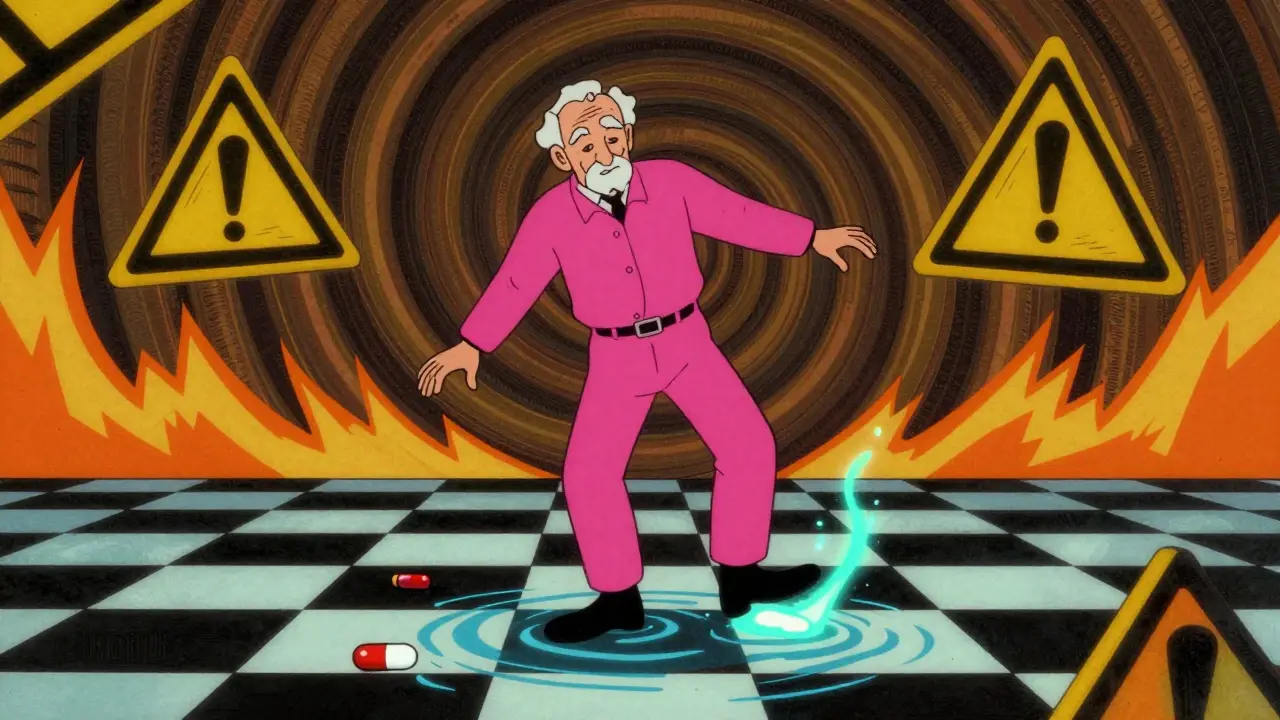
The Danger of Falling: Statistics You Cannot Ignore
If memory loss wasn't concerning enough, consider your physical safety. One of the biggest risks associated with Benzodiazepines , particularly for older adults, is the danger of falling. It seems counterintuitive-a sleeping person rarely walks-but these drugs cause a unique mix of sedation and impaired coordination that leads to accidents during regular daily movements.
A comprehensive 2014 meta-analysis analyzed 25 studies covering 1.2 million participants. The results were stark. Current users had a 50% increased risk of falls compared to non-users. Even scarier was the link to injuries: there was a 70% increased risk of hip fractures. Hip fractures in the elderly are catastrophic, leading to long-term disability or death rates as high as 30% within a year due to complications.
| Risk Factor | Relative Risk Increase |
|---|---|
| Falls | 50% Higher (OR = 1.50) |
| Hip Fractures | 70% Higher (OR = 1.70) |
| ER Visits (Falls) | 93,000 Annually in US |
Why does this happen? It comes down to chemistry affecting physics. Benzodiazepines reduce balance control by 30 to 40% and slow reaction times by 25 to 35% in older adults. High-potency drugs like alprazolam and lorazepam actually carry a 60% higher fall risk than lower potency agents like chlordiazepoxide or diazepam. Because of this, the American Geriatrics Society lists benzodiazepines as potentially inappropriate medications for older adults in their Beers Criteria since 2012.
Tapering Strategies: How to Stop Safely
Knowing these risks brings up the inevitable question: "If I'm already taking them, how do I get off?" Suddenly stopping these medications is dangerous. Your brain has adapted to the constant presence of the drug, and removing it abruptly can trigger severe withdrawal symptoms, including seizures. You need a plan. The gold standard for this is the Ashton Protocol was developed by Professor C. Heather Ashton in 1984 and updated in 2002. It recommends switching to a long-acting benzodiazepine (like diazepam) to smooth out the blood levels and reducing the dose by 5 to 10% every one to two weeks.
Speed matters immensely here. In 2021, a randomized controlled trial with 312 long-term users showed the power of patience. Those on a 12- to 16-week tapering protocol achieved a 68.5% successful discontinuation rate at six months. Compare that to the 27.3% success rate in the control group who tapered faster or used different methods.
If you decide to taper, keep these practical tips in mind based on clinical guidelines and patient forums:
- Switch First: If you are on short-acting meds like Xanax (alprazolam), switch to Valium (diazepam) first. It has a longer half-life, making the blood concentration drop less sharply between doses.
- Monitor Symptoms: Expect some withdrawal discomfort, like rebound anxiety or insomnia. About 22% of patients require pausing the taper for 2 to 4 weeks because symptoms become intolerable.
- Expect Brain Fog: 65% of users reported persistent cognitive difficulties during the process. Do not let this scare you into giving up. Cognitive function usually begins to improve at week 4, with significant gains in processing speed and sustained attention by week 8.

Are There Better Options?
Given the side effects profile, experts are shifting away from long-term benzodiazepine use. The American Psychiatric Association Practice Guideline for Anxiety Disorders (2020) advises against prescribing them for more than four weeks due to dependence risks.
However, alternatives exist. For anxiety disorders, antidepressants like SSRIs are now often preferred as a first-line treatment despite slower onset. For sleep, non-habit forming options include behavioral therapy like CBT-I (Cognitive Behavioral Therapy for Insomnia).
Looking toward the future, science is promising. Emerging research is investigating compounds that target specific subtypes of the GABAA receptor. Phase II trials published in early 2024 showed agonists targeting α2/α3 subtypes could provide anxiety relief without the memory impairment seen with traditional broad-spectrum benzodiazepines. Until those are widely available, sticking to the lowest effective dose and avoiding them in the over-65 demographic remains the safest course of action.
Frequently Asked Questions
Can memory loss from benzos be reversed?
Yes, often, but it takes time. Studies show that 73% of successful tapers reported gradual cognitive improvement over 6 to 12 months post-discontinuation. However, about 55% of former users may continue to show residual impairment after 10 months, suggesting some effects linger longer than others.
Which benzodiazepines are safest for seniors?
Generally, none are considered fully safe for routine long-term use in seniors according to the Beers Criteria. If they must be used, lower potency agents like diazepam or chlordiazepoxide have slightly lower fall risks than high-potency ones like alprazolam, though any use increases risk significantly.
How fast should I lower my dosage?
Slowly. A reduction of 5 to 10% of your current dose every 1 to 2 weeks is the standard recommendation. Going faster significantly increases the chance of severe withdrawal symptoms like seizures.
What are the symptoms of benzodiazepine withdrawal?
Common symptoms include rebound anxiety, insomnia, perceptual disturbances, tremors, and in severe cases, seizures. Many patients experience intense 'brain fog' and difficulty concentrating during the process.
Do I need a doctor to help me stop?
Absolutely. Stopping requires medical supervision to manage withdrawal and monitor for seizures. Never attempt to stop suddenly on your own after long-term use.
Molly O'Donnell
April 1, 2026 AT 12:11Stats on falls are scarily accurate.
Owen Barnes
April 1, 2026 AT 19:58this is defintly somthin everyone needs to kno
Eleanor Black
April 1, 2026 AT 23:29It feels so overwhelming to read about memory loss risks honestly. My family faced similar challenges recently with my grandmother. She was prescribed pills for anxiety years ago without warnings. Nobody told us how much it affects cognitive function directly. We noticed she forgot conversations from earlier in the day. Sometimes she did not recognize family members visiting us. The fall statistics presented here are incredibly frightening to see. Hip fractures lead to such devastating outcomes for seniors unfortunately. We lost sleep worrying about her safety every single night. Tapering off medications requires immense patience and steady support. Medical advice suggests slow reduction to prevent severe issues. Withdrawal symptoms can be tough mentally and physically alike. Many people report improved clarity after discontinuing usage fully. It gives hope that the brain can recover with proper care taken. Everyone deserves to know these hidden dangers beforehand. :) Please share this info so others can protect their health. :)
Rod Farren
April 3, 2026 AT 17:51The pharmacokinetics of benzodiazepines dictate that half-life variance is critical. GABA-A receptor agonists bind with high affinity leading to sedation. Rapid dose reduction induces neuroadaptation rebound phenomena. Clinical guidelines recommend cross-tapering to diazepam first. Steady state plasma concentrations are maintained via long-acting agents. CYP450 enzyme metabolism rates vary significantly among patients. Therapeutic monitoring prevents acute seizure risk during cessation. Pharmacodynamic tolerance develops over prolonged exposure periods.
Callie Bartley
April 4, 2026 AT 00:06I guess some people think knowing chemistry helps them cope with reality. Most of us just want to sleep at night without side effects. Experts love to use big words when simple explanations work better.
Arun Kumar
April 5, 2026 AT 21:24We must support each other through the difficult journey of tapering. Knowledge empowers us to make informed choices for our health. Patience is the greatest medicine during this challenging process. Let us encourage those who struggle to keep going forward. Community strength provides a vital safety net for recovery. Small steps lead to big victories over time eventually.
Julian Soro
April 7, 2026 AT 08:44Finding safer alternatives is really promising for future treatment plans. Behavioral therapy offers excellent long-term results for many patients. It is great to see research moving away from risky drugs. We all benefit from safer options for anxiety management. Staying positive helps maintain mental resilience throughout treatment.
Christopher Beeson
April 9, 2026 AT 04:11Society treats medication as a quick fix for existential suffering. Modern medicine creates dependency rather than solving the root cause. Human vulnerability is exploited by corporate profit motives always. True healing requires internal transformation not external chemical suppression. The illusion of safety masks the underlying fragility of the mind.
Sharon Munger
April 9, 2026 AT 07:18slow is best fast is bad. dont rush. listen to body. safety first
Jenny Gardner
April 11, 2026 AT 00:20That is absolutely correct regarding pacing the taper schedule. Rushing the process definitely increases the probability of setbacks. Adherence to gradual reduction minimizes physiological stress. We should all prioritize listening to our own bodies. Safety measures are paramount for successful discontinuation. Well said!
James DeZego
April 12, 2026 AT 09:57CBT-I remains the gold standard for insomnia without drug reliance. Non-habit forming strategies yield sustainable improvements over time. Education on mechanisms improves patient compliance rates significantly. :) Science supports behavioral interventions strongly.
Russel Sarong
April 14, 2026 AT 01:56This information!!! Is crucial!!! Why wasnt this taught earlier!!!!! Risk factors!!! Are huge!!! People need to know!!! ASAP!!!
Rocky Pabillore
April 15, 2026 AT 16:15Common knowledge should not require reading forums to understand basic medical risks. One would expect healthcare providers to discuss these details initially. Perhaps the average individual lacks the intellectual capacity to self-manage this well. Education gaps persist despite widespread access to digital information today.