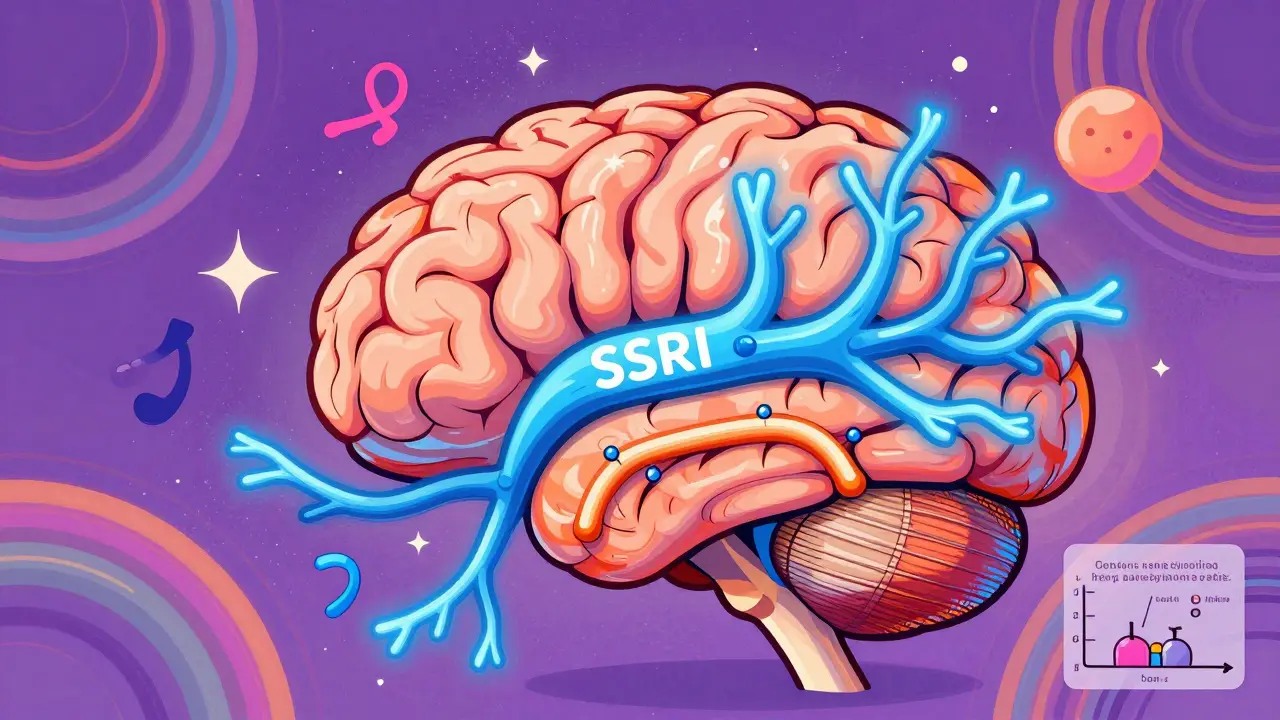
Depression Symptom Tracker with Buspirone Augmentation
Your Current Situation
Your Buspirone Augmentation Potential
Your Expected Outcome
Why This Matters
According to clinical studies, buspirone augmentation has shown a 62% response rate compared to 42% for placebo. For severe depression (MADRS >30), improvements can be significant within the first week.
Buspirone vs. Alternatives
- +37% Less weight gain compared to antipsychotics
- +63% Improved sexual function (vs. 42% for sildenafil)
- 0.3 kg Average weight change (vs. 2.5-4.2 kg with antipsychotics)
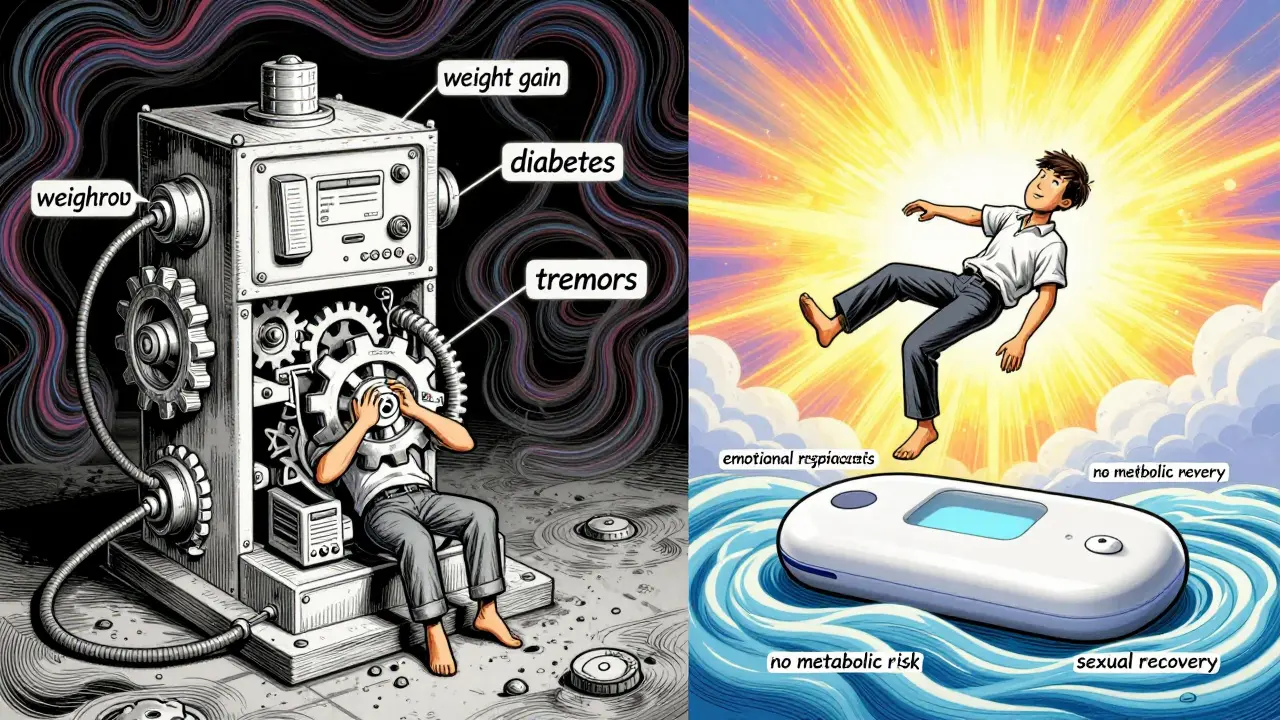
When SSRIs don’t fully work for depression, doctors often turn to augmentation - adding another medication to boost the effect. One of the most underappreciated options is buspirone. Originally approved for anxiety, it’s now commonly used off-label to help people who aren’t responding to SSRIs like sertraline, escitalopram, or fluoxetine. Unlike other add-ons like aripiprazole or quetiapine, buspirone doesn’t cause weight gain, high blood sugar, or movement problems. It also has a unique ability to fix one of the most frustrating side effects of SSRIs: sexual dysfunction.
How Buspirone Works Differently from SSRIs
SSRIs work by blocking the reabsorption of serotonin in the brain, leaving more of it available to improve mood. Buspirone does something completely different. It’s a partial agonist at the 5-HT1A serotonin receptor. That means it doesn’t flood the system with extra serotonin like SSRIs do - instead, it fine-tunes how serotonin signals are received. This subtle difference is why buspirone can help when SSRIs alone aren’t enough.
It’s not just about mood. Buspirone also affects other brain pathways linked to anxiety and emotional processing. That’s why it’s especially useful for people with depression who also have persistent anxiety, irritability, or emotional numbness. In clinical trials, patients on buspirone augmentation reported feeling more emotionally responsive - something many SSRIs blunt over time.
How Effective Is Buspirone as an Augmentation?
Research shows buspirone works. In the STAR*D trial - one of the largest depression studies ever done - adding buspirone to an SSRI led to better outcomes than switching to another antidepressant. More recent studies confirm this. A 2023 double-blind trial with 102 patients found that those on buspirone (10-30 mg twice daily) saw a significant drop in depression scores within the first week. The improvement was strongest in people with severe depression, where baseline scores were above 30 on the Montgomery-Asberg Depression Rating Scale (MADRS).
Response rates in these studies were around 62% for buspirone augmentation versus 42% for placebo. That’s comparable to FDA-approved options like aripiprazole, but without the metabolic downsides. A 2022 meta-analysis found buspirone’s effect size was similar to antipsychotic augmentations, but with far fewer long-term risks.
Side Effects: What to Expect
Buspirone’s side effect profile is mild compared to most other augmentation drugs. The most common issues are dizziness (14.3% of users), headache (11.1%), nausea (9.6%), and nervousness (9.1%). These usually fade within the first week or two. Unlike SSRIs, buspirone doesn’t cause fatigue, brain fog, or gastrointestinal upset in most people.
One big advantage? Sexual side effects. While 40-60% of people on SSRIs report problems like low libido, delayed orgasm, or erectile dysfunction, only about 1.6% of those taking buspirone report the same. In fact, buspirone can actually reverse these issues. A 2024 case study showed a man with sertraline-induced delayed ejaculation saw complete resolution after adding 15 mg of buspirone daily. This isn’t an anomaly - a 2021 review found buspirone helped 63% of patients with SSRI-related sexual dysfunction, beating out sildenafil (42%) and yohimbine (38%).
How It Compares to Other Augmentation Options
Let’s say your SSRI isn’t working. Your doctor might suggest adding an antipsychotic like aripiprazole. But those drugs come with real risks: weight gain (2.5-4.2 kg on average), increased triglycerides, higher blood sugar, and even movement disorders like tremors. Buspirone? Average weight change: 0.3 kg. No impact on lipids or glucose. No need for blood tests.
Compared to lithium - another common add-on - buspirone doesn’t require regular kidney or thyroid monitoring. Lithium can be toxic if levels creep too high. Buspirone doesn’t have that risk. Thyroid hormone augmentation can trigger heart rhythm problems in 5-8% of patients. Buspirone? No cardiac concerns.
Even modafinil, used for fatigue and brain fog, doesn’t touch the sexual side effects that buspirone fixes. And unlike benzodiazepines, buspirone isn’t addictive and doesn’t cause withdrawal.

Dosing and How to Start
There’s no one-size-fits-all dose. Most doctors start low: 5-10 mg twice a day. That’s usually enough to test tolerance. If it’s well-tolerated, the dose is increased by 5 mg every 3-5 days. The typical target is 20-30 mg daily, split into two doses. Some patients with treatment-resistant depression may need up to 60 mg daily, but that’s done under close supervision.
Because buspirone has a short half-life (2-3 hours), it’s best taken twice daily - morning and evening - to keep levels steady. Skipping doses can cause dizziness or a return of anxiety symptoms. It’s not a quick fix. While some people feel better in the first week, full benefit usually takes 4-6 weeks. Don’t give up too soon.
Drug Interactions and Safety
Buspirone is metabolized by the liver enzyme CYP3A4. That means anything that blocks this enzyme can cause buspirone to build up in your system. Common culprits: grapefruit juice (increases levels by 4x), ketoconazole, erythromycin, and some antifungals. If you’re on any of these, your doctor may need to lower your buspirone dose.
It’s also important to avoid alcohol. While buspirone isn’t a sedative like benzodiazepines, mixing it with alcohol can worsen dizziness and impair coordination. There’s no evidence it causes liver damage, but if you have severe liver disease, your doctor may avoid it altogether.
Who Benefits Most?
Buspirone isn’t for everyone. It works best in people with:
- Severe depression (MADRS score >30)
- Residual anxiety or emotional blunting on SSRIs
- Sexual side effects from SSRIs
- Concerns about weight gain or metabolic changes
- History of benzodiazepine use (it doesn’t work as well if you’ve been dependent on them)
It’s especially popular in older adults because it doesn’t interact with warfarin, doesn’t cause dry mouth or constipation (unlike older antidepressants), and has minimal risk of falls or confusion. Geriatric psychiatrists often call it their first-line augmentation choice for seniors.
Cost and Accessibility
Buspirone is cheap. Generic versions cost about $4.27 for 60 tablets of 10 mg. Compare that to aripiprazole (Abilify), which runs over $780 for a 30-day supply. Even though it’s off-label for depression, most insurance plans cover it because it’s a generic drug with decades of safety data.
Prescription data from 2023 shows over 1.2 million U.S. outpatient visits included buspirone for depression augmentation - up 17% from the year before. That’s not a fluke. More doctors are recognizing its value.
What’s Next for Buspirone?
Researchers are now studying buspirone for SSRI-induced emotional blunting - that flat, numb feeling some people get after months on antidepressants. Early results from the BUS-EMO trial show a 37% improvement in emotional responsiveness after 8 weeks. That could open the door to FDA approval for this use in the next few years.
As concerns grow about metabolic side effects from antipsychotics - especially in an aging population - buspirone’s clean profile makes it a natural fit. Experts predict its use will keep growing, not just for depression, but for anxiety, emotional blunting, and even as a standalone option for mild to moderate cases.
Bottom Line
If you’re on an SSRI and still feel depressed, anxious, or emotionally flat - or if sexual side effects are dragging you down - buspirone is worth discussing. It’s safe, affordable, and doesn’t add the baggage of weight gain, diabetes risk, or sedation. It won’t work for everyone, but for many, it’s the missing piece. Start low, go slow, give it time, and don’t be afraid to ask your doctor about it. Sometimes the simplest fix isn’t a new drug - it’s the right add-on.
Can buspirone help with SSRI-induced sexual dysfunction?
Yes. Studies show buspirone improves sexual function in about 63% of people experiencing SSRI-related issues like delayed orgasm or low libido. It works by blocking alpha-2 receptors, which helps restore normal sexual response. Unlike sildenafil or yohimbine, it doesn’t just treat the symptom - it addresses the underlying neurochemical imbalance caused by SSRIs.
How long does it take for buspirone to work as an antidepressant augmenter?
Some patients notice improvements in mood and anxiety within the first week, especially if they have severe depression. But full benefit usually takes 4-6 weeks. Unlike benzodiazepines, buspirone doesn’t work overnight. It needs time to modulate serotonin receptors in the brain. Patience is key.
Is buspirone addictive?
No. Buspirone is not addictive and does not cause physical dependence. Unlike benzodiazepines, it doesn’t act on GABA receptors, which are linked to sedation and withdrawal. Stopping buspirone doesn’t cause rebound anxiety or seizures. You can stop it safely under your doctor’s guidance.
Can I take buspirone with other antidepressants?
Yes. Buspirone is commonly used with SSRIs, SNRIs, and sometimes even TCAs. It’s not an MAOI, so there’s no risk of serotonin syndrome when combined with SSRIs. However, always inform your doctor about all medications you’re taking - especially antibiotics or antifungals - because of CYP3A4 interactions.
Does buspirone cause weight gain?
No. Clinical trials show an average weight change of just 0.3 kg (about 0.7 pounds) - essentially no change. This makes it one of the safest augmentation options for people concerned about metabolic side effects, especially compared to antipsychotics like quetiapine or olanzapine, which often cause 5-10 pound weight gains.
Who should avoid buspirone?
People with severe liver disease should use caution, as buspirone is processed by the liver. Those with a history of benzodiazepine dependence may not respond as well. Also, avoid it if you’re taking strong CYP3A4 inhibitors like ketoconazole or grapefruit juice in large amounts. If you’re pregnant or breastfeeding, talk to your doctor - data is limited, but no major risks have been identified.
Glendon Cone
December 31, 2025 AT 02:37Just started buspirone last week with my sertraline and honestly? My libido came back like it was on vacation and decided to return. 😌 No more avoiding intimacy because I felt like a robot. Also no weight gain - still fitting into my jeans. Life-changing stuff.
Aayush Khandelwal
December 31, 2025 AT 09:33Buspirone’s 5-HT1A partial agonism is a masterclass in neuromodulatory finesse - it doesn’t brute-force serotonin like SSRIs do, it orchestrates the symphony. The elegance lies in its receptor-subtype selectivity, avoiding the downstream metabolic chaos of D2 antagonism. It’s pharmacology as poetry, not a sledgehammer. 🎻
Shae Chapman
January 2, 2026 AT 05:01OMG I’ve been on this combo for 3 months and I’m crying happy tears 😭 I finally feel like ME again - not numb, not sluggish, not broken in the bedroom. My therapist said I’ve ‘reclaimed my emotional bandwidth.’ I didn’t know I’d lost it until it came back. THANK YOU for writing this.
Nadia Spira
January 2, 2026 AT 06:56Oh please. Another ‘miracle drug’ for people too lazy to do CBT or change their diet. Buspirone’s ‘efficacy’ is just placebo with a fancy receptor name. And don’t get me started on that 62% response rate - no control for baseline anxiety levels. This is snake oil dressed in peer-reviewed pajamas.
henry mateo
January 3, 2026 AT 02:35i just wanted to say thank you for this post. i was about to quit my ssri bc the sex stuff was killing me and then i read this and asked my doc about buspirone. we started me on 10mg and its been 3 weeks - i can feel the difference already. not perfect but way better. you guys are awesome
Kunal Karakoti
January 3, 2026 AT 07:59It’s fascinating how this drug repositions serotonin not as a resource to be hoarded, but as a signal to be refined. The human mind doesn’t need more noise - it needs better tuning. Buspirone, in its quiet way, is the equivalent of turning down the volume on the static so the music can be heard again.
Kelly Gerrard
January 3, 2026 AT 13:33As a psychiatrist with 22 years of clinical experience I must emphasize that off-label augmentation requires rigorous monitoring. While buspirone has a favorable profile, it is not a panacea. Patients must be educated on delayed onset and potential dizziness. This post, while well-intentioned, risks oversimplification. Caution is paramount.
Henry Ward
January 3, 2026 AT 20:26Everyone’s acting like this is some magical cure. Newsflash: you’re just swapping one side effect for another. Dizziness? Nausea? That’s your brain screaming it doesn’t want this chemical cocktail. And don’t even get me started on people who think ‘no weight gain’ means it’s safe. You’re still messing with your neurotransmitters like a lab rat. Wake up.
Sandeep Mishra
January 4, 2026 AT 09:44Hey, if you’re on SSRIs and feeling emotionally hollow - try buspirone. I’ve seen it help patients who’d given up. Not everyone, but enough. It’s not flashy, but it’s gentle. And if you’re worried about cost? It’s cheaper than your monthly coffee habit. No need to overthink it - just ask your doc. You’ve got nothing to lose but the numbness.
Joseph Corry
January 4, 2026 AT 15:31How quaint. A 1980s anxiolytic repurposed as a ‘depression enhancer’ because Big Pharma ran out of novel molecules. The STAR*D data is a mess, and the ‘63% sexual recovery’ claim ignores confounding variables like placebo response and subjective reporting. This isn’t science - it’s pharmaceutical nostalgia dressed in TikTok-friendly bullet points.
Colin L
January 5, 2026 AT 04:18I’ve been on buspirone for 11 months now, and honestly, I don’t know if I’d be alive without it. I was on 40mg of sertraline, had zero sex drive, gained 28 pounds, and couldn’t cry even when my dog died. Then I added 30mg of buspirone twice a day. Within six weeks, I started laughing again - real laughter, not the fake kind you force when people ask how you are. I cried at a sunset last week. That hadn’t happened since college. I know this sounds dramatic, but it’s true. I’m not just ‘better’ - I’m human again. And yes, I still get dizzy sometimes, but I’d rather be dizzy and alive than numb and perfect.
Hayley Ash
January 7, 2026 AT 02:41Wow what a miracle drug right? Next you’ll tell me sunlight cures depression and water hydrates you. Buspirone? More like bus-poor-ine. Everyone’s acting like it’s the first time someone tried to fix SSRI side effects without adding another pill that turns you into a zombie. Newsflash: if your antidepressant kills your sex life, maybe the problem isn’t serotonin - it’s the damn SSRI. Just stop taking it. 🙄