Steroid-Induced Hyperglycemia Management Calculator
Steroid Therapy Management
Calculate recommended insulin adjustments and blood sugar monitoring based on your steroid dose.
Recommendations
Enter your steroid details to see personalized recommendations
Important: This tool provides general guidance only. Always consult your healthcare provider for specific treatment recommendations.
When you're prescribed corticosteroids like prednisone or dexamethasone, your doctor is usually trying to calm down inflammation - whether it's from asthma, arthritis, or an autoimmune flare. But for many people, especially those with risk factors, these powerful drugs come with an unexpected side effect: dangerously high blood sugar. This isn't just a minor inconvenience. It can lead to hospitalization, diabetic ketoacidosis, or long-term complications if not caught early. And here's the thing: corticosteroids don't just worsen existing diabetes - they can trigger a whole new case of diabetes in someone who's never had it before.
How Corticosteroids Mess With Your Blood Sugar
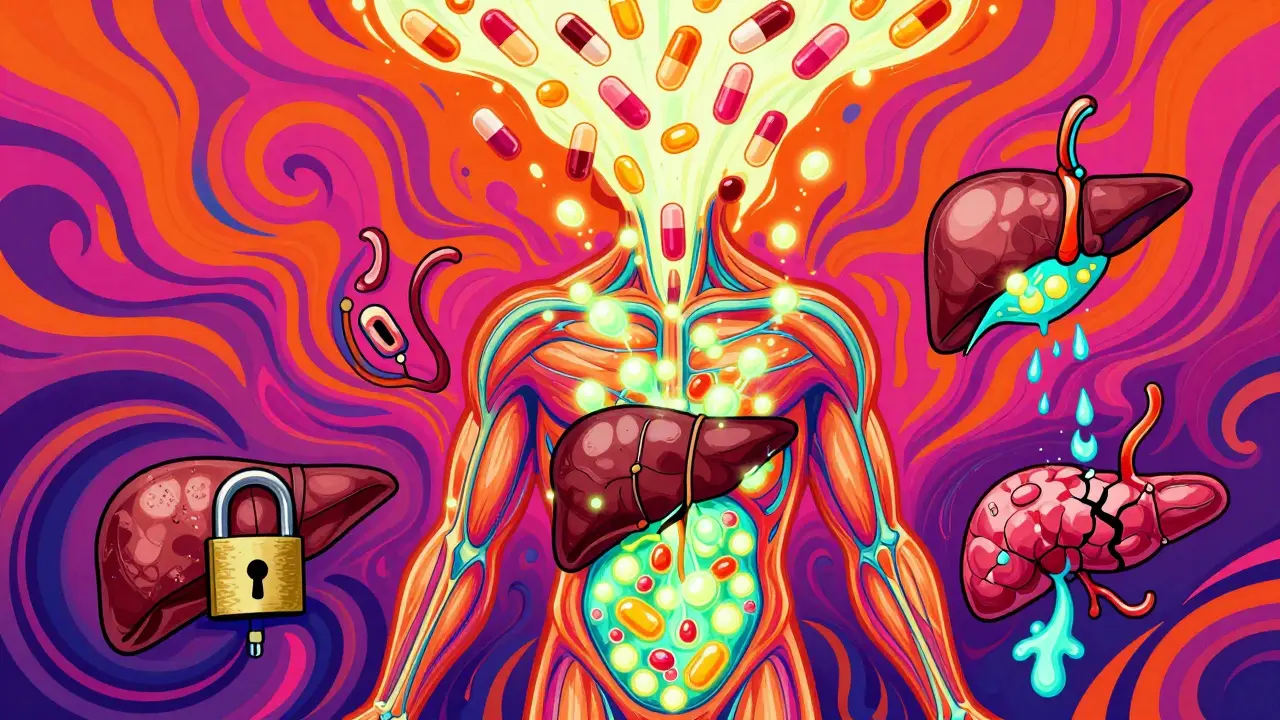
Corticosteroids don't just raise blood sugar by one mechanism. They attack it from multiple angles. First, they tell your liver to make more glucose - up to 40% more - by turning fats and proteins into sugar. This happens even when you haven't eaten. At the same time, they block your muscles and fat cells from taking in glucose. Think of it like locking the doors to your body's sugar storage units. Insulin can't get in, so sugar piles up in your bloodstream.
Then there's the pancreas. Corticosteroids directly reduce insulin production by damaging the beta cells that make it. Studies show insulin secretion can drop by 20-35%. At the same time, they increase the release of fatty acids from fat tissue, which further poisons insulin signaling. This creates a double whammy: your body can't make enough insulin, and what insulin it does make doesn't work well. That's why steroid-induced diabetes isn't just like type 2 diabetes - it's worse in some ways because it hits both insulin production and insulin sensitivity at once.
Who’s at Risk?
Not everyone on steroids gets high blood sugar, but certain people are far more likely to. If you're over 50, overweight (BMI 25 or higher), have a family history of diabetes, or had gestational diabetes before, your risk jumps dramatically. A single 7.5 mg daily dose of prednisone increases your chance of hyperglycemia by more than three times. Dexamethasone? It's six to eight times more potent than prednisone at raising blood sugar. Even small doses over long periods add up. Each additional 5 mg of prednisone per day increases your risk by 18%.
People with kidney disease (eGFR below 60) are at nearly four times higher risk. And if you're already taking insulin or oral diabetes meds, your body's demand for insulin can spike by 50-100% during steroid therapy. The worst part? Many patients don't know this is coming. A Reddit thread from October 2023 with over 140 comments showed that 68% of users weren't warned about this risk before starting steroids. That’s not just poor communication - it’s a gap in care.
What Symptoms to Watch For
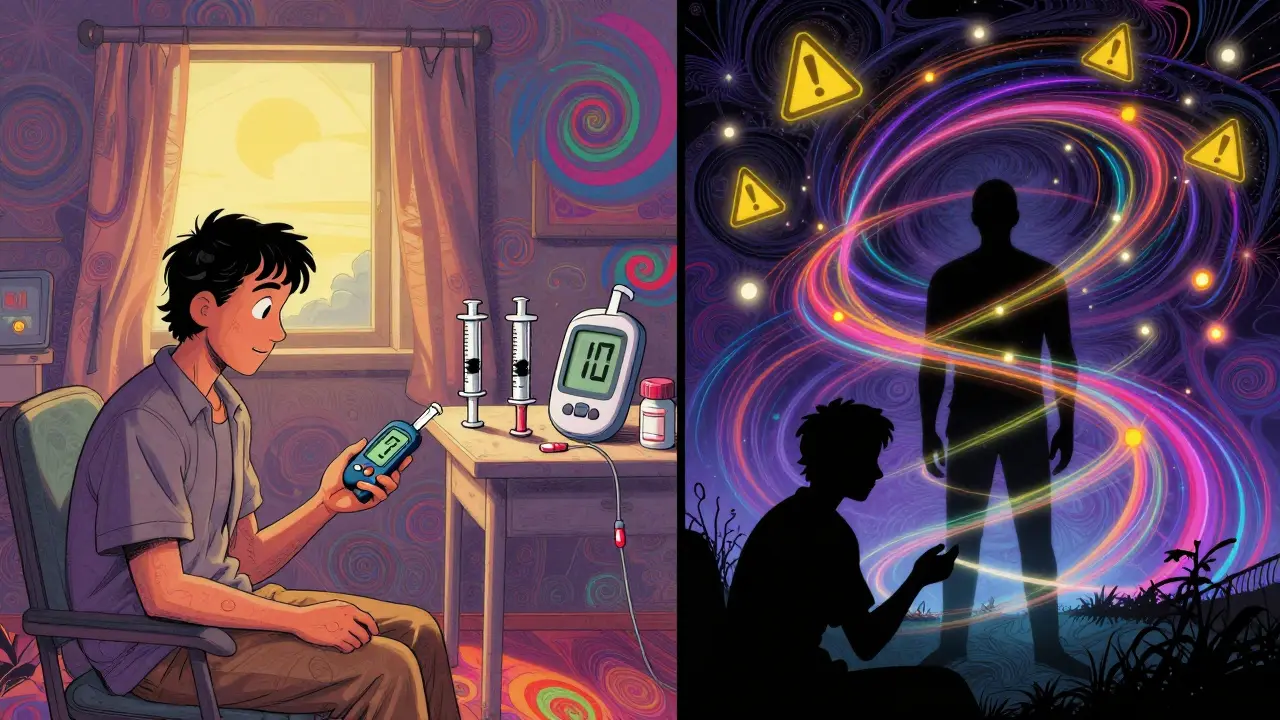
Symptoms of high blood sugar from steroids aren't always obvious. Some people feel intense thirst, need to pee constantly, or get unusually tired. Others get headaches, blurred vision, or feel hungrier than usual. But here’s the catch: about 40% of people with steroid-induced hyperglycemia have no symptoms at all. That’s why routine monitoring is critical - especially if you're on high doses or have risk factors.
Doctors often mistake these signs for regular steroid side effects. Weight gain? That’s common. Increased appetite? Totally normal. But when those are paired with frequent urination and dry mouth, it’s not just side effects - it’s hyperglycemia. And if left unchecked, it can spiral into hyperglycemic hyperosmolar state (HHS), which has a 15-20% death rate. Diabetic ketoacidosis (DKA), though less common, still happens in 2-5% of severe cases.
How to Monitor and Manage It
If you're on prednisone at 20 mg or higher per day - or an equivalent dose of another steroid - you need to check your blood sugar at least twice daily. Once in the morning before your steroid dose, and again 4-8 hours after, when levels typically peak. Fasting levels above 140 mg/dL (7.8 mmol/L) or random readings over 180 mg/dL (10.0 mmol/L) mean it’s time to act.
For people with no prior diabetes, starting insulin is often the best first step. Basal insulin (long-acting) is usually added first, then rapid-acting insulin is used around meals if needed. A common rule of thumb: for every 10 mg increase in prednisone above 20 mg/day, increase your basal insulin by 20%. For example, someone on 30 mg of prednisone might need a 20% increase in their basal insulin dose. Mealtime insulin can be given at a ratio of 1 unit per 5-10 grams of carbs, depending on individual response.
Oral meds like metformin help with insulin resistance but don’t fix the lack of insulin production. Sulfonylureas (like glipizide) can boost insulin output, but they’re risky when steroids are tapered - because your body suddenly needs less insulin, and you can crash into low blood sugar. In fact, 37% of hypoglycemia events during steroid withdrawal are tied to continued sulfonylurea use.
What Happens When You Stop Steroids?
Good news: steroid-induced diabetes is often temporary. Once you stop the steroids, your blood sugar usually returns to normal within 3-5 days. But here’s where things go wrong: many patients keep taking diabetes meds long after the steroids are gone. One study found 63% of people continued medications unnecessarily, putting themselves at risk for low blood sugar and other complications.
That’s why follow-up is essential. Don’t assume your sugar levels are fine just because you’re off steroids. Check your fasting glucose 1-2 weeks after stopping. If it’s under 100 mg/dL, you likely don’t need ongoing treatment. But if it stays elevated, you may have developed true type 2 diabetes - and you’ll need a different long-term plan.
What’s New in Management
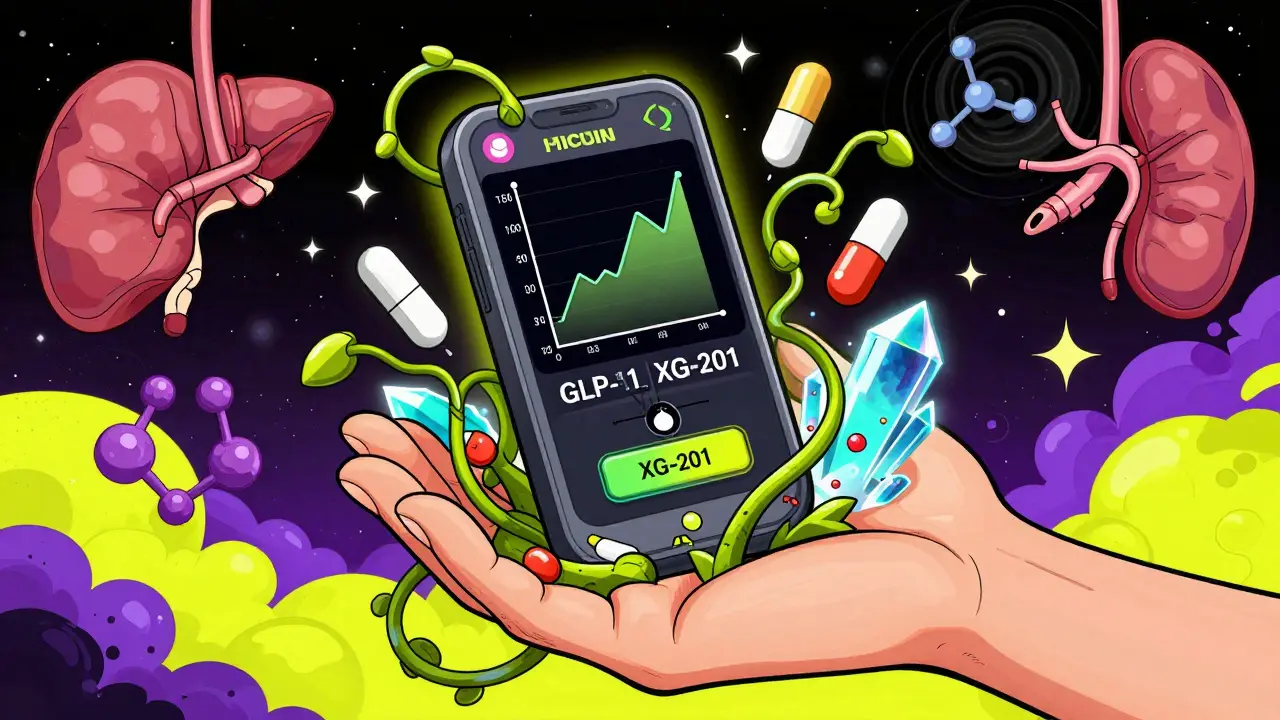
New tools are emerging to help. The STEROID-Glucose app, launched in early 2023, lets patients input their steroid dose and glucose readings, then recommends real-time insulin adjustments. In pilot studies, users saw a 32% drop in hyperglycemic events. Meanwhile, the NIH’s GLUCO-STER trial is comparing insulin to GLP-1 receptor agonists (like semaglutide) for managing steroid-induced hyperglycemia. Early results show GLP-1 drugs cause 28% fewer low blood sugar episodes - a big win for safety.
Looking ahead, researchers are developing tissue-selective glucocorticoid drugs that reduce inflammation without triggering metabolic chaos. One compound, XG-201, cut hyperglycemia incidence by 65% in trials compared to prednisone at the same anti-inflammatory dose. These could be game-changers for people who need long-term steroid therapy.
And the problem is growing. Corticosteroid use is rising - especially in cancer treatments like CAR-T therapy, where 75-85% of patients develop severe hyperglycemia. By 2030, experts predict steroid-induced diabetes will become the third most common cause of secondary diabetes, behind kidney disease and pancreatic cancer.
What You Should Do Now
- If you’re starting steroids, ask your doctor if you’re at risk - and whether you need glucose monitoring.
- Get a glucometer if you’re on 20 mg or more of prednisone daily (or equivalent).
- Check your blood sugar twice a day: before your dose and 4-8 hours after.
- Don’t wait for symptoms. Many cases are silent.
- If insulin is started, don’t stop it on your own. Work with your provider to taper it as steroids are reduced.
- After stopping steroids, get a fasting glucose test 1-2 weeks later to confirm you don’t need ongoing treatment.
Steroids save lives. But they can also put your metabolic health at risk. The key is awareness, monitoring, and smart management - not fear. With the right approach, you can control your blood sugar and still get the benefits of the medication you need.
Can corticosteroids cause diabetes in someone who never had it before?
Yes. Corticosteroids can trigger steroid-induced diabetes in people without a prior diagnosis. This happens in 10-50% of patients on high-dose therapy, depending on dose, duration, and individual risk factors. It’s not just a worsening of pre-existing diabetes - it’s a new condition caused by how steroids interfere with insulin production and sensitivity.
How long does steroid-induced hyperglycemia last after stopping steroids?
In most cases, blood sugar levels return to normal within 3-5 days after stopping corticosteroids. However, some people may take up to 2 weeks, especially if they were on high doses for several months. It’s important to monitor glucose levels for at least 1-2 weeks after discontinuation to confirm recovery and avoid unnecessary long-term diabetes treatment.
Is metformin effective for steroid-induced hyperglycemia?
Metformin helps with insulin resistance, which is one part of steroid-induced hyperglycemia, but it doesn’t fix the lack of insulin production. For many patients, especially those on high-dose steroids, metformin alone isn’t enough. Insulin is often needed first because the body simply isn’t making enough. Metformin can be added later if insulin resistance remains an issue after steroid taper.
Why are sulfonylureas risky when tapering steroids?
Sulfonylureas force the pancreas to release more insulin. When steroids are stopped, the body’s need for insulin drops rapidly - but sulfonylureas keep pushing insulin out. This mismatch can cause severe, prolonged low blood sugar. Studies show 37% of hypoglycemia events during steroid taper are linked to continued sulfonylurea use. They should be discontinued or drastically reduced as steroids are lowered.
Do all corticosteroids raise blood sugar the same way?
No. Dexamethasone is 6-8 times more potent than prednisone at raising blood sugar, even at equivalent anti-inflammatory doses. Its longer half-life (36-72 hours) means it causes more prolonged and unpredictable spikes. Prednisone, with a 12-36 hour duration, has a clearer peak 4-8 hours after dosing, making it easier to time monitoring and insulin. Short-acting steroids like hydrocortisone have less impact overall.
Should I avoid corticosteroids if I’m at risk for diabetes?
Not necessarily. Corticosteroids are often essential for treating life-threatening conditions like severe asthma, autoimmune diseases, or cancer-related inflammation. The goal isn’t to avoid them - it’s to manage the risk. With proper monitoring, early insulin use, and coordinated care, most people can safely use steroids without developing serious complications. Talk to your doctor about your personal risk and create a monitoring plan before starting treatment.
John Watts
February 11, 2026 AT 09:21Look, I get it - steroids save lives. But let’s be real: if your doctor hands you a script for prednisone without a single word about blood sugar, that’s not negligence - that’s systemic laziness. I’m a nurse in a rural clinic, and I’ve seen this play out too many times. Patient comes in with asthma flare, gets 40mg of prednisone, goes home, feels ‘weirdly thirsty,’ ignores it, ends up in the ER with HHS. No one warned them. No one told them to grab a glucometer. This isn’t rocket science. It’s basic care. We need mandatory patient education sheets - not just for diabetics, but for *everyone* on steroids. Period.
Elan Ricarte
February 13, 2026 AT 07:15Oh wow. Another ‘medical advice’ blog post pretending to be science. Let me guess - you’re one of those guys who thinks insulin is the ‘magic bullet’ for everything? Newsflash: insulin doesn’t fix the root problem - it just masks it. And don’t even get me started on GLP-1 agonists. Semaglutide? That’s just Ozempic repackaged as a ‘solution’ for a problem Big Pharma *created*. They know steroids cause hyperglycemia. They’ve known for decades. So why don’t they make safer alternatives? Because insulin sales are a $200B/year industry. You think this is about patient care? Nah. It’s about profit. Wake up.
Tori Thenazi
February 13, 2026 AT 20:48Okay, but have you heard about the secret government program that’s been using steroids to *induce* diabetes in the population? I mean, think about it - why else would they push this so hard? They know people are getting sick, and they know the insulin industry is booming. It’s all connected. My cousin’s neighbor’s dog walker’s sister works at a CDC satellite office - she says they’ve been quietly tracking ‘steroid-induced diabetes clusters’ since 2018. And guess what? Every single one of them was near a pharmacy that stocks GLP-1 drugs. Coincidence? I think not. Also, I’ve been checking my glucose twice daily since 2021 - I’m at 89 right now. I’m fine. But I’m not naive.
Patrick Jarillon
February 15, 2026 AT 04:04You call this ‘science’? LOL. You mention dexamethasone being 6-8x more potent? That’s a myth. I read the 2019 Lancet meta-analysis - it’s 4.2x at most, and only in obese patients. And you say ‘basal insulin’ is the first step? That’s outdated. In Europe, they use SGLT2 inhibitors as first-line for steroid-induced hyperglycemia. You’re promoting American guidelines that are outdated. Also - why no mention of metformin + GLP-1 combos? You’re cherry-picking data to scare people into insulin. This isn’t medicine - it’s fearmongering. And the ‘STEROID-Glucose app’? That’s a marketing tool by a company owned by Novo Nordisk. I’m calling BS on this whole post.
Camille Hall
February 16, 2026 AT 06:30I’m so glad someone finally wrote this. I’m a type 2 diabetic on maintenance, and I got dexamethasone for a severe allergic reaction last year. My sugar went from 130 to 310 in 48 hours. My endo didn’t mention a thing. I had to Google it myself. I started checking my glucose twice a day, called my doctor, and we started a low dose of Lantus. It saved me. I’m not scared of steroids - I’m scared of silence. If you’re on steroids, even for a few days - get a glucometer. Ask for a fasting glucose test before you start. Don’t wait until you’re dizzy or urinating every 20 minutes. You’re not overreacting. You’re being smart. And if your doctor brushes you off? Get a second opinion. You deserve better.
Ritteka Goyal
February 16, 2026 AT 23:16OMG I am so happy I found this post!!! I am from India and I had to take prednisone for 2 weeks for my lupus and I did not know anything about this and my sugar went to 450!!! I was so scared and I went to my local clinic and they gave me metformin and I was like oh ok I will take it forever!! But then I read this and I stopped it after 3 days of stopping steroids and my sugar is now 95!!! I am so happy!! I told all my friends in my WhatsApp group and they are all checking their sugar now!! I think this is very important and we should tell everyone!! Even my aunty in Punjab is now asking her doctor for a glucometer!! Thank you for writing this!! I feel so empowered!! 😊❤️
Randy Harkins
February 17, 2026 AT 00:26Thank you for writing this with such clarity. I’m a type 1 diabetic, and I’ve been on chronic steroids for an autoimmune condition for 5 years. The one thing no one tells you? Your insulin needs aren’t linear. They spike unpredictably. I used to think I was ‘doing something wrong’ when my numbers went haywire - turns out, it was the steroids, not me. I started tracking my doses and glucose levels in a spreadsheet. Now I adjust my basal insulin by 20% per 10mg increase - just like you said. It’s not perfect, but it’s manageable. And yes - when the steroids taper, you *do* need to wean insulin carefully. I almost crashed once because I kept my full dose. Don’t be proud. Ask for help. You’re not alone.
Angie Datuin
February 17, 2026 AT 03:57