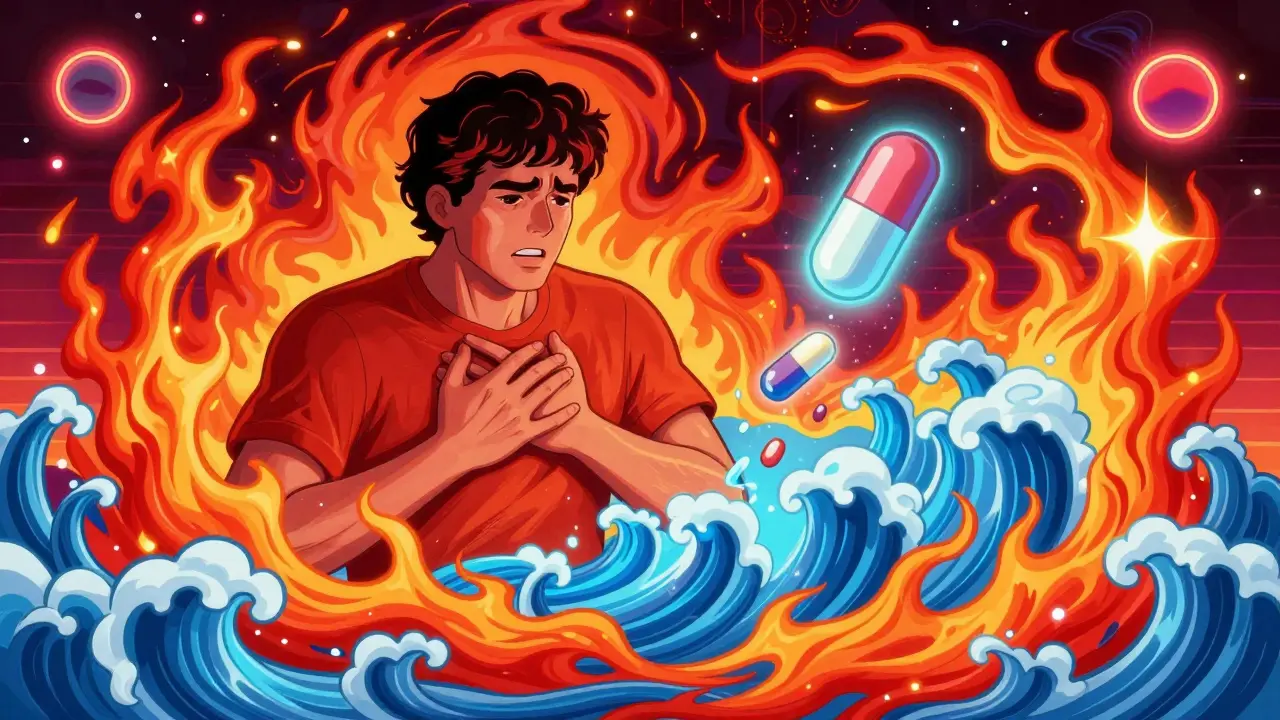
For many people, a corticosteroid prescription feels like a miracle. One day you’re in pain, swollen, struggling to breathe or move - the next, you feel like yourself again. That’s the power of corticosteroids. They work fast. Sometimes in under 24 hours. But here’s the catch: what helps you today might hurt you tomorrow. And the longer you take them, the more the risks stack up.
How Corticosteroids Work - And Why They’re So Fast
Corticosteroids are synthetic versions of cortisol, the hormone your adrenal glands make naturally. They don’t just reduce pain - they shut down inflammation at the source. That’s why they’re so effective for sudden flare-ups: lupus, rheumatoid arthritis, asthma attacks, severe allergies, even a bad case of poison ivy. Unlike NSAIDs or DMARDs, which can take weeks to kick in, corticosteroids like prednisone or methylprednisolone often bring relief within a day or two. For someone in acute distress, that’s life-changing.
They come in many forms: pills, injections into joints or muscles, inhalers, creams, even eye drops. Oral pills are the most common - about 68% of all prescriptions. A single cortisone shot into a painful knee can ease symptoms for weeks or months. But none of these forms are harmless. The same mechanism that reduces swelling also disrupts your body’s natural balance.
The Short-Term Payoff: Real Relief, Real Fast
When used correctly for a short time, corticosteroids are hard to beat. A 2019 study in the New England Journal of Medicine found that patients with severe asthma who got a short steroid course spent 1.8 fewer days in the hospital. For someone with a peritonsillar abscess, steroids cut the chance of needing surgery by 27%. In rheumatoid arthritis, a 10-day course of prednisone can drop disease activity scores by more than 2 points - faster than any other treatment.
Real people confirm this. One Reddit user, u/RheumWarrior, wrote in June 2023: “Prednisone 20mg saved me from hospitalization during my lupus flare. Within 48 hours, my fever broke and joint swelling dropped by 70%.” That’s the kind of story that keeps doctors prescribing them. When you’re drowning in pain or inflammation, steroids are the life raft.
The Long-Term Toll: What Happens When You Stay on Them
But what happens after the flare is over? If you keep taking them - even at low doses - your body starts to pay the price. The side effects aren’t rare. They’re predictable. And they’re serious.
Within just a few weeks, weight gain is almost guaranteed. The Steroid Recovery Project’s 2023 survey of 1,200 users found 87% gained an average of 12.4 pounds in eight weeks. That’s not just a few extra pounds - it’s fluid retention, fat redistribution (think “moon face” and a buffalo hump), and increased appetite. Many patients say they look different, feel uncomfortable, and struggle with body image.
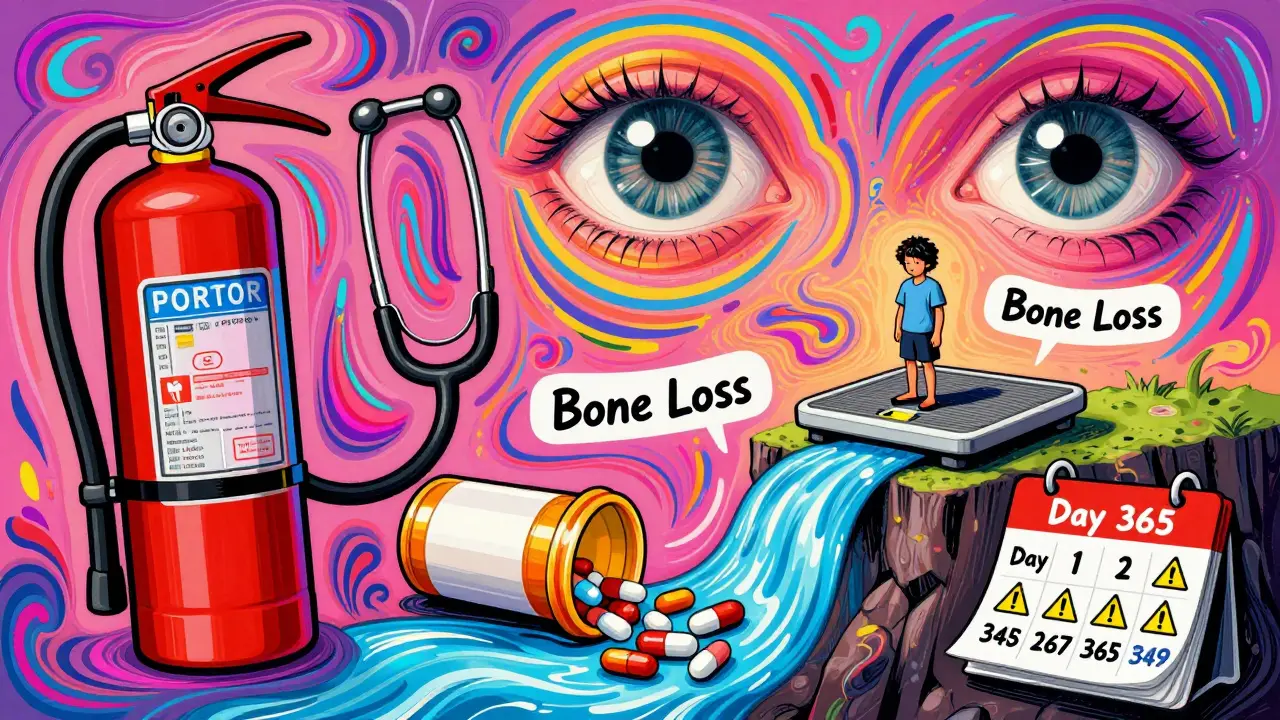
Bone loss starts fast, too. One study showed that in the first six months of steroid use, people lose 3-5% of their bone density every month. That’s why doctors now recommend a DEXA scan before starting any course longer than three months. Osteoporosis isn’t just a risk - it’s a near-certainty if you’re on steroids for over a year. And once bone is gone, it doesn’t come back.
Then there’s blood sugar. Corticosteroids make your liver pump out more glucose and block insulin from working properly. About 41% of users develop elevated blood sugar, and 7% end up with steroid-induced diabetes - even if they never had it before. Some never fully recover.
And the infections? They’re scary. A 2020 analysis of 1.5 million patients showed that even a short 30-day course of steroids increased the risk of sepsis by 430% and blood clots by 230%. Pneumonia risk jumps 15% in COPD patients on steroids. That’s not a small bump. That’s a red flag.

Who’s Getting Them - And Why They Shouldn’t Be
Here’s the uncomfortable truth: a lot of people are getting corticosteroids for conditions they don’t help. The American Academy of Family Physicians found that nearly half of all steroid prescriptions - 47% - are for things like the common cold, acute bronchitis, or nonspecific back pain. These are viral illnesses. Steroids don’t kill viruses. They just weaken your immune system while you’re sick.
Dr. Robert Simon of NYU Langone called this a “quality-of-care failure.” In 2021, he pointed out that 21% of U.S. adults received steroids for upper respiratory infections - even though studies show zero benefit. And it’s costing the system $1.2 billion a year in avoidable hospitalizations, infections, and diabetes treatments.
Older adults are hit hardest. People over 65 get steroid prescriptions 2.3 times more often than those under 45. Rural patients get inappropriate prescriptions 1.7 times more often than city dwellers. That’s not just a medical issue - it’s a systemic one.
How to Use Them Safely - If You Must
If your doctor recommends corticosteroids, ask these questions:
- Is this the right diagnosis? (Not every ache or cough needs steroids.)
- What’s the shortest possible course? (Ideally under two weeks.)
- Is there a non-steroid alternative? (Like physical therapy, biologics, or targeted DMARDs?)
- Will I need monitoring? (Blood sugar, bone density, eye exams?)
- How will I stop? (Never quit cold turkey.)
If you’re on steroids for more than 14 days, you must taper off slowly. Stopping suddenly can crash your adrenal system - leading to fatigue, nausea, low blood pressure, even death. Your body stops making cortisol because it thinks it’s getting it from the pill. When you pull the plug, it’s like turning off a faucet that’s been running for weeks. Your body doesn’t know how to turn it back on.
For anyone on more than 7.5mg of prednisone daily for over three months, guidelines say you need:
- Calcium 1200mg and vitamin D 800IU daily
- Annual zoledronic acid infusion to protect bones
- Monthly blood sugar checks
- Quarterly eye exams for cataracts and glaucoma
Yet, a 2022 JAMA audit found only 42% of primary care doctors follow all these steps. That means more than half of patients are being put at risk without protection.
New Hope: Safer Alternatives Are Coming
There’s good news on the horizon. In December 2023, the FDA approved the first selective glucocorticoid receptor modulator (SGRM) - fosdagrocorat. Unlike traditional steroids, it targets inflammation without triggering as many metabolic side effects. In trials, it caused 63% less high blood sugar than prednisone at the same anti-inflammatory dose.
Hospitals are also getting smarter. Since January 2024, Medicare Advantage plans require pre-authorization for any steroid course longer than 10 days. Electronic health records now flag inappropriate prescriptions in 87% of U.S. hospitals. Early results show a 31% drop in misuse.
And the medical community is finally speaking up. The European League Against Rheumatism now says: “No patient should receive continuous systemic steroids beyond six months without failing at least two advanced biologic therapies.” That’s a big shift. Steroids are no longer seen as a default - they’re seen as a last resort.
What to Do If You’ve Been on Steroids Too Long
If you’ve been on corticosteroids for more than three months, don’t panic - but do act. Talk to your doctor about:
- Getting a DEXA scan to check bone density
- Testing your fasting blood sugar and HbA1c
- Seeing an ophthalmologist for eye damage
- Creating a taper plan - even if you feel fine
- Exploring non-steroid options like biologics, DMARDs, or physical therapy
Some damage - like cataracts or bone fractures - is permanent. But catching it early can stop it from getting worse. And stopping steroids safely can reverse many side effects: weight gain, mood swings, and high blood sugar often improve within months.
The Bottom Line
Corticosteroids aren’t evil. They’re powerful tools - like a fire extinguisher. You don’t want to leave it running. You don’t want to use it for a candle. But when the building is on fire, you grab it without hesitation.
Use them for the right reason. For the shortest time. With the right monitoring. And never assume they’re safe just because they’re common. Millions of people have benefited. Millions more have suffered avoidable harm.
The goal isn’t to avoid steroids forever. It’s to use them wisely - so they heal you without breaking you.
Can I stop taking prednisone if I feel better?
No. Even if you feel fine, stopping suddenly can trigger adrenal insufficiency - a life-threatening condition where your body can’t make enough cortisol. Always taper off under medical supervision, especially after more than two weeks of use. Your doctor will create a slow reduction plan to let your adrenal glands recover.
Do steroid injections cause the same side effects as pills?
Less so - but not zero. A single joint injection delivers steroids locally, so systemic side effects are rare. But if you get multiple injections over time, or if the medication leaks into your bloodstream, you can still develop weight gain, high blood sugar, or bone loss. Limit injections to 3-4 per year in the same joint, and avoid them if you have diabetes or osteoporosis.
Are corticosteroids safe for older adults?
They’re riskier. Older adults metabolize steroids slower and are more prone to bone fractures, high blood pressure, and infections. The American College of Rheumatology recommends the lowest possible dose for the shortest time. Always check bone density and blood sugar before and during treatment. Many seniors can avoid steroids entirely with physical therapy, NSAIDs, or targeted biologics.
Can corticosteroids cause permanent damage?
Yes. Long-term use can lead to irreversible changes: cataracts, osteoporosis with fractures, type 2 diabetes, and muscle wasting. The longer you’re on them - especially beyond 6 months - the higher the risk. That’s why guidelines now say: if you’re still on steroids after six months, your doctor should have tried at least two other advanced treatments first.
What are the signs I’m getting too many side effects?
Watch for: rapid weight gain (especially around the face and belly), extreme thirst or frequent urination (signs of high blood sugar), blurred vision, bone pain, easy bruising, mood swings, or trouble sleeping. If you notice any of these, contact your doctor immediately. Early detection can prevent serious complications.
Are there natural alternatives to corticosteroids?
There’s no natural remedy that matches the speed or strength of steroids. But for chronic inflammation, options like fish oil, turmeric (curcumin), low-dose naltrexone, and physical therapy can help reduce reliance on steroids. They won’t stop a sudden flare - but they can help manage long-term inflammation with far fewer risks.
Matt Davies
December 21, 2025 AT 05:01Man, this post hit different. I was on prednisone for 6 weeks after a bad asthma flare and felt like a superhero… until I looked in the mirror. Moon face? Check. Buffalo hump? Oh yeah. I cried in the grocery store because I didn’t recognize myself. But I’d do it again if my lungs were shutting down. Steroids are the devil’s magic trick - works like hell, leaves you broken. Still, I’m alive. That’s something.
Isabel Rábago
December 21, 2025 AT 23:46It’s insane how many doctors still prescribe this like it’s Advil. My uncle got a 30-day course for a ‘bad cold’ - he got diabetic, gained 30 pounds, and now has a vertebral fracture. This isn’t medicine. It’s medical negligence dressed up in white coats. If your provider can’t explain why steroids are necessary - walk out. There are safer ways. We’re not helpless.
Moses Odumbe
December 22, 2025 AT 07:08Y’all need to chill. 🙃 Steroids aren’t the enemy - ignorance is. I’ve had 12 joint injections over 5 years. No weight gain. No diabetes. Just less pain. And guess what? I’m still hiking. The problem isn’t the drug - it’s the people who don’t taper, don’t monitor, and don’t listen. 📉💊 #SteroidsAreToolsNotTerrorists
Dev Sawner
December 23, 2025 AT 07:28The statistical evidence presented in this article is methodologically sound and aligns with current clinical guidelines as articulated by the American College of Rheumatology and the European League Against Rheumatism. The 47% rate of inappropriate prescribing represents a systemic failure in primary care education and incentivized diagnostic shortcuts. Moreover, the absence of mandatory DEXA screening in 58% of cases constitutes a breach of standard-of-care protocols under CMS guidelines. This is not a medical issue - it is a public health crisis rooted in administrative apathy.
Elaine Douglass
December 23, 2025 AT 09:04mark shortus
December 25, 2025 AT 08:50THEY’RE TURNING US INTO PUMPKINS. 🎃 I looked in the mirror and screamed. I looked like a cartoon villain. My skin was paper-thin. I bruised from a FLEA BITE. I was crying in the shower because I couldn’t tie my shoes. And my doctor said ‘it’s just side effects.’ JUST SIDE EFFECTS?!?! This isn’t medicine - it’s torture with a prescription pad. I’m 32. I have the bones of an 80-year-old. And I’m still paying for it. #SteroidTrauma
Mike Rengifo
December 26, 2025 AT 18:58I’ve been on low-dose prednisone for 18 months for RA. It’s not perfect. I gained weight, I’m on calcium and vitamin D, I get my eyes checked every 3 months. But I can hold my kid. I can walk to the mailbox. I’d take the side effects over being trapped in my own body any day. It’s not a cure. But it’s a bridge. And if you’re lucky, you get to walk across it with your eyes open - and your doctor on your side.
Emily P
December 26, 2025 AT 21:12Does anyone know if the new SGRM drug (fosdagrocorat) is available outside clinical trials yet? I’m in a rural area and my doctor hasn’t heard of it. Is it covered by insurance? Or is it still locked in academic hospitals?
bhushan telavane
December 28, 2025 AT 15:58In India, steroids are sold over the counter at every pharmacy. No prescription. No warning. People take them for fever, for headaches, for ‘body pain.’ I’ve seen grandmas on prednisone for 3 years. No monitoring. No tapering. No idea what’s happening to them. This isn’t just an American problem. It’s global. And it’s deadly.
Takeysha Turnquest
December 29, 2025 AT 13:33Life is a series of trade-offs. Pain or peace. Freedom or fragility. The body is a temple but also a machine - and machines break when you force them. Steroids don’t heal. They silence. And silence has a cost. But sometimes… silence is the only way to hear your own heartbeat again.
So we take them.
And we pay.
And we keep living.
That’s the price of being human.