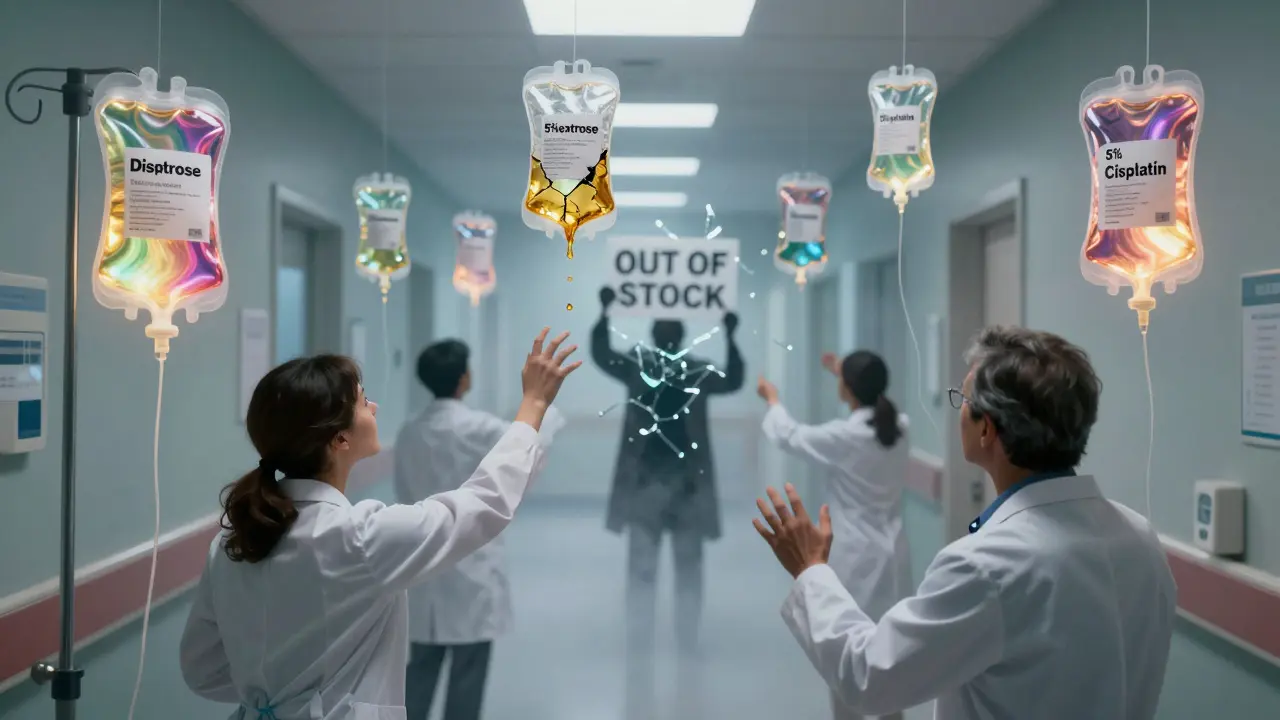
Right now, if you or someone you know relies on a common medication like cisplatin, saline IV bags, or even ADHD pills, you might be facing delays, substitutions, or worse - no medication at all. As of January 2026, more than 270 drugs remain in short supply across the U.S., and many of these aren’t obscure niche drugs. They’re the ones hospitals and clinics depend on every single day. This isn’t a temporary hiccup. It’s a systemic breakdown that’s been building for years - and it’s hitting patients hardest right now.
What’s Actually in Short Supply?
The drugs most affected aren’t the fancy brand-name ones. They’re the generics: cheap, essential, and made overseas. The biggest shortages are in sterile injectables - things you get through an IV. These include:- 5% Dextrose Injection (small bags) - used to hydrate patients, deliver other drugs, and treat low blood sugar. Shortage started in February 2022, expected to last until August 2025.
- 50% Dextrose Injection - critical for emergency hypoglycemia. Shortage since December 2021, resolution expected September 2025.
- Cisplatin - a backbone chemotherapy drug for testicular, ovarian, and lung cancers. Production halted after a 2022 FDA inspection found quality failures at an Indian plant that supplied half of U.S. demand.
- Vancomycin - a last-resort antibiotic for serious infections. Shortages have stretched into 2026 due to raw material delays.
- Levothyroxine - the most common thyroid medication. Demand jumped 30% since 2020, outpacing supply.
- Glucagon - used to treat severe low blood sugar in diabetics. Shortages hit hard in late 2024 and haven’t fully recovered.
It’s not just cancer or diabetes drugs. Even basic fluids like normal saline are tight. Hospitals have had to ration IV bags, using smaller volumes or switching to oral rehydration when possible. For patients in dialysis, chemotherapy, or intensive care, these aren’t inconveniences - they’re life-or-death delays.
Why Are These Drugs So Hard to Find?
Most people think drug shortages happen because of bad weather or truck strikes. The real problem is deeper. Over 80% of the raw ingredients for U.S. medications come from just two countries: India and China. That’s not just a supply chain risk - it’s a national vulnerability.Indian manufacturers produce about 45% of the active ingredients in U.S. drugs. Chinese suppliers make up another 25%. When one factory fails an FDA inspection - like the one that made cisplatin - production stops. No backup. No quick fix. And because these drugs are cheap generics, manufacturers don’t invest in extra capacity. Why make more if the profit margin is only 5-8%?
Brand-name drugs, on the other hand, often have higher margins (30-40%) and sometimes make ingredients domestically. That’s why you rarely hear about shortages for drugs like Ozempic or Humira. But when a generic chemotherapy drug or antibiotic goes missing, there’s no rich company stepping in to fill the gap.
On top of that, demand has exploded. GLP-1 weight loss drugs like Wegovy and Ozempic are now prescribed for diabetes, obesity, and even PCOS. ADHD prescriptions have climbed 35% since 2020. These surges weren’t planned for. Factories didn’t scale up. Now, they’re playing catch-up - and losing.
How Are Doctors and Pharmacies Coping?
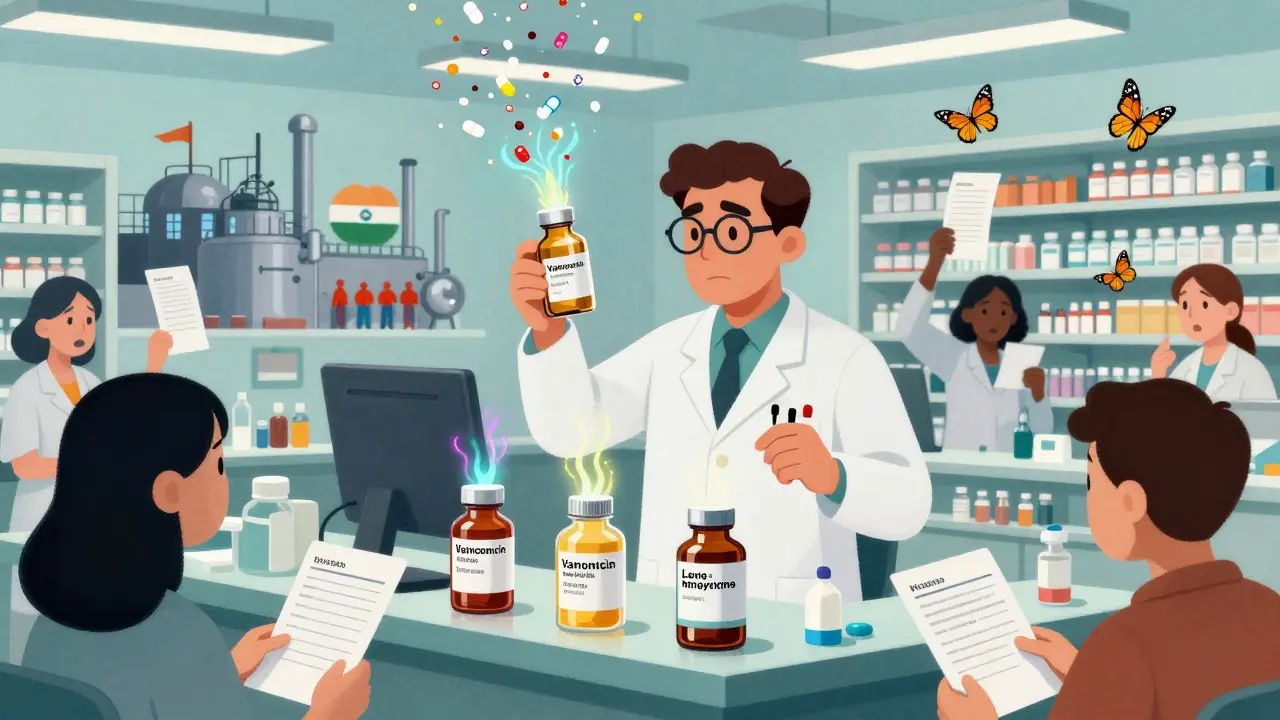
Healthcare workers are stretched thin. A 2024 AMA survey found that 78% of physicians have delayed treatments because of drug shortages. Nearly half had to switch patients to less effective or more expensive alternatives.Pharmacists are spending over 10 hours a week just tracking down drugs. One pharmacist in Ohio told Reddit that her hospital now prioritizes cisplatin for testicular cancer patients - the group where it’s most effective - while others get alternative regimens that are harder on the body and less proven.
Substitutions are happening, but they’re risky. In 67% of hospitals, medication errors have been directly linked to switching drugs during shortages. A nurse might grab the wrong vial. A doctor might not know the substitute’s side effects. A patient might not realize their new drug interacts with their other meds.
Some states are trying to fix this. New York is building an online map showing which pharmacies still have scarce drugs. Hawaii now allows Medicaid to use foreign-approved versions of drugs if U.S. supplies run out. But most hospitals still don’t keep even a 30-day backup stock - because it’s too expensive.
What’s Being Done - and Why It’s Not Enough
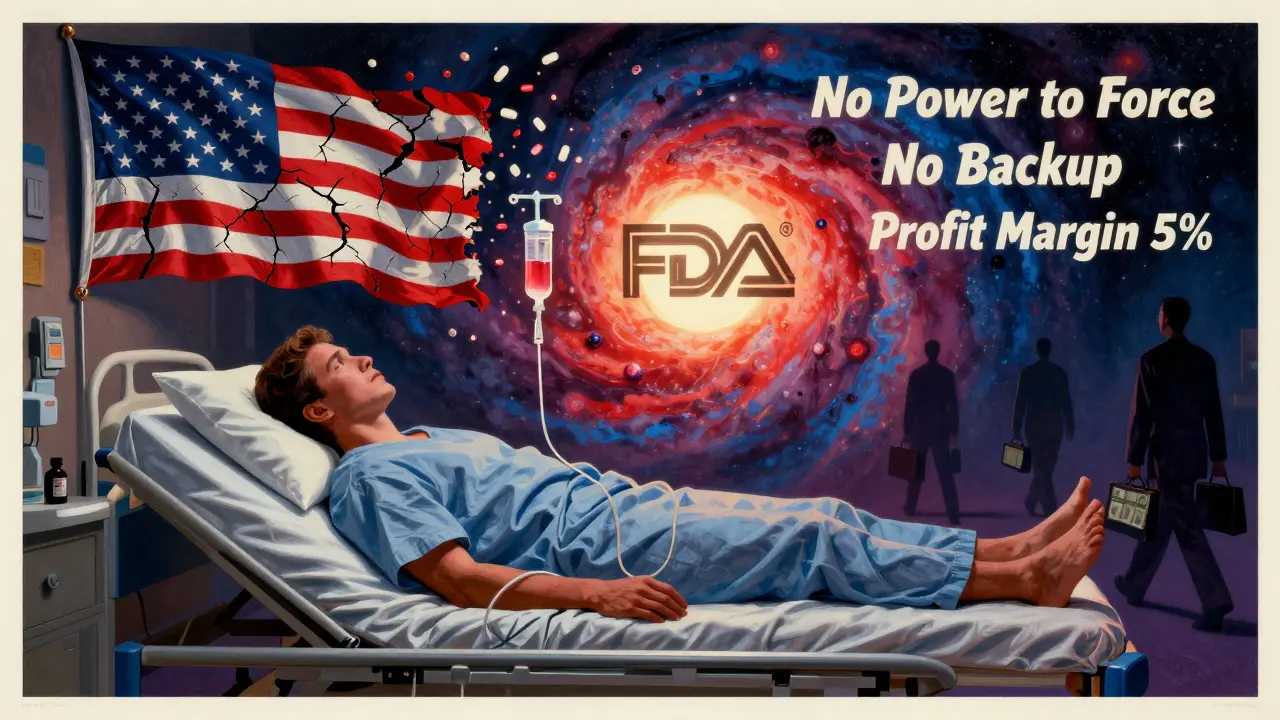
The FDA says it stops about 200 potential shortages every year by stepping in early. That sounds good - until you realize they have no power to force companies to make more. They can’t require factories to fix problems faster. They can’t tell manufacturers to ramp up production. All they can do is ask.In January 2025, the FDA launched a new portal where doctors and pharmacists can report shortages not yet listed. In just three months, they got over 1,200 reports - 87% of which led to FDA action. That’s progress. But it’s reactive, not preventive.
Two bills are in Congress to fix this: the Drug Shortage Prevention Act and the End Drug Shortages Act. They’d require manufacturers to report supply issues earlier, define what counts as a “demand surge,” and give the FDA more tools. But neither has passed. Meanwhile, proposed tariffs of 50-200% on Chinese and Indian pharmaceutical ingredients could make everything worse - raising costs and cutting supply even further.
What This Means for You
If you’re on a generic drug - especially an injectable, a chemotherapy agent, or a hormone - don’t wait until your prescription runs out. Talk to your doctor now. Ask:- Is this drug currently in shortage?
- Is there a therapeutically equivalent alternative?
- Can we adjust the dose or frequency to stretch what we have?
- Should I call my pharmacy ahead of time to check stock?
Don’t assume your pharmacy has it. Call them. Ask if they’re on a waiting list. If you’re on Medicare or Medicaid, ask if they can help you get access to an alternative drug approved under emergency rules.
And if you’re a caregiver for someone with cancer, diabetes, or a chronic condition - keep a list of their medications, dosages, and alternatives. Share it with your pharmacist. Keep extra copies at home. In a shortage, every bit of information matters.
What’s Next?
The Congressional Budget Office predicts drug shortages will stay above 250 through 2027. Without major changes - like financial incentives to make ingredients in the U.S., mandatory stockpiles of critical drugs, or a national early-warning system - this won’t get better. It might get worse.For now, the system is patching holes with duct tape. Hospitals are rationing. Pharmacies are scrambling. Patients are waiting. And the drugs that keep people alive - the ones we all assume will always be there - are disappearing.
It’s not a glitch. It’s a design flaw. And until the system changes, the people who need these drugs the most will keep paying the price.
What are the most common drugs in shortage right now?
As of early 2026, the most common shortages include sterile injectables like 5% and 50% Dextrose, cisplatin (a key chemotherapy drug), vancomycin (an antibiotic), levothyroxine (for thyroid conditions), and glucagon (for severe low blood sugar). These are all generics with low profit margins and overseas manufacturing, making them vulnerable to supply chain issues.
Why are generic drugs more likely to be in shortage than brand-name drugs?
Generic drugs make up 90% of prescriptions but only 20% of pharmaceutical revenue. Manufacturers earn just 5-8% profit margins on them, so they don’t invest in backup production, extra inventory, or domestic facilities. Brand-name drugs, with 30-40% margins, can afford to maintain multiple suppliers and domestic manufacturing, making them less likely to run out.
Can pharmacists substitute a different drug if mine is out of stock?
In 47 states, pharmacists can substitute a therapeutically equivalent generic drug during a shortage. But only 19 states allow substitutions without a doctor’s approval. Even then, substitutions aren’t always safe - some alternatives have different side effects or dosing needs. Always check with your doctor before accepting a substitute.
Is there a website where I can check if my medication is in shortage?
Yes. The American Society of Health-System Pharmacists (ASHP) maintains a public Drug Shortages Database at ashp.org/drugshortages. It’s updated daily and lists drugs in shortage, expected resolution dates, and alternative recommendations. Many hospitals and pharmacies use this same source to manage their inventory.
Should I stockpile my medication if it’s in shortage?
No. Stockpiling can make shortages worse for others and may lead to expired or ineffective medication. Instead, talk to your doctor and pharmacist about your options. If your drug is in shortage, they can help you find alternatives, adjust your dose, or connect you with programs that prioritize access.
Are there any new laws or policies to fix drug shortages?
Two bills are under consideration: the Drug Shortage Prevention Act and the End Drug Shortages Act. They’d require manufacturers to report supply issues earlier, define demand surges, and give the FDA more authority to intervene. But neither has passed. Some states, like New York and Hawaii, are creating local solutions - like public shortage maps and allowing foreign-approved drugs - but federal action is still needed.