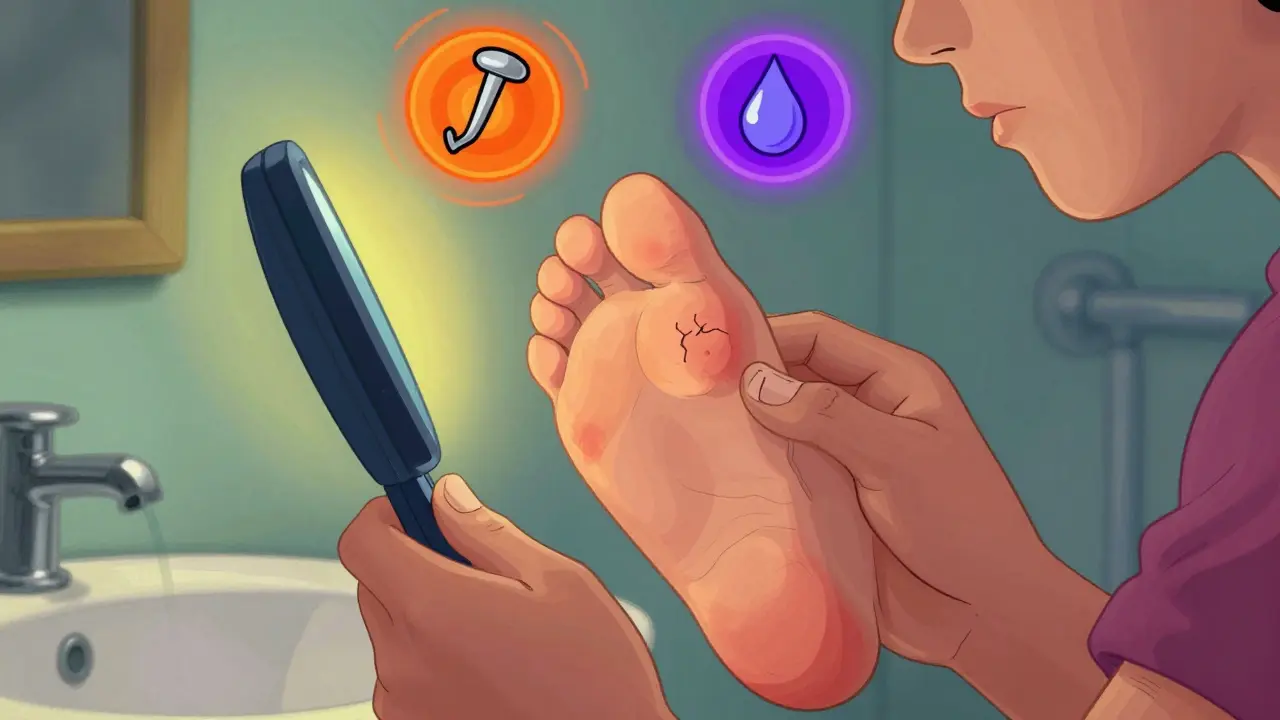
Every year, over 82,000 Americans lose a toe, foot, or leg because of diabetes. Most of these amputations are preventable. The problem doesn’t start with a big wound. It starts with a small cut, a blister, or a patch of red skin that goes unnoticed. If you have diabetes, your feet are at risk - not because they’re weak, but because nerve damage and poor circulation hide the warning signs. The good news? You can stop it before it starts. A daily foot inspection and a few simple habits can keep you walking without fear.
Why Your Feet Are at Risk
Diabetes doesn’t just affect blood sugar. It quietly damages nerves and blood vessels, especially in your feet. Nerve damage, called diabetic neuropathy, means you can’t feel pain, heat, or pressure like you used to. You might step on a nail or rub a toe against your shoe and not know it. At the same time, reduced blood flow makes it harder for cuts to heal. Even a tiny break in the skin can turn into an ulcer - a wound that doesn’t heal and can lead to infection, hospitalization, or worse.
The numbers don’t lie. According to the CDC, 15% to 25% of people with diabetes will develop a foot ulcer at some point. The International Working Group on the Diabetic Foot (IWGDF) says these ulcers cost the U.S. healthcare system over $11 billion a year. And yet, 68% of these ulcers start from injuries that were never noticed. That’s the key: prevention isn’t about fancy treatments. It’s about catching problems early.
The Daily Foot Inspection Checklist
There’s no mystery here. Prevention is routine. It’s not hard - but it must be done every single day. Think of it like brushing your teeth. Skip a day, and nothing seems wrong. Skip a week, and you’re in trouble. Here’s the exact 7-step checklist backed by NYU Langone Health and the CDC:
- Wash your feet daily in lukewarm water (90-95°F). Test the water with your elbow or a thermometer. Hot water can burn you without you feeling it. Use mild soap - no harsh scrubs or antibacterial soaps that dry out skin.
- Dry thoroughly, especially between your toes. Moisture trapped there invites fungus, which can crack skin and open the door to infection.
- Inspect every surface of both feet. Use a hand mirror or ask someone to help. Look at the soles, tops, heels, and between toes. Don’t skip the sides. Ulcers often start where pressure builds - under the ball of the foot or around the big toe.
- Look for specific warning signs: blisters larger than 3mm, cuts deeper than 1mm, redness bigger than a dime, swelling that makes your shoe feel tight, or skin that feels warmer than the other foot. Any of these need attention within 24 hours.
- Apply moisturizer to dry skin - but never between the toes. Dry skin cracks. Cracks get infected. Use a fragrance-free cream like petroleum jelly or urea-based lotion. Avoid alcohol-based products.
- Trim nails straight across, leaving 1-2mm of white nail beyond the skin. Don’t round the edges. Don’t cut into the corners. Ingrown toenails are a common cause of foot ulcers. If your nails are thick or hard, see a podiatrist - don’t try to file them yourself.
- Do it at the same time every day. The CDC recommends checking between 10 a.m. and 2 p.m., when your body temperature is most stable. Checking in the morning or right before bed? You might miss subtle changes.
Studies show that 92% of plantar ulcers develop under the metatarsal heads - the bones just behind your toes. That’s where pressure builds when you walk. Make sure you spend extra time inspecting this area. Use your finger to feel for any lumps, calluses, or warmth.
Footwear: The Hidden Danger
Your shoes are either your best defense or your biggest threat. The IWGDF says 87% of forefoot ulcers and 79% of midfoot ulcers come from shoes that don’t fit right. It’s not about brand or price. It’s about fit and function.
Here’s what matters:
- Never walk barefoot - not even indoors. The CDC found walking barefoot for just 5 minutes a day increases ulcer risk 11.3 times.
- Your shoe should have 0.5 inches (12.7 mm) of space between your longest toe and the tip. That’s about the width of your thumb.
- Your foot should have room to spread. If your toes are squished, you’re asking for pressure sores.
- Heel counters should be firm, not floppy. A simple test: squeeze the back of the shoe. If it collapses easily, it won’t support your foot.
- For moderate-to-high-risk patients (those with deformities, past ulcers, or poor circulation), therapeutic shoes with pressure-reducing insoles are not optional. They’re required.
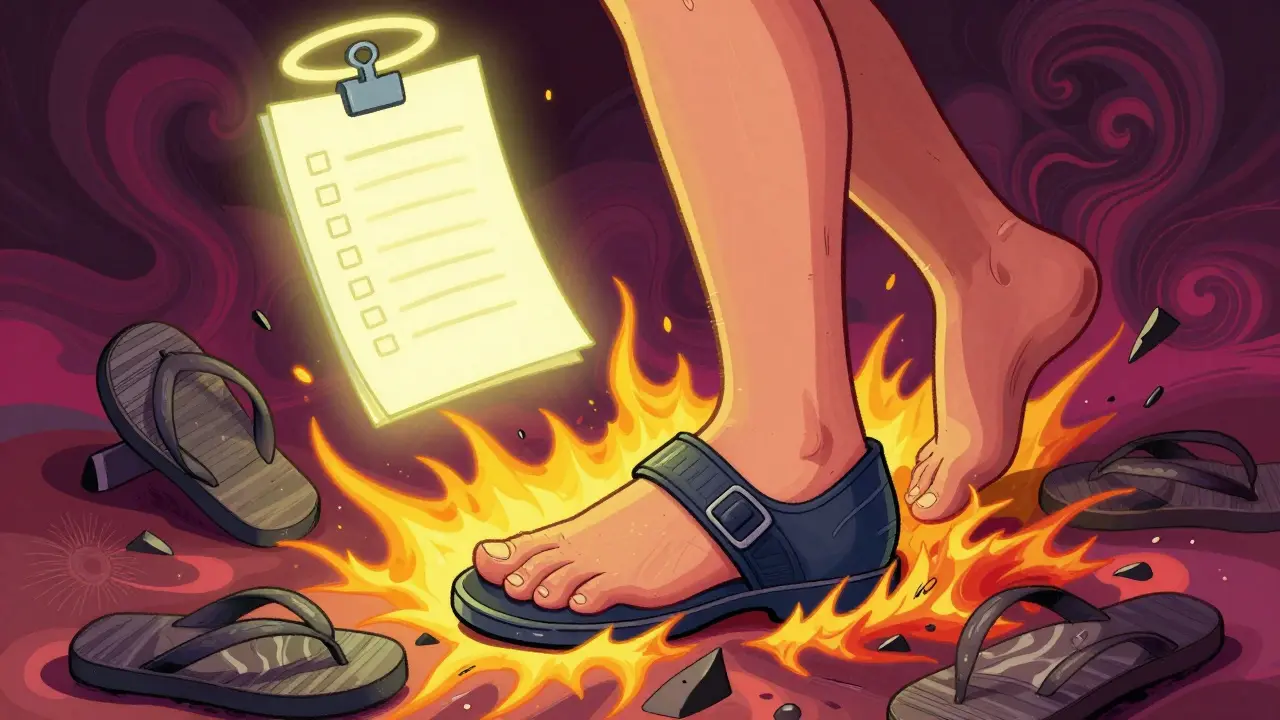
Summer is a trap. When temperatures hit 89°F, many people switch to sandals. But open shoes expose skin, increase friction, and don’t protect against pressure. A 2022 University of Michigan study found sandals increase ulcer risk by 4.3 times. Stick to closed-toe, cushioned shoes - even in heat.
Who Needs Extra Care?
Not everyone with diabetes has the same risk. The IWGDF classifies risk into four levels:
- Risk 0: No nerve damage, no past ulcers. Annual check-up is enough.
- Risk 1: Nerve damage, but no foot deformities or past wounds. Check every 6 months.
- Risk 2: Nerve damage plus foot deformities (like bunions, hammertoes, or flat feet). Check every 3 months.
- Risk 3: History of ulcer, amputation, or poor circulation. Check monthly - or more often if advised.
How do you know your risk? Your doctor should test you with a 10g monofilament - a thin nylon wire that touches your foot to see if you feel pressure. They should also check your ankle-brachial index (ABI), which measures blood flow. If your ABI is below 0.9, you need a vascular specialist. If it’s below 0.5, you’re at urgent risk for tissue death.
What Doesn’t Work
There’s a lot of noise out there. Here’s what science says doesn’t help - and might even hurt:
- Antibiotics for uninfected wounds. The IDSA says giving antibiotics to prevent infection in a clean ulcer does nothing. It just increases antibiotic resistance. Save them for real infections.
- Nerve decompression surgery. Some clinics still offer this to “fix” nerve damage. Nine randomized trials show it doesn’t prevent ulcers. Avoid it.
- Unsupervised foot exercises. A 2022 study found unsupervised ankle exercises increased ulcer risk by 22%. If you want to move your feet, walk - not twist or stretch without professional guidance.
- Home remedies. Honey, tea tree oil, vinegar soaks - they sound natural, but they can irritate skin or delay healing. Stick to doctor-approved products.
Barriers to Success
Even with perfect advice, many people struggle. The CDC found only 38.7% of doctors do full foot exams every year. And only 42.1% of patients check their feet daily. Why?
- Vision problems make it hard to see the bottom of your feet.
- Neuropathy makes it hard to remember routines.
- Cost: Therapeutic shoes cost $300-$800. Insurance doesn’t always cover them.
- Access: Rural areas lack podiatrists. Medicaid patients are 28.7% less likely to get proper care.
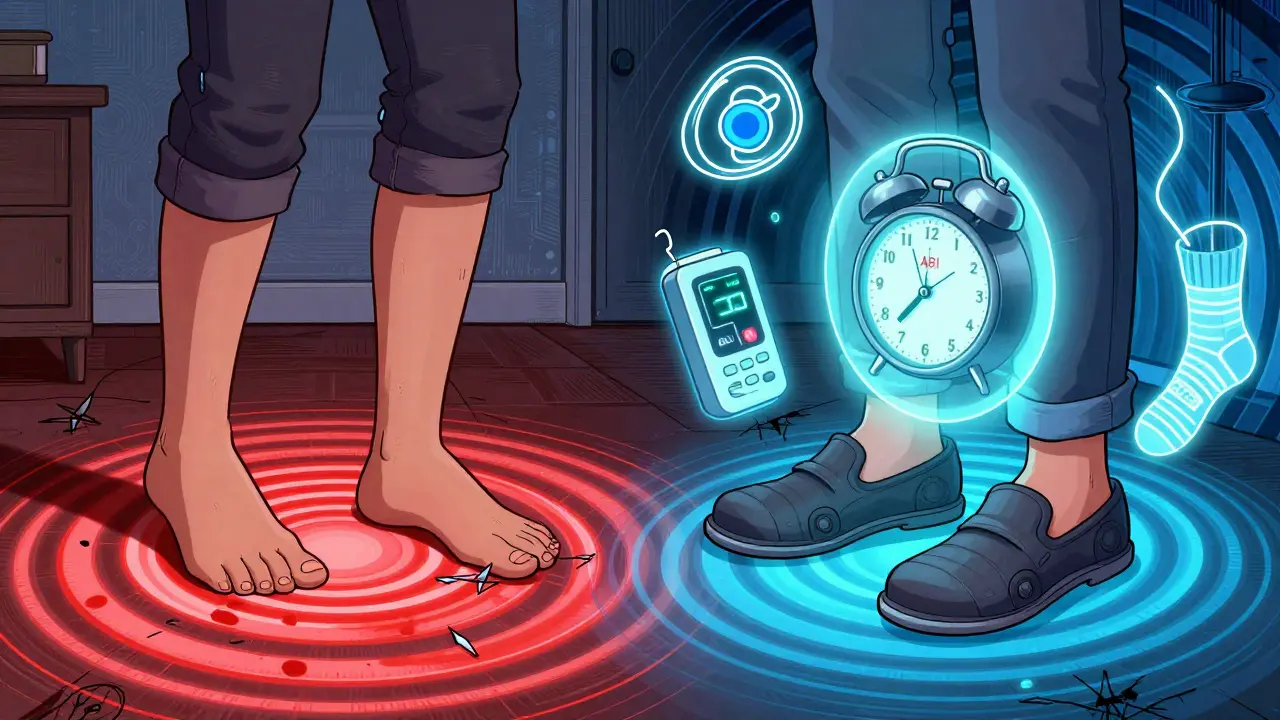
If you’re struggling, ask for help. Ask a family member to check your feet. Use a mirror taped to the floor. Set a daily phone alarm. Talk to your doctor about foot care programs. Medicare and Medicaid now cover therapeutic shoes for high-risk patients - if you ask.
The Future Is Here - But It’s Not for Everyone
New tools are emerging. Smart socks that monitor temperature. Insoles that send alerts when pressure builds. AI apps that scan your foot with your phone camera. These work. The D-FOOT trial found temperature changes predict ulcers 4-7 days before they form - with 73% accuracy.
But here’s the catch: Podimetrics Smart Mat costs $299 upfront plus $99/month. Siren Socks are $149/pair. And 68.3% of Medicaid patients can’t afford them. AI apps need fast internet - which 22 million rural Americans don’t have. These tools are promising, but they’re not replacements for the basics: daily inspection, proper shoes, and regular check-ups.
What You Can Do Today
You don’t need a clinic or a device. You need consistency.
- Set a daily alarm: “Check feet.”
- Keep a mirror by your bed or bathroom.
- Buy shoes that fit - not just look good.
- Call your podiatrist if you see redness, swelling, or a cut that won’t heal in 24 hours.
- Ask your doctor for a risk assessment - and write down your level.
Every day you skip inspection, you’re gambling. But every day you check, you’re taking control. You’re not just preventing a wound. You’re protecting your independence, your mobility, your life. This isn’t about being careful. It’s about being smart.
How often should I inspect my feet if I have diabetes?
You should inspect your feet every single day. This isn’t optional - it’s your first line of defense. The CDC says 68% of foot ulcers start from injuries that were never noticed. Daily checks catch problems before they become emergencies. If you have nerve damage or a history of ulcers, don’t skip a day. Use a mirror or ask someone to help if you can’t see the bottom of your feet.
What should I look for during a daily foot inspection?
Look for blisters larger than 3mm, cuts deeper than 1mm, redness bigger than a dime, swelling that makes your shoe feel tight, or skin that feels warmer than the other foot. Also check for dry, cracked skin, calluses, ingrown toenails, and any changes in color or texture. Pay special attention to the ball of your foot, heels, and between your toes - these are the most common ulcer sites. If you notice any of these signs, contact your doctor within 24 hours.
Can I use moisturizer on my feet if I have diabetes?
Yes - but only on dry areas like heels and tops of feet. Never apply moisturizer between your toes. Moisture trapped there creates a perfect environment for fungus, which can lead to cracks and infection. Use fragrance-free creams like petroleum jelly or urea-based lotions. Avoid alcohol-based products, which dry skin further. Keeping skin soft prevents cracking, which is a major entry point for bacteria.
Do I need special shoes if I have diabetes?
If you have nerve damage, foot deformities, a history of ulcers, or poor circulation, yes - therapeutic shoes are essential. These shoes are designed to reduce pressure on high-risk areas of your foot. Even if you’re low-risk, avoid flip-flops, sandals, or shoes with thin soles. Your shoe should have 0.5 inches of space between your longest toe and the tip, room for your toes to spread, and a firm heel counter. Medicare and Medicaid cover these shoes for high-risk patients - ask your doctor for a prescription.
Is it safe to walk barefoot at home if I have diabetes?
No. Walking barefoot - even indoors - increases your risk of foot ulcers by 11.3 times, according to the CDC. You might not feel a sharp object, a hot floor, or a rough edge. Always wear closed-toe shoes or slippers with good soles inside your home. This simple step alone can prevent most preventable injuries.
Can I trim my own toenails?
You can - but only if you do it correctly. Trim nails straight across, leaving 1-2mm of white nail beyond the skin. Never cut into the corners or round the edges - that can cause ingrown toenails, a leading cause of foot ulcers. If your nails are thick, yellow, or hard to reach, see a podiatrist. They’re trained to handle diabetic nails safely. Don’t use sharp tools like nail clippers if you have poor vision or numbness - ask for help.
What should I do if I find a cut or blister on my foot?
Clean it gently with mild soap and water. Pat dry. Cover with a sterile bandage. Do not use hydrogen peroxide, alcohol, or iodine - they damage healing tissue. Do not pop blisters. Monitor for signs of infection: increasing redness, swelling, warmth, pus, or odor. If the wound doesn’t improve in 24 hours - or if you notice any infection signs - call your doctor immediately. Delaying care even one day can turn a small cut into a serious ulcer.
Are there any foot care products I should avoid?
Yes. Avoid heating pads, electric blankets, and hot water bottles - you can’t feel burns. Skip foot scrubs, corn removers, and callus shavers - they’re too aggressive. Don’t use home remedies like vinegar soaks, honey, or tea tree oil - they’re unproven and can irritate skin. Avoid tight socks or those with seams that rub. And never use over-the-counter antibiotics on uninfected wounds - they don’t help and can cause resistance. Stick to doctor-recommended products only.
David Robinson
March 19, 2026 AT 01:06Also, stop wearing those damn sandals. Even in 90-degree heat. I did. Got a blister. Took 3 weeks to heal. Just buy one pair of good shoes and stick with them.
Jeremy Van Veelen
March 19, 2026 AT 20:19Therapeutic shoes cost $800? That's a national scandal. Someone's making billions off amputations. Who's profiting? Who's lobbying? This isn't about diabetes. It's about capitalism eating its own.
Laura Gabel
March 20, 2026 AT 09:12jerome Reverdy
March 20, 2026 AT 22:32And the shoe thing? 87% of ulcers from ill-fitting shoes? That's not a medical issue. It's a housing issue. If you're living in a trailer with no climate control, your feet swell. Your shoes don't fit. You can't afford new ones. This isn't about discipline. It's about poverty. We need policy, not posters.
Andrew Mamone
March 22, 2026 AT 12:10Washed feet. Dried between toes. Mirror check. Moisturizer (not between!). Nails straight. Shoes with thumb space. Alarm set for 11 a.m. Every day. No exceptions.
3 months in. Zero issues. It's not hard. It's just... consistent. And honestly? It's kinda meditative. Like brushing your teeth but for your future self.
MALYN RICABLANCA
March 23, 2026 AT 08:23gemeika hernandez
March 24, 2026 AT 15:07Sanjana Rajan
March 25, 2026 AT 22:30Kyle Young
March 26, 2026 AT 10:02cara s
March 26, 2026 AT 16:42Amadi Kenneth
March 27, 2026 AT 09:35Alexander Pitt
March 27, 2026 AT 11:58David Robinson
March 28, 2026 AT 18:04