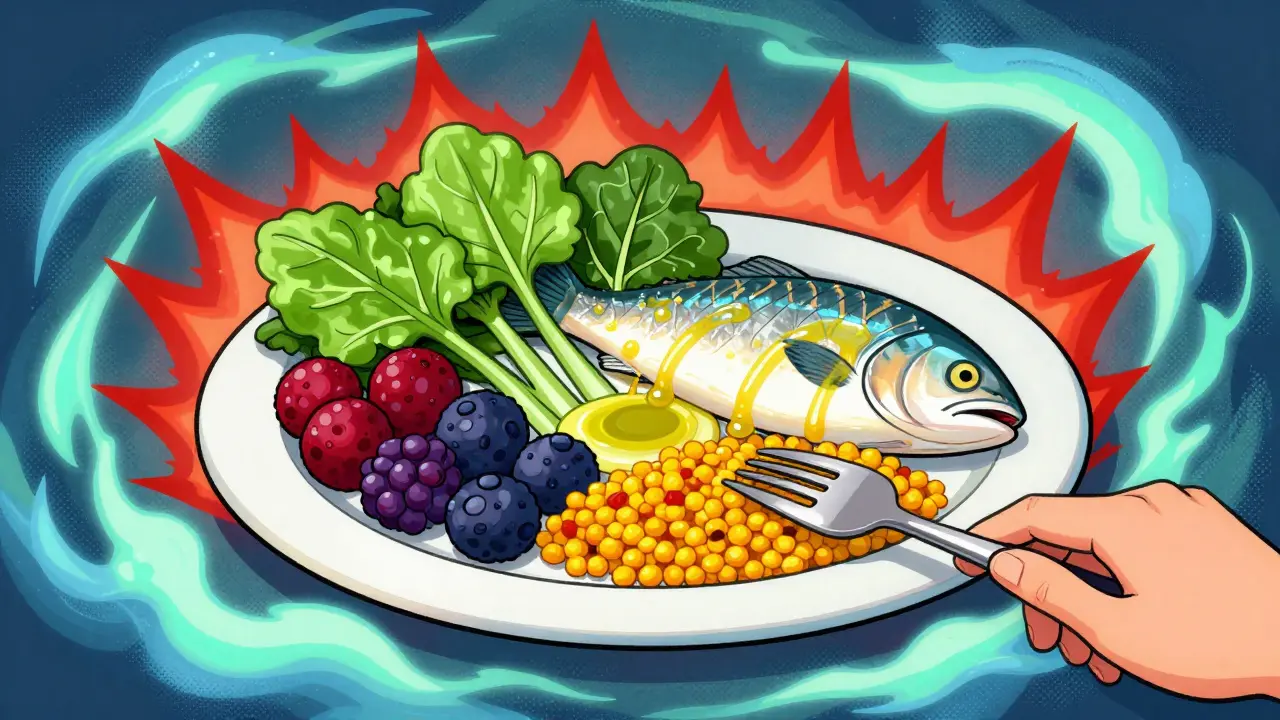
When your immune system turns on your own body, food isn’t just fuel-it becomes a tool. For people living with autoimmune diseases like rheumatoid arthritis, Hashimoto’s thyroiditis, or Crohn’s disease, what’s on the plate can mean the difference between daily pain and moments of relief. This isn’t about miracle cures. It’s about science-backed patterns that help quiet the body’s internal fire. And the evidence is growing.
What Anti-Inflammatory Eating Actually Means
Anti-inflammatory eating isn’t one diet. It’s a group of patterns that share the same goal: reduce chronic inflammation by choosing foods that calm immune overactivity and cutting out ones that fuel it. Think of it like tuning a radio-you’re turning down the static so your body can function better. The most studied of these patterns is the Mediterranean diet. It’s not fancy. It’s simple: lots of vegetables, fruits, whole grains, beans, olive oil, nuts, and fish. One 2021 trial with 2,500 people with rheumatoid arthritis found those following this diet had a 22% drop in disease activity scores and 18% lower levels of CRP, a key marker of inflammation. That’s not small. That’s clinically meaningful. Then there’s the Autoimmune Protocol (AIP) diet. It’s stricter. For 5 to 8 weeks, you cut out grains, legumes, dairy, eggs, nuts, seeds, nightshades (like tomatoes and peppers), coffee, and additives. Then you slowly bring them back one at a time to see what triggers symptoms. People with Hashimoto’s and IBD often report big improvements-up to 70% in observational studies. But here’s the catch: no large randomized trials prove it yet. It works for many, but we don’t yet know why for everyone. The keto diet is getting attention too. A 2023 study from UCSF showed that when mice with a multiple sclerosis-like condition produced higher levels of β-hydroxybutyrate (a ketone made during fasting or low-carb eating), their harmful immune cells calmed down. The mechanism? A gut bacterium started producing indole lactic acid, which blocked those cells. This isn’t just about weight loss-it’s about changing immune signaling at the molecular level. Human trials are still small, but the science is promising. And then there’s plant-based eating. Vegetarian and vegan diets show a 26% drop in CRP levels in people who stick with them for two years or more. Why? More fiber, more antioxidants, less saturated fat. But you need to plan. Without supplements, vitamin B12 deficiency jumps by 300% in long-term vegans. That’s not a risk you can ignore.What to Eat: The Anti-Inflammatory Food List
If you’re trying this, here’s what actually works based on real studies:- Fruits and vegetables: Aim for 7-10 servings a day. Berries (blueberries, strawberries) are packed with anthocyanins-natural compounds that reduce inflammation. Leafy greens like spinach and kale are rich in vitamin K and polyphenols.
- Whole grains: At least 3 servings daily. Oats, brown rice, quinoa. They give you 25-30 grams of fiber, which feeds good gut bacteria that lower IL-6, another inflammatory marker.
- Legumes: Beans, lentils, chickpeas. Eat them 3 times a week. They’re fiber and protein powerhouses with anti-inflammatory polyphenols.
- Fatty fish: Salmon, mackerel, sardines. Two to three servings a week. Each serving should give you 250-500 mg of EPA and DHA. At 2-4 grams daily, omega-3s can reduce pro-inflammatory cytokines by 15-25%.
- Extra virgin olive oil: Use at least 2 tablespoons daily. It’s not just fat-it’s loaded with oleocanthal, a compound that works like ibuprofen to block inflammation pathways.
- Nuts and seeds: Walnuts, flaxseeds, chia seeds. One to two servings a day. They’re rich in alpha-linolenic acid (ALA), another omega-3 that helps.
- Herbs and spices: Turmeric, ginger, garlic, rosemary. Use them generously. Turmeric’s curcumin inhibits NF-κB, a master switch for inflammation.
What to Avoid: The Inflammatory Triggers
These aren’t just “junk food.” They’re active drivers of immune chaos:- Refined sugars: More than 25 grams a day (about 6 teaspoons) spikes inflammation. Soda, candy, even “healthy” granola bars can sneak this in.
- Processed carbs: White bread, pastries, crackers. They break down fast, raising blood sugar and triggering inflammation.
- Trans fats: Found in fried foods and margarine. They raise CRP and damage blood vessels.
- Excess saturated fat: Not all fat is bad, but too much from red meat and full-fat dairy can activate immune cells.
- Ultra-processed foods: Anything with more than five ingredients you can’t pronounce. These are designed to be addictive and inflammatory.
A 2022 meta-analysis showed people eating a Western diet-high in these items-had 30-50% higher CRP levels than those avoiding them. That’s not coincidence. That’s cause and effect.

Comparing the Diets: What Works Best?
| Diet | Strength of Evidence | Key Benefits | Main Challenges | Adherence at 6 Months |
|---|---|---|---|---|
| Mediterranean | Strong | Reduces joint pain, CRP, disease activity | Higher cost ($150-200/week for two adults) | 85% |
| Vegetarian/Vegan | Moderate | 26% lower CRP, improved gut health | Risk of B12 deficiency without supplements | 60% |
| Ketogenic | Preliminary | Reduces T-cell activation, potential for MS | Fatigue during adaptation, hard to sustain | 45% |
| AIP | Observational | 60-70% report symptom relief (Hashimoto’s, IBD) | Socially isolating, complex reintroduction | 40% |
The Mediterranean diet wins for balance: strong evidence, good adherence, and real-world practicality. AIP gives people hope and symptom relief, but it’s not yet proven in large trials. Keto is exciting science, but it’s not ready for prime time as a standard recommendation.
Real People, Real Results
Behind the numbers are real lives. On Reddit’s r/Autoimmune community, 68% of 1,247 respondents said their symptoms improved with anti-inflammatory eating. One person wrote: “After 6 weeks on the Mediterranean diet, my morning stiffness dropped from 2 hours to 30 minutes.” Another said eliminating nightshades cut their psoriatic arthritis pain in half. But it’s not easy. The same survey found 78% struggled with social situations. Family dinners, work lunches, holidays-it all gets hard. And cost matters. These diets can run $50-75 more per week than the average American diet. For people on fixed incomes, that’s a barrier. One woman with Crohn’s disease shared: “I went from monthly flares to one every few months. But I had to quit my job for three months to focus on healing. That’s the hidden cost.”What Experts Say-And Don’t Say
Dr. Frank Hu at Harvard says the Mediterranean diet “significantly decreased inflammation” in heart patients-and believes it likely helps autoimmune patients too. But he’s careful: “Research is limited.” Dr. Peter Turnbaugh’s team at UCSF discovered how ketones interact with gut bacteria to calm immune cells. He calls it “a new way of treating MS.” But he’s not telling people to go keto tomorrow. He’s working on a supplement that mimics the effect. The European League Against Rheumatism (EULAR) says this: “Dietary factors may prevent or ameliorate rheumatoid arthritis,” but “evidence remains insufficient to recommend specific interventions as standard care.” Translation: We see the potential, but we’re not ready to write a prescription for broccoli.
How to Start-Without Overwhelming Yourself
You don’t need to overhaul your life overnight. Start small:- Swap white bread for whole grain. Add one extra serving of vegetables to lunch.
- Replace soda with sparkling water and lemon. Cut out added sugar for a week.
- Use olive oil instead of butter for cooking.
- Try one meatless day a week. Focus on beans and lentils.
- Keep a food-symptom journal. Note what you eat and how you feel the next day.
After 4-6 weeks, you’ll start seeing patterns. Maybe your joints feel lighter. Maybe your brain fog lifts. Maybe your digestion improves.
If you want to go deeper-try AIP or keto-do it with support. A registered dietitian who understands autoimmune conditions can help you avoid nutrient gaps and make it sustainable. Studies show 83% of people who worked with a dietitian stuck with their plan after 12 months. Those who went solo? Only 42%.
The Future: Personalized Eating and New Tools
This isn’t static. Science is moving fast. The NIH is funding a 5-year trial called DIETA, which will compare the Mediterranean diet to standard care in 1,000 early rheumatoid arthritis patients. Results come in 2026. Companies like Viome and Zoe are using gut microbiome tests to recommend personalized diets. Early data suggests people respond better when their food plan matches their unique bacteria. By 2028, this could be standard practice. Meanwhile, omega-3 supplements are already widely used-23% of autoimmune patients take them. But whole foods still beat pills. The synergy of fiber, polyphenols, and healthy fats in real food can’t be replicated in a capsule.Bottom Line: Food Is Medicine, But Not a Magic Bullet
Anti-inflammatory eating won’t cure your autoimmune disease. But it can reduce flares, lower medication doses, and give you back control. For many, it’s the difference between surviving and living. The science isn’t perfect. The diets aren’t one-size-fits-all. But the evidence is clear: what you eat matters. More than ever before.Start where you are. Eat more plants. Cut out the junk. Listen to your body. And remember-you’re not alone. Over 50 million Americans are doing the same thing.
Can diet really help with autoimmune diseases?
Yes. Multiple studies show that anti-inflammatory diets can reduce symptoms like joint pain, fatigue, and digestive flares in conditions like rheumatoid arthritis, Hashimoto’s, and Crohn’s disease. They work by lowering inflammatory markers like CRP and IL-6, improving gut health, and calming overactive immune cells. While they don’t cure autoimmune diseases, they can significantly improve quality of life and reduce reliance on medications.
Is the Mediterranean diet the best option for autoimmune conditions?
For most people, yes. It has the strongest evidence base, with large trials showing real improvements in disease activity and inflammation. It’s also sustainable, flexible, and rich in nutrients. Unlike stricter diets, it doesn’t require eliminating entire food groups long-term, making it easier to maintain. If you’re starting out, this is the safest, most effective place to begin.
What’s the difference between AIP and a regular anti-inflammatory diet?
AIP is a more aggressive version. It removes common triggers like eggs, nuts, seeds, nightshades, and dairy for several weeks, then reintroduces them one by one to find personal sensitivities. A regular anti-inflammatory diet doesn’t eliminate these unless you have a known reaction. AIP is useful for people with stubborn symptoms who haven’t improved with standard approaches-but it’s harder to follow and lacks large-scale clinical proof.
Do I need to take supplements on an anti-inflammatory diet?
Not always, but sometimes. Omega-3 supplements can help if you don’t eat fatty fish regularly. Vitamin D is often low in autoimmune patients and may support immune balance. Vegans need B12 supplements-without them, deficiency risk increases 300%. Always test your levels first. Food should be your main source, but supplements can fill gaps when needed.
How long does it take to see results from an anti-inflammatory diet?
Some people feel better in 2-4 weeks-less joint stiffness, better digestion, more energy. For deeper changes like reduced inflammation markers or fewer flares, it usually takes 6-12 weeks. The AIP diet recommends a minimum 5-8 week elimination phase before reintroducing foods. Patience and consistency matter more than speed.
Can I still eat out or travel while following an anti-inflammatory diet?
Yes, but it takes planning. Choose grilled fish or chicken with steamed vegetables. Ask for olive oil instead of butter. Skip sauces and dressings unless you know the ingredients. Bring snacks like nuts or fruit. Many restaurants now offer gluten-free or plant-based options. It’s not perfect, but it’s doable. Social flexibility is key to long-term success.
Are there risks to following an anti-inflammatory diet?
The biggest risk is nutrient deficiency if you eliminate too many food groups without planning-especially B12, iron, calcium, and vitamin D. Very low-carb diets like keto can cause fatigue, constipation, or electrolyte imbalances early on. AIP can lead to social isolation or disordered eating if not approached mindfully. Always work with a professional if you’re making major changes, especially if you’re on medication.
Why don’t doctors recommend these diets more often?
Most doctors aren’t trained in nutrition. Medical schools spend less than 20 hours on diet over four years. Also, large, long-term clinical trials are expensive and hard to run. While evidence is growing, it’s still considered “emerging” by many guidelines. That’s changing-42% of rheumatologists now discuss diet with patients, up from 28% in 2018. But change takes time.
Is this just a fad, or is it backed by science?
It’s not a fad. It’s based on decades of research on inflammation, gut health, and immune function. Over 1,200 clinical trials are currently registered on ClinicalTrials.gov studying diet and autoimmunity. The Mediterranean diet has been studied since the 1950s. The science behind omega-3s, polyphenols, and fiber is solid. What’s new is applying this knowledge specifically to autoimmune diseases-and the results are promising.
What’s the next big thing in diet and autoimmunity?
Personalization. Researchers are starting to match diets to your unique gut bacteria, genes, and immune profile. Companies are already offering microbiome tests to guide food choices. In the next 5 years, you might get a custom anti-inflammatory plan based on your stool sample-not a generic list. That’s the future: precision nutrition for autoimmune health.
Jane Lucas
December 27, 2025 AT 17:37thanks for the list.
Paula Alencar
December 29, 2025 AT 12:46Nikki Thames
December 29, 2025 AT 18:32Chris Garcia
December 31, 2025 AT 12:38James Bowers
January 2, 2026 AT 11:33Will Neitzer
January 3, 2026 AT 15:50Janice Holmes
January 4, 2026 AT 21:33Elizabeth Alvarez
January 4, 2026 AT 23:32