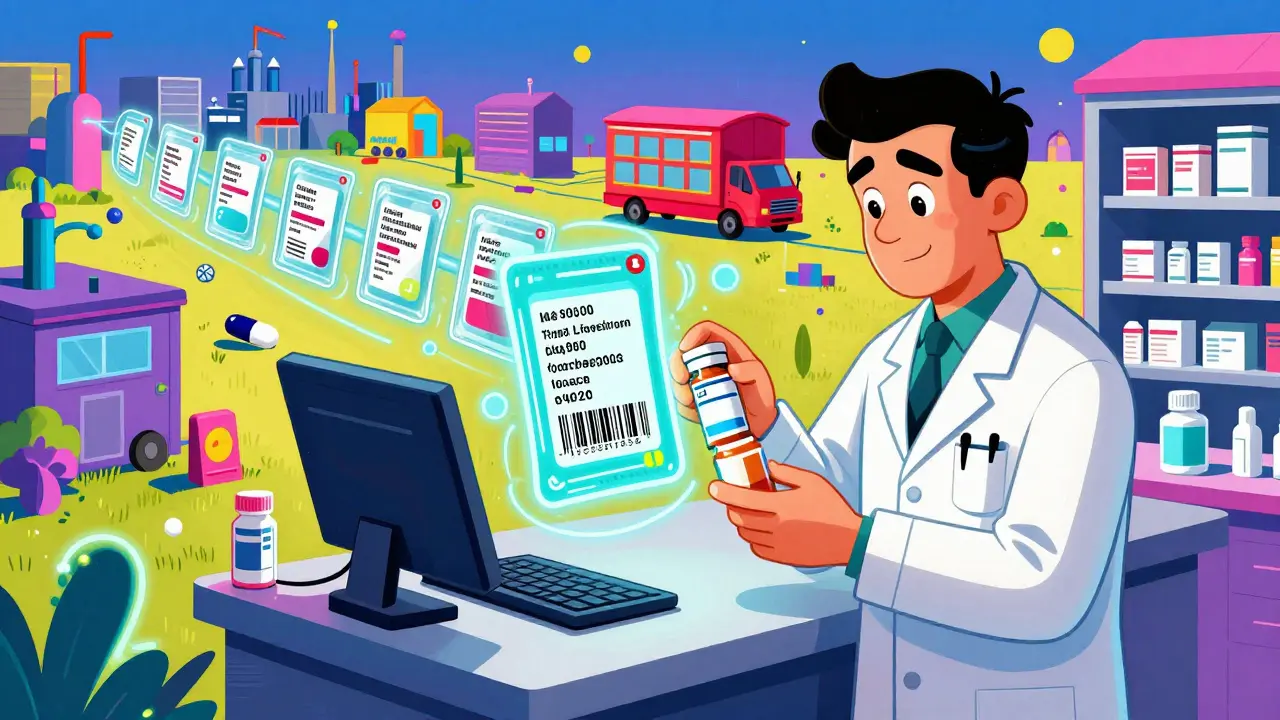
The U.S. pharmaceutical supply chain handles over 5 billion prescription drug transactions every year. That’s a lot of pills, injections, and vials moving from manufacturers to pharmacies. But for years, there was no reliable way to tell if a package was real - or if it was a dangerous fake. Counterfeit drugs have been found containing chalk, rat poison, or no active ingredient at all. In 2013, Congress passed the Drug Supply Chain Security Act (DSCSA) to fix that. By November 27, 2024, every prescription drug sold in the U.S. must be trackable at the package level. This isn’t just paperwork. It’s a digital shield against counterfeit drugs.
What the DSCSA Actually Does
The DSCSA doesn’t just add another layer of regulation. It rebuilds how drugs move through the supply chain. Before DSCSA, tracking was patchy. Some states had their own rules. Others had none. A drug could pass through 10 different hands - manufacturer, wholesaler, repackager, distributor - with no one knowing if it had been tampered with. The DSCSA changed that by requiring every package to have a unique digital fingerprint. That fingerprint is called a product identifier. It includes four pieces of data: the National Drug Code (NDC), the lot number, the expiration date, and a unique 20-character serial number. All of it must be printed in both human-readable text and a machine-scannable barcode. This isn’t optional. Every bottle, vial, or blister pack must carry it. But the serial number alone isn’t enough. The law also requires trading partners - manufacturers, wholesalers, repackagers, and pharmacies - to share three electronic documents with each transaction: Transaction Information (TI), Transaction History (TH), and Transaction Statement (TS). Together, these create a digital trail that shows where the drug came from, who handled it, and that it’s legitimate.Why This Matters for Patients
Imagine you’re taking a life-saving cancer drug. You open the bottle. The pill looks right. But what if it’s fake? It might have no active ingredient. Or worse - it might have something toxic. In 2018, the FDA found counterfeit versions of the blood thinner heparin in the U.S. supply chain. Patients got sick. Some died. The DSCSA stops this before it happens. If a pharmacy receives a suspicious package, they can scan the barcode and instantly check the serial number against the manufacturer’s database. If the number doesn’t match, or if the package was never shipped to that distributor, the system flags it. The drug gets quarantined. The FDA is notified. And the fake never reaches you. The FDA estimates the DSCSA will reduce counterfeit drug incidents by 95% by 2027. That’s not a guess. It’s based on data from countries like the EU, which implemented a similar system in 2019. Since then, counterfeit medicine seizures in Europe have dropped by over 80%.Who Has to Follow the Rules
The DSCSA applies to everyone who handles prescription drugs in the U.S. supply chain:- Manufacturers: Must serialize every package and share transaction data.
- Repackagers: Must re-serialize drugs they repackage (like turning bulk pills into blister packs).
- Wholesale distributors: Must verify the authenticity of every package they receive and pass along transaction data.
- Dispensers: This includes pharmacies - hospital, retail, and mail-order. By 2024, they must be able to verify any drug they receive.
How the System Works in Practice
Here’s how it looks on the ground. A manufacturer ships a box of insulin to a wholesaler. Each bottle has a unique serial number. The manufacturer sends electronic transaction data - TI, TH, TS - to the wholesaler. The wholesaler scans each bottle upon receipt. The system checks: Is the serial number valid? Is it from the right lot? Does the transaction history match? If everything checks out, the insulin moves on. If not - say, the serial number was already used or the lot number doesn’t match - the system flags it. The wholesaler holds the package and contacts the manufacturer. If it’s confirmed fake, they report it to the FDA. That’s the whole point: real-time verification. Pharmacies do the same thing when they receive drugs. Before DSCSA, they might have just checked the label. Now, they scan every package. In 2023, the FDA reported that pharmacies using automated verification systems caught 12 times more suspect products than those still using manual checks.Technology Behind the System
The DSCSA doesn’t rely on a single government database. Instead, it uses a decentralized system built on EPCIS standards - a global format for sharing supply chain event data. Think of it like a shared spreadsheet that every player in the chain can read and update. Major software vendors like TraceLink, SAP, and Oracle dominate the market, offering platforms that connect manufacturers to pharmacies. These systems handle the massive volume: over 1.2 billion serialized transactions were processed by McKesson alone in 2023 with 99.98% accuracy. But it’s not perfect. One of the biggest problems? Data mismatches. A manufacturer might use one format for serial numbers. A pharmacy uses another. A repackager adds extra characters. The system sees a mismatch and flags the package - even if it’s real. That causes delays. Some pharmacies report 2-3 day holds on shipments because of these errors. The FDA gave the industry a one-year grace period - from November 2023 to November 2024 - to fix these issues without penalties. But by the end of 2024, there’s no more wiggle room.What Happens If You Don’t Comply?
Non-compliance isn’t just a fine. It’s a legal risk. The FDA can issue warning letters, block shipments, or even shut down operations. In 2022, a regional distributor got a warning letter for failing to investigate and report suspect products - a direct violation of DSCSA Section 582(c)(2). For pharmacies, the risk is even higher. If a fake drug reaches a patient and causes harm, the pharmacy could be sued. Insurance premiums could rise. Reputation could be destroyed. That’s why even small pharmacies are investing in compliance. The National Community Pharmacists Association found that 68% of independent pharmacies listed DSCSA as their top technology challenge - not because they don’t want to comply, but because it’s hard.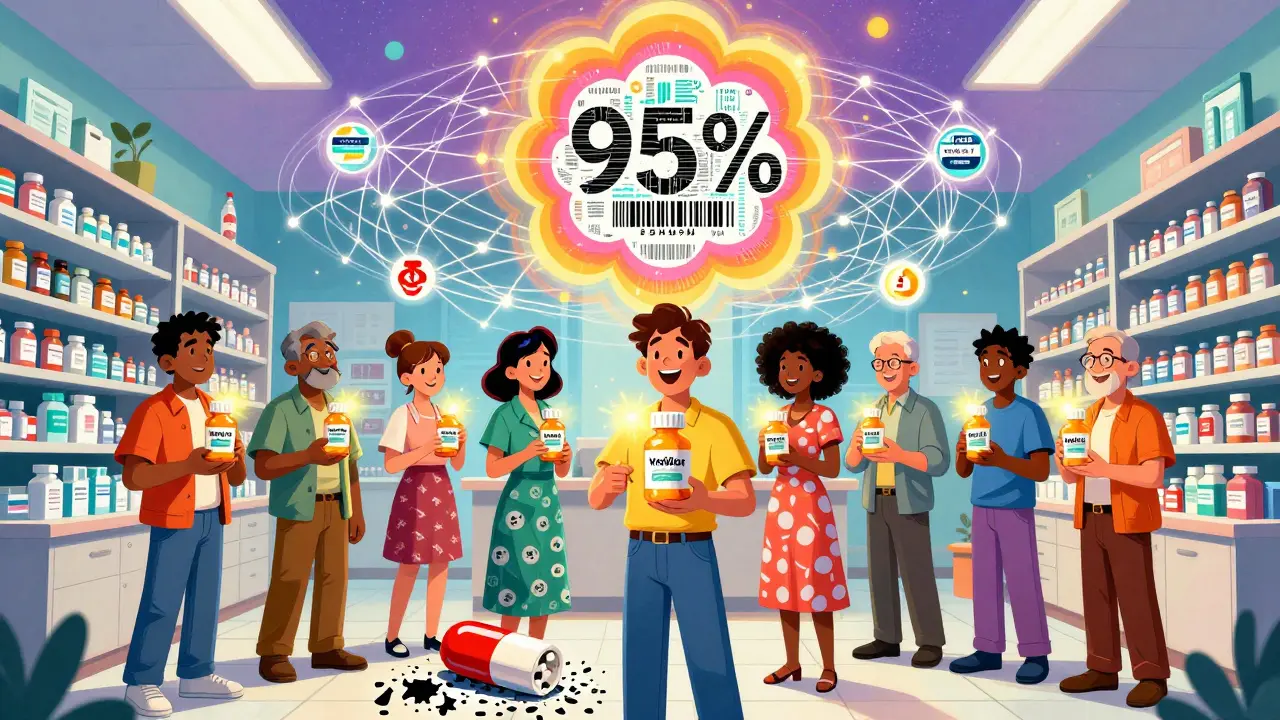
What’s Next After 2024?
The November 2024 deadline isn’t the end. It’s the beginning. The FDA is already looking at expanding DSCSA to over-the-counter (OTC) drugs - especially high-risk ones like insulin pens, erectile dysfunction pills, and painkillers. These are common targets for counterfeiters because they’re widely used and often bought online. Long-term, the goal is to make the system smarter. Imagine a pharmacy app that scans your prescription bottle and instantly tells you: “This is legitimate. It was shipped from ABC Wholesalers on January 10. No recalls. No alerts.” That’s not science fiction. It’s the next step. PwC projects that by 2027, DSCSA-compliant systems will save the U.S. healthcare system $2.3 billion a year through faster recalls, less drug diversion, and fewer counterfeit-related hospitalizations. That’s money that goes back into patient care.What Patients Should Know
You don’t need to understand EPCIS or serial numbers. But you should know this: if you’re prescribed a drug, it’s now far safer than it was 10 years ago. The system isn’t perfect. There are still glitches. Some packages get held up. But the chance of getting a fake drug is now the lowest it’s ever been. If you ever get a drug that looks odd - wrong color, wrong shape, strange taste - don’t ignore it. Report it to your pharmacist. They’re now trained and equipped to check it. And if they find something wrong, they’ll report it to the FDA. That’s how the system works. You’re not just a patient. You’re part of the safety net.Real-World Impact
In 2023, a pharmacist in Ohio scanned a bottle of metformin. The serial number didn’t match the manufacturer’s database. The system flagged it. The pharmacist held the bottle. The wholesaler was contacted. The manufacturer confirmed: it was a counterfeit. The batch was pulled. No one got sick. That’s the DSCSA in action. It’s not flashy. It doesn’t make headlines. But it’s working. Every day, thousands of these checks happen quietly. And each one keeps you safe.What is the DSCSA deadline for track-and-trace compliance?
The full implementation deadline for the DSCSA track-and-trace system is November 27, 2024. By that date, all trading partners - manufacturers, wholesalers, repackagers, and pharmacies - must be able to electronically verify the authenticity of prescription drugs at the package level using serialized product identifiers and interoperable data exchange.
Does the DSCSA apply to over-the-counter (OTC) drugs?
As of 2026, the DSCSA only applies to prescription drugs. However, the FDA has publicly stated it is evaluating whether to extend track-and-trace requirements to certain high-risk over-the-counter medications, such as insulin pens, erectile dysfunction drugs, and painkillers. No official rules have been issued yet, but expansion is likely in the coming years.
How do pharmacies verify drugs under DSCSA?
Pharmacies use scanning systems to read the barcode on each drug package. The system checks the serial number against the manufacturer’s database and verifies that the transaction data (TI, TH, TS) matches what was sent by the previous handler. If the data doesn’t match or the serial number is invalid, the system flags the package as suspect. The pharmacy must then quarantine the product and report it to the manufacturer and FDA.
What happens if a pharmacy gets a counterfeit drug?
If a pharmacy receives a suspect or illegitimate product, they are legally required to quarantine it immediately. They must then notify the manufacturer and report the incident to the FDA within 24 hours. The FDA will investigate and may issue a public recall. Pharmacies that fail to report counterfeit drugs can face fines, warning letters, or loss of licensure.
Is the DSCSA system foolproof?
No system is foolproof. The DSCSA has reduced counterfeit drugs by an estimated 95%, but challenges remain. Data mismatches between vendors, inconsistent EPCIS implementation, and manual errors can cause delays or false flags. However, the system is designed to catch problems before drugs reach patients. Continuous improvements and industry collaboration are helping close these gaps.
How much does DSCSA compliance cost a small pharmacy?
For an independent pharmacy, DSCSA compliance typically costs between $150,000 and $185,000. This includes new scanning hardware, software integration, staff training, and ongoing maintenance. Many small pharmacies received grants or joined cooperative purchasing programs to reduce costs. Chain pharmacies, with more resources, spent millions - Walgreens invested $120 million between 2021 and 2022.
Vanessa Barber
January 24, 2026 AT 05:53Look, I get the theory, but in practice, I’ve seen pharmacies hold shipments for days because some repackager used a different font for the serial number. It’s not stopping fakes-it’s just slowing down insulin for diabetics who can’t wait.
Sallie Jane Barnes
January 26, 2026 AT 01:28While I appreciate the technical rigor of the DSCSA framework, I must emphasize the profound operational burden it imposes upon community-based dispensers. The financial and logistical demands are not trivial, and yet, the societal benefit-patient safety-is unequivocally paramount.
Andrew Smirnykh
January 28, 2026 AT 00:43It’s interesting how this mirrors what the EU did with their Falsified Medicines Directive. The tech’s similar, but here, it feels more fragmented-like everyone’s using different dialects of the same language. Still, if it keeps fake cancer drugs off the shelf, I’m all for it.
charley lopez
January 29, 2026 AT 04:32The EPCIS-compliant serialization architecture, while ostensibly robust, suffers from non-uniform implementation across trading partners, resulting in high false-positive rates during transaction data validation. The 99.98% accuracy metric cited by McKesson is misleading without context on the volume of non-conforming transactions. The system’s operational latency remains a critical bottleneck.
Kerry Evans
January 30, 2026 AT 03:36Of course the big pharma guys are happy-this system makes it impossible for small players to compete. They spent $120 million, sure, but they got the FDA on their side. Meanwhile, my cousin’s mom’s pharmacy in rural Iowa is barely hanging on. This isn’t safety-it’s consolidation dressed up as regulation.
Susannah Green
January 31, 2026 AT 08:27Just a heads-up: if your pill looks weird-different color, weird smell, doesn’t dissolve right-don’t just shrug it off. Scan it. Report it. Your pharmacist is trained now, and they’re not gonna judge you for being paranoid. Seriously. Better safe than sorry.
Kerry Moore
January 31, 2026 AT 17:34Thank you for highlighting the real-world impact in Ohio. It is precisely these quiet, unpublicized interventions that underscore the efficacy of the DSCSA. The collaboration between pharmacists, wholesalers, and manufacturers exemplifies a model of shared responsibility that is both commendable and essential to public health.
Sue Stone
January 31, 2026 AT 19:00My pharmacy got a box of metformin flagged last week. Turned out the barcode was smudged. Took three days to fix. We didn’t lose a single customer, but man, it was a headache. This system’s great… if your scanner works.