Fentanyl Patch Safety Risk Calculator
Risk Factors Assessment
Your risk assessment:
Safety Recommendations
Continue following your doctor's instructions and monitor for signs of overdose. Keep naloxone on hand as recommended by the FDA.
EMERGENCY RESPONSE
If you observe any overdose symptoms:
- Remove the patch immediately
- Call 911 or your local emergency number
- Administer naloxone if available
- Keep the person awake and sitting upright
SAMHSA National Helpline: 1-800-662-HELP (4357)
Using a fentanyl patch might seem simple-stick it on your skin, and it slowly releases pain relief for days. But behind that quiet, steady delivery is a powerful opioid that can kill you if used wrong. Fentanyl is 50 to 100 times stronger than morphine. Even a small mistake-like applying heat to the patch, not disposing of it properly, or stopping it suddenly-can lead to overdose or brutal withdrawal. This isn’t just about pain management. It’s about survival.
How Fentanyl Patches Work (and Why They’re Dangerous)
Fentanyl patches, like the old brand Duragesic and today’s generics, are designed for people with severe, long-term pain who need constant relief-like those with advanced cancer or chronic conditions that don’t respond to other treatments. They don’t work for sudden pain, post-surgery pain, or occasional use. That’s because they take 12 to 24 hours to reach full strength in your bloodstream. And once they’re in, they stay there for up to 72 hours.
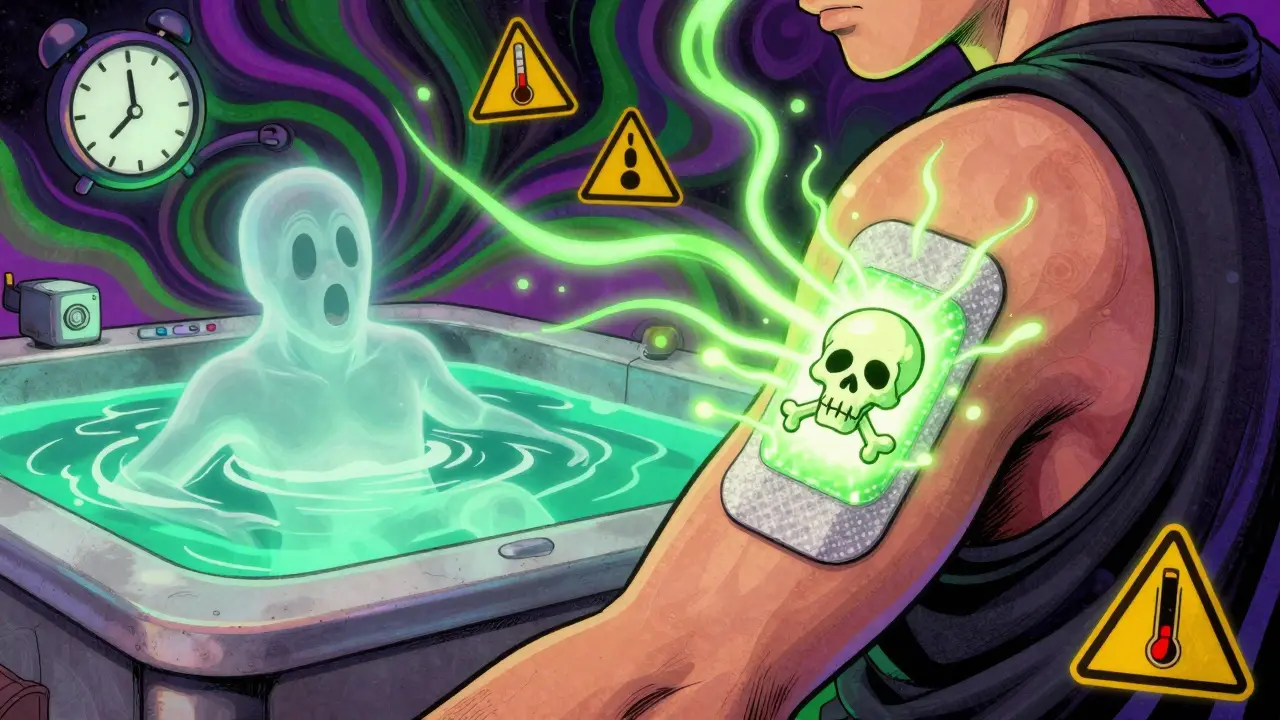
This slow, steady release is great for stable pain control. But it’s also why they’re so risky. If your body temperature rises-because you have a fever, take a hot shower, sit in a hot tub, or use a heating pad-the patch releases fentanyl faster. That spike can push your breathing into slow, shallow, or even stopped patterns. In 2012, the FDA reported 32 children died after finding and sticking used or unused patches on their skin. One patch can contain enough fentanyl to kill an adult who’s not used to opioids.
These patches are not for beginners. The CDC and FDA require you to already be taking at least 60 mg of morphine daily for a week before you’re even considered for a fentanyl patch. If you’re opioid-naive, your body has no tolerance. One patch could be fatal.
Signs of Fentanyl Overdose: Don’t Wait
Overdose doesn’t always come with screaming or thrashing. With fentanyl, it’s often quiet. You or someone you care about might just seem unusually sleepy, hard to wake up, or breathing very slowly. These are red flags:
- Slow, shallow, or irregular breathing
- Unresponsiveness-you can’t wake them up
- Cold, clammy, or blue skin, especially lips and fingernails
- Pinpoint pupils
- Extreme dizziness or weakness
- Slow heartbeat or loss of consciousness
If you see any of these, act immediately. Remove the patch. Call 911. If you have naloxone (Narcan), use it. Naloxone can reverse an opioid overdose, even from fentanyl, but it may need to be given multiple times because fentanyl sticks around longer than other opioids. The FDA now recommends that anyone prescribed a fentanyl patch also be given naloxone-just in case.
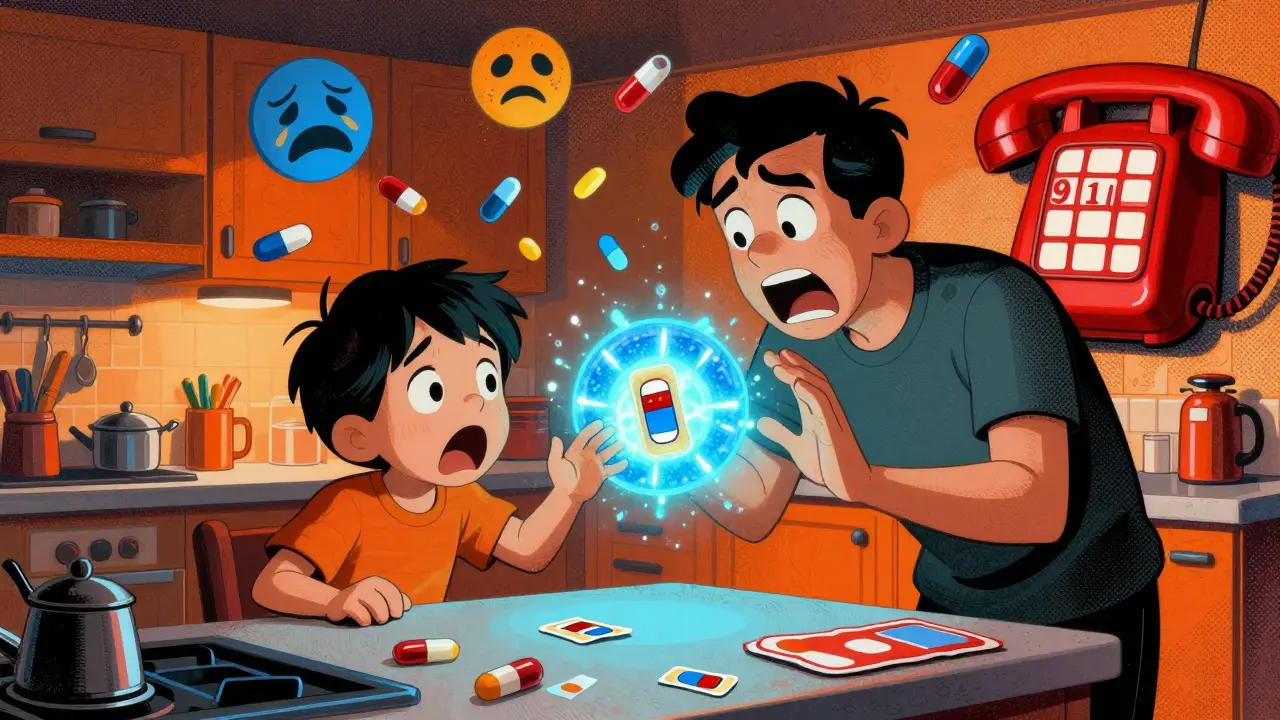
Don’t assume it’s just "sleeping it off." Fentanyl overdose can kill in minutes. And it’s not rare. Between 1997 and 2012, over 30 children died from accidental exposure. Even adults who don’t use opioids regularly have died after touching a patch left on a bed or in a trash can.
Withdrawal Isn’t Just Uncomfortable-It Can Be Life-Threatening
Stopping a fentanyl patch cold turkey is one of the worst mistakes you can make. Your body has adapted. Your nervous system is wired to expect this drug. When it’s gone, your system goes into chaos.
Withdrawal symptoms usually start 8 to 24 hours after your last patch is removed. They peak around 36 to 72 hours and can last up to two weeks. Here’s what it looks like:
- Severe anxiety, irritability, and agitation
- Insomnia-can’t sleep even when exhausted
- Profuse sweating, chills, and goosebumps
- Runny nose, tearing eyes, yawning
- Stomach cramps, nausea, vomiting, diarrhea
- Increased heart rate and blood pressure
- Muscle aches, tremors, weakness
- Thoughts of suicide
The FDA found 148 serious cases of harm-like seizures, heart problems, and suicidal thoughts-linked to sudden opioid withdrawal between 2012 and 2017. The European Medicines Agency warns that rapid tapering can cause uncontrolled pain and even death. Withdrawal isn’t usually fatal on its own, but complications like dehydration from vomiting and diarrhea can lead to kidney failure or heart rhythm problems. And if you relapse after stopping, your tolerance is gone. A dose you used to handle could now kill you. A 2021 Johns Hopkins study found that 37% of fatal fentanyl overdoses happened in people who had recently stopped using.
How to Stop Fentanyl Patches Safely
You don’t quit fentanyl patches by just taking off the last one. You quit by working with your doctor to taper slowly. The FDA, EMA, and Mayo Clinic all agree: tapering must be gradual.
Typical tapering plans reduce your dose by 10% to 25% every 1 to 3 weeks. If you’ve been on a high dose (like 100 mcg/hour), it can take weeks or even months. Your doctor will monitor you closely for pain and withdrawal signs. Never try to cut the patch in half to reduce your dose-this is dangerous and unreliable. Patches are designed to deliver precise amounts. Tampering can cause uneven absorption and overdose risk.
During tapering, your doctor may switch you to a longer-acting oral opioid like methadone or buprenorphine to make the process smoother. They might also prescribe medications to help with specific symptoms: anti-nausea drugs, sleep aids, or anti-anxiety meds (used carefully, since mixing them with opioids is risky).
And don’t forget: tell every doctor, dentist, or surgeon you see that you’re on a fentanyl patch. Even a minor procedure can require sedation or pain meds that interact dangerously with fentanyl.

Safe Use and Disposal: A Matter of Life and Death
There are simple rules that can save lives-yours and others’:
- Apply patches only to clean, dry, intact skin-never on burned, irritated, or broken skin.
- Avoid heat: no hot tubs, saunas, heating pads, or sunbathing while wearing a patch.
- Keep patches out of reach of children and pets. Store them locked up.
- After use, fold the patch in half with the sticky sides together. Flush it down the toilet or take it to a drug take-back program. Never throw it in the trash where someone else might find it.
- Never share your patches. Ever.
- Don’t refill early. These prescriptions are not refillable. Schedule regular check-ins with your doctor.
The number of fentanyl patch prescriptions in the U.S. dropped 42% between 2016 and 2022. Why? Because doctors now know the risks. The American Medical Association found that 78% of physicians only prescribe them after all other options have failed. That’s the right approach.
What to Do If You or Someone Else Is Struggling
If you’re on a fentanyl patch and feel trapped-by pain, by dependence, by fear-you’re not alone. The Substance Abuse and Mental Health Services Administration (SAMHSA) recommends that all patients on these patches get education on overdose response and access to support services. If you’re thinking about stopping, talk to your doctor first. Don’t wait until you’re in crisis.
If you’re worried about a loved one, learn the signs of overdose. Keep naloxone on hand. Know where to get help: SAMHSA’s National Helpline is 1-800-662-HELP (4357), free and confidential. You can also text your zip code to 435748 to find local treatment options.
Fentanyl patches are tools-not magic. They can help. But they can also destroy. The difference is knowledge, caution, and never going it alone.
Can you overdose from just touching a fentanyl patch?
Yes. Fentanyl can be absorbed through the skin. Accidental contact with a used or unused patch-especially in children-has caused fatal overdoses. The FDA documented 32 pediatric deaths between 1997 and 2012 from this exact cause. Always handle patches with care and dispose of them properly by folding sticky sides together and flushing them down the toilet.
How long does fentanyl stay in your system after removing the patch?
Fentanyl can remain detectable in your body for up to 72 hours after removing the patch, but its active effects wear off faster. The drug is slowly released over time, so even after you take off the patch, your body continues absorbing it for several hours. Withdrawal symptoms can begin 8 to 24 hours after removal, and traces of the drug can show up in urine tests for up to 3 days.
Can you use alcohol or other drugs with a fentanyl patch?
No. Mixing alcohol, benzodiazepines (like Xanax or Valium), sleep aids, or other opioids with a fentanyl patch dramatically increases the risk of respiratory depression, coma, and death. Even a small amount of alcohol can push your breathing into dangerous territory. The FDA and Mayo Clinic both warn against combining these substances.
Is it safe to cut a fentanyl patch to reduce the dose?
No. Cutting or altering the patch can cause unpredictable and dangerous spikes in fentanyl delivery. The patch is engineered to release medication slowly and evenly. Cutting it disrupts that system, potentially leading to overdose. Always follow your doctor’s prescribed tapering plan-never adjust the patch yourself.
What should you do if you miss a patch change?
If you forget to change your patch on time, apply a new one as soon as you remember. Do not apply extra patches to make up for the missed dose. If you miss more than one change, contact your doctor. Skipping doses can trigger withdrawal symptoms, and doubling up increases overdose risk. Stick to your schedule and set phone reminders if needed.
Are there safer alternatives to fentanyl patches for chronic pain?
Yes. Many patients find relief with non-opioid medications like gabapentin, duloxetine, or NSAIDs, combined with physical therapy, nerve blocks, or cognitive behavioral therapy. For some, lower-potency opioids like tramadol or extended-release oxycodone may be safer options. Fentanyl patches are only recommended when other treatments have failed and you’re already opioid-tolerant. Always discuss alternatives with your doctor before starting.
Herman Rousseau
December 22, 2025 AT 20:06Just had to share this - my dad was on a fentanyl patch for cancer pain, and we almost lost him when he accidentally sat in a hot tub. The docs said it spiked his levels like a rocket. We now keep the used patches in a sealed ziplock and flush them immediately. Naloxone? We keep two in the house. Better safe than sorry. 🙏
Sam Black
December 24, 2025 AT 16:58People treat these patches like candy. I’ve seen folks buy them off the street because they "just need something to chill out." Fentanyl isn’t a vibe. It’s a silent killer wrapped in a sticker. If you’re not opioid-tolerant, you’re not a patient - you’re a statistic waiting to happen.
Vikrant Sura
December 24, 2025 AT 21:01Wow. So much fearmongering. Most of these warnings are from 2012. The patches are way more regulated now. Also, 78% of docs only prescribe after other options? That’s not a problem - that’s good medicine. Stop acting like everyone’s gonna die.
Candy Cotton
December 25, 2025 AT 18:42As an American woman who has seen the devastation of the opioid crisis firsthand, I must say: this article is dangerously incomplete. The real issue is that liberal policies enabled this. We need to stop prescribing opioids like they’re Advil. This isn’t about pain - it’s about personal responsibility. If you can’t handle a patch, don’t take it. End of story.
Jim Brown
December 26, 2025 AT 15:02There’s a quiet tragedy here - we’ve turned human suffering into a pharmacological equation. Fentanyl patches aren’t evil; they’re a mirror. They reflect how little we’ve done to treat chronic pain without relying on chemical suppression. We offer pills instead of presence, dosages instead of dialogue. Maybe the real overdose isn’t of the drug - it’s of our collective numbness to suffering.
Jamison Kissh
December 28, 2025 AT 00:52Does anyone else wonder why we don’t have more research on non-opioid alternatives for elderly patients? My grandma had neuropathic pain for 12 years. They pushed her onto a patch because "it’s easier." But what if we’d invested in nerve stimulation or TENS units instead? We’re not just treating pain - we’re automating compassion away.
Gabriella da Silva Mendes
December 28, 2025 AT 04:43Okay so like… I’m not saying this is a bad article but like… have you SEEN the number of people who just leave their patches on the bathroom counter?? I found one in my cousin’s trash can last year and I almost threw it in the garbage myself before I Googled it and almost cried. Like… why are we not teaching this in high school? Like… this is like… LIFE OR DEATH stuff and we’re treating it like a side effect on a cereal box?? 😭
Tarun Sharma
December 29, 2025 AT 12:04Proper disposal is critical. Fold, flush, or return. No exceptions.
Julie Chavassieux
December 30, 2025 AT 20:45My brother died from a patch he found on the floor. He was 22. He didn’t even know what it was. Just thought it was a bandage. I’m still not over it. Don’t ever underestimate this.