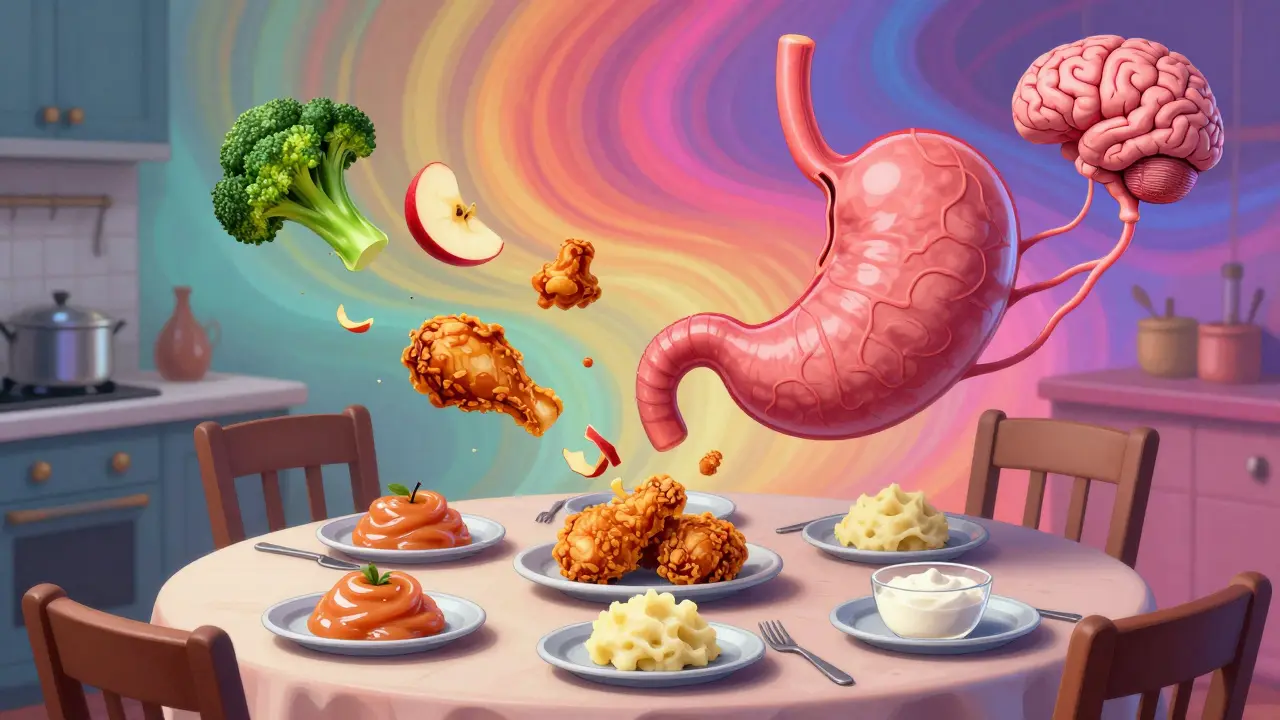
When your stomach won’t empty properly, eating becomes a chore-and sometimes a nightmare. Gastroparesis isn’t just feeling full after a meal. It’s when food sits in your stomach for hours, causing nausea, vomiting, bloating, and pain. No matter how little you eat, your body doesn’t move it along. For millions of people, especially those with diabetes, this isn’t rare. It’s real. And the good news? Diet changes can make a huge difference.
What Gastroparesis Really Means
Gastroparesis means your stomach muscles aren’t working right. The nerves that tell your stomach to churn food into a slurry and push it into the small intestine are damaged. Most often, it’s the vagus nerve. That’s the main line of communication between your brain and your gut. When it’s injured-by diabetes, surgery, or unknown causes-your stomach just stops doing its job. You might hear doctors say it’s "delayed gastric emptying." That’s just a fancy way of saying food stays in your stomach too long. The official test? A gastric emptying scan. If less than 40% of your meal leaves your stomach after two hours, you’re diagnosed. But symptoms come first: nausea in 90% of cases, vomiting in 75-80%, and feeling full after just a few bites in 85%. It’s not just discomfort. Left untreated, gastroparesis can lead to bezoars-solid masses of undigested food that block your stomach. It can cause severe dehydration from vomiting, dangerous drops in potassium, and weight loss. For people with diabetes, it makes blood sugar control nearly impossible because food enters the bloodstream unpredictably.Who Gets Gastroparesis-and Why
Women are four times more likely to get gastroparesis than men. The reasons aren’t fully understood, but hormones and nerve sensitivity may play a role. The biggest risk factor? Diabetes. Up to half of people with type 1 diabetes and 30% of those with long-term type 2 diabetes develop it. That’s because high blood sugar damages nerves over time. Other causes include stomach surgery (especially vagus nerve injury), autoimmune conditions like scleroderma, and certain medications like opioids or some antidepressants. About 30% of cases have no clear cause-these are called idiopathic gastroparesis. It’s easy to confuse gastroparesis with regular indigestion or functional dyspepsia. But there’s a key difference: gastroparesis brings more vomiting and nausea, while dyspepsia is mostly pain and bloating without delayed emptying. If your symptoms last longer than three months and don’t improve with antacids, it’s time to get tested.Dietary Changes That Actually Work
The single most effective treatment for gastroparesis? Diet. Not drugs. Not surgery. Food. Studies show 65% of patients see big improvements just by changing what and how they eat. The goal? Reduce the workload on your stomach. That means smaller, softer, easier-to-digest meals. Start with these rules:- Eat 5 to 6 small meals a day-not 3 big ones.
- Keep each meal under 1.5 cups total. That’s about the size of a baseball.
- Avoid anything with more than 3 grams of fat per serving. Fat slows emptying by 30-50%.
- Limit fiber to under 15 grams per meal. Raw veggies, whole grains, beans, and nuts are off-limits.
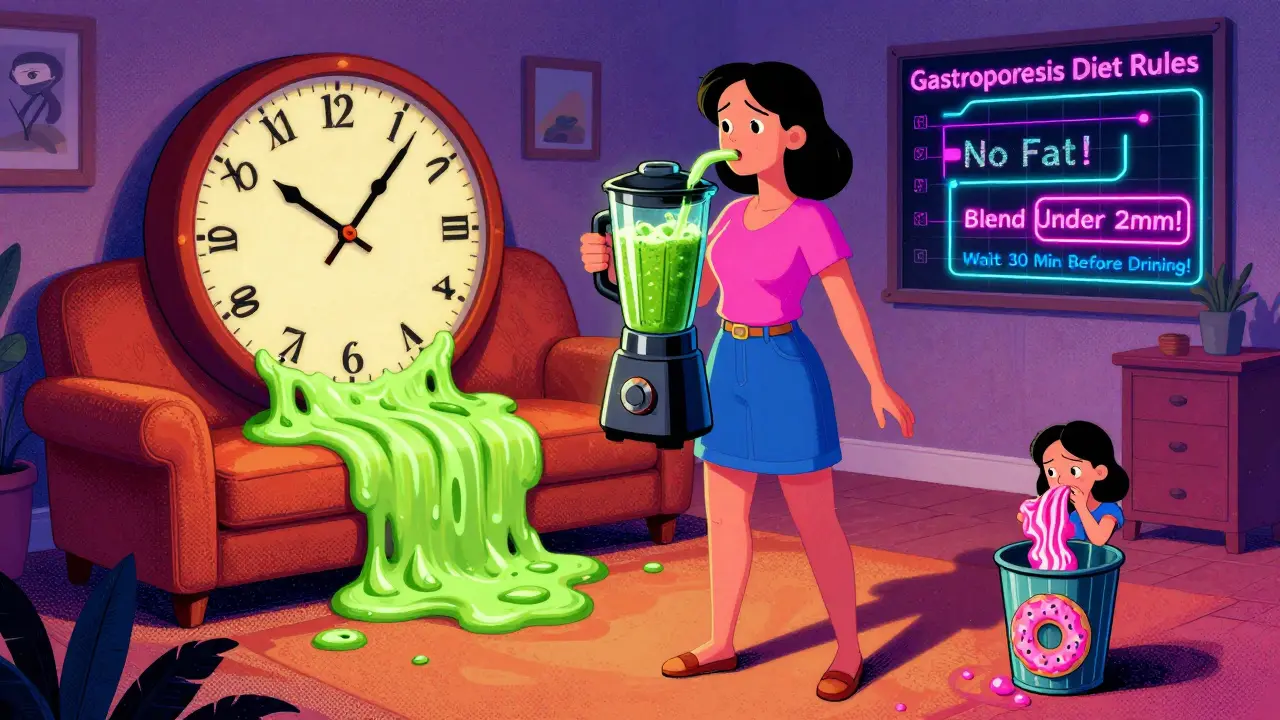
- Blenderize your food. If it’s chunky, blend it until it’s smooth. Particle size should be under 2mm.
- Drink fluids separately from solids. Wait 30 minutes after eating before drinking anything.
- Avoid carbonated drinks. They puff up your stomach and make bloating worse.
- Don’t lie down for at least two hours after eating.
Hydration and Nutrition Tips
You can’t survive on nausea and vomiting. Dehydration and malnutrition are real dangers. Most patients lose weight-not because they’re not eating, but because their body can’t absorb nutrients. Drink water slowly: 1 to 2 ounces every 15 minutes. That’s about a sip every minute. Avoid gulping. Large amounts of liquid at once stretch your stomach and trigger symptoms. If you’re losing weight or feel weak, talk to a dietitian who specializes in gastroparesis. They’ll help you find calorie-dense, low-residue options. Nutritional supplements like Ensure Clear or Boost Breeze (low-fiber, low-fat) can be lifesavers. Some patients need liquid meal replacements for every meal. Keep a food and symptom diary. Write down what you ate, when, and how you felt afterward. Most people find their personal triggers this way. One person can’t handle milk. Another can’t tolerate eggs. Your list will be unique.When Diet Isn’t Enough
If you’re still vomiting daily or losing weight after 8-12 weeks of strict diet changes, it’s time to add medication or other treatments. Prokinetics like metoclopramide can help your stomach contract better. But they come with risks. Long-term use can cause a serious movement disorder called tardive dyskinesia. Doctors usually limit it to 12 weeks unless absolutely necessary. Gastric electrical stimulation (GES) is a small device implanted like a pacemaker. It sends pulses to your stomach muscles. It’s FDA-approved and helps 70% of people who don’t respond to meds. About half reduce vomiting by more than half. A newer option is per-oral pyloromyotomy (POP). A doctor uses an endoscope to cut the muscle at the bottom of your stomach. This reduces resistance and lets food pass more easily. Success rates are 60-70%. For the most severe cases-where you can’t keep anything down and are losing weight fast-feeding tubes or IV nutrition may be needed. This isn’t failure. It’s survival.
What’s Coming Next
Research is moving fast. In 2022, the FDA approved relamorelin, a drug that mimics ghrelin-the hunger hormone-and speeds up gastric emptying. Early trials showed a 35% improvement. Scientists are also looking at the gut microbiome. People with gastroparesis often have different gut bacteria. Early studies using specific probiotics showed 30% symptom improvement. AI is being used to analyze gastric emptying scans more accurately than human radiologists. And in the next five years, doctors hope to match patients to treatments based on their symptom type-not just guess.Living with Gastroparesis
This isn’t a condition you cure. It’s one you manage. But managing it well means you can live a full life. Most people who stick to the diet see 50% or more symptom reduction within a few months. You’ll be able to eat out, travel, and even enjoy a meal with family again. But it takes discipline. No cheating. No "just one bite" of pizza or salad. One slip can set you back days. And don’t ignore the mental side. Sixty-five percent of patients feel anxious about eating. Half report avoiding social events because they’re scared of vomiting. That’s normal. But you’re not alone. Support groups exist. Therapy helps. The key is consistency. Small meals. Low fat. Low fiber. Blended food. Hydration between meals. Track your progress. Work with a dietitian. And remember: you’re not broken. Your stomach just needs a different kind of fuel.Can gastroparesis go away on its own?
In rare cases, especially after surgery or a viral infection, gastroparesis can improve over time. But for most people-especially those with diabetes-it’s a long-term condition. It doesn’t disappear without treatment, but symptoms can be controlled with diet and medical support.
Is a liquid diet the only option for gastroparesis?
No. While liquids are easier to digest, most people can progress to soft, blended solids. The goal is to find textures your stomach can handle. Many eat mashed potatoes, ground chicken, yogurt, and applesauce. Pureeing food to a smooth consistency (under 2mm) is more effective than drinking everything.
Can I still eat fruits and vegetables?
Yes-but only cooked and peeled, and blended. Avoid raw ones. Try peeled applesauce, strained carrot puree, or blended spinach in a smoothie. Never eat skins, seeds, or fibrous parts like broccoli stems. Fiber is the enemy of emptying.
Does stress make gastroparesis worse?
Yes. Stress affects the gut-brain connection, which is already disrupted in gastroparesis. Anxiety can slow digestion even more and increase nausea. Managing stress with breathing exercises, therapy, or gentle movement like walking helps reduce flare-ups.
How long until I feel better on a gastroparesis diet?
Most people notice improvement within 4 to 8 weeks. Significant changes-like reduced vomiting or better energy-often happen by 12 weeks. Consistency matters more than perfection. Stick to the plan, even on good days.
Should I avoid sugar if I have gastroparesis?
Not necessarily. Sugar itself doesn’t slow emptying. But sugary foods often come with fat or fiber (like pastries or sweetened yogurt). Choose simple sugars like honey, maple syrup, or fruit purees without added fat. Avoid high-sugar drinks that also contain thickening agents.
Can I drink alcohol with gastroparesis?
It’s not recommended. Alcohol relaxes the stomach muscles and delays emptying further. It can also irritate the stomach lining and worsen nausea. If you do drink, limit it to a tiny amount and only on a full stomach. But most experts say to avoid it completely.
Is gastroparesis the same as IBS?
No. IBS affects the intestines and causes cramping, diarrhea, or constipation. Gastroparesis affects the stomach and causes delayed emptying, nausea, and vomiting. They can coexist, but they’re different conditions with different treatments.
Praseetha Pn
January 18, 2026 AT 13:13Okay but have you ever considered that gastroparesis isn’t even a real medical condition? It’s just Big Pharma’s way of selling you expensive purees and $800 supplements while the real cause is 5G radiation messing with your vagus nerve. I know a guy in Kerala who cured his ‘gastroparesis’ by drinking neem juice and yelling at his WiFi router for three days. No joke. They’re hiding the truth because they don’t want you to know food can heal itself if you just stop trusting doctors. 🌿⚡
Nishant Sonuley
January 19, 2026 AT 02:37Look, I get it - diet changes sound boring, but honestly? This is the most practical guide I’ve read in years. I’ve been managing this for my cousin since she got diagnosed after her gastric bypass, and the 2mm particle size rule? Game-changer. Blending everything into a smoothie with whey and banana? She went from vomiting twice a day to eating dinner with us without crying. It’s not glamorous, but it works. And yes, I know you think it’s just ‘eat less fat’ - but no, it’s about particle physics in your stomach. Tiny bits. Like baby food, but for adults who refuse to give up on life. Also, avoid anything that looks like it could survive a war. 🍲
Emma #########
January 19, 2026 AT 08:56This was so validating. I’ve been told for years that I’m just ‘anxious’ or ‘eating too slow’ - but this laid it all out so clearly. I didn’t realize how much I was avoiding social dinners because I was terrified of being sick. Thank you for writing this. I’m going to start a food journal tomorrow. And maybe… I’ll let someone cook for me again. 💛
Tyler Myers
January 20, 2026 AT 22:03Let me guess - the FDA approved relamorelin because it’s owned by the same corporation that makes insulin. Diabetes is a scam. They want you dependent on drugs, not diet. You think your stomach’s broken? It’s your soul. You’re eating processed garbage because you’re too lazy to grow your own food. Eat raw meat. Fast. Pray. Stop listening to doctors who got paid by Big Pharma to write this article. Your body isn’t broken - you’re just weak. And yes, I’ve cured my own gastroparesis with bone broth and cold showers. No pills. No science. Just willpower.
Zoe Brooks
January 21, 2026 AT 04:08I love how this post doesn’t just throw meds at you - it says ‘listen to your body.’ I’ve been doing the small meals thing for 6 months now, and honestly? I feel like I’ve gotten my life back. I still can’t eat broccoli, but I made a smoothie with cooked carrots, banana, and almond milk yesterday and actually enjoyed it 😊 I used to cry every time I had to skip a family BBQ. Now I bring my own blended lentil soup. It’s not perfect, but it’s mine. And that’s enough. 🌱
Kristin Dailey
January 21, 2026 AT 11:06Stop coddling people. If your stomach can’t handle food, you’re weak. Eat less. Move more. No excuses. America’s gone soft.
Wendy Claughton
January 22, 2026 AT 22:52I just… I needed to hear this. I’ve been so afraid to talk about this - like it’s embarrassing. But reading this, I realized I’m not broken. I’m just adapting. I’ve been blending my meals for 4 months now. I cry sometimes when I think about how much I’ve lost… but also how much I’ve regained. I’m not ‘fixed.’ But I’m alive. And that’s worth celebrating. 🌻
Jake Moore
January 23, 2026 AT 16:34One thing no one talks about: timing your meals with your blood sugar. If you’re diabetic, eating a low-fat, low-fiber meal at 7am and then taking insulin at 8am? Disaster. You need to delay insulin until after the meal starts emptying - which could be 2+ hours later. I worked with a GI dietitian who taught me to use a CGM to track my glucose spikes and match insulin timing to gastric emptying, not the clock. It’s not in the article, but it saved me. If you’re diabetic with GP - talk to your endo about this. It’s not just diet. It’s rhythm.
Danny Gray
January 24, 2026 AT 04:27Interesting. But if you really think diet is the solution, why are we still seeing rising cases despite decades of ‘eat smaller meals’ advice? Maybe it’s not the food. Maybe it’s the soil. The pesticides. The glyphosate. The fact that every apple you eat is grown in a monoculture that’s destroyed the gut biome before it even reaches your plate. You’re treating symptoms because you’re scared to ask: what if the whole system is broken? What if gastroparesis isn’t your fault - it’s the industrial food machine’s?