When you pick up a prescription, you might see two options: the name you recognize from TV ads, or a simpler, cheaper version with a different label. That cheaper version is a generic drug. It’s not a copy, a knockoff, or a lower-quality substitute. It’s the exact same medicine-just without the brand name and marketing costs.
What Exactly Is a Generic Drug?
A generic drug contains the same active ingredient as the brand-name version. That means it works the same way in your body, targets the same condition, and delivers the same results. The U.S. Food and Drug Administration (FDA) defines it clearly: a generic drug must be identical or bioequivalent to the brand-name drug in dosage form, safety, strength, route of administration, quality, performance characteristics, and intended use. It’s not about cutting corners. The FDA requires generic manufacturers to prove their product performs the same as the original. That’s not a suggestion-it’s a legal requirement. If it doesn’t meet those standards, it doesn’t get approved.How Do Generic Drugs Get Approved?
Before 1984, getting a generic drug on the market meant repeating every single clinical trial the original company did. That cost millions, made generics impractical, and kept prices high. Everything changed with the Hatch-Waxman Act. This law created the Abbreviated New Drug Application (ANDA) process. Instead of redoing years of animal and human trials, generic companies only need to prove one thing: bioequivalence. That means their version delivers the same amount of medicine into your bloodstream at the same speed as the brand-name drug. The FDA sets strict limits for this: the amount of drug absorbed must fall within 80% to 125% of the brand-name version. That’s not a wide gap-it’s a tight window designed to ensure no meaningful difference in how the drug works. The FDA also checks the manufacturing process. Every generic factory, whether in the U.S., India, or China, must follow the same Current Good Manufacturing Practices (cGMP) as brand-name makers. The FDA inspects about 3,500 facilities each year-many without warning-to make sure quality doesn’t slip.Are Generic Drugs Really the Same?
Yes. But people often get confused because generics look different. They might be a different color, shape, or size. Sometimes they even taste different. That’s because inactive ingredients-like dyes, fillers, or flavorings-can vary. These don’t affect how the drug works. They’re just there to make the pill identifiable or easier to swallow. The active ingredient? Identical. The strength? Exact. The way it’s absorbed? The same. The FDA doesn’t allow any meaningful variation in performance. In fact, the agency permits no more than a 5% difference in active ingredient content for both brand-name and generic pills. That’s the same standard for everyone. Multiple studies back this up. The Institute of Medicine reviewed 38 clinical trials on cardiovascular generics and found no clinically meaningful difference in effectiveness. The American College of Physicians, the American Medical Association, and the FDA all agree: if a generic is approved, it’s safe and effective to use.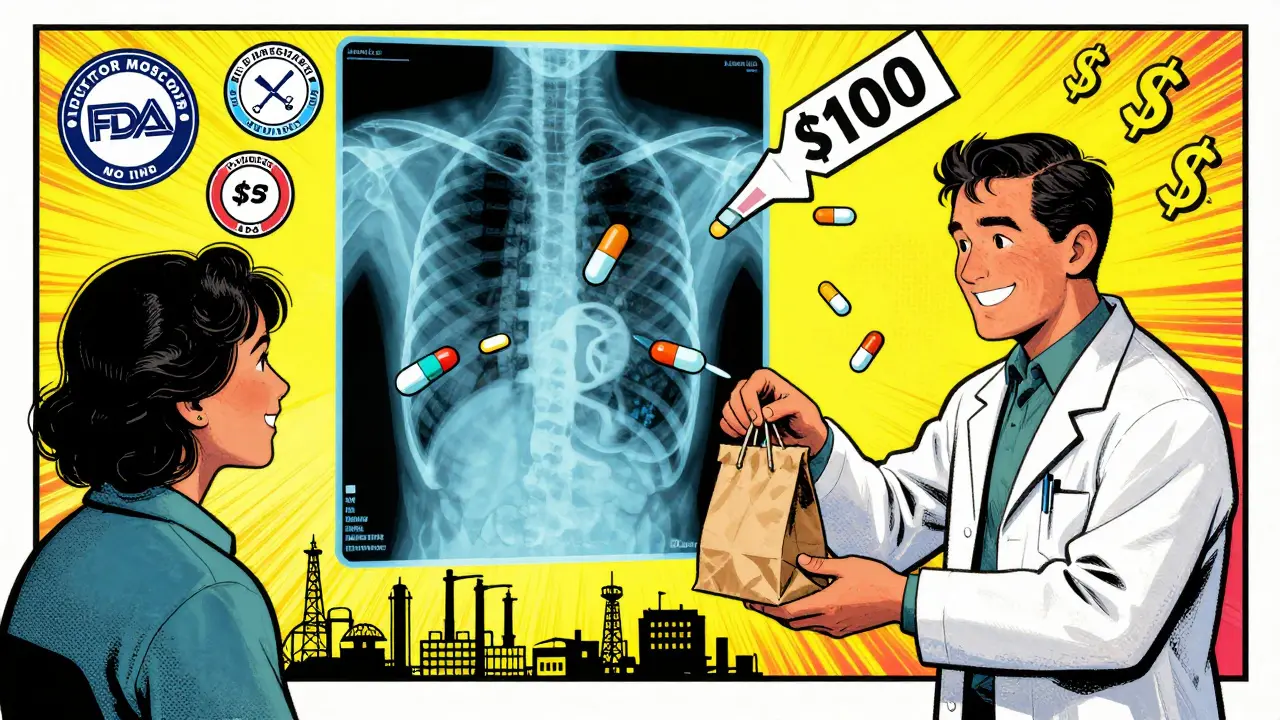
Why Are Generic Drugs So Much Cheaper?
The price difference isn’t because generics are inferior. It’s because they don’t have to pay for research, marketing, or advertising. The original brand-name company spent an average of $2.6 billion to develop their drug. That includes failed experiments, clinical trials, and years of legal work. Generic manufacturers skip all that. They don’t need to run expensive studies. They just need to prove their version matches the original. That saves them billions. And because multiple companies can make the same generic once the patent expires, competition drives prices down. In the U.S., generics make up 90% of all prescriptions filled. But they account for only 13% of total drug spending. That’s a massive savings. Over the past decade, generics saved the healthcare system more than $2 trillion. When five or more companies start making the same generic, prices can drop to just 9% of the original brand price. That’s not a guess-it’s what the Federal Trade Commission found.What About Complex Drugs Like Biologics?
Not all drugs are created equal. Simple pills like metformin or lisinopril are easy to copy. But biologics-drugs made from living cells, like insulin or rheumatoid arthritis treatments-are much more complex. You can’t just replicate them exactly. That’s why we have biosimilars. These aren’t generics. They’re “highly similar” versions. The FDA still requires extensive testing, but because of the complexity, they don’t have to prove perfect equivalence. That’s why biosimilars usually cost only 20-30% less than the original, not 80-85%. The FDA approved the first biosimilar in 2015. Adoption has been slow, partly because of confusion among patients and doctors. But that’s changing as more become available.What About Narrow Therapeutic Index Drugs?
Some drugs have a very small window between a helpful dose and a dangerous one. These are called narrow therapeutic index (NTI) drugs. Examples include warfarin (a blood thinner), levothyroxine (for thyroid problems), and some seizure medications. Because even tiny changes in blood levels can matter, some doctors and patients prefer to stick with one version-brand or generic. The FDA says generics for NTI drugs still meet bioequivalence standards. But in practice, some prescribers may ask for “dispense as written” on the prescription to avoid switching. That doesn’t mean generics are unsafe. It means extra caution is warranted. Pharmacists are trained to counsel patients on any switch, especially with these drugs.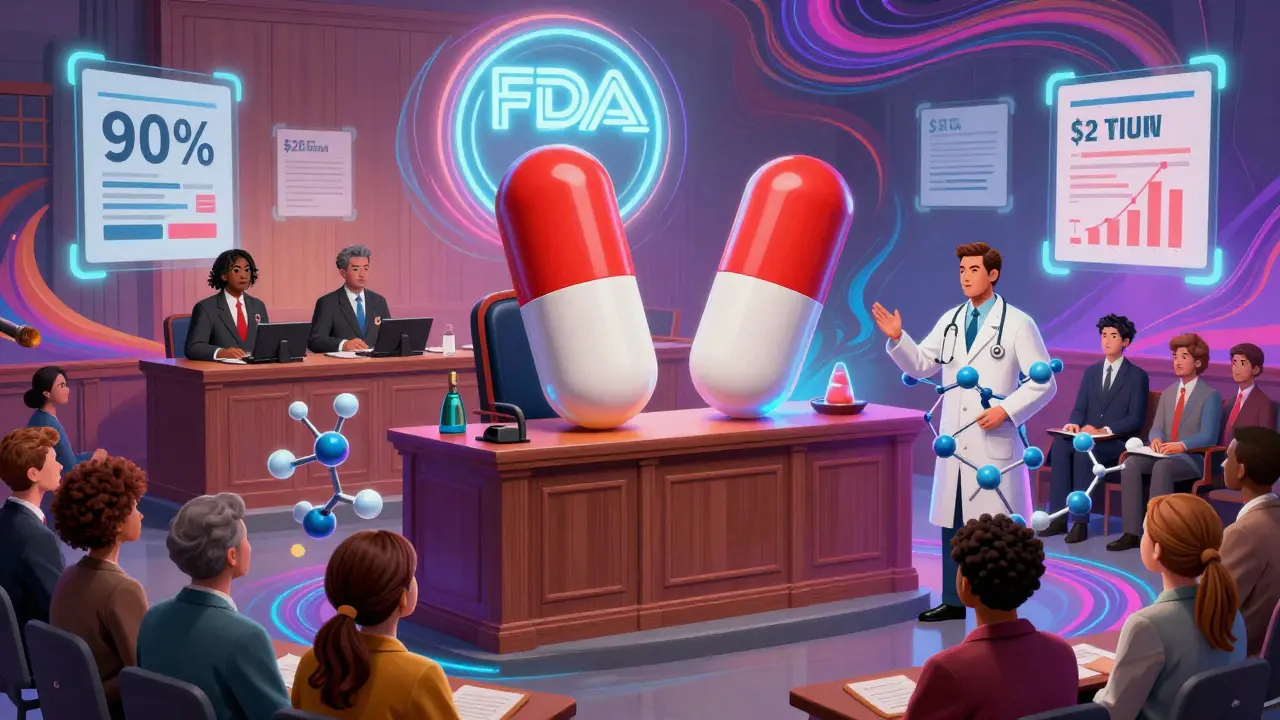
How Are Generic Drugs Used in Real Life?
In pharmacies across the country, pharmacists automatically substitute generics unless the doctor says “do not substitute.” All 50 states have laws allowing this. In 49 of them, the pharmacist can switch without asking the patient-unless the prescription says otherwise. Patients often don’t realize they’re getting a generic. The pill looks different. The name on the bottle is unfamiliar. That’s why clear communication matters. Pharmacists should explain that it’s the same medicine, just cheaper. Many insurance plans require you to try the generic first. If you refuse, you might pay more out of pocket. That’s not a punishment-it’s a way to keep costs down for everyone.What’s Next for Generic Drugs?
More than 350 brand-name drugs will lose patent protection between 2023 and 2027. That’s $138 billion in potential savings. But challenges remain. Manufacturing is concentrated. About 80% of the active ingredients in generics come from just two countries: India and China. Supply chain issues-like factory shutdowns or raw material shortages-can cause drug shortages. The FDA reported a 22% increase in shortages in 2022, partly because of quality problems at some generic plants. New rules like GDUFA III aim to fix this. The FDA is speeding up reviews, increasing inspections, and cracking down on delays caused by brand-name companies blocking generic access. The CREATES Act, passed in 2019, makes it harder for big pharma to use legal tricks to delay generics. At the same time, authorized generics-where the brand-name company sells its own generic version-are becoming more common. This lets them keep some market share while still lowering prices.Bottom Line: Should You Use Generic Drugs?
Yes. Unless your doctor has a specific reason not to, choose the generic. It’s the same medicine. It’s been tested just as rigorously. It works just as well. And it saves you-and the whole system-money. The fear that generics are inferior is based on marketing, not science. The FDA doesn’t approve drugs based on brand names. It approves them based on performance. And if a generic passes, it’s safe, effective, and ready to use. You’re not taking a risk when you choose a generic. You’re making a smart, evidence-based choice.Are generic drugs as safe as brand-name drugs?
Yes. The FDA requires generic drugs to meet the same safety and quality standards as brand-name drugs. They use the same active ingredients, are made in the same type of facilities under the same rules, and are monitored just as closely after they hit the market. There is no evidence that generics are less safe.
Why do generic drugs look different from brand-name drugs?
By law, generic drugs can’t look exactly like the brand-name version because of trademark rules. That’s why the color, shape, or size might be different. But these differences are only in inactive ingredients like dyes or fillers-they don’t affect how the drug works. The active ingredient is identical.
Can I switch from a brand-name drug to a generic safely?
For most drugs, yes. The FDA approves generics only if they’re bioequivalent, meaning they work the same way in your body. For common medications like high blood pressure pills, antibiotics, or cholesterol drugs, switching is routine and safe. For drugs with a narrow therapeutic index-like warfarin or levothyroxine-your doctor may prefer you stay on one version, but this is a precaution, not a requirement.
Do generic drugs take longer to work?
No. Generic drugs must reach the same level in your bloodstream at the same rate as the brand-name version. The FDA tests this using bioequivalence studies. If a generic absorbed too slowly or too quickly, it wouldn’t be approved.
Why are some generic drugs still expensive?
When only one or two companies make a generic, there’s little competition, so prices stay higher. Once five or more manufacturers enter the market, prices typically drop dramatically. Some older generics have become expensive because demand is low or manufacturing is difficult. But for most common drugs, generics are still far cheaper than the brand.
Are all generic drugs made in the U.S.?
No. Many generic drugs are made overseas, especially in India and China. But the FDA inspects all facilities-domestic and foreign-using the same standards. Just because a drug is made abroad doesn’t mean it’s lower quality. The FDA has inspectors stationed in key countries to monitor production.
Can I trust a generic drug if it’s much cheaper?
Absolutely. The price difference comes from savings in development and marketing, not from lower quality. The FDA doesn’t approve drugs based on cost. It approves them based on science. If a generic is on the market, it has passed the same tests as the brand-name version.
Joanne Smith
December 26, 2025 AT 22:14So let me get this straight - we’re paying $2.6 billion to make a pill, then let someone else make the exact same pill for $0.10? And the FDA says it’s fine? 🤯 I mean, I get it, but also… who decided that capitalism should be this ridiculous?
Prasanthi Kontemukkala
December 28, 2025 AT 14:39As someone from India where many generics are made, I’ve seen how carefully these are produced. The factories aren’t shady backrooms - they’re clean, regulated, and inspected. It’s not magic, it’s science. And yes, it saves lives. 💚
Alex Ragen
December 29, 2025 AT 20:25One must pause - and I do mean *pause* - to contemplate the epistemological implications of bioequivalence: if two substances are functionally indistinguishable in vivo, does the ontological distinction of branding persist as a mere semiotic construct? Or, more pertinently - is the placebo effect of brand-name pills, statistically significant, a testament to the power of narrative over chemistry?
Lori Anne Franklin
December 31, 2025 AT 16:29my doc switched me to generic lisinopril and i thought i was gonna die… but like… i didn’t? weird. now i save $40 a month. also i think the generic looks like a tiny blue pebble. no biggie.
Bryan Woods
January 2, 2026 AT 08:36The data is clear and the regulatory framework is robust. Generic drugs are not merely cost-effective alternatives - they are scientifically validated equivalents. Their widespread adoption represents one of the most successful public health interventions in modern medicine.
Ryan Cheng
January 4, 2026 AT 02:07For anyone still nervous about generics - try this: next time you get a prescription, ask your pharmacist to show you the FDA’s bioequivalence report. It’s not just a formality - it’s a guarantee. You’re not taking a gamble. You’re just skipping the ad budget.
wendy parrales fong
January 5, 2026 AT 05:55why are we scared of cheap medicine? we buy generic cereal and think its fine. why is a pill any different? it’s the same stuff. just cheaper. that’s not bad. that’s smart.
Jeanette Jeffrey
January 6, 2026 AT 05:51Oh please. You think the FDA’s some saintly guardian? Half the generic plants in India have inspection reports that look like they were written by a sleep-deprived intern. And don’t get me started on the ‘80-125% bioequivalence window’ - that’s a loophole wide enough to drive a truck full of talc through.
Shreyash Gupta
January 7, 2026 AT 13:59Bro… I took generic metformin and my stomach hated me for 3 weeks. Brand name? Smooth as butter. 😔 Maybe it’s not all the same? 🤔
Ellie Stretshberry
January 8, 2026 AT 18:39my aunt switched to generic thyroid med and she’s fine now… but i think she got the wrong one once and felt weird for a day? maybe just be careful? i dont know. i’m not a doctor
Zina Constantin
January 10, 2026 AT 06:06As a Nigerian-American, I’ve seen how life-changing generics are in my family’s home country - where people choose between medicine and food. This isn’t just about savings. It’s about dignity. Thank you for explaining this so clearly.
Dan Alatepe
January 12, 2026 AT 00:44THEY MADE ME TAKE THE BLUE PILL INSTEAD OF THE RED ONE AND I FELT LIKE I WAS BEING BETRAYED 😭💔 BUT THEN I REALIZED… I WAS STILL ALIVE. SO I CRIED A LITTLE… THEN I SAVED $80. 🙏