GLP-1 Side Effect Timeline Calculator
Track Your Side Effect Progression
Get a personalized timeline for when nausea typically improves based on your dosing schedule.
More than 1 in 8 Americans are now taking a GLP-1 receptor agonist-whether for type 2 diabetes or weight loss. Drugs like Ozempic, Wegovy, and Mounjaro deliver real results: up to 20% body weight loss, better blood sugar control, and fewer diabetes complications. But for many, the cost isn’t just financial. It’s the nausea, the bloating, the vomiting that makes them question whether the benefits are worth it.
Why Do GLP-1 Drugs Make You Feel Sick?
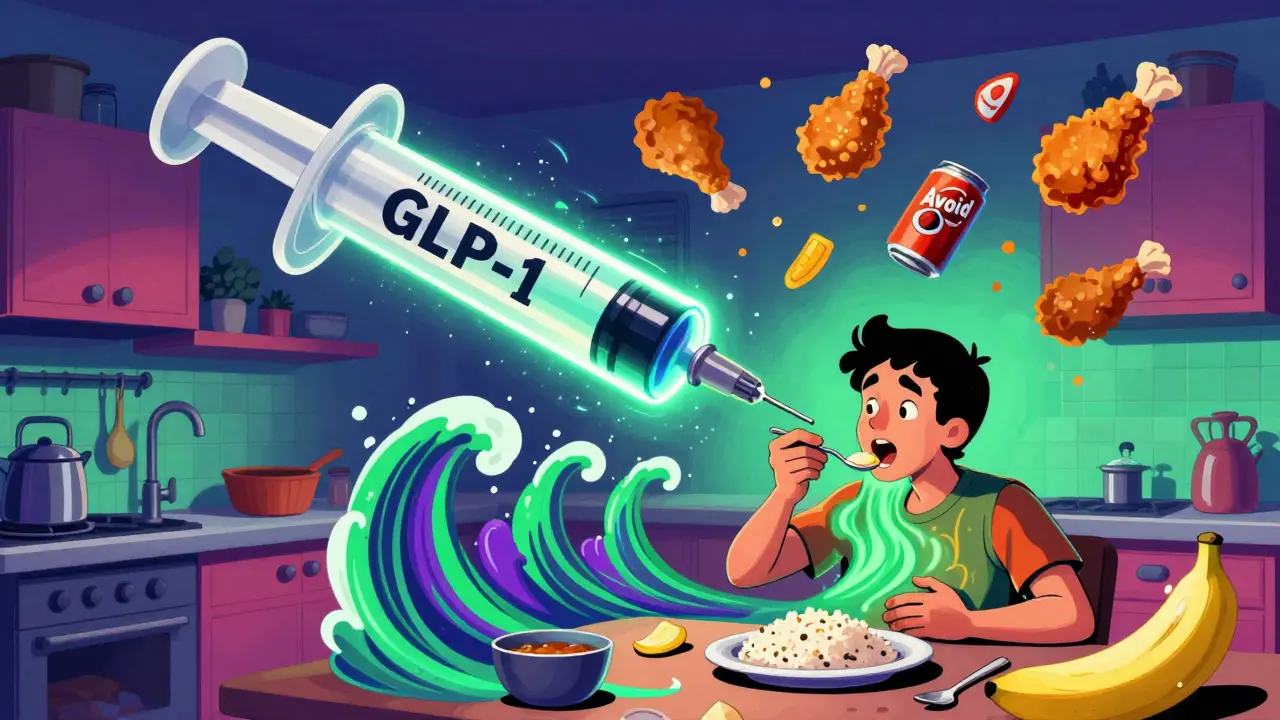
These drugs work by mimicking a natural hormone called GLP-1, which tells your brain you’re full and slows down how fast food leaves your stomach. That’s why you eat less and lose weight. But that same mechanism is why your gut rebels. Slowing gastric emptying means food sits longer. Your stomach doesn’t churn like it used to. The result? Nausea, bloating, stomach pain, and sometimes vomiting.
This isn’t a bug-it’s the feature. Every GLP-1 agonist does this, no matter if it’s injected weekly or daily, whether it’s semaglutide, liraglutide, or tirzepatide. The side effects are class-wide. You can’t avoid them by switching brands. The only difference is how bad they are for you.
How Common Are These Side Effects?
Studies show 40% to 85% of people on GLP-1 drugs experience nausea or other GI issues. In clinical trials, about 1 in 5 people on semaglutide felt nauseous at the full dose. With liraglutide, it’s closer to 1 in 4. During the first few weeks of treatment, especially while your dose is being increased, nausea hits hardest. Some people feel sick every day. Others only get it after big meals or fatty foods.
But here’s the good news: for most, it gets better. Within 4 to 8 weeks, as your body adjusts, symptoms fade. A 2022 study in the Journal of Clinical Medicine found that over 80% of patients saw major improvement after reaching their maintenance dose. The problem isn’t that the side effects are permanent-it’s that they’re strong enough to make people quit too soon.
What’s the Worst That Can Happen?
Most GI side effects are annoying, not dangerous. But some risks are real. A 2023 JAMA Network study of over 5,000 users found GLP-1 drugs increased the risk of serious conditions like:
- Pancreatitis (9 times higher risk)
- Bowel obstruction (4 times higher risk)
- Gastroparesis (3.5 times higher risk)
These are rare-less than 1 in 100 people-but they’re serious. You need to know the red flags: severe abdominal pain that doesn’t go away, vomiting that won’t stop, inability to pass gas or have a bowel movement, or yellowing of the skin or eyes. If you have any of these, call your doctor immediately. Don’t wait. These drugs carry a boxed warning from the FDA about thyroid tumors in animals, though no clear link has been found in humans.
How to Reduce Nausea Without Stopping the Drug
You don’t have to suffer through it. There are proven ways to make these side effects easier to handle.
Slow down the dose increase. Many doctors rush patients to the full dose. But the FDA-approved titration schedules exist for a reason. If you’re on Ozempic, stay at 0.25 mg for 4 weeks, then 0.5 mg for another 4. Don’t jump ahead. Let your stomach adapt.
Eat smaller, simpler meals. Large portions, greasy food, and sugary snacks make nausea worse. Stick to bland, low-fat foods: toast, rice, bananas, broth, boiled chicken. Avoid fried food, creamy sauces, and carbonated drinks. Eat slowly. Chew well. Stop when you’re 80% full-even if you’re still hungry.
Stay hydrated, but sip slowly. Chugging water right after eating can trigger vomiting. Sip water, herbal tea, or ginger ale throughout the day. Ginger is a natural anti-nausea aid. Try ginger tea, ginger chews, or capsules (after checking with your doctor).
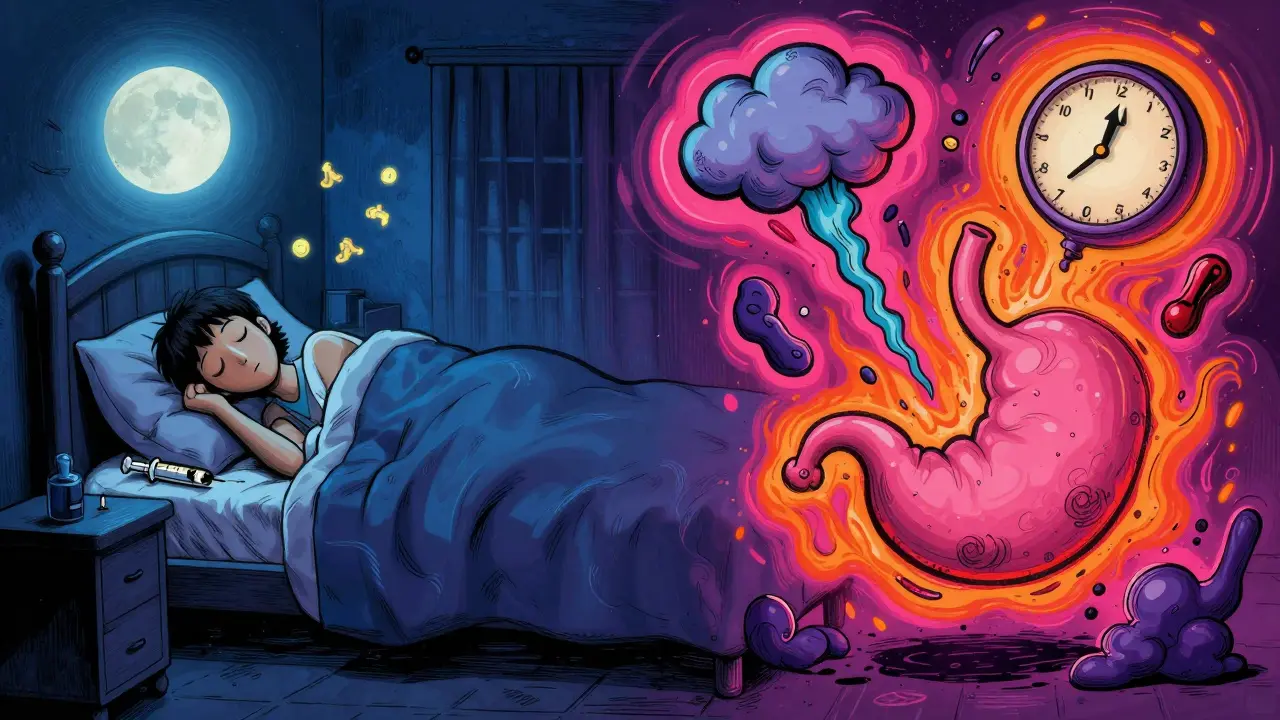
Take your dose at night. Many people report less nausea when they inject their medication before bed. That way, if you feel sick, you’re already lying down. You’re less likely to notice it, and you can sleep through the worst part.
Don’t lie down after eating. Gravity helps. Stay upright for at least 30 minutes after a meal. This keeps food from backing up into your esophagus and triggering reflux or nausea.
Consider OTC help-carefully. Medications like Dramamine (dimenhydrinate) or Pepto-Bismol can help with nausea and upset stomach. But talk to your doctor first. Some can interact with other meds or mask symptoms that need attention.
When to Quit-And When to Push Through
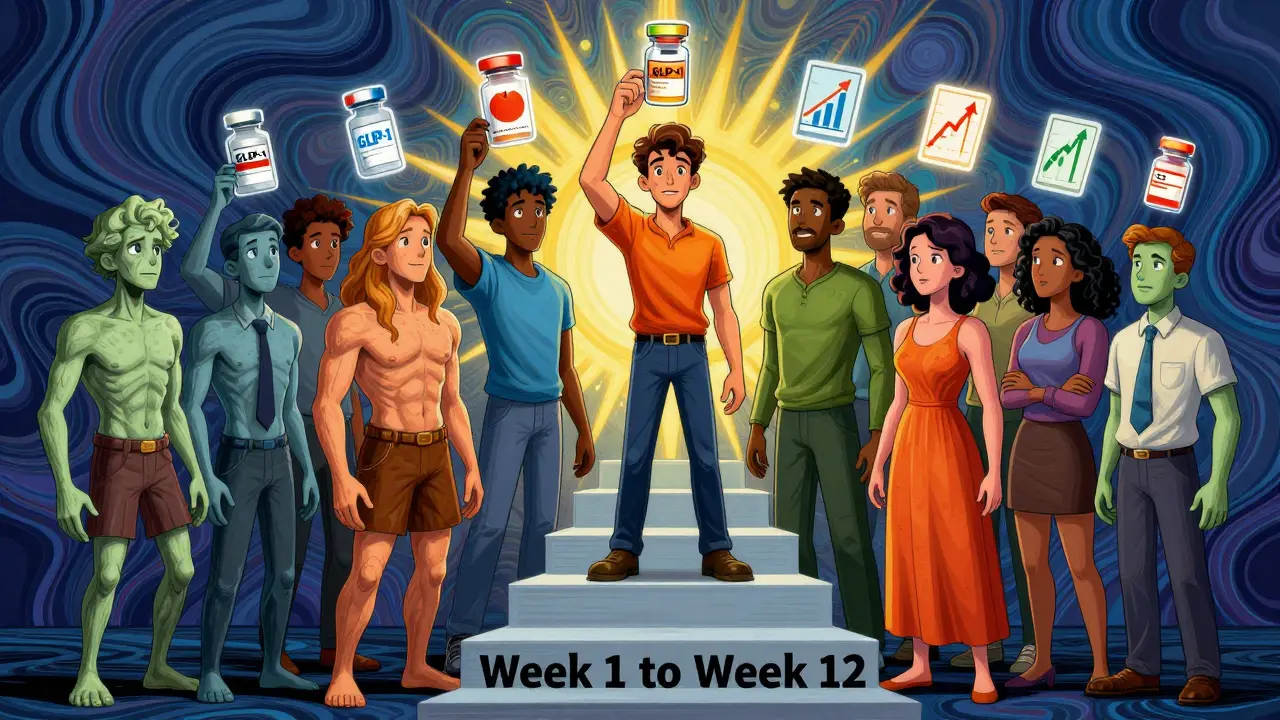
It’s normal to want to stop when you feel awful. But quitting too early means missing out on the benefits. Most people who stick with it for 3 months see their nausea drop by 70% or more. Weight loss kicks in around week 8 to 12. Blood sugar improves even faster.
But if your nausea turns into vomiting multiple times a day, you’re losing weight too fast, or you’re dehydrated and dizzy, that’s a sign to pause. Talk to your provider. They may lower your dose temporarily or delay the next increase. Never stop cold turkey without medical advice-it can cause blood sugar spikes or rebound weight gain.
What’s Next for These Drugs?
Drugmakers know the side effects are holding back adoption. That’s why new versions are coming. Some are being designed to release more slowly, reducing the gut shock. Others combine GLP-1 with other hormones (like GIP) to boost effectiveness at lower doses-meaning less nausea for the same results. Tirzepatide (Mounjaro) already does this, and early data suggests slightly lower nausea rates than semaglutide.
The FDA is also reviewing oral versions of GLP-1 drugs, which may be easier on the stomach than injections. Early trials show promise, but we’re still years away from wide availability.
Real People, Real Experiences
On Reddit’s r/Ozempic and r/Wegovy, users share the same stories: the first month is brutal. One person wrote, “I threw up twice on day 3. I almost quit. But I stuck with the 0.25 mg for 6 weeks, then went to 0.5 mg. Now, at 1 mg, I feel fine. I lost 42 pounds.”
Another said, “I switched from morning to night injections. No more nausea at work. I started eating oatmeal for breakfast instead of toast with butter. Game changer.”
These aren’t outliers. They’re the people who made it through.
Bottom Line: It’s Hard, But It’s Worth It
GLP-1 agonists are powerful tools. They’re changing lives-for people with diabetes, for those struggling with obesity, for people who’ve tried everything else and failed. But they’re not magic pills. They’re medicine with real, uncomfortable side effects.
If you’re taking one, know this: your nausea won’t last forever. Your body will adjust. The key is patience, smart eating, and communication with your doctor. Don’t quit because you feel sick today. Wait until you’ve given it time. Most people who stick with it say the weight loss, the energy, the improved blood sugar-they’re worth every uncomfortable day.
And if you’re thinking about starting? Talk to your provider. Ask about starting low. Ask about diet tips. Ask what to watch for. Don’t go in blind. You’re not alone. Millions are on this path. And most of them made it through.
How long does nausea from Ozempic or Wegovy last?
Nausea usually starts during the dose-escalation phase and peaks in the first 2 to 4 weeks. For most people, it improves significantly by week 6 to 8, once they reach their maintenance dose. Some may feel mild nausea occasionally, but severe symptoms typically fade within 2 to 3 months.
Can I take anti-nausea medicine with GLP-1 drugs?
Yes, but only under medical supervision. Over-the-counter options like Dramamine (dimenhydrinate) or Pepto-Bismol can help with mild nausea and stomach upset. Avoid herbal supplements or unregulated remedies without checking with your doctor, as they may interfere with your medication or mask warning signs of more serious issues.
Does taking GLP-1 drugs at night help reduce nausea?
Many users report less nausea when they inject their dose at bedtime. This allows them to sleep through the worst of the symptoms, reducing anxiety and disruption to daily activities. It’s not a guaranteed fix, but it’s a simple, low-risk strategy worth trying.
What foods should I avoid while on GLP-1 agonists?
Avoid large meals, fried or greasy foods, high-fat dairy, sugary snacks, and carbonated drinks. These slow digestion even more and worsen bloating and nausea. Stick to small portions of bland, low-fat foods like rice, toast, boiled chicken, bananas, and clear broths. Eat slowly and stop before you feel full.
When should I stop taking a GLP-1 drug because of side effects?
Stop and call your doctor immediately if you experience severe, persistent vomiting or diarrhea, intense abdominal pain, inability to pass gas or have a bowel movement, jaundice (yellow skin or eyes), or signs of dehydration (dizziness, dark urine, rapid heartbeat). These could signal serious complications like pancreatitis, bowel obstruction, or gallbladder disease.
Will I gain all the weight back if I stop GLP-1 drugs?
Most people do regain weight after stopping, especially if they return to previous eating habits. GLP-1 drugs work by suppressing appetite and slowing digestion-once you stop, those effects disappear. To maintain weight loss, you’ll need to adopt long-term lifestyle changes: consistent healthy eating, regular movement, and portion control. Think of the drug as a tool to help you reset, not a permanent solution.
steve rumsford
January 7, 2026 AT 10:43Anastasia Novak
January 9, 2026 AT 03:36LALITA KUDIYA
January 9, 2026 AT 13:04Jessie Ann Lambrecht
January 10, 2026 AT 06:03Kyle King
January 10, 2026 AT 16:47Anthony Capunong
January 10, 2026 AT 22:06Jonathan Larson
January 12, 2026 AT 13:16Mina Murray
January 13, 2026 AT 04:41Andrew N
January 14, 2026 AT 01:05Poppy Newman
January 15, 2026 AT 11:39Emma Addison Thomas
January 16, 2026 AT 03:56Aparna karwande
January 17, 2026 AT 12:59Vince Nairn
January 18, 2026 AT 00:31Kamlesh Chauhan
January 19, 2026 AT 03:33