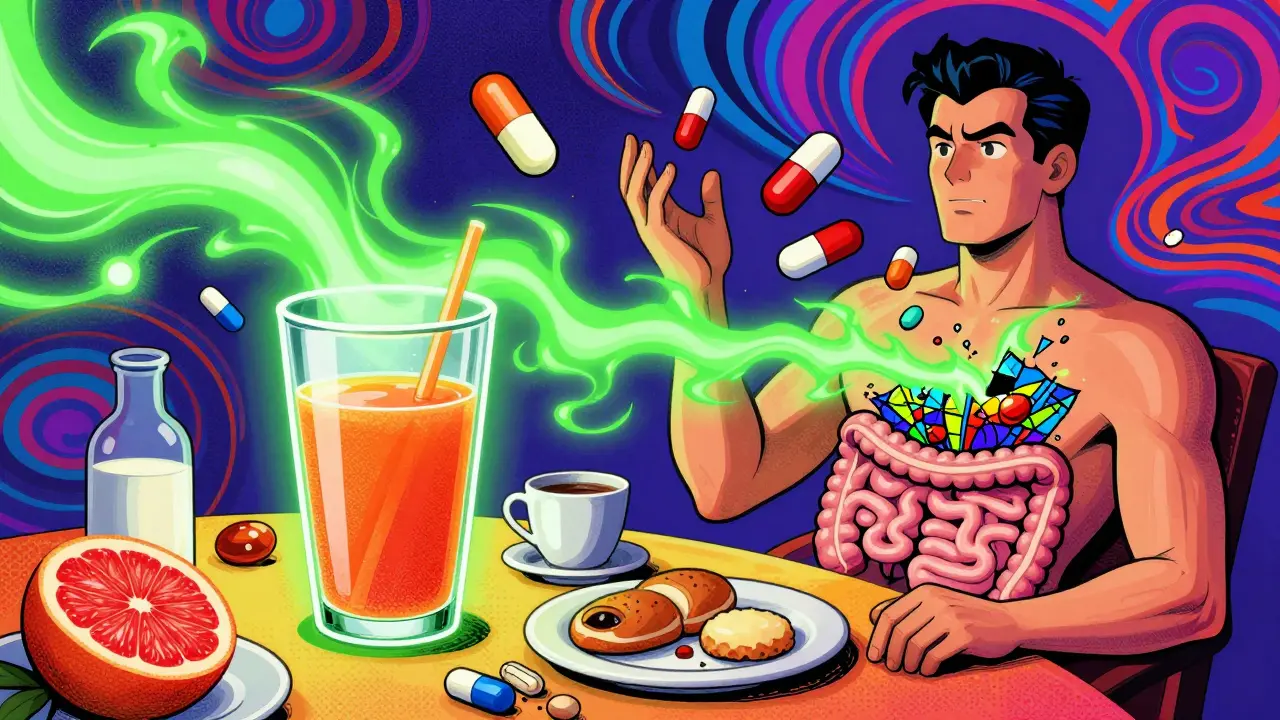
Drinking a glass of grapefruit juice in the morning might seem like a healthy habit-until it turns dangerous. For people taking certain medications, that refreshing citrus drink can trigger a silent chemical reaction inside the body that pushes drug levels into toxic territory. This isn’t a myth. It’s not a warning on a rare drug label. It’s a well-documented, life-threatening interaction that affects more than 85 prescription medications in the U.S. alone. And the worst part? Many people have no idea they’re at risk.
Why Grapefruit Juice Changes How Your Medication Works
It all starts in your gut. When you swallow a pill, your body doesn’t just absorb it whole. Many drugs pass through the lining of your small intestine, where enzymes-especially CYP3A4-break them down before they ever reach your bloodstream. This is a natural filter. It keeps too much drug from flooding your system too fast. Grapefruit juice doesn’t just bypass this filter. It shuts it down. The juice contains chemicals called furanocoumarins, mainly bergamottin and 6',7'-dihydroxybergamottin. These compounds bind to CYP3A4 enzymes in your gut and permanently disable them. It’s not a temporary pause. Your body has to grow new enzymes to replace the ones destroyed. That takes 24 to 72 hours. So even if you take your medication hours after drinking grapefruit juice, the damage is already done. A single 6.7-ounce glass of grapefruit juice can cut intestinal CYP3A4 activity by nearly half within four hours. That means more of your drug slips through untouched, flooding your blood. The result? Drug levels can jump 3 to 8 times higher than they should. For some medications, that’s the difference between healing and hospitalization.Medications That Can Turn Deadly With Grapefruit
Not all drugs react the same way. But the ones that do? They’re common-and dangerous when mixed. Statins are the biggest concern. Simvastatin (Zocor) is especially risky. Just one glass of grapefruit juice a day for three days can triple your simvastatin levels. That spikes your risk of rhabdomyolysis-a condition where muscle tissue breaks down, releasing toxins that can fry your kidneys. The risk jumps from 0.04 cases per 100 people per year to 0.44. That’s a tenfold increase. Atorvastatin (Lipitor) is less affected, but still risky. Pravastatin and rosuvastatin? They’re safe. If you’re on simvastatin, switching to one of those alternatives could be life-saving. Calcium channel blockers like felodipine (Plendil) and nifedipine (Procardia) can see their levels jump 5-fold and 3.3-fold, respectively. That means your blood pressure can crash too hard. You might feel dizzy, faint, or even have heart rhythm problems. Amlodipine (Norvasc) is an exception-it barely reacts. But if you’re not sure which one you’re on, don’t guess. Immunosuppressants like cyclosporine (Neoral) are another red flag. After grapefruit juice, drug levels can rise 50-60%. That increases the chance of kidney damage, high blood pressure, and infections. Organ transplant patients who drink grapefruit juice are putting their new organ at risk. Antiarrhythmics like amiodarone (Cordarone) can build up in the blood, leading to dangerous heart rhythms. Even some psychiatric drugs, like certain benzodiazepines and sedatives, can become overly potent. But not all are affected. Trazodone and zolpidem, for example, show little to no interaction. The key is knowing which ones are.It’s Not Just Juice-It’s Everything Grapefruit
People think they’re safe if they only eat the fruit. They’re wrong. The furanocoumarins are in the pulp, the peel, and the juice. Even grapefruit-flavored sodas or candies might contain enough to cause problems. And it’s not just grapefruit. Seville oranges (the kind used in marmalade) and pomelos have the same chemicals. If your breakfast includes Seville orange marmalade on toast and you’re on a statin? You’re in danger. Sweet oranges, tangerines, lemons, and limes? Safe. They don’t contain the same compounds. But if you’re unsure, assume it’s risky until you check with your pharmacist.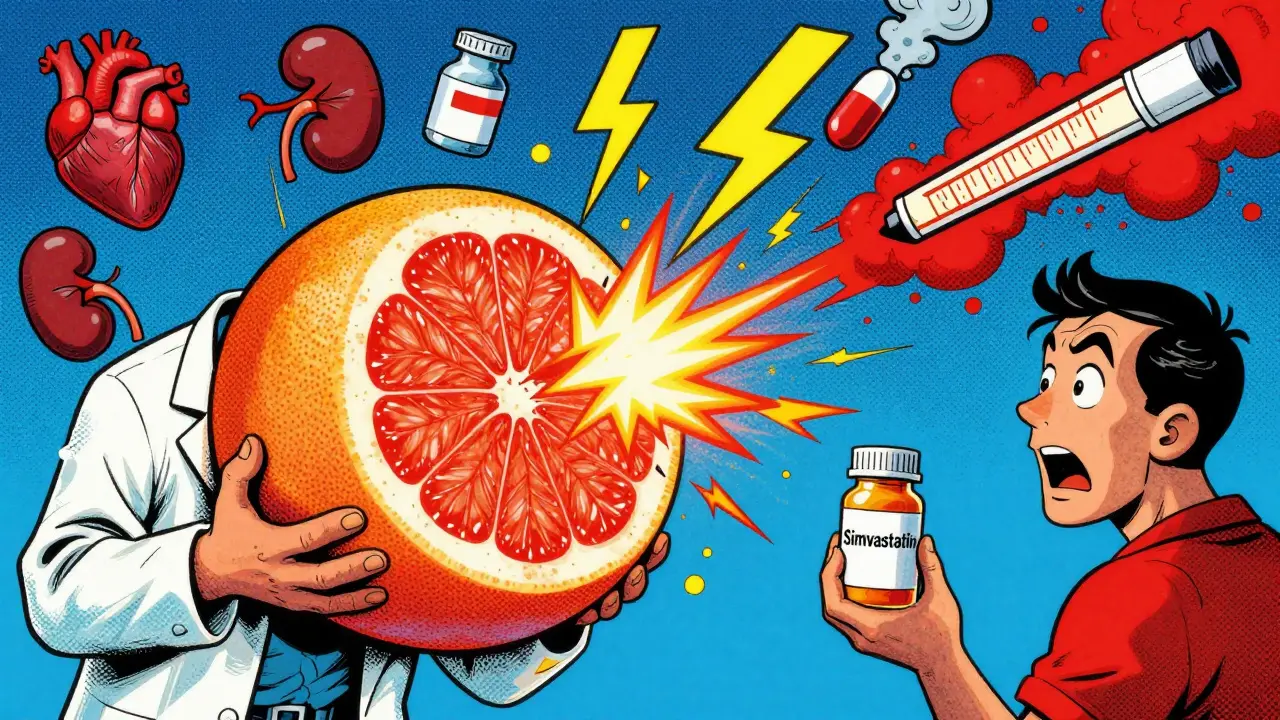
Who’s Most at Risk?
Older adults are the most vulnerable. People over 65 make up 40% of grapefruit juice drinkers in the U.S. They’re also the ones most likely to be on five or more medications. The average 70-year-old might be taking a statin, a blood pressure pill, a painkiller, a heart rhythm drug, and a supplement-all of which could interact. And because liver and kidney function decline with age, their bodies clear drugs slower to begin with. Add grapefruit juice? The risk multiplies. People with genetic variations that make them naturally produce more CYP3A4 enzymes are also at higher risk. Their bodies break down drugs faster, so when grapefruit shuts that system down, the spike in drug levels is even more dramatic. But there’s no test for this. You can’t know if you’re in that group. So the rule is simple: if your drug is on the list, avoid grapefruit entirely.What Should You Do?
Step one: Check your meds. Look at the label. If it says “avoid grapefruit” or “do not consume grapefruit products,” follow it. If it doesn’t say anything, don’t assume it’s safe. Ask your pharmacist. They’re trained to catch these interactions-and they check for them every time you pick up a prescription. Step two: Make a list. Write down every prescription, over-the-counter drug, and supplement you take. Bring it to your doctor or pharmacist every time you get a new prescription. Don’t rely on memory. Many people don’t realize their multivitamin or herbal remedy could be part of the problem. Step three: Find alternatives. If you’re on simvastatin, ask if pravastatin or rosuvastatin is an option. If you’re on felodipine, ask about amlodipine. Many safe switches exist. Your doctor can change your medication without losing effectiveness. Step four: Be consistent. Even if you only drink grapefruit juice once a week, it’s still dangerous. The enzyme inhibition lasts for days. There’s no safe window. You can’t time it around your dose. The FDA’s advice is clear: avoid grapefruit for the entire time you’re on the medication.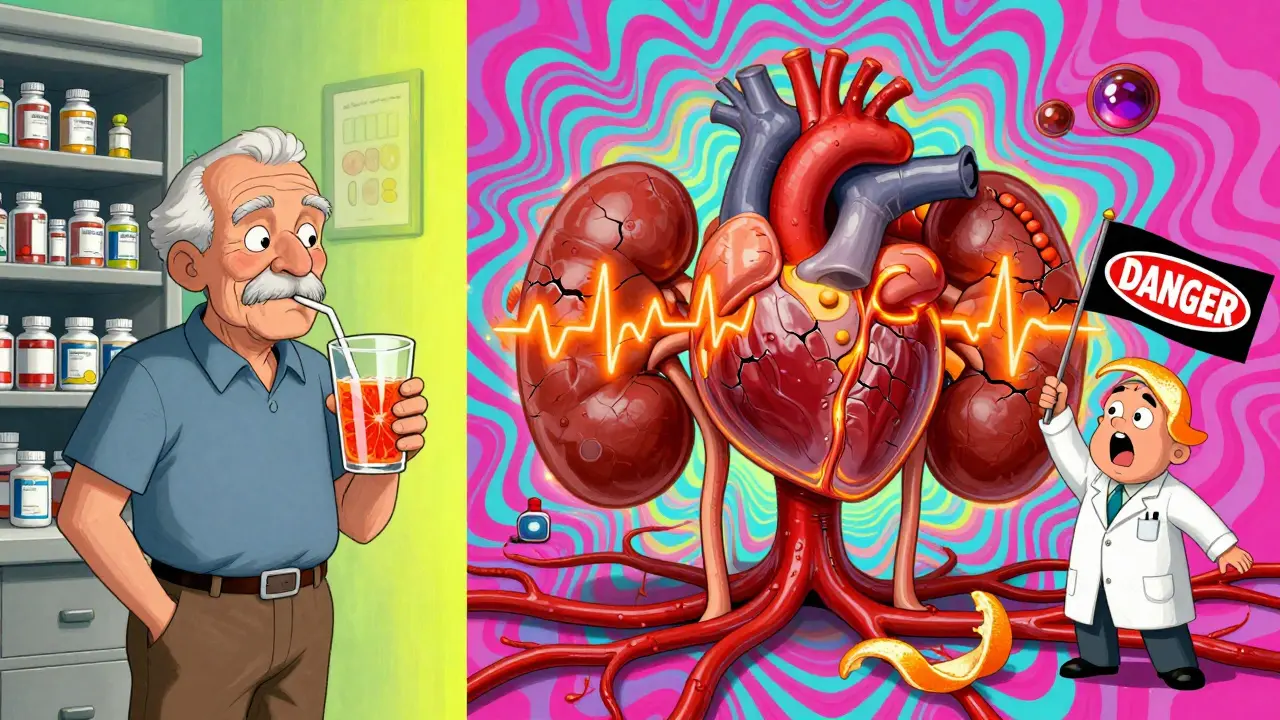
Why Aren’t More People Warned?
It’s shocking, but only 38% of patients recall being told about grapefruit interactions when they were prescribed affected drugs. Pharmacies screen for it in 89% of cases, but that doesn’t mean patients hear it. Labels are often buried in fine print. Doctors are rushed. Patients assume “natural” means “safe.” The FDA has required drugmakers to include grapefruit warnings since 2014. But compliance isn’t perfect. And even when warnings are there, they’re easy to miss. That’s why the burden falls on you-to ask, to check, to double-check.What’s Changing? What’s Next?
There’s hope on the horizon. In October 2023, the USDA announced CRISPR-edited grapefruit with 90% less furanocoumarin had passed early safety tests. If this reaches the market, it could change everything. But that’s years away. Until then, the old rule stands: if your drug interacts, avoid it. Researchers are also learning more about individual differences. Why does one person’s drug level triple with grapefruit juice, while another’s barely changes? Genetics, gut health, and even diet play roles. But again-no test exists to tell you where you fall. So the safest path is the same for everyone: avoid grapefruit if your medication is on the list.What If You Accidentally Drank It?
If you had a glass of grapefruit juice and just realized you’re on a risky medication, don’t panic. But don’t ignore it either. Monitor yourself. Are you dizzy? Do you feel unusually weak? Is your heart racing or skipping? Call your doctor or pharmacist immediately. Don’t wait for symptoms to get worse. Going forward, skip grapefruit entirely. One slip-up doesn’t mean you’re doomed. But repeating it? That’s how emergencies happen.Can I have orange juice instead of grapefruit juice?
Yes, sweet orange juice (like navel or Valencia) is safe. It doesn’t contain the furanocoumarins that cause the interaction. But avoid Seville oranges and pomelos-they have the same dangerous chemicals as grapefruit. Always check the label if you’re unsure.
Does cooking or pasteurizing grapefruit juice make it safe?
No. The furanocoumarins are heat-stable. Pasteurized juice, concentrate, or even grapefruit-flavored snacks still contain enough of these chemicals to block CYP3A4. Fresh, frozen, or bottled-it doesn’t matter. If it’s grapefruit, avoid it.
How long after drinking grapefruit juice should I wait to take my medication?
You shouldn’t wait. The enzyme inhibition lasts 24 to 72 hours. Even if you drink grapefruit juice in the morning and take your pill at night, the interaction still happens. The only safe option is to avoid grapefruit entirely while on the medication.
Are all statins affected by grapefruit juice?
No. Simvastatin and lovastatin are high-risk. Atorvastatin has a moderate interaction. Pravastatin, rosuvastatin, and fluvastatin are not affected. If you’re on a statin and want to drink grapefruit juice, ask your doctor which one you’re taking-and if there’s a safer alternative.
Can I drink grapefruit juice if I only take my medication once a week?
No. The enzyme inhibition lasts for days, regardless of how often you take your drug. Even if you only take your medication once a week, drinking grapefruit juice on any day can affect how your body processes that dose. The rule is simple: if your drug interacts, avoid grapefruit for the entire time you’re on it.