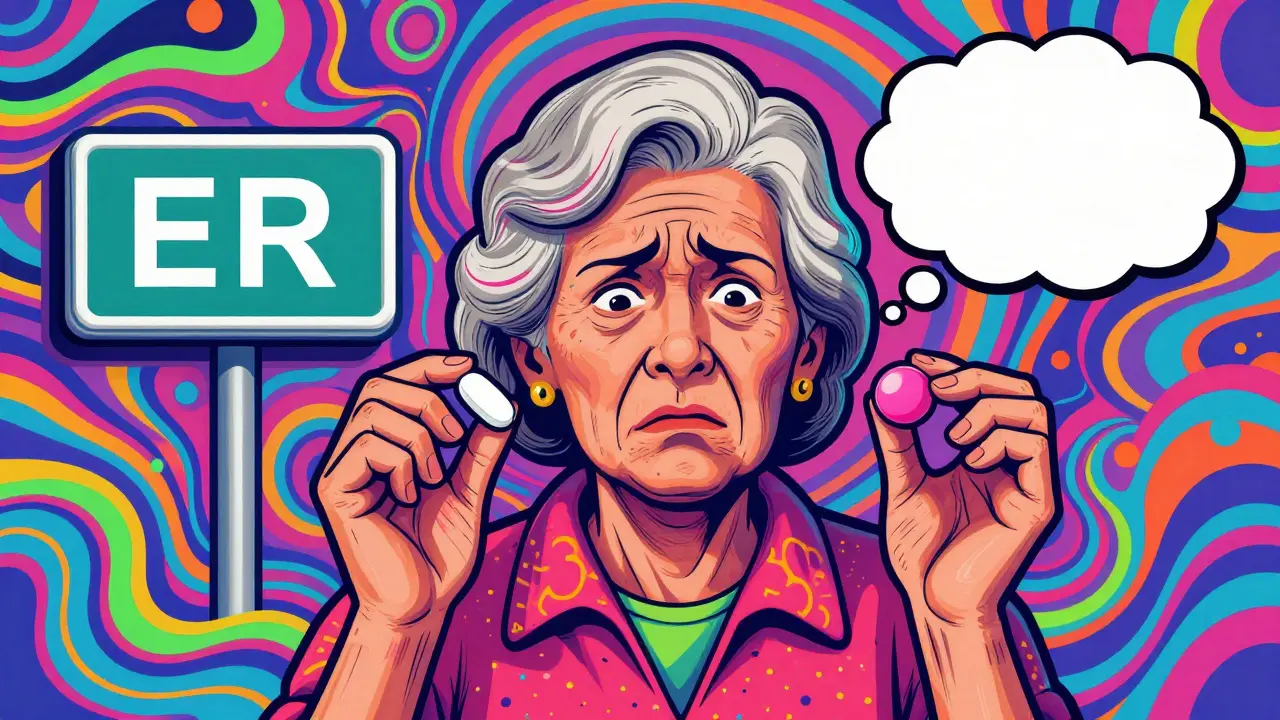
When you pick up a prescription, you expect the pill in your hand to do what it’s supposed to do. But what if that pill looks completely different from the last one you took? For millions of people, especially those with low health literacy, this change isn’t just confusing-it’s dangerous. Generic medications are meant to save money and make care more accessible. But without clear, consistent information, they can cause real harm.
Why Generics Look Different-and Why That Matters
Generic drugs contain the same active ingredients as brand-name drugs. They work the same way. They’re just cheaper. But here’s the problem: they don’t look the same. A pill that was white and oval one month might be pink and round the next. The packaging changes. The name on the label changes. For someone with strong health literacy, this is just a minor detail. For someone with limited literacy skills, it’s a red flag.A 2021 study in the Journal of the American Geriatrics Society found that over half of older adults taking heart medications would toss out pills that looked different-thinking they were fake, expired, or the wrong drug. One woman with diabetes told a support group: "My metformin changed from a white oval to a pink round tablet. I didn’t take it for three days. I thought it was a mistake. I ended up in the ER with high blood sugar."
This isn’t rare. A 2022 FDA review found that only 37% of generic drug manufacturers use plain language on patient leaflets. That means most instructions are written at a college reading level, even though 80 million American adults read at a basic or below-basic level. The result? People stop taking their meds. They take too much. They skip doses. They panic.
The Trust Gap: Why People Think Generics Don’t Work
Brand-name drugs have ads. They have logos. They have names people recognize-Lipitor, Prozac, Advil. Generics? They’re labeled with chemical names like "metformin" or "atorvastatin." No marketing. No recognition. Just a little pill in a plain bottle.That lack of familiarity breeds doubt. A 2018 study showed 68% of patients worried generics weren’t as effective as brand-name drugs. That number jumps to 82% among Medicare beneficiaries with low health literacy. People aren’t being irrational. They’re reacting to what they see: different shapes, different colors, no familiar branding. Their brain says: "If it looks different, it must be different."
And it gets worse. The same drug, made by two different companies, can look totally different. One manufacturer’s metformin might be a blue oval. Another’s might be a green capsule. A patient who’s stable on one version might get switched to another-and not realize it’s the same medicine. Between 2015 and 2020, over 1,200 medication errors were reported due to confusion between different generic versions of the same drug.
What Patients Need to Know (in Plain Language)
The National Network of Libraries of Medicine lays out six key questions every patient should be able to answer about their meds:- Name of medicine: Is this the brand name or the generic? Are they the same thing?
- What it’s for: Why am I taking this? What problem is it solving?
- How to take it: When? With food? On an empty stomach? Can I crush it?
- How to store it: Does it need refrigeration? Should it stay in the original bottle?
- Side effects: What’s normal? What’s dangerous? When should I call my doctor?
- When to worry: What signs mean I need help right away?
But here’s the catch: most patients never get clear answers to these questions. A 2016 study found 42% of patients couldn’t confirm that generics are just as effective as brand-name drugs. And when they’re handed a new pill with no explanation, they assume the worst.
How Healthcare Systems Are (Slowly) Fixing This
Some places are stepping up. The "Ask Me 3" program, used in over 1,200 clinics, trains doctors and pharmacists to ask three simple questions:- What is my main problem?
- What do I need to do?
- Why is it important?
Hospitals using this method saw a 31% drop in medication errors linked to generic switches. Another method, the "Brown Bag Review," asks patients to bring all their pills to an appointment. Pharmacists then lay them out and explain each one. In a Johns Hopkins study, this cut medication discrepancies by 44%.
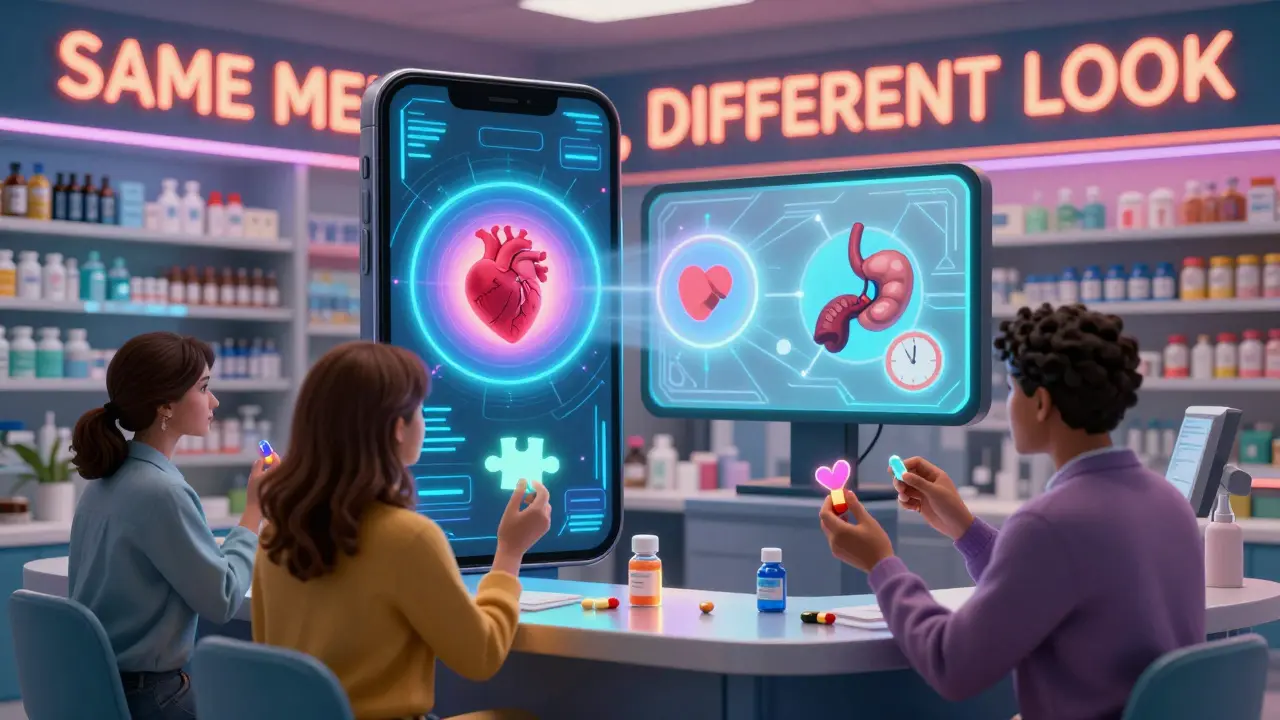
Digital tools are helping too. The Medisafe app, used by over 4 million people, shows photos of pills and alerts users when a new generic version arrives. A 2022 trial found it improved understanding by 37%. AI-powered tools that let patients snap a picture of a pill and instantly identify it are now being tested-and in early trials, they boosted understanding by 63% among people with low literacy.
The Bigger Picture: What Needs to Change
The problem isn’t just individual confusion. It’s systemic. The FDA and WHO agree: generic medications should be designed with health literacy in mind. That means:- Standardized appearance: The same drug should look the same across manufacturers. Color, shape, size-consistent.
- Plain language labels: No jargon. No tiny print. Simple words, big fonts.
- Color-coding: The FDA is testing a system where all blood pressure meds are blue, all diabetes meds are green. Australia’s version cut errors by 33%.
- Pharmacist-led checks: When a generic is switched, pharmacists should explain it-not just hand over the bottle.
Europe has already made progress. The EU’s Falsified Medicines Directive requires standardized packaging. Pilot programs in Germany and France cut medication errors by 19%. The European Medicines Agency now requires consistent appearance for generics across all member states-and saw a 27% drop in errors.
In the U.S., the 2023 National Action Plan to Improve Health Literacy set a goal to reduce generic-related confusion by 25% by 2027. The CDC’s Universal Precautions approach, now used in 92% of federally funded clinics, includes clear scripts for explaining generics. And in 38 states, new laws now require pharmacists to assess a patient’s understanding before switching to a generic.
What You Can Do Today
If you or someone you care for takes generic medications:- Ask: "Is this the same medicine I was taking before?" If the pill looks different, ask why.
- Bring all pills: Take your meds to every appointment. Lay them out. Let your doctor or pharmacist check them.
- Use apps: Download a pill identifier app. Take a picture. Know what you’re taking.
- Don’t guess: If you’re unsure, don’t skip a dose. Call your pharmacy. Ask for help.
Generic drugs save billions every year. They’re safe. They’re effective. But they’re only helpful if people understand them. Making information understandable isn’t a nice-to-have. It’s a matter of life and death.
Are generic medications really the same as brand-name drugs?
Yes. Generic drugs must contain the same active ingredient, strength, dosage form, and route of administration as the brand-name version. They’re required by the FDA to work the same way in the body. The only differences are in inactive ingredients (like dyes or fillers), shape, color, and packaging. These don’t affect how the drug works-only how it looks.
Why do generic pills look different each time I refill?
Different manufacturers make the same generic drug. Each company has its own formula for color, shape, and size. When your pharmacy switches suppliers-which happens often to keep costs low-the pill you get might look completely different. This doesn’t mean it’s less effective, but it can cause confusion, especially for people taking multiple medications or with low health literacy.
Can I ask my pharmacist to give me the same generic brand every time?
Yes. You can ask your pharmacist to fill your prescription with the same manufacturer each time. Some pharmacies will do this if you request it. Others may charge extra or have limited stock. But you have the right to ask-and if you’re confused by changing pills, it’s a reasonable request.
What should I do if I think my generic medication isn’t working?
Don’t stop taking it. Call your pharmacist or doctor. Ask if the medication changed. Check the label for the manufacturer name. Many times, the issue is confusion-not effectiveness. But if you notice real changes in how you feel (like new side effects or symptoms returning), get it checked. Your health matters more than assumptions.
Are there tools to help me identify my pills?
Yes. Apps like Medisafe, Drugs.com Pill Identifier, and WebMD’s Pill Identifier let you take a photo of a pill or enter its shape, color, and imprint to find out what it is. These tools are especially helpful when generics change appearance. The CDC recommends using them as part of your medication routine.
Ferdinand Aton
March 8, 2026 AT 02:08William Minks
March 8, 2026 AT 22:36Jeff Mirisola
March 9, 2026 AT 01:20Aaron Pace
March 11, 2026 AT 00:47Weston Potgieter
March 12, 2026 AT 02:15Vikas Verma
March 13, 2026 AT 00:46Sean Callahan
March 13, 2026 AT 05:29phyllis bourassa
March 14, 2026 AT 13:57Susan Purney Mark
March 14, 2026 AT 14:20Tim Hnatko
March 15, 2026 AT 09:18Joey Pearson
March 15, 2026 AT 10:24