
Breaking a pill in half or crushing it into a powder might seem like a simple way to save money or make a dose easier to swallow. However, doing this incorrectly can turn a helpful medication into a safety hazard. From aerosolizing dangerous chemicals to accidentally mixing two different drugs, the risks are real. If you're managing medications for yourself or a loved one, knowing how to keep the process sterile and accurate is non-negotiable.
| Goal | The Right Way | The Risky Way |
|---|---|---|
| Splitting | Use a stainless steel splitter with a V-shape holder | Using scissors or snapping by hand |
| Crushing | Use a closed-system crusher (like Silent Knight) | Mortar and pestle or open bags |
| Cleaning | 70% isopropyl alcohol wipes between different drugs | Rinsing with water or ignoring residue |
| Selection | Only split tablets with a visible score mark | Splitting enteric-coated or extended-release pills |
Know Which Pills Are Safe to Break
Before you even touch a pill splitter, you have to know if the medication is designed to be broken. Not all tablets are created equal. Immediate-release tablets is a type of medication formulated to dissolve and enter the bloodstream quickly. If these have a score mark (that little indented line), they are usually safe to split.
However, you must never split or crush Enteric-coated tablets or sustained-release (SR) and extended-release (ER) formulations. These are engineered to release the drug slowly over many hours or to protect the stomach lining. If you break these, you dump the entire dose into your system at once-a phenomenon known as "dose dumping"-which can be toxic or cause the drug to fail entirely. In fact, nearly 98% of these specialized coatings are strictly non-splittable according to FDA guidelines.
Stopping Cross-Contamination in Its Tracks
Cross-contamination happens when residue from one medication ends up in another. This is a massive risk for people taking multiple prescriptions, especially blood thinners like warfarin. Imagine a tiny fragment of a potent drug sticking to your splitter and then transferring to a different pill. That's how medication errors happen.
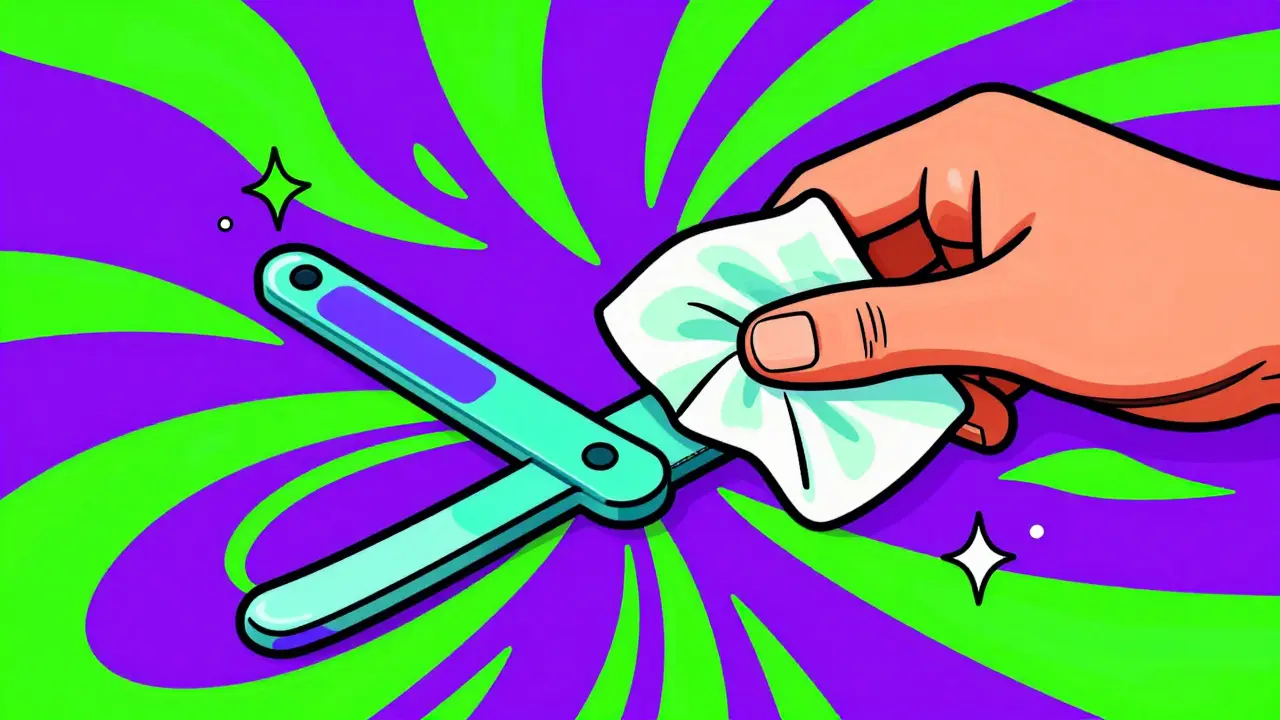
To prevent this, you need a strict cleaning ritual. Never use the same equipment for two different medications without a deep clean. The industry standard is using 70% isopropyl alcohol wipes to strip away any remaining powder. A simple rinse with water isn't enough because many pharmaceutical binders are water-resistant and will cling to the plastic or metal surfaces of your tools.
If you are a caregiver for multiple people, you simply cannot share a single splitter. Using resident-specific or patient-specific equipment has been shown to reduce errors by over 30%. If you must share a device, treat it like a medical instrument: disinfect it completely before and after every single use.
The Right Tools for the Job
Put the scissors away. Using household shears to cut a pill is one of the fastest ways to ensure an uneven dose. Research shows that manual breaking or using scissors only achieves about 63% dose accuracy. In contrast, using a dedicated splitter with a stainless steel blade and a V-shaped holder can jump that accuracy to over 92%.
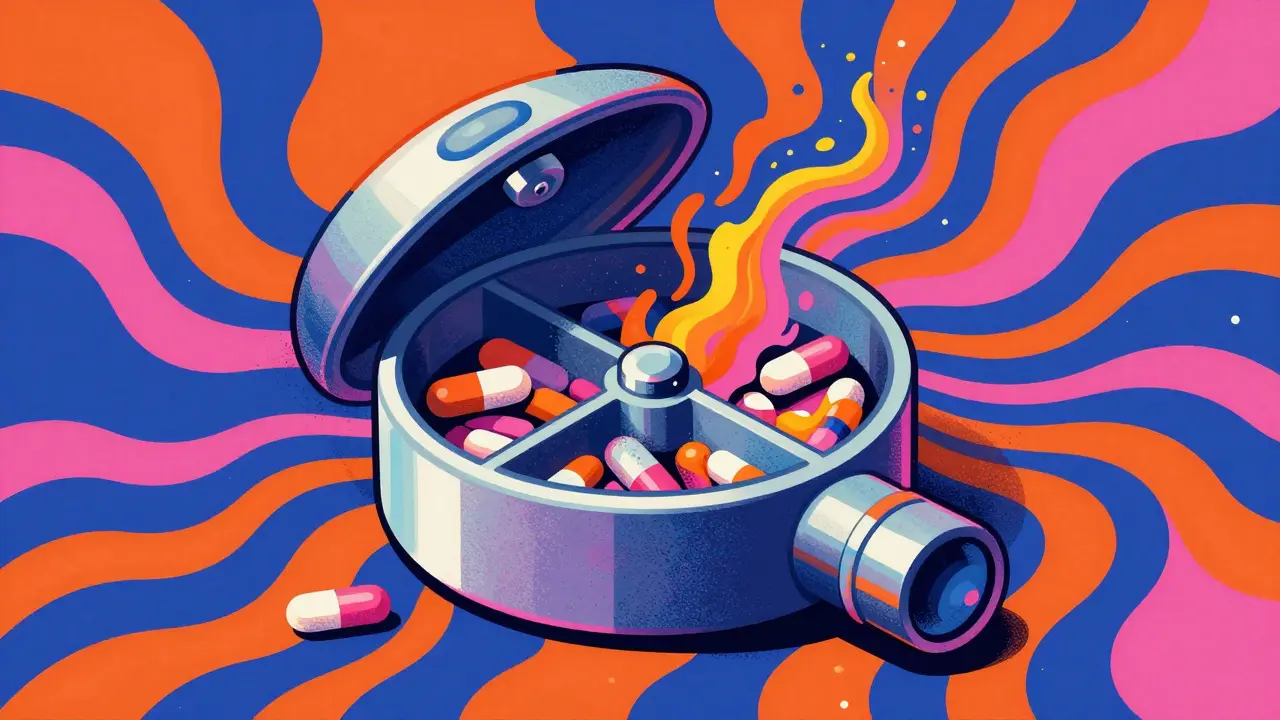
When choosing a splitter, look for one with a 0.05mm tolerance. This ensures the blade hits the center of the score mark every time. For those who need to pulverize medication, an open mortar and pestle is a contamination nightmare. It leaves powder in the crevices and releases particles into the air. Instead, opt for a closed-system pill crusher. The Silent Knight is often cited as the gold standard because it contains 99.8% of the particulate matter, keeping the drug inside the device and out of your lungs.
Handling Hazardous Drugs and High-Risk Meds
Some medications aren't just dangerous if the dose is wrong-they're dangerous to touch or breathe. Hazardous Drugs (HDs), including certain chemotherapy agents and cytotoxic drugs, can aerosolize when crushed. This means the medication literally floats into the air and can be inhaled by the person preparing the dose.
If you are dealing with NIOSH-listed hazardous drugs, a closed-system crusher is the only safe option. Open crushing can leave significant residues on gloves and surfaces. For these high-risk meds, follow these non-negotiable steps:
- Wear surgical gloves to prevent skin absorption.
- Use a sealed crushing chamber to trap dust.
- Clean the workspace immediately after the process with specialized disinfectant wipes.
- Ensure the area is well-ventilated.
The Proper Workflow for Sterile Administration
To keep your medication pill splitting safety standards high, follow this specific sequence. Don't skip steps, as the order of operations is what prevents contamination.
- Wash and Prep: Wash your hands thoroughly and clean your workspace. Use a clean, non-porous surface like a stainless steel tray or a sterilized countertop.
- Verify the Pill: Check the medication's packaging or ask a pharmacist if it's safe to split. Look for the score mark.
- Disinfect the Tool: Wipe down your splitter or crusher with an alcohol prep pad.
- Align and Cut: Place the pill firmly in the V-shaped holder. Ensure the blade is centered exactly on the score line.
- Administer Immediately: Don't split your entire month's supply at once. The FDA warns against pre-splitting and storing pills because the exposed interior can degrade when exposed to air and moisture. Split the pill right before you take it.
- Post-Clean: Wipe the tool again to remove any remnants before storing it.
Common Mistakes and How to Fix Them
Even with the right tools, things can go wrong. Many people struggle to align scored tablets perfectly, leading to crumbling. If your pill keeps shattering, it might be the blade. Replace your splitter blades regularly; a dull blade crushes the pill rather than slicing it, which increases the risk of losing a portion of the dose to "pill dust."
Another common error is ignoring the "DO NOT CRUSH" warnings on medication records. If you see a bold warning on your pharmacy label, believe it. These warnings are there because the drug's chemistry depends on its physical structure. If you're unsure, a pharmacist-led consultation can reduce these splitting errors by nearly 60%.
Can I split a pill if it doesn't have a score mark?
Generally, no. A score mark is a manufacturer's signal that the drug is distributed evenly throughout the tablet. Without a score mark, the active ingredient might be concentrated on one side, meaning one half of the pill could have all the medicine and the other half none.
Is it okay to split all my pills for the month at once?
No. The FDA recommends splitting pills only at the time of administration. Once a pill is split, the internal surface is exposed to humidity and oxygen, which can cause the medication to break down or lose potency faster.
What happens if I crush an extended-release tablet?
Crushing an extended-release (ER) tablet destroys the time-release mechanism. This leads to "dose dumping," where the entire 12 or 24-hour dose hits your system instantly. This can lead to an overdose or severe side effects.
How do I properly clean my pill splitter?
The most effective method is using 70% isopropyl alcohol wipes. Avoid using just water, as pharmaceutical binders often stick to plastic. Wipe all surfaces, including the blade and the V-shaped holder, between different medications to prevent cross-contamination.
Are there pills that are dangerous to crush because of the air?
Yes. Hazardous drugs, such as some chemotherapy medications, can become airborne particles when crushed. This can contaminate the environment and be inhaled by the user. Always use a closed-system crusher for these types of medications.
Troubleshooting and Next Steps
If you find that your pills are consistently crumbling even with a high-quality splitter, check the pill's hardness. Some medications are naturally more brittle. In these cases, ask your doctor if a liquid version of the medication is available. This removes the need for crushing entirely and ensures 100% dose accuracy.
For those managing complex medication regimes for seniors, consider a pharmacy that offers "pre-split" dosing if they can guarantee stability. Otherwise, investing in a dedicated set of tools for each person is the best way to avoid the kind of cross-contamination incidents that have plagued care facilities in the past.