Most people think cutting salt means just skipping the shaker at the dinner table. But if you’re trying to lower your blood pressure, that’s like trying to put out a house fire with a water bottle. About 75% of the sodium in your diet comes from packaged, processed, and restaurant foods-not the salt you add yourself. That’s why simply reducing table salt won’t make a real difference. The good news? You don’t need to eat bland food. You just need to know where the hidden sodium is and how to swap it out.
Why Sodium Raises Blood Pressure
Your body needs a little sodium to work properly-nerve signals, muscle contractions, fluid balance. But too much? It pulls water into your bloodstream. More fluid means more pressure on your artery walls. Your heart has to pump harder. Over time, that extra strain damages arteries, stiffens blood vessels, and increases your risk of heart attack and stroke. Research from the 2023 CARDIA-SSBP study showed that just one week of eating less sodium dropped systolic blood pressure by an average of 8 mm Hg in middle-aged and older adults. That’s similar to the effect of many blood pressure medications. And it wasn’t just people with hypertension who saw results-73% of all participants had lower blood pressure, even if they weren’t diagnosed with high blood pressure yet. Not everyone responds the same way. About half of people with high blood pressure are “salt sensitive,” meaning their blood pressure reacts strongly to sodium. Even 25% of people with normal blood pressure are affected. That’s why blanket advice like “eat less salt” works for most-but not all.The Numbers You Need to Know
The American Heart Association says the ideal daily sodium limit is 1,500 mg. That’s less than a teaspoon of salt. The upper limit? 2,300 mg. Most Americans eat 3,400 mg a day. That’s nearly 50% more than the upper limit. Here’s what that looks like in real food:- One fast-food burger: 1,000-1,500 mg sodium
- One can of canned soup: 800-1,200 mg sodium
- Two slices of store-bought bread: 400-600 mg sodium
- One frozen pizza: 1,500-2,500 mg sodium
- Home-cooked chicken and vegetables: 300-500 mg sodium
Where the Sodium Hides (And How to Avoid It)
You won’t find the biggest sodium sources in your salt shaker. You’ll find them in:- Processed meats: Bacon, deli meats, sausages, hot dogs. A single serving of ham can have over 1,000 mg sodium.
- Condiments: Soy sauce, ketchup, barbecue sauce, salad dressings. Two tablespoons of soy sauce = 1,000 mg sodium.
- Snacks: Chips, pretzels, crackers, popcorn. Even “lightly salted” versions add up fast.
- Canned and packaged foods: Beans, vegetables, broths, and sauces often have salt added for shelf life and flavor.
- Restaurant meals: Even “healthy” options like salads can have 1,200 mg sodium from croutons, cheese, and dressing.
How to Eat Less Sodium Without Giving Up Flavor
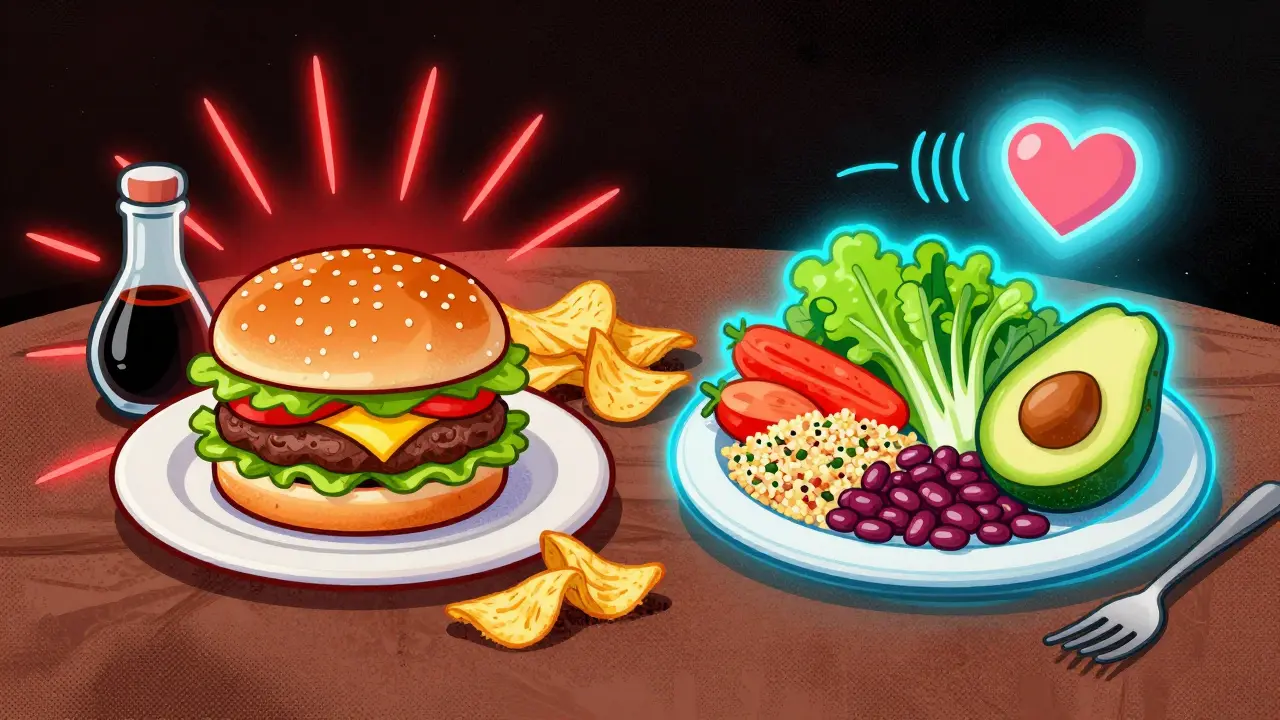
You don’t need to live on steamed broccoli and plain rice. Flavor comes from more than salt. Swap these:- Salt → Lemon juice, vinegar, or citrus zest: A squeeze of lime on grilled fish or a splash of balsamic on roasted veggies adds brightness without sodium.
- Table salt → Potassium chloride salt substitutes: Brands like Mrs. Dash or NoSalt replace sodium with potassium. These can cut sodium by 300-500 mg per meal. (Check with your doctor if you have kidney disease-potassium can be risky for some.)
- Soy sauce → Coconut aminos: It’s 70% less sodium than soy sauce and has a similar savory taste.
- Pre-made seasoning blends → Homemade spice mixes: Make your own taco seasoning with cumin, chili powder, garlic powder, and paprika. No salt needed.
- Instant rice or noodles → Plain brown rice or quinoa: Instant versions are loaded with sodium. Cook your own and add herbs.
The DASH Diet: Proven to Lower Blood Pressure
The DASH diet (Dietary Approaches to Stop Hypertension) isn’t a fad. It’s backed by decades of research. The original DASH study in 1997 showed it could lower systolic blood pressure by 8-14 mm Hg-as much as some medications. DASH isn’t about cutting sodium alone. It’s about eating more:- Fruits and vegetables (4-5 servings each per day)
- Whole grains (6-8 servings)
- Low-fat dairy (2-3 servings)
- Lean protein (fish, poultry, beans)
- Nuts, seeds, and legumes (4-5 servings per week)
- Saturated fat
- Sugar
- Sodium
Restaurant Hacks: Eat Out Without Spiking Your BP
You don’t have to give up dining out. Just be smart.- Ask for sauces and dressings on the side: That’s often 300-500 mg sodium saved.
- Choose grilled, steamed, or baked over fried: Frying adds sodium from breading and batter. Save 200-400 mg per meal.
- Avoid “healthy” traps: A “garden salad” with croutons, bacon bits, and ranch dressing can have more sodium than a cheeseburger.
- Order half portions: Many restaurants serve double portions. Splitting a meal cuts sodium and calories.
- Check menus online ahead of time: Many chains list nutrition info. Pick the lowest-sodium option before you get there.
Real-Life Success: How People Are Doing It
The American Heart Association’s “Sodium Swap” app users saw an average systolic blood pressure drop of 6.3 mm Hg after 30 days of tracking sodium. What did they do?- Switched from canned to no-salt-added beans
- Started making their own tomato sauce instead of buying it
- Used garlic, onion powder, and smoked paprika instead of salt
- Batch-cooked meals on Sundays so they didn’t reach for frozen dinners during the week
When Less Sodium Isn’t Better
Some experts warn that going too low-under 1,500 mg a day-might not help everyone. A 2024 meta-analysis in Nature Reviews Cardiology found a “J-shaped curve”: very high sodium increases risk, very low sodium might too, especially in people with advanced heart or kidney disease. That’s why blanket rules don’t work. If you’re on diuretics, have heart failure, or have kidney disease, talk to your doctor before making big changes. For most people, though, cutting from 3,400 mg to 2,000 mg-or even 2,500 mg-is a huge win.Start Small. Get Quick Wins.
You don’t need to overhaul your diet overnight. Start with one change:- This week: Swap one high-sodium food for a low-sodium version (e.g., canned soup → homemade broth).
- Next week: Read labels on your top three packaged foods.
- Month two: Try one new spice blend or herb combo in your cooking.
Lowering sodium isn’t about restriction. It’s about rediscovering real flavor. When you eat less processed food, you taste the sweetness of tomatoes, the earthiness of mushrooms, the brightness of herbs. Your body will thank you-with lower blood pressure, less strain on your heart, and more energy.
Can I still eat out if I’m trying to lower my sodium intake?
Yes, but you need to be strategic. Ask for sauces and dressings on the side, choose grilled or baked over fried, and avoid dishes with words like “crispy,” “smoked,” or “seasoned”-they’re code for extra sodium. Many restaurants now list nutrition info online, so check ahead. Even small changes, like skipping the croutons on your salad, can cut 300-500 mg of sodium in one meal.
Is sea salt or Himalayan salt better than table salt?
No. While these salts may have trace minerals, they’re still almost 100% sodium chloride. A teaspoon of sea salt has the same amount of sodium as table salt-about 2,300 mg. The idea that they’re healthier is a myth. If you’re trying to lower blood pressure, all salt counts the same.
How long does it take to notice a difference in blood pressure after cutting sodium?
Some people see changes in as little as one week. The CARDIA-SSBP study showed an average 8 mm Hg drop in systolic blood pressure after just seven days of a low-sodium diet. For others, it takes two to four weeks, especially if taste buds need time to adjust. Consistency matters more than speed.
Do I need to take potassium supplements to balance sodium?
Not usually. Most people can get enough potassium from food: bananas, spinach, sweet potatoes, beans, yogurt, and avocados. The goal is 3,500-5,000 mg per day from diet, not supplements. Potassium supplements can be dangerous if you have kidney problems or take certain blood pressure medications. Always talk to your doctor before taking them.
Can I ever have salt again after lowering my intake?
Yes-but sparingly. Once your taste buds reset, you’ll find that you don’t need much salt to enjoy food. A pinch on your eggs or a sprinkle on roasted vegetables is fine. The key is keeping most of your sodium from whole, unprocessed foods. Avoid going back to processed snacks, canned soups, or fast food regularly. Occasional salt is okay. Daily salt in processed foods is not.
Angel Tiestos lopez
January 12, 2026 AT 19:10Scottie Baker
January 14, 2026 AT 16:57Anny Kaettano
January 16, 2026 AT 09:58Kimberly Mitchell
January 16, 2026 AT 12:00Diana Campos Ortiz
January 18, 2026 AT 03:12Jesse Ibarra
January 18, 2026 AT 08:56laura Drever
January 18, 2026 AT 20:15Rosalee Vanness
January 20, 2026 AT 13:14John Tran
January 21, 2026 AT 00:22