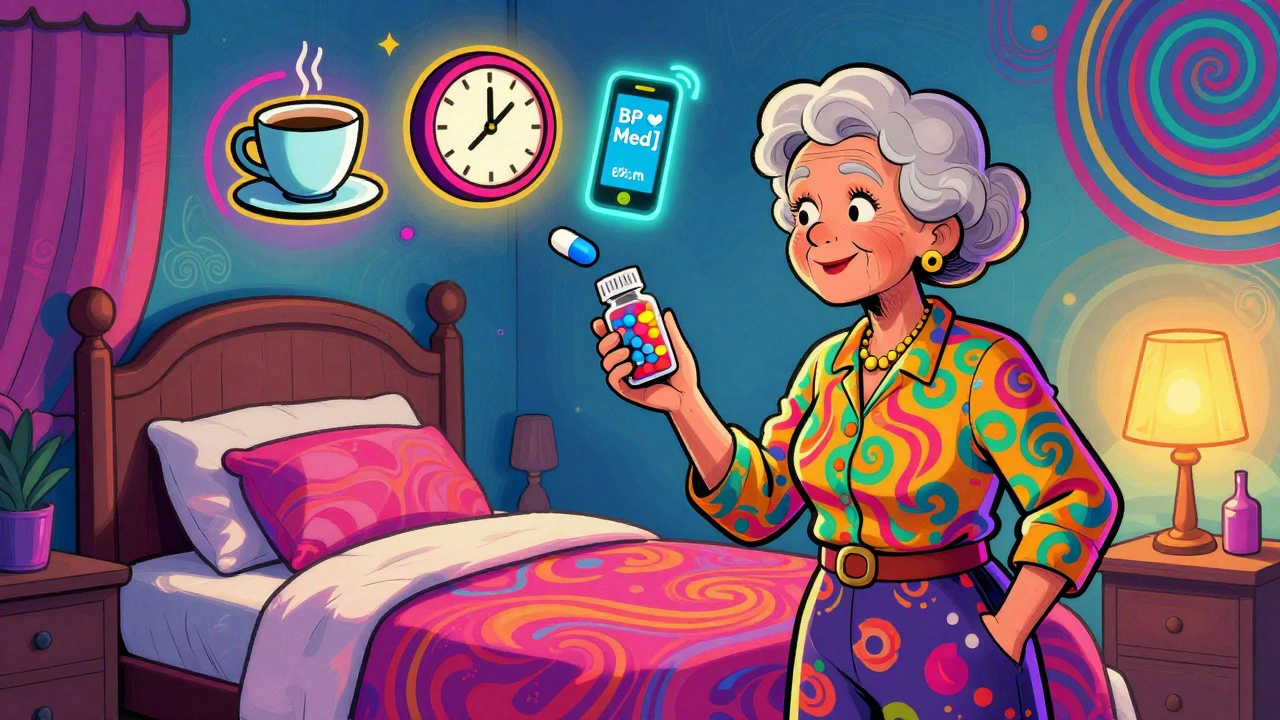
Managing multiple medications is harder than just reading the label. If you’re taking five, ten, or more pills a day - some in the morning, some at night, some with food, some without - it’s easy to miss one, mix them up, or forget why you’re even taking them. That’s where a medication action plan comes in. It’s not just a list. It’s your personal roadmap to taking your meds right, every time, with help from your care team.
What Exactly Is a Medication Action Plan?
A medication action plan (MAP) is a written, personalized guide that tells you exactly what to do with your medications. It’s not the same as a pharmacy printout that lists your prescriptions. A real MAP includes your goals, your daily routine, and clear steps to fix problems - like forgetting your afternoon pill or feeling dizzy after taking your blood pressure medicine. It’s built around your life, not your doctor’s notes. If you eat breakfast at 7 a.m. and take your insulin right after, your plan says that. If you hate pill organizers, your plan finds another way - maybe a phone alarm labeled "Heart Med" that goes off at 8 p.m. It’s made with you, not just for you. This tool is part of something called Medication Therapy Management (MTM), a service covered by Medicare Part D and many private insurers. It’s not optional. Studies show patients who use a real MAP are 25-40% more likely to take their meds correctly. And that means fewer hospital visits, fewer bad reactions, and more control over your health.Who Should Have One?
You don’t need to be sick to need a MAP. But you’re more likely to benefit if you:- Take three or more prescription medications for chronic conditions (like diabetes, high blood pressure, or heart disease)
- Also take over-the-counter drugs, vitamins, or herbal supplements
- Have been hospitalized recently or had a change in your meds
- Feel confused about why you’re taking each pill
- Miss doses more than once a week
Step-by-Step: How to Build Your Medication Action Plan
Creating a good plan takes time and teamwork. Here’s how it works:- Collect everything. Before your appointment, gather all your medications. That includes pills, patches, inhalers, eye drops, OTC painkillers, CBD gummies, fish oil, and herbal teas. Put them in a bag. Don’t just list them - bring the real bottles. Pharmacists can spot duplicates, expired meds, or dangerous interactions you might miss.
- Meet with your care team. This is usually your pharmacist, but it can be your doctor or nurse. They’ll ask: What’s working? What’s not? Do you ever skip a dose because it makes you tired? Do you take your blood sugar meds before or after coffee? They’ll write down your answers - not just your diagnosis.
- Identify the problems. Your team will look for issues: too many pills at once, conflicting instructions, side effects you haven’t mentioned, or meds that don’t match your lifestyle. Maybe you take a pill at 8 a.m. and 8 p.m., but you’re asleep by 10 p.m. That’s not sustainable. They’ll turn that into a fix.
- Set one clear goal. Don’t try to fix everything at once. Pick one thing: "Take my evening blood pressure pill every day for the next 30 days." Make it measurable. Use a calendar, a checklist, or a sticker chart. If you hit it, celebrate. If you miss it, figure out why.
- Write the action steps. This is the heart of the plan. Instead of saying "Take lisinopril daily," it says: "After brushing your teeth at night, pick up the blue pill from the bedside drawer and swallow it with a glass of water. Set a phone alarm labeled 'BP Med' for 9 p.m. If you forget, call your pharmacist before taking it tomorrow."
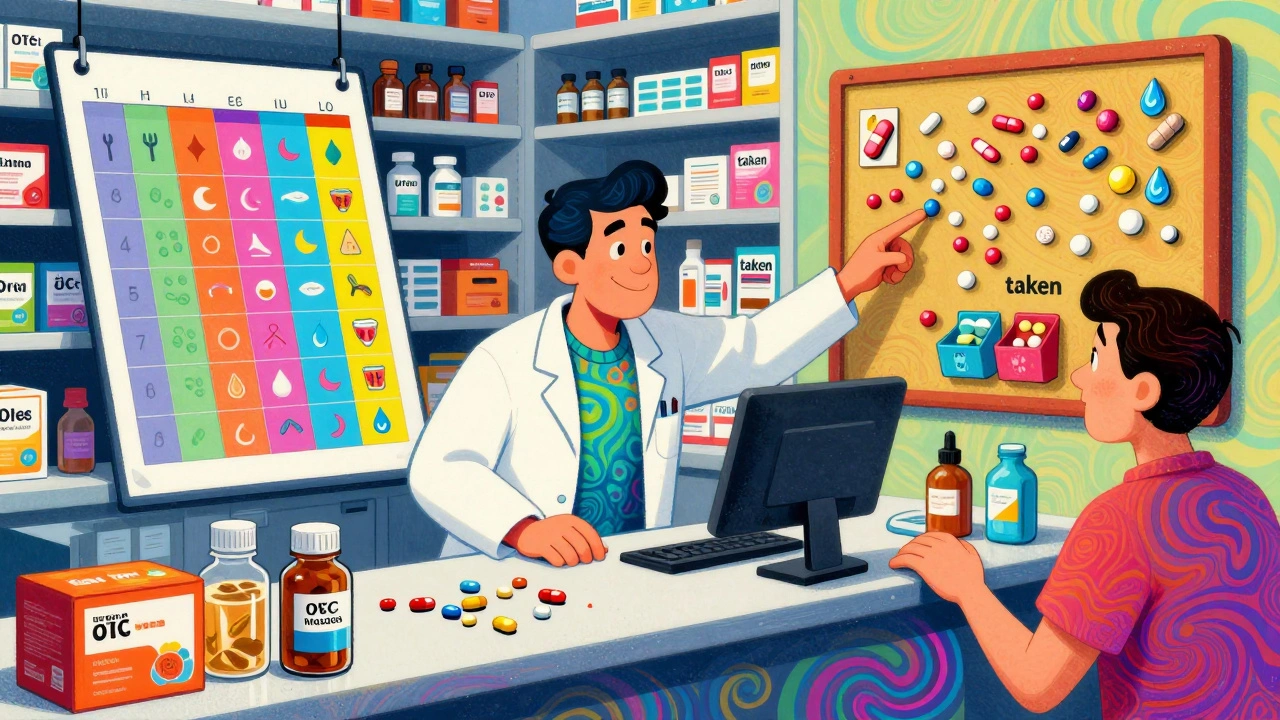
- Make it visual. If reading is hard, use pictures. Tape photos of your pills to a weekly chart next to your coffee maker. Color-code: red for heart meds, green for diabetes, yellow for pain. One patient turned her MAP into a fridge magnet with magnets for each pill - she moved them to a "taken" bin each day.
- Review it every 3 months. Your body changes. Your meds change. Your schedule changes. Your plan should too. Ask for a quick check-in every quarter. Even a 10-minute phone call can catch a problem before it becomes a hospital visit.
What Makes a Plan Work - and What Makes It Fail
Not all MAPs are created equal. The ones that help follow three rules:- Personalized. A generic template with "Take meds as directed" is useless. Your plan must reflect your real life - your work hours, your sleep schedule, your memory tricks.
- Clear language. No "QID" or "PRN." Say "Take four times a day" or "Take only if your pain is above a 5 on a scale of 1 to 10."
- Measurable. You need to know if you’re succeeding. "Take your pill" isn’t enough. "Take your pill at 8 p.m. for 21 out of 30 days" is.
What to Bring to Your Appointment
Be ready. Bring:- All prescription bottles (even ones you stopped taking)
- All OTC meds: Advil, Tylenol, allergy pills, sleep aids
- Vitamins, supplements, herbal teas, or CBD products
- A list of your biggest concerns: "I feel dizzy after my heart pill," or "I forget my insulin at work."
- Your calendar or phone - show your daily schedule
- Any past hospital discharge papers or lab results
How Your Care Team Helps
You’re not alone in this. Your care team includes:- Your pharmacist: The expert on how drugs work together. They’ll spot interactions, simplify your routine, and update your plan every time you pick up a new prescription.
- Your doctor: They decide which meds you need and adjust doses. They should review your MAP during every visit.
- Your nurse or care coordinator: They check in between visits, help you set reminders, and connect you to resources like low-cost drug programs.
- Family or caregivers: If you live with someone, include them. They can help you remember pills, drive you to appointments, or call the pharmacy if you’re confused.
Real Stories, Real Results
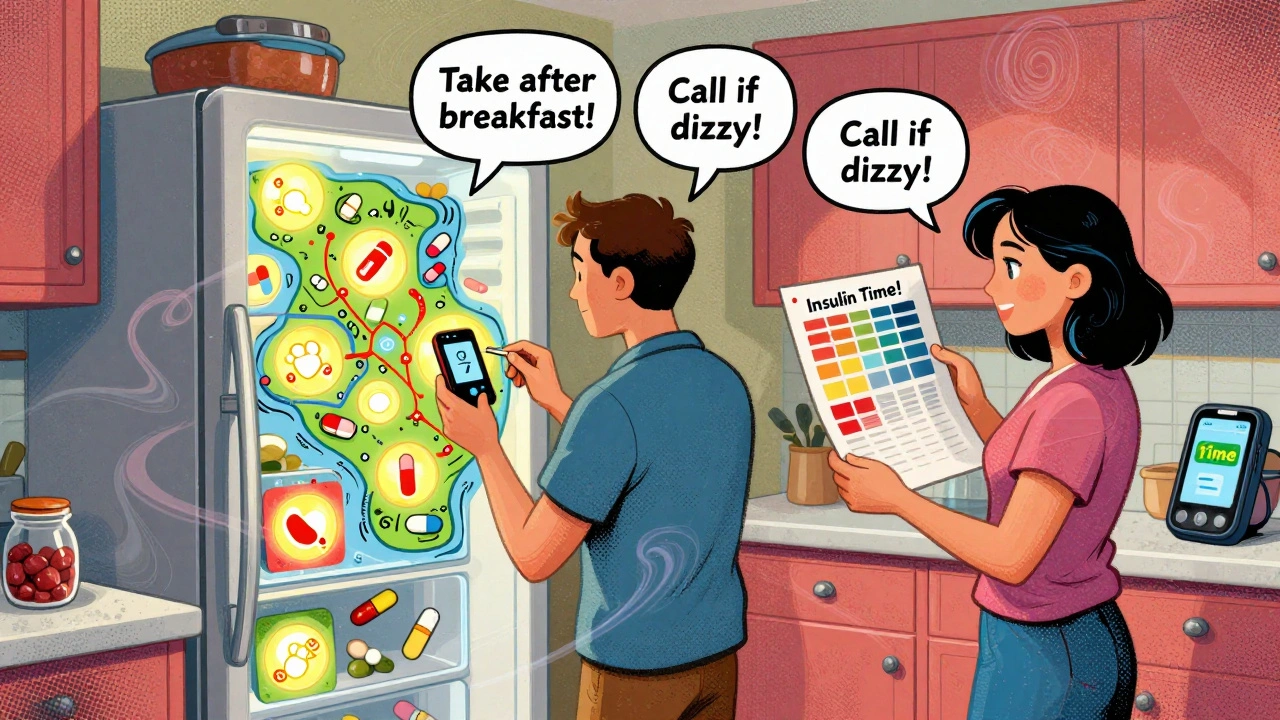
One 72-year-old woman took 11 pills a day. She was confused, often missed doses, and ended up in the ER twice in six months. Her MAP didn’t just list meds - it showed her a picture of her pills next to her morning coffee, her lunch, and her bedtime routine. She got a phone alarm for each one. Within 30 days, she was taking 95% of her doses. Her blood pressure dropped. She hasn’t been back to the ER. A 58-year-old man with diabetes and kidney disease was told to take four different pills at different times. He couldn’t keep track. His pharmacist turned his plan into a color-coded chart with icons: a fork for mealtime meds, a moon for bedtime, a water drop for ones that need fluids. He printed it and taped it to his fridge. His A1C dropped from 9.2 to 7.1 in four months. These aren’t miracles. They’re just good planning.What If You Can’t Get a Plan?
If your doctor or pharmacy says you’re not eligible, ask anyway. Many insurers now cover MAPs for people taking five or more chronic meds. If you’re on Medicare, call 1-800-MEDICARE and ask if you qualify for Medication Therapy Management. If you’re still stuck, make your own. Use a free template from the American Pharmacists Association (aphanet.pharmacist.com) or draw one on paper. Write:- Medication name and purpose
- When and how to take it
- What to do if you miss a dose
- Side effects to watch for
- One goal for the next month
Why This Matters More Than Ever
Every year, about 280,000 Americans are hospitalized because of medication errors. That’s not accidents - it’s preventable. Most happen because people don’t know what they’re taking or why. A good medication action plan cuts those numbers. It saves money, too. Every $1 spent on MTM saves $12.30 in avoided hospital stays, according to the Congressional Budget Office. But more than that, it gives you back your life. No more panic when you open your medicine cabinet. No more guessing. Just a clear, simple plan that fits your day - and your body.Can I create a medication action plan by myself?
You can start one on your own, but it won’t be as effective without input from your care team. A self-made list might miss drug interactions, outdated instructions, or better alternatives. Your pharmacist or doctor can spot problems you can’t - like a blood thinner that shouldn’t be taken with garlic supplements. Use your own notes as a starting point, then bring them to your next appointment to turn them into a real plan.
Do I need to see a pharmacist to get a medication action plan?
Not always, but it’s the best way. Pharmacists are trained to review all your meds - including OTCs and supplements - and spot conflicts. Many pharmacies offer free Medication Therapy Management (MTM) sessions. Ask your local pharmacy if they offer MTM. If you’re on Medicare, you’re likely eligible. Even if you’re not, many private insurers cover it now.
What if I don’t understand the medical terms on my plan?
Say so. A good plan uses plain language. If it says "hypertension," it should also say "high blood pressure." If it says "PRN," it should say "take only if needed." Ask your pharmacist to rewrite any confusing parts. Your health is too important to guess what the words mean.
How often should I update my medication action plan?
Update it every time your meds change - new prescription, stopped pill, changed dose. Even if nothing changes, review it every three months. Your body, schedule, or health goals might have shifted. A plan that worked last year might not fit your life now. Ask your pharmacist to review it during your next refill.
Can my family help with my medication action plan?
Yes - and they should. If someone helps you take your pills, remembers your appointments, or drives you to the pharmacy, include them. Give them a copy of your plan. Teach them what to do if you miss a dose or feel sick. A care team isn’t just doctors and pharmacists - it’s the people who live with you and care about you.
Are digital apps better than paper plans?
They can be, but only if they’re linked to your real plan. Apps that just remind you to take pills without explaining why or what to do if you miss one aren’t enough. The best digital tools let you upload your MAP, set custom alarms, and flag side effects. Some pharmacy apps even let you message your pharmacist directly from the app. But if you prefer paper, that’s fine - as long as it’s clear, updated, and easy to use.
Emmanuel Peter
December 4, 2025 AT 21:14This whole MAP thing is just another way for Big Pharma to make you feel guilty for forgetting your pills. I’ve been on 8 meds for 12 years and I’ve never had a single problem - until some pharmacist started asking me about my CBD gummies like I’m a drug dealer. You don’t need a plan, you need discipline. And if you can’t remember to take your blood pressure pill, maybe you shouldn’t be driving.
Ashley Elliott
December 5, 2025 AT 10:18I love how this post breaks it down so clearly - especially the part about color-coding and using pictures. My mom has dementia and she couldn’t read a pharmacy label, but she could point to the photo of her red pill next to her coffee mug. We made a simple chart with stickers and now she takes everything on time. It’s not fancy, but it works. And honestly? It made me feel less like a caregiver and more like a partner.
Chad Handy
December 7, 2025 AT 01:03Look, I get it - medication adherence is important. But let’s be real here. The system is broken. You’re supposed to go to your doctor, your pharmacist, your nurse, your care coordinator, and then your family, and somehow they’re all supposed to be on the same page? Meanwhile, the insurance company denies your refill because your formulary changed last Tuesday, and your pharmacy won’t update your plan unless you schedule a 45-minute appointment during business hours, which you can’t take off work because your boss thinks ‘medication management’ is a buzzword. So you end up with a 12-page PDF that no one reads, and you’re still taking half your pills at 3 a.m. because you forgot what they were for. This isn’t a plan. It’s a bureaucratic obstacle course dressed up as self-care.
Augusta Barlow
December 8, 2025 AT 01:15Have you ever noticed that every single one of these ‘action plans’ is designed for people who have time, money, and access to a pharmacist who actually cares? What about the people who live in food deserts, can’t afford transportation, or get their meds from a Walmart in a town where the pharmacist has never heard of MTM? And don’t get me started on the ‘color-coded charts’ - what if you’re colorblind? Or blind? Or illiterate? This whole thing feels like a marketing gimmick for insurance companies to say they’re ‘supporting patient outcomes’ while still denying coverage for the actual drugs. I’ve seen this before - they give you a pamphlet and call it ‘empowerment.’ It’s not empowerment. It’s negligence with a PowerPoint.
Joe Lam
December 9, 2025 AT 08:48As someone who has studied pharmacoeconomics at Johns Hopkins, I must say this article is dangerously oversimplified. The 25-40% adherence improvement statistic is cherry-picked from a 2018 JAMA sub-study with a sample size of 312 and no control for socioeconomic confounders. The real benefit comes from structured MTM programs with clinical pharmacists embedded in primary care teams - not some guy at CVS scribbling on a napkin because you ‘brought your pills in a bag.’ Also, calling CBD gummies ‘medications’ is misleading. They’re not FDA-regulated. Don’t equate them with lisinopril. This is why Americans think healthcare is a DIY project.
zac grant
December 10, 2025 AT 17:55One thing people overlook: the real MVP here is the pharmacist. Not the doctor, not the nurse - the pharmacist. They’re the only one who sees your entire med list, knows your OTC habits, and can catch that you’re taking 800mg ibuprofen with warfarin. I used to think MTM was just a formality. Then my uncle got his plan updated after a refill - they found he was doubling up on simvastatin because two different docs prescribed it. Saved him from rhabdo. That’s not luck. That’s expertise. If your pharmacy doesn’t offer MTM, ask why. And if they say ‘we don’t do that,’ go somewhere else. Your life isn’t a cost center.
michael booth
December 12, 2025 AT 02:40Thank you for this thoughtful and comprehensive guide. It is clear, well-structured, and grounded in evidence-based practice. I have shared this with my elderly patients at the senior center, and the response has been overwhelmingly positive. Many had no idea that such a service was available, let alone covered by insurance. I encourage everyone to take the initiative and request a Medication Therapy Management session. It is a small investment of time that yields significant returns in quality of life and health outcomes. You are not alone in this journey.
Carolyn Ford
December 13, 2025 AT 12:59Okay, but… who wrote this? Because it sounds like a pharma ad. You mention Medicare Part D coverage like it’s a gift, but you don’t say that insurers only pay for MTM if you’re spending over $4,430 - which means if you’re poor, you’re SOL. And why is the ‘real stories’ section full of miracle cures? One woman went from 11 pills to 95% adherence? That’s not a plan - that’s a miracle. And what about the people who can’t afford the meds even with the plan? You don’t mention cost. You don’t mention copays. You don’t mention that some people choose between insulin and groceries. This isn’t empowerment. It’s victim-blaming wrapped in a rainbow sticker chart.
Heidi Thomas
December 15, 2025 AT 07:49Just make a spreadsheet. That’s it. No charts. No alarms. No color codes. Just a simple Excel file with medication, time, dose, and a checkbox. If you can’t do that, you shouldn’t be managing your own meds. Stop pretending you need a team. You need a brain. And if you’re too lazy to open Excel, then maybe you should let someone else take over. This whole article is just pandering to people who don’t want to take responsibility.