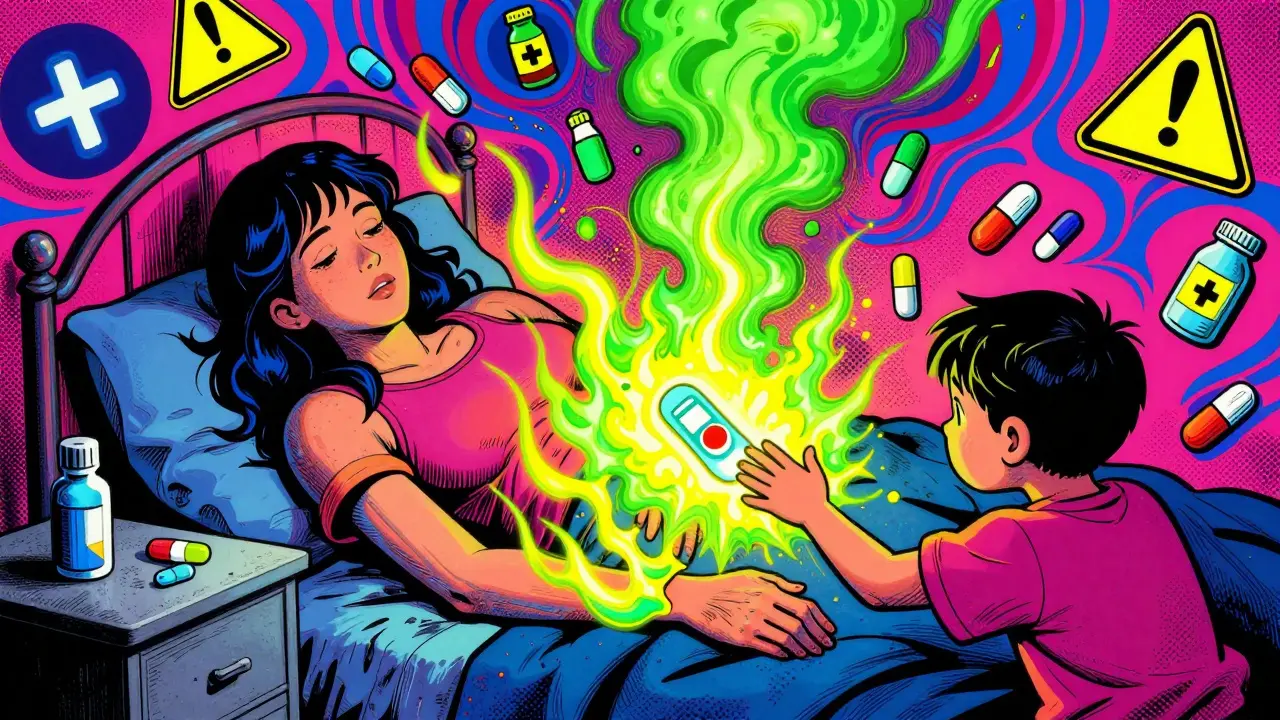
Why Patch, Liquid, and Extended-Release Medications Are Riskier
When you take a pill, you know roughly how much medicine you’re getting. But with patches, liquids, and extended-release forms, that certainty disappears. A fentanyl patch isn’t just a bandage-it’s a slow-release drug pump. Crush an OxyContin tablet, and you’re not getting 12 hours of pain relief-you’re getting a full dose all at once. Drink a liquid opioid without measuring right, and you might take twice what you meant to. These aren’t just different ways to take medicine. They’re different ways to die.
In 2023, over 80,000 opioid-related overdoses happened in the U.S. Many involved prescription medications, not street drugs. People aren’t always using these wrong on purpose. Sometimes, they’re following their doctor’s instructions-and still end up in the ER. Why? Because the risks aren’t well explained.
How Fentanyl Patches Can Kill Even When Used as Directed
Fentanyl patches are designed to deliver medicine slowly through your skin over 72 hours. But if you heat the patch-say, by wearing it under a heating pad, taking a hot shower, or lying in the sun-the drug releases faster. That’s how someone on a low-dose patch ends up with a lethal overdose. Even a patch that’s been worn for days can still hold enough fentanyl to kill someone else if it’s pulled off and reused.
One real case from Oregon: A man with chronic pain used his patch correctly. His wife, thinking it was just a used bandage, picked it up and stuck it on her wrist to help with her arthritis. She passed out within 20 minutes. She survived because her daughter found her and gave her naloxone. But she almost didn’t make it.
Here’s what you need to do:
- Never cut, chew, or heat a patch.
- Store patches in their original packaging, out of reach of kids and pets.
- Dispose of used patches by folding them in half (sticky sides together) and flushing them down the toilet-unless your pharmacy says otherwise.
- Tell everyone in your household what the patch is and how dangerous it is if misused.
Why Liquid Opioids Are a Dosing Nightmare
Think a teaspoon is a teaspoon? It’s not. A kitchen spoon holds anywhere from 3 to 7 milliliters. A proper oral syringe holds exactly 5 mL. If you use a spoon to measure liquid morphine or codeine syrup, you could be giving yourself 40% more than prescribed.
And it gets worse. Liquid opioids often look alike. A bottle of hydrocodone syrup and a bottle of cough medicine with codeine might be right next to each other on your shelf. One says "take 10 mL every 6 hours." The other says "take 5 mL every 4 hours." Mix them up? You’re not just risking a stomach ache-you’re risking respiratory failure.
Real advice from pharmacists in Portland:
- Always use the syringe or cup that came with the bottle. Never guess with kitchen utensils.
- Write the dose and time on the bottle with a marker.
- Keep liquid opioids locked up-even if you’re not addicted, someone else might be tempted.
- Use fentanyl test strips if you’re unsure about the strength of any liquid drug, even if it was prescribed.
Extended-Release Pills: The Silent Time Bomb
Extended-release pills like OxyContin, Vyvanse, or methadone tablets are made to release slowly. The coating keeps the drug from hitting your system all at once. But if you crush, chew, or dissolve them, that coating breaks. You get the full dose immediately.
That’s why people die after snorting or injecting their own prescription pills. They think they’re just getting more relief. Instead, they’re triggering a rapid shutdown of their breathing.
Even without crushing them, mistakes happen:
- Taking an extra pill because you forgot one earlier.
- Combining them with alcohol, benzodiazepines, or sleep aids.
- Not realizing that extended-release versions are stronger than immediate-release ones.
One patient in Washington told his doctor he was taking his 20 mg OxyContin tablet once a day. He didn’t say he was splitting it in half and taking two halves 12 hours apart. That’s not how it works. Splitting an extended-release tablet can destroy the time-release mechanism. He overdosed three weeks later.
Naloxone Isn’t Enough-But It’s Still Your Best Shot
Naloxone (Narcan) reverses opioid overdoses. It’s lifesaving. But with extended-release meds, it’s not a fix-all. Naloxone lasts 30 to 90 minutes. Fentanyl patches and extended-release pills can keep releasing opioids for 24 to 72 hours. That means after naloxone wears off, the person can overdose again. This is called renarcotization.
That’s why calling 911 is non-negotiable-even if naloxone works. Emergency responders need to monitor you for hours. In Oregon, a man revived his friend with naloxone after she overdosed on an extended-release oxycodone. He thought she was fine. She went back into overdose 4 hours later. She died because no one stayed with her.
Keep naloxone handy. Know how to use it. But never assume one dose is enough.
What to Do Before You Even Start Taking These Medications
Before your doctor prescribes a patch, liquid, or extended-release drug, ask these questions:
- Is this the lowest effective dose? Can we try an immediate-release version first?
- What happens if I miss a dose? What if I take too much?
- How do I store this safely? How do I dispose of it?
- Are there non-opioid alternatives?
- Can I get a prescription for naloxone too?
Doctors don’t always bring this up. You have to ask. If they push back, get a second opinion. Your life is worth more than a quick fix.
Safe Storage and Disposal: Stop the Leak Before It Starts
Most overdoses don’t happen to the person who took the medicine. They happen to someone else-kids, teens, visitors, or even pets.
Here’s how to lock it down:
- Use a lockbox or pill safe. Even a locked drawer is better than a bathroom cabinet.
- Keep patches out of sight and out of reach. Don’t leave them on a nightstand.
- For liquids: Use childproof caps and store them in a separate cabinet from other medicines.
- Take unused patches and pills to a drug take-back location. If none are nearby, flush fentanyl patches (but only if instructed). For other pills, mix them with coffee grounds or cat litter, seal them in a bag, and throw them away.
Don’t Use Alone-Even If You’re Not an Addict
Overdose doesn’t care if you’re a veteran, a grandma, or a college student. It only cares if no one’s there to help.
Set up a safety plan:
- Text a friend before you take your dose. Say, "I’m taking my patch now. Check in at 10 p.m. If I don’t reply, call 911."
- Use a smartwatch or phone alarm to remind you when it’s time to take-or not take-your next dose.
- Keep naloxone in your purse, your car, your coat pocket. Not in the medicine cabinet.
- Teach someone how to use naloxone. Even if you’re fine with it, they might need to save your life.
What If You’re Worried About Someone Else?
Maybe your parent is on a fentanyl patch. Maybe your sibling takes liquid pain meds every night. You notice they’re sleepy all the time. They don’t answer texts like they used to.
Don’t wait for a crisis. Talk to them. Say: "I care about you. I’m worried about how you’re taking your meds. Can we talk to your doctor?"
If they’re resistant, call their pharmacy. Pharmacists can flag dangerous prescribing patterns. Call 911 if they’re unresponsive. Under the 911 Good Samaritan Law in most states, you won’t get in trouble for calling-even if they have illegal drugs too.
Final Reality Check
Overdose isn’t about being weak. It’s about systems failing. Medications that were meant to help are killing people because we don’t talk about how dangerous they really are.
But you can change that. Know the risks. Ask questions. Keep naloxone. Store meds safely. Don’t use alone. Teach others. These aren’t just tips. They’re survival tools.
One patch. One teaspoon. One crushed pill. That’s all it takes. Don’t let it be yours-or someone you love’s.
Can I use a kitchen spoon to measure liquid pain medicine?
No. Kitchen spoons vary in size and can deliver 30-50% more or less than the prescribed dose. Always use the oral syringe or dosing cup that came with the medication. If you lost it, ask your pharmacy for a new one-they’ll give it to you for free.
Is it safe to cut or crush extended-release pills?
Never. Extended-release pills are designed with special coatings or matrices to release medicine slowly over hours. Crushing, chewing, or dissolving them releases the entire dose at once, which can cause a fatal overdose-even if you’ve taken the same dose safely before.
How long does naloxone last, and why does that matter for patches and extended-release meds?
Naloxone works for 30 to 90 minutes. But fentanyl patches and extended-release pills can keep releasing opioids for 24 to 72 hours. That means after naloxone wears off, the person can overdose again. This is called renarcotization. Always call 911-even if naloxone works-and stay with the person until help arrives.
Can I reuse a fentanyl patch?
Never. Even a used patch still contains up to 80% of the original drug. If someone else uses it-like a child, teen, or visitor-they can overdose and die within minutes. Always fold used patches in half (sticky sides together) and flush them down the toilet or return them to a pharmacy for safe disposal.
What should I do if I think someone is overdosing on a patch or extended-release pill?
Call 911 immediately. Give naloxone if you have it. Stay with the person. Keep them awake and breathing. Do not leave them alone-even if they wake up. Their overdose could return hours later. Emergency responders need to monitor them for at least 4-6 hours.
Lily Lilyy
January 5, 2026 AT 16:59Love you all. Stay safe.
Mukesh Pareek
January 6, 2026 AT 01:08Gabrielle Panchev
January 7, 2026 AT 05:40Katelyn Slack
January 8, 2026 AT 11:37Melanie Clark
January 9, 2026 AT 01:55Harshit Kansal
January 10, 2026 AT 13:40Saylor Frye
January 11, 2026 AT 18:58Kiran Plaha
January 13, 2026 AT 16:16Matt Beck
January 14, 2026 AT 16:04Kelly Beck
January 14, 2026 AT 16:14Katie Schoen
January 15, 2026 AT 22:36Tiffany Adjei - Opong
January 16, 2026 AT 13:14Isaac Jules
January 18, 2026 AT 03:27Amy Le
January 18, 2026 AT 09:52Ashley S
January 19, 2026 AT 07:25