When you pick up a prescription for insulin or a biologic drug like Humira, you might not realize that the bottle in your hand could be a biosimilar-and not just any biosimilar, but one that’s been approved for automatic substitution by your pharmacist. This isn’t science fiction. It’s happening right now in pharmacies across the U.S., thanks to a special FDA designation called interchangeability. But here’s the catch: not all biosimilars are created equal. Only a handful have earned this status, and even then, whether you get swapped without your doctor’s say-so depends on where you live.
What Exactly Is an Interchangeable Biosimilar?
A biosimilar is a biologic drug that’s highly similar to an existing FDA-approved biologic, known as the reference product. Biologics aren’t like regular pills made of simple chemicals. They’re made from living cells-think antibodies, proteins, or hormones-and that makes them incredibly complex. Even tiny changes in how they’re made can affect how they work. That’s why a generic version of a small-molecule drug like ibuprofen is easy to copy, but a biosimilar needs years of testing to prove it’s as safe and effective. Interchangeability is a higher bar. The FDA gives this label only to biosimilars that have proven, through switching studies, that you can go back and forth between the biosimilar and the original drug-multiple times-without any increase in risk or loss of effectiveness. Think of it like this: if you’re on Humira and your pharmacist switches you to Cyltezo (an interchangeable biosimilar), your body shouldn’t react differently whether you took Humira yesterday, Cyltezo today, or Humira again tomorrow. That’s the gold standard. As of November 2023, only 10 out of 41 approved biosimilars in the U.S. have this interchangeability tag. The first was Semglee, an insulin glargine product approved in July 2021. The first interchangeable monoclonal antibody? Cyltezo, approved in August 2023. These aren’t just copies. They’re proven to be safe for automatic swapping.Why Does This Matter for Patients?
The whole point of interchangeability is cost. Biologics are expensive. Humira, for example, can cost over $7,000 a month without insurance. Biosimilars typically run 15% to 30% cheaper. When a biosimilar is interchangeable, pharmacies can swap it in without calling your doctor. That means fewer delays, fewer paperwork hassles, and lower out-of-pocket costs for you. Some patients have seen big savings. One person on a psoriasis forum shared they dropped from $800 a month for Humira to under $100 with the interchangeable biosimilar Hyrimoz. But not everyone has had smooth sailing. Another user reported an allergic reaction after being switched to Hadlima without warning. Turns out, they were sensitive to an inactive ingredient in the biosimilar. That’s why notification matters. The FDA insists: all approved biosimilars are as safe and effective as the original. Interchangeability doesn’t mean “better.” It just means you can switch back and forth without risk. But patients still worry. A 2022 survey by the National Psoriasis Foundation found that while 63% of those switched to biosimilars were happy, nearly a third were anxious because they weren’t told in advance.State Laws Make It a Patchwork
Here’s where it gets messy. Even if the FDA says a biosimilar is interchangeable, your state decides whether your pharmacist can swap it without asking your doctor. And every state has different rules. - 40 states, including Arizona, let pharmacists substitute automatically-no permission needed. - 6 states and D.C. only allow substitution if it saves you money. - 4 states-Alabama, Indiana, South Carolina, and Washington-plus Puerto Rico require your doctor’s approval before any switch. This creates real confusion for pharmacists. One pharmacist on Reddit said their pharmacy system doesn’t even distinguish between states. So when someone from Arizona fills a prescription in California, the pharmacist has to know both states’ laws. A 2022 survey found 67% of independent pharmacists were confused about their state’s rules. Arizona’s law is strict: pharmacists must notify you, record the exact product and manufacturer, tell your doctor within five days, and keep records for seven years. Other states have different notice rules. Some require verbal confirmation. Others just need a note in your chart. And don’t forget: your doctor can always say “no.” If they write “dispense as written” or use a DAW code on your prescription, the pharmacy must honor it. That’s your right.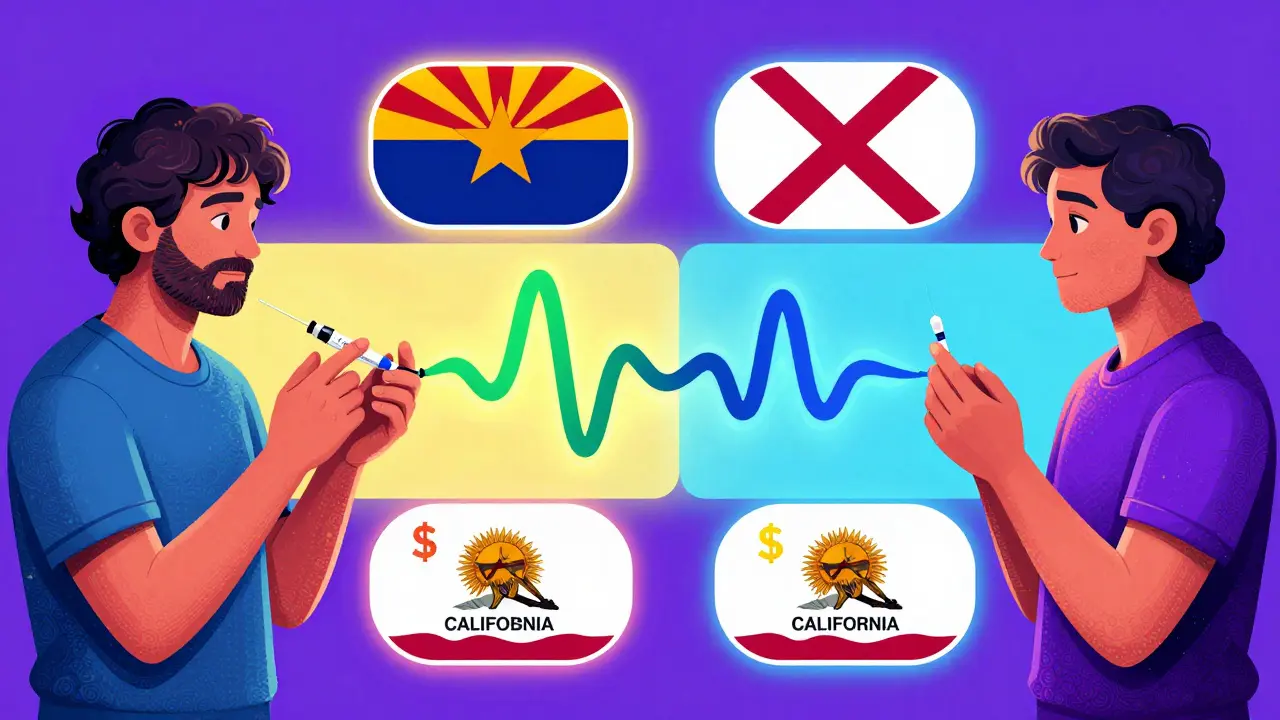
How Insurance Plays Into the Game
Insurance companies are pushing hard for interchangeable biosimilars. About 78% of commercial health plans now require automatic substitution when state law allows it. Why? Because they’re paying the bill. If a biosimilar costs 30% less and works just as well, they want you on it. That’s why you might get switched without knowing. Your insurer may have pre-approved the biosimilar as the default option. If your pharmacy doesn’t have the reference product in stock, they’ll automatically give you the interchangeable version. No call. No notice. Just a different-looking bottle. But here’s the twist: just because a biosimilar is FDA-approved doesn’t mean your insurance covers it. Some plans still favor the original drug. Others only cover interchangeable ones. So even if you’re eligible for substitution, your coverage might block it.What’s Happening in Other Countries?
The U.S. is the only country with a formal interchangeability designation. In Europe, pharmacists can’t substitute biosimilars without the prescriber’s okay. Canada lets provinces decide. Japan requires extra testing but doesn’t use the word “interchangeable.” That makes the U.S. system unique-and complicated. It’s designed to drive down costs fast. But critics worry it moves too fast. Dr. Kevin Winthrop from Oregon Health & Science University pointed to a study showing psoriasis patients switched to biosimilars were 20% more likely to stop treatment altogether. Maybe because they felt confused, or maybe because they had a bad reaction. Meanwhile, the pharmaceutical industry is split. The Biosimilars Council wants to eliminate the switching studies entirely and make all biosimilars interchangeable. PhRMA says that’s dangerous. The FDA says the current rules are right. And Congress is debating it.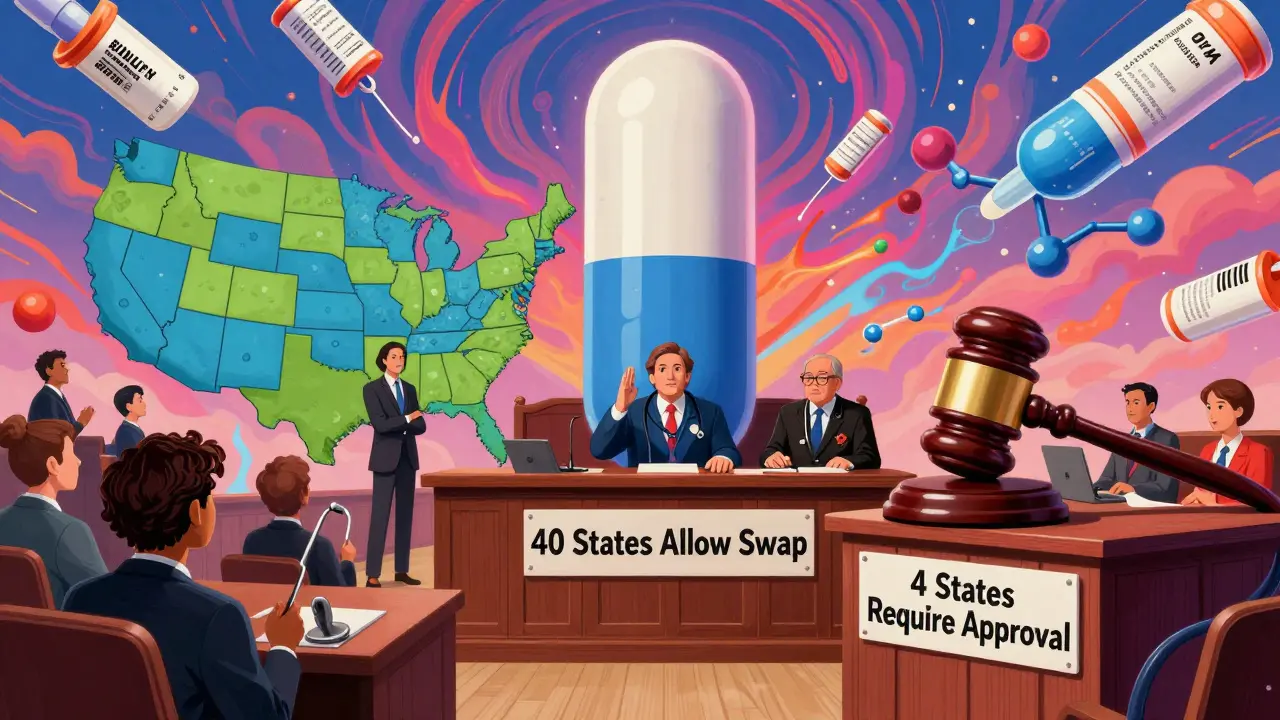
What Should You Do?
If you’re on a biologic drug:- Ask your doctor: “Is my medication eligible for a biosimilar?”
- Ask your pharmacist: “Is what I’m getting interchangeable? Can you substitute it without asking me?”
- Check your insurance: Do they require substitution?
- Know your state’s law: A quick Google search for “your state + biosimilar substitution law” will tell you if your pharmacist can swap without permission.
- Always read the label: The manufacturer name and lot number are on the box. If it’s different from last time, ask why.
If you’re switched without warning and feel worse-fatigue, rash, joint pain, swelling-call your doctor. It might be nothing. Or it might be your body reacting to a new excipient. Either way, speak up.
The Future of Interchangeability
By 2026, biosimilars are expected to take 47% of the $168 billion biologics market. That means more drugs will be up for substitution. Insulin, Humira, Enbrel, Remicade-all have biosimilars. More are coming. The FDA is already working to simplify the switching study process. Some experts think the requirement for multiple switches might be unnecessary. Others argue it’s the only way to prove safety. One thing’s clear: automatic substitution is here to stay. The question isn’t whether it’ll grow-it’s whether the system will get smarter. Better labeling. Clearer communication. Consistent rules across states. And most importantly, patients who know what’s in their hands-and why.Can my pharmacist substitute a biosimilar without telling me?
In 40 U.S. states, yes-pharmacists can substitute an interchangeable biosimilar without notifying you. But in states like Alabama, Indiana, South Carolina, and Washington, they must get your doctor’s approval first. Even in states that allow automatic substitution, your doctor can block it by writing "dispense as written" on your prescription. Always check your state’s law and ask your pharmacist about their policy.
Are all biosimilars interchangeable?
No. Only 10 out of 41 FDA-approved biosimilars as of late 2023 have the interchangeability designation. All biosimilars are safe and effective, but only those that passed FDA-switching studies can be swapped automatically at the pharmacy. The rest require a new prescription if you want to switch.
Can I be switched from one biosimilar to another?
No. FDA interchangeability only applies to switching between the reference product (like Humira) and its biosimilar (like Cyltezo). It does not allow substitution between two different biosimilars of the same reference product. So if you’re on Hyrimoz, your pharmacist can’t swap you to Hadlima without your doctor’s approval-even if both are interchangeable with Humira.
Why do some patients have bad reactions after being switched?
Biosimilars are highly similar, but not identical. They may use different inactive ingredients (excipients) like preservatives or stabilizers. Some people are sensitive to these. A 2023 patient report described an allergic reaction after being switched to a biosimilar with a different excipient than their original drug. Always check the label for manufacturer and ingredients if you notice new side effects.
Will my insurance cover an interchangeable biosimilar?
Most commercial insurance plans now require substitution for interchangeable biosimilars when allowed by state law. But coverage varies. Some plans still favor the reference product. Always check your plan’s formulary or call your insurer to confirm which version they cover and whether substitution is automatic.
Benjamin Fox
February 20, 2026 AT 22:15Jonathan Rutter
February 22, 2026 AT 17:04Jana Eiffel
February 24, 2026 AT 06:19aine power
February 25, 2026 AT 03:24Irish Council
February 26, 2026 AT 20:33Freddy King
February 27, 2026 AT 08:45Laura B
February 27, 2026 AT 12:22Robin bremer
February 28, 2026 AT 00:13Jayanta Boruah
March 1, 2026 AT 00:25