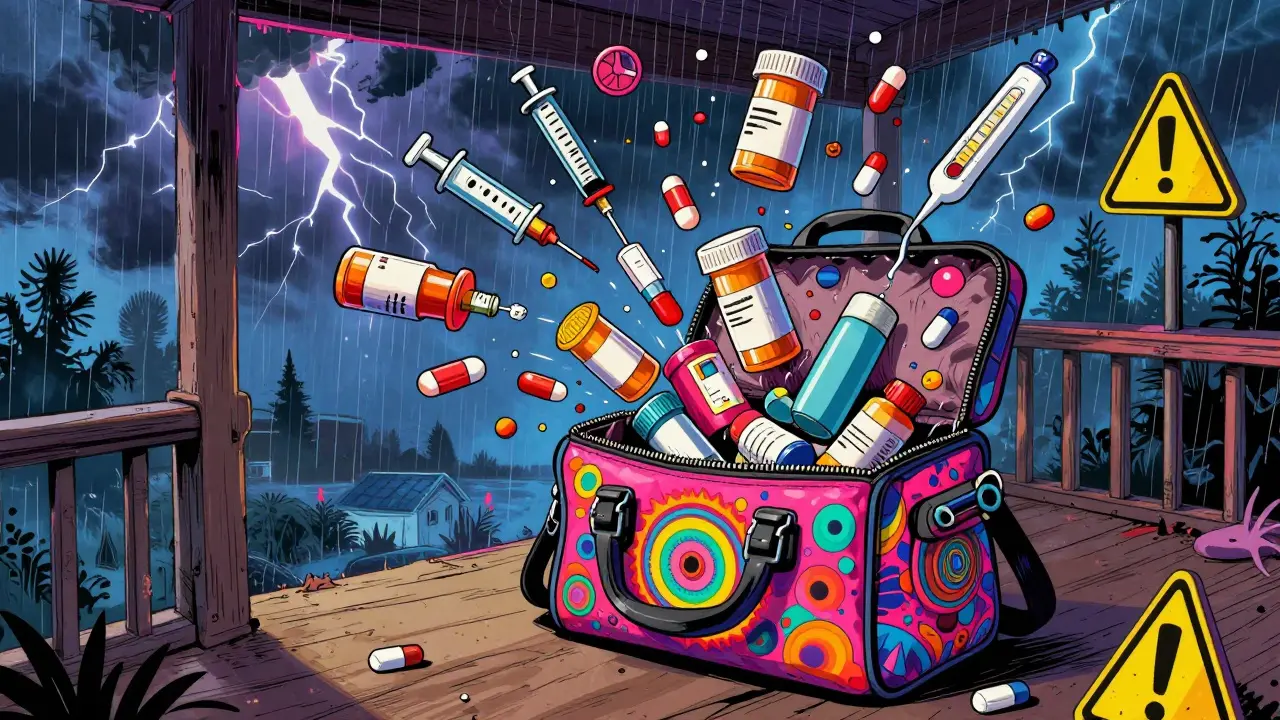
When a storm hits, a fire spreads, or an earthquake shakes your neighborhood, your first thought isn’t about your meds-it’s about getting out alive. But if you don’t have your medications with you, survival becomes a lot harder. People end up in emergency rooms not because they got hurt, but because they ran out of blood pressure pills, insulin, or asthma inhalers. That’s not just inconvenient-it’s life-threatening. And it happens more often than you think.
Why Your Go-Bag Needs More Than Water and Flashlights
Most people know to pack water, snacks, a flashlight, and a battery-powered radio. But according to the CDC, 89% of Americans over 65 take at least one prescription medication. That number jumps even higher if you include younger adults with chronic conditions like diabetes, epilepsy, or heart disease. And when power goes out, pharmacies close, and roads are blocked, those meds become your lifeline. FEMA’s 2022 guidelines say you should have at least a 72-hour supply. But real emergencies don’t last three days. Hurricane Ian left one family stranded for 11 days. California wildfires trapped people for weeks. The American Red Cross recommends a 7-day supply. Alert San Diego, which deals with frequent earthquakes, says go for two weeks. If you’re in a high-risk area, don’t settle for the minimum. Pack enough to last until help arrives-or until you can get back home.What Exactly Goes in a Medication Go-Bag?
This isn’t just a random collection of pills. A proper go-bag has structure. Here’s what you need:- At least 7-14 days of all prescription medications-even if you don’t take them daily. Think inhalers, insulin, seizure meds, thyroid pills. Don’t forget patches, eye drops, or injectables.
- Over-the-counter essentials: Pain relievers like ibuprofen or acetaminophen, antihistamines, antacids, laxatives, and electrolyte packets. These aren’t luxuries-they’re necessities when you’re stressed, eating poorly, or dehydrated.
- Original prescription bottles: Labels with your name, dosage, and doctor’s info are critical. Emergency responders need to know exactly what you’re taking. Don’t dump pills into ziplock bags unless it’s an absolute last resort.
- A written medication list: Include the name of each drug, why you take it, the dose, and how often. If you’re on insulin, write your type and how many units you use. If you take blood thinners, note your INR target. This list can save your life if you’re unconscious.
- Medical documents: Insurance cards, a copy of your advance directive, and contact info for your primary doctor and pharmacy. Keep these in a waterproof pouch.
- Special equipment: Syringes, glucose monitors, nebulizers, or epinephrine auto-injectors. If you need them daily, they belong in the bag.
And don’t forget the small stuff: alcohol wipes, gloves, a thermometer, and a small notebook to track symptoms or side effects. You might not think you need it-but when you’re in a shelter with no power and no pharmacy, a simple note like “fever started yesterday” can help a nurse make better decisions.
Storing Medications Safely During Emergencies
Heat, humidity, and cold can ruin your meds faster than you think. Insulin, epinephrine, and some antibiotics are especially sensitive. The FDA says expired meds aren’t always dangerous-but they can stop working. And that’s just as bad.Here’s how to protect them:
- Keep your go-bag in a cool, dry place-like a closet shelf in your bedroom. Avoid the bathroom or garage. Humidity kills pills.
- If you take insulin or other temperature-sensitive drugs, invest in a cooling case. The Frio Wallet, tested by Consumer Reports in 2023, keeps meds under 86°F for up to 48 hours without ice. That’s enough to get you through a power outage or evacuation.
- For longer-term storage, consider the MedAngel ONE, an FDA-cleared device that sends alerts to your phone if your meds get too hot or cold. It’s small, fits in your bag, and costs less than a monthly prescription co-pay.
- Never store meds in your car. Summer temperatures inside a parked car can hit 140°F. That’s enough to break down most medications.
How to Keep Your Go-Bag Updated
A go-bag that’s outdated is worse than no bag at all. Expired epinephrine won’t stop anaphylaxis. Old antibiotics won’t fight infection. You need a system.Here’s how to stay on top of it:
- When you refill a prescription, immediately replace the oldest bottle in your go-bag with the new one. Don’t wait until it expires.
- Set a calendar reminder for every January 1 and July 1 to check everything. Look at expiration dates. Smell pills-some meds smell funny when they’ve gone bad.
- Ask your pharmacist for 60- or 90-day supplies instead of 30-day ones. Most insurers allow it, and it cuts down on how often you need to refill.
- Keep a backup list of your meds digitally. Take a photo of your pill bottles and store it in the cloud or email it to a trusted person. That way, if your bag gets lost, you still have the info.
One user on Reddit, a nurse who survived Hurricane Ian, said: “I had 7 days of meds. We were out 11. I wish I’d listened to the two-week rule.” Don’t be that person.
Special Cases: Diabetics, Asthma, and Chronic Conditions
Some conditions need extra planning.Diabetics: Insulin is the most common medication that fails during emergencies. The CDC says 62% of insulin users struggle to keep it cool during power outages. Always carry a backup insulin pen. Keep your glucose meter and test strips in the bag. Include fast-acting sugar like juice boxes or glucose tabs-hypoglycemia can hit fast when you’re stressed or eating irregularly.
Asthma and COPD: Keep at least two inhalers. One might get damaged. One might run out. Bring spacer devices if you use them. Include a peak flow meter if you track your lung function.
Heart conditions: If you take blood thinners like warfarin or apixaban, make sure your list includes your latest INR or lab results. Emergency staff need to know your baseline. Include nitroglycerin if you have angina.
Seizure disorders: Keep your rescue meds (like diazepam nasal spray) in the bag. Don’t rely on family to remember to pack them.
And if you’re on biologics or injectables that require refrigeration, talk to your doctor now. Some pharmacies offer emergency cold shipping. Others can provide a short-term supply if you call ahead during a forecasted disaster.
What to Do If You’re Caught Without a Go-Bag
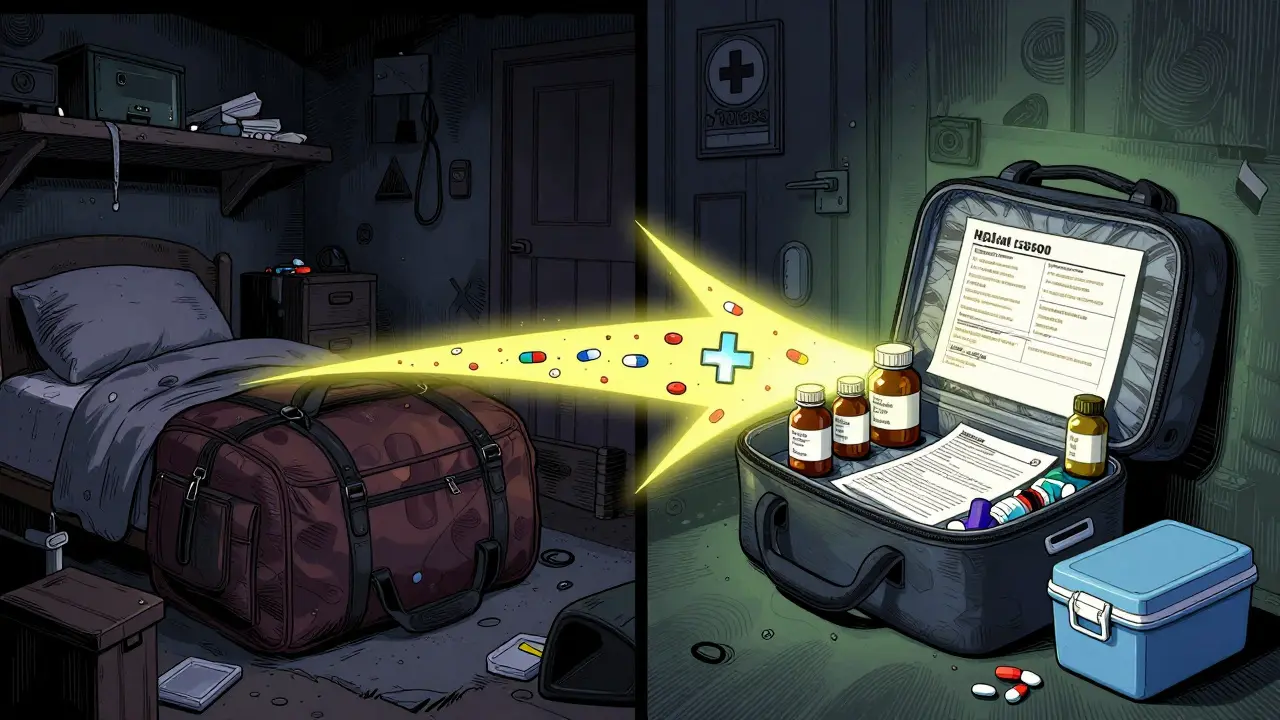
Sometimes, you don’t have time. You’re evacuating on a moment’s notice. Your bag is still on the shelf.Here’s what to do:
- Call your pharmacy. In 42 states, pharmacists can give you an emergency 7-day supply of most medications without a new prescription-especially if you’ve filled there before.
- Go to an urgent care or ER. They’re required to give you enough meds to get you through until you can get back to your doctor. Don’t be shy about asking.
- Write down your meds. Even if you don’t have bottles, a list helps. “I take metformin 500mg twice a day” is better than nothing.
- Don’t skip doses. If you’re out of blood pressure meds for a day, your risk of stroke goes up. If you’re out of insulin, you could go into DKA. Push to get help.
The American College of Emergency Physicians found that 38% of ER visits during disasters are because people ran out of meds. Most of those could’ve been avoided with a simple bag.
Who Needs This Most?
You might think this is only for older adults. But it’s not. The CDC’s 2022 survey shows only 18% of people aged 18-34 with chronic conditions have a medication go-bag. That’s dangerous. People in this group often have asthma, diabetes, autoimmune diseases, or mental health conditions that require daily meds. And they’re less likely to think ahead.Parents of children with chronic illnesses-like cystic fibrosis or severe allergies-need go-bags too. School nurses can’t always help during a disaster. You need to be ready.
Even if you’re “healthy,” you might need meds in an emergency. Antibiotics for an infected cut. Anti-nausea pills if you’re vomiting from stress. Painkillers after an injury. Don’t assume you’re exempt.
Final Checklist: Is Your Go-Bag Ready?
Before the next emergency hits, run through this:- Do I have 7-14 days of every medication I take?
- Are they in original bottles with clear labels?
- Do I have a printed list of names, doses, and reasons for each?
- Is my medical ID, insurance card, and doctor’s number included?
- Do I have special equipment (inhalers, syringes, glucose monitor)?
- Are temperature-sensitive meds protected?
- Have I checked expiration dates in the last 6 months?
- Is my bag easy to grab-no heavy backpack, no tangled cords, no locked cabinet?
If you answered no to any of these, fix it this week. Don’t wait for a storm to remind you.
What if I can’t afford to stock up on extra meds?
Many pharmacies offer free or low-cost 30-day refills through patient assistance programs. Ask your pharmacist about generic alternatives. Some states have emergency medication programs for low-income residents. Nonprofits like NeedyMeds can help you find discounts. Even one extra week of meds is better than none.
Can I use a pill organizer instead of original bottles?
Only as a backup. Original bottles have your name, prescription number, and doctor’s info-critical for ER staff. Use pill organizers for daily use at home, but keep the bottles in your go-bag. If you must use a pill box, label it clearly with your name and the drug names.
Do I need to pack my vitamins and supplements?
Only if they’re part of your medical treatment. For example, if you take high-dose vitamin D for a diagnosed deficiency, include it. But daily multivitamins? Skip them. They’re not essential in an emergency. Focus on life-saving meds first.
What if I have a pet that needs medication?
Include your pet’s meds in your go-bag if you plan to evacuate with them. Keep their prescriptions, dosing instructions, and food in a separate small bag. Many shelters now allow pets-but they won’t have veterinary supplies.
How often should I check my go-bag?
At least twice a year-June and December. Check expiration dates, replace anything near expiry, and update your list if your meds changed. Make it a habit, like changing your smoke detector batteries.
bob bob
January 3, 2026 AT 15:08I never thought about keeping my asthma inhaler in my go-bag until I read this. My neighbor lost hers during the wildfire evacuation last year and ended up in the ER. Just a reminder: if you have any chronic condition, your meds aren’t optional gear-they’re survival gear.
Vicki Yuan
January 4, 2026 AT 06:59This is one of the most practical, well-researched posts I’ve seen on emergency preparedness. I’ve been packing my 14-day supply since Hurricane Harvey, but I never thought to include alcohol wipes and a symptom notebook. Small details like that make all the difference when you’re in a shelter with no power and no phone signal.
Uzoamaka Nwankpa
January 4, 2026 AT 18:32It’s funny how people act like they’re immune to disaster until it’s too late. I’ve seen too many families lose everything because they thought ‘it won’t happen to me.’ The truth? It already did. And it will again.
Chris Cantey
January 4, 2026 AT 20:23Let’s be honest-how many of us actually follow this? The real crisis isn’t the lack of meds-it’s the systemic failure of a society that expects individuals to solve problems created by infrastructure neglect. We’re told to ‘be prepared’ while our healthcare system makes prescriptions unaffordable and pharmacies close in rural areas. This checklist is a band-aid on a hemorrhage.
Abhishek Mondal
January 5, 2026 AT 23:26Wait-so you’re suggesting we carry ALL our medications? Even the ones we take ‘as needed’? And you’re recommending Frio Wallets? Have you considered the environmental cost of these plastic, battery-powered devices? And why not just rely on telemedicine? The entire premise of this post is rooted in capitalist individualism, ignoring the fact that in a true crisis, community networks-not personal go-bags-are what save lives.
Oluwapelumi Yakubu
January 6, 2026 AT 12:37Man, this is the real deal. I’ve been telling my cousins in Lagos for years: ‘If your body depends on a pill, that pill better ride with you when the world goes sideways.’ I packed my insulin, my metformin, and even my antihistamines in a waterproof pouch after my cousin’s brother passed during the flood because he ran out of his heart meds. Don’t wait till it’s too late-your life ain’t a backup plan.
Terri Gladden
January 6, 2026 AT 18:00OMG I JUST REALIZED I DON’T EVEN HAVE A GO-BAG!! I’M SO SCARED RIGHT NOW!! I HAVE DIABETES AND I’M GONNA DIE IN A FIRE AND NO ONE WILL KNOW WHAT TO DO!! I JUST CRIED IN THE MIDDLE OF THE GROCERY STORE!!
Jennifer Glass
January 8, 2026 AT 09:23I appreciate the thoroughness of this guide. One thing I’d add is that if you’re on long-term psychiatric meds-like SSRIs or mood stabilizers-stopping them abruptly can be just as dangerous as running out of insulin. It’s not just physical health at stake; mental stability is part of survival too. Include them. Don’t dismiss them as ‘not urgent.’
Joseph Snow
January 10, 2026 AT 02:55Who funded this article? The pharmaceutical industry? The CDC? FEMA? All of these agencies have a history of exaggerating risks to push compliance. I’ve researched this-medications don’t degrade as quickly as claimed. And 14 days? That’s a scare tactic. The real issue is government overreach disguised as ‘preparedness.’ You’re being manipulated into stockpiling for a system that doesn’t care about you.
melissa cucic
January 11, 2026 AT 07:28Excellent structure. I would only suggest adding a footnote regarding drug interactions: if you’re on multiple medications, especially blood thinners or CNS depressants, it’s critical to note any known contraindications on your written list. Emergency personnel may not have time to cross-reference every pill-clear, concise notation can prevent lethal errors.
Akshaya Gandra _ Student - EastCaryMS
January 12, 2026 AT 05:18i rlly need this bc i have asthma and my mom forgets to pack my inhaler when we go on trips so i think i shud make a go bag but i dont know if i shud pack my vitamin d too??
en Max
January 12, 2026 AT 18:59Given the documented physiological degradation profiles of thermolabile biologics under ambient thermal stressors, the recommended 7- to 14-day pharmacological redundancy protocol is empirically sound. Furthermore, the integration of FDA-cleared environmental monitoring devices (e.g., MedAngel ONE) represents a paradigmatic shift in decentralized pharmaceutical stewardship. The omission of refrigerated transport protocols for insulin analogs in non-urban environments remains a critical gap in public health preparedness frameworks.
bob bob
January 13, 2026 AT 06:04^ This. I’ve got my Frio Wallet and a backup insulin pen. Last month, the power went out for 36 hours. My insulin stayed cool. I slept fine. Don’t wait for a disaster to start caring about your health. Do it now-before it’s too late.