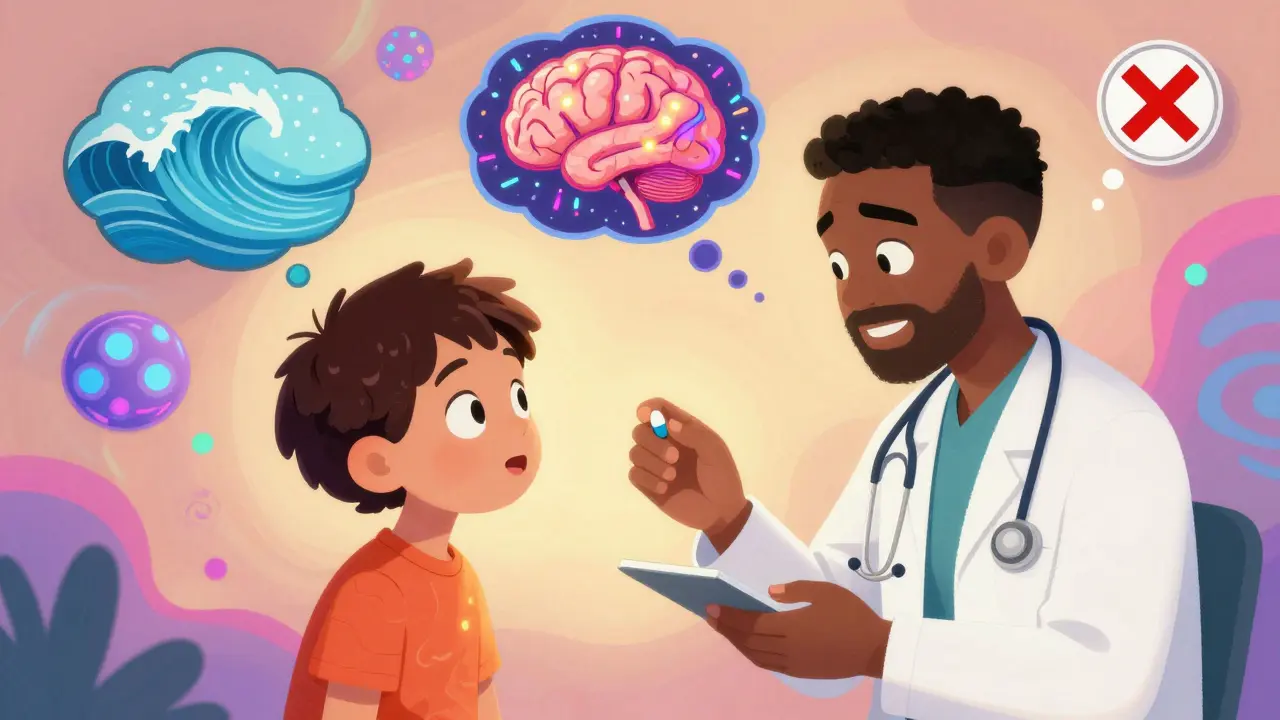
Every year, millions of Americans take medications that weren’t originally approved by the FDA for their condition. A child with autism gets an antipsychotic for irritability. A cancer patient receives a drug meant for lung cancer to treat a rare sarcoma. An adult with obesity starts taking a diabetes pill to lose weight. These aren’t mistakes. They’re off-label drug use-and it’s more common than most people realize.
What Exactly Is Off-Label Drug Use?
Off-label drug use means prescribing a medication for a purpose that hasn’t been officially approved by the FDA. This could mean using a drug for a different disease, giving it to a child when it’s only approved for adults, changing the dose, or even giving it by a different route-like swallowing a pill that was meant to be injected. The FDA doesn’t control how doctors prescribe drugs. It only decides whether a drug is safe and effective for a specific use. Once approved, doctors can legally prescribe it however they see fit. That’s because the FDA regulates drugs, not the practice of medicine. This legal gap has existed since the 1960s and is still in place today. Think of it this way: the FDA says, “This drug works for Type 2 diabetes.” But if a doctor sees a patient with a rare autoimmune disorder and finds strong evidence that the same drug helps, they can prescribe it-even if the FDA hasn’t signed off on it.How Common Is Off-Label Prescribing?
About 1 in 5 prescriptions in the U.S. are off-label. That’s roughly 20%. But that number jumps dramatically depending on the specialty. - In pediatrics, up to 62% of prescriptions are off-label. Why? Because most drugs are never tested in children. Only 20-30% of medications have pediatric labeling. - In psychiatry, about 31% of prescriptions are off-label. Antidepressants and antipsychotics are often used for anxiety, insomnia, or OCD-even when they’re only approved for depression or schizophrenia. - In oncology, the rate hits 85%. Cancer treatments are rarely one-size-fits-all. A drug approved for breast cancer might be used for ovarian or pancreatic cancer if it targets the same genetic mutation. These aren’t random guesses. They’re based on published studies, clinical experience, and guidelines from groups like the National Comprehensive Cancer Network (NCCN).Why Do Doctors Use Drugs Off-Label?
There are three big reasons: 1. No approved options exist. For rare diseases, pediatric conditions, or advanced cancers, there often aren’t any FDA-approved drugs. Off-label use is the only way to treat the patient. 2. Science moves faster than regulation. A drug might show promise in a small study, and doctors start using it. But getting formal FDA approval can take 5-7 years and cost $50-100 million. Many companies won’t bother if the market is small. 3. Real-world evidence supports it. A drug like methotrexate was originally for cancer and psoriasis. Now it’s used for rheumatoid arthritis, lupus, and even ectopic pregnancies-all off-label. Decades of data show it works. The FDA just hasn’t updated the label. In many cases, off-label use isn’t experimental-it’s standard. The NCCN compendium, which Medicare uses to decide what to cover, lists dozens of off-label cancer treatments as recommended options.The Risks: When Off-Label Use Goes Wrong
Off-label doesn’t mean unsafe. But it does mean less data. When a drug is approved for a specific use, the FDA reviews hundreds of studies. Off-label uses often rely on smaller trials, case reports, or expert opinion. Some dangerous examples: - Fen-Phen: A weight-loss combo of fenfluramine and phentermine was used off-label for years. It was never approved for obesity. Later, it caused severe heart valve damage and was pulled from the market. - Antipsychotics in elderly dementia patients: Used off-label to calm agitation. But studies showed increased risk of stroke and death. The FDA issued a black box warning. - GLP-1 agonists like Ozempic for weight loss: These drugs are approved for type 2 diabetes. But since 2020, off-label use for weight loss has surged. Long-term safety data for this use? Still limited. Doctors have to weigh potential benefits against unknown risks. That’s why documentation matters. If a patient has side effects, the doctor needs to prove they based the decision on solid evidence-not just a pharmaceutical rep’s pitch.
What’s Stopping Patients From Getting These Drugs?
Even if a doctor thinks off-label use is right, insurance might say no. Most insurers, including UnitedHealthcare and Medicare, require one of these to cover off-label drugs: - The use is listed in a recognized compendium (like NCCN or DRUGDEX) - There’s peer-reviewed research supporting it - It’s approved for a similar condition If it doesn’t meet those criteria, patients might pay out-of-pocket-or go without treatment. One oncologist on Reddit shared that she has to fight for prior authorization every time she prescribes vincristine off-label for a rare sarcoma-even though studies show better outcomes. That process can add 3-5 days to treatment. For someone with aggressive cancer, that’s critical time lost.Pharmaceutical Companies Can’t Promote Off-Label Use
Here’s the catch: drug makers are strictly forbidden from marketing their products for off-label uses. That’s why you never see ads saying, “This drug works for autism.” Violations come with massive fines: - GlaxoSmithKline paid $3 billion in 2012 for promoting off-label uses of Paxil, Wellbutrin, and Topamax. - Pfizer paid $2.3 billion in 2012 for promoting Bextra and other drugs for unapproved uses. Since 2009, pharmaceutical companies have paid over $14 billion in settlements for illegal off-label promotion. That’s why most companies stay quiet-even when doctors are using their drugs off-label.How Do Doctors Decide What’s Safe?
Good off-label prescribing isn’t random. It’s evidence-based. Doctors rely on: - Peer-reviewed journals (like The New England Journal of Medicine) - Compendia (NCCN, DRUGDEX, Micromedex) - Systematic reviews and meta-analyses - Expert guidelines from professional societies A 2018 study in JAMA Internal Medicine found that 78% of off-label uses lacked strong scientific backing. That’s alarming. But the 22% that did? They saved lives. The key is distinguishing between common and well-supported. Just because a drug is used off-label doesn’t mean it’s the right choice.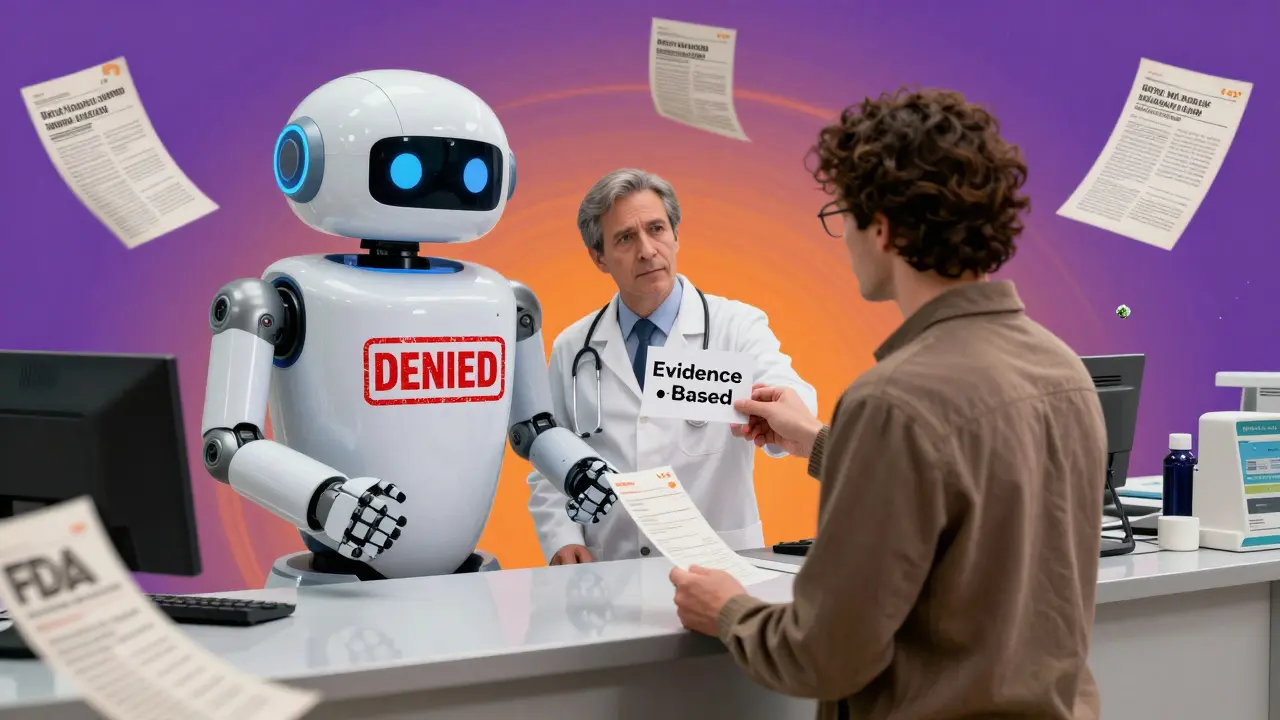
Chloe Hadland
January 23, 2026 AT 15:53My grandma was on an off-label antipsychotic for her dementia and it actually calmed her down without making her a zombie. I know it sounds scary but sometimes the system just doesn’t move fast enough for real people.
Michael Camilleri
January 24, 2026 AT 13:51Doctors playing god with prescriptions because the FDA is too slow? That’s not medicine that’s chaos. If you want to experiment then do a damn clinical trial. Don’t turn your patients into guinea pigs because bureaucracy is inefficient.
Helen Leite
January 26, 2026 AT 13:09THEY KNOW WHAT THEY’RE DOING 😳 Big Pharma is hiding the truth. Why else would they fight so hard to keep labels locked? This is mind control via pills. 🤯
Shanta Blank
January 28, 2026 AT 00:07Oh honey let me tell you about my cousin’s oncologist who prescribed a diabetes drug for his lymphoma and now he’s hiking in Patagonia. Meanwhile the FDA is still debating whether to add a comma to the label. 🙄
Juan Reibelo
January 28, 2026 AT 17:35I’ve seen this in my ER rotation-kids with autism on risperidone, elderly with Alzheimer’s on memantine for agitation, even off-label ketamine for depression. It’s not reckless. It’s responsive. The FDA approves drugs for populations that don’t exist in real life. Real doctors treat real people with real symptoms. And yes, sometimes that means bending the rules. But bending isn’t breaking-if you’ve got the data.
And before you say ‘but what about fen-phen?’-that was marketing-driven, not evidence-driven. There’s a world of difference between a rep handing out free samples and a clinician reviewing five peer-reviewed papers before writing a script.
And insurance? Oh, don’t get me started. I had a 9-year-old with a rare sarcoma whose family had to wait 11 days for prior auth because the insurer didn’t recognize the NCCN guidelines. Eleven days. For a kid whose tumor was doubling every 72 hours.
Pharma can’t promote off-label? Fine. But why can’t they fund real-world evidence collection? Why are we still stuck in a 1960s regulatory model in 2025? The Cures Act was a start. But it’s like putting a Band-Aid on a hemorrhage.
And yes, 78% of off-label use lacks strong evidence-that’s horrifying. But the other 22%? That’s where medicine lives. That’s where the miracles happen. The problem isn’t off-label prescribing. It’s the lack of infrastructure to validate, track, and reimburse it properly.
Patients need to ask questions. Absolutely. But doctors need better tools to answer them. Not lawsuits. Not denials. Just data. And time. And trust.
So no, this isn’t a loophole. It’s a lifeline. And if you’re mad about it, don’t blame the doctor. Blame the system that made them choose between watching a patient suffer and doing what they know works.
Viola Li
January 30, 2026 AT 13:42So you’re saying it’s okay to ignore FDA rules as long as a doctor feels good about it? That’s not medicine, that’s cowboy medicine. Someone’s going to die because someone thought ‘it might work.’
Jenna Allison
January 31, 2026 AT 23:54Actually, Viola, the FDA doesn’t regulate prescribing-that’s the Medical Practice Act, which is state-level. Off-label use has been legal since 1938. The FDA’s job is to approve drugs for specific indications, not to control physician judgment. The real issue is lack of reimbursement and poor data collection. We need registries to track outcomes, not more restrictions.
Kevin Waters
February 1, 2026 AT 10:14Jenna’s right. I’m a pharmacist and I’ve seen this for years. We have a whole database called DRUGDEX that tracks off-label uses with evidence grades. If a doc prescribes something off-label and it’s in there with a ‘Category 1’ rating, we fill it without hesitation. It’s not magic-it’s science, just not yet labeled.
venkatesh karumanchi
February 3, 2026 AT 06:06In India, we do this all the time. Cancer drugs approved for one type used for another because we don’t have money for 10 different drugs. But we have data from trials in the US and Europe. So we use it. Doctors here are not reckless-they’re resourceful.
Jamie Hooper
February 3, 2026 AT 13:33off label? more like off the rails lmao. my bro got prescribed a weight loss drug for his anxiety and now he’s on a 3k/month pill habit. nobody told him it was ‘off label’ until the insurance denied it. classic.
Elizabeth Cannon
February 4, 2026 AT 10:26my niece was born with a rare metabolic disorder. zero approved meds. her neurologist prescribed an off-label seizure drug that’s been used since the 80s. she’s 8 now, in 3rd grade, riding a bike. if the FDA had waited for their paperwork, she’d be dead. so yeah, off-label saved her life. don’t shame the doctors who actually show up.
Darren Links
February 6, 2026 AT 09:35They let doctors do this but ban pharmaceutical ads? That’s pure hypocrisy. If it’s safe enough to prescribe, it’s safe enough to talk about. This whole system is rigged to protect Big Pharma’s profits, not patients.
Izzy Hadala
February 6, 2026 AT 18:05It is imperative to acknowledge that the regulatory framework governing pharmaceuticals was established under a fundamentally different paradigm of medical knowledge acquisition. Contemporary evidence-based practice, grounded in real-world data and adaptive trial designs, renders the current FDA approval paradigm increasingly anachronistic. The disjunction between clinical necessity and bureaucratic authorization constitutes a systemic failure of epistemic alignment.