What Is Otitis Media?
Otitis media is an infection or inflammation of the middle ear, the space behind the eardrum that’s filled with air and connected to the throat by the Eustachian tube. It’s one of the most common reasons parents take their kids to the doctor, especially between 6 months and 3 years old. About 80% of children will have at least one ear infection before their third birthday. While it’s less common in adults, it still happens-often after a cold or sinus infection.
The problem starts when the Eustachian tube, which normally drains fluid and balances pressure, gets blocked. This can happen because of swelling from a virus, allergies, or even a stuffy nose. When fluid builds up behind the eardrum, it becomes a perfect breeding ground for bacteria or viruses. The most common bacterial culprits are Streptococcus pneumoniae, Haemophilus influenzae (non-typeable), and Moraxella catarrhalis. Viruses like RSV, rhinovirus, and influenza can also cause it.
How Do You Know It’s an Ear Infection?
Not every ear tug or fuss means an infection. The real signs are more specific. A red, bulging eardrum seen with a pneumatic otoscope is the gold standard for diagnosis. Other symptoms include:
- Sharp ear pain, especially when lying down
- Fever over 102.2°F (39°C)
- Fussiness or crying in babies who can’t talk
- Tugging or pulling at the ear
- Difficulty sleeping
- Fluid draining from the ear
- Loss of appetite or trouble hearing
Some kids just seem off-more tired, clingy, or irritable than usual. If your child has a cold and then suddenly becomes inconsolable at night, it’s worth checking.
There’s also a condition called otitis media with effusion (OME), where fluid stays behind the eardrum after the infection clears. This doesn’t usually hurt, but it can cause mild hearing loss-15 to 40 decibels-which might make a child seem inattentive or like they’re not listening. The good news? This fluid usually clears on its own within 3 months.
Why Antibiotics Aren’t Always the Answer
For years, doctors handed out antibiotics like candy for ear infections. But research changed that. The American Academy of Pediatrics and the American Academy of Family Physicians now say: not every ear infection needs antibiotics.
Here’s the truth: about 80% of uncomplicated ear infections get better on their own within 3 days. The body’s immune system can fight off the infection without drugs. Antibiotics help speed up recovery by about 1 day on average, but they come with risks-diarrhea in 10-25% of kids, rashes, yeast infections, and, most importantly, contributing to antibiotic resistance.
The CDC reports that 30-50% of Streptococcus pneumoniae strains in the U.S. are now resistant to penicillin. That’s why guidelines now push for watchful waiting-especially for kids over 2 years old with mild symptoms. Instead of reaching for amoxicillin right away, parents are encouraged to manage pain and monitor for 48 to 72 hours.
When Do You Actually Need Antibiotics?
Antibiotics are necessary when the infection is severe or the child is at higher risk. Here’s when to start them:
- Children under 6 months with confirmed ear infection
- Children 6 to 23 months with bilateral ear infections (both ears)
- Children of any age with high fever (over 102.2°F) or severe ear pain lasting more than 48 hours
- Children with underlying conditions like cleft palate, immune problems, or cochlear implants
For kids under 2 with severe symptoms, antibiotics are recommended immediately. For older kids with mild symptoms, waiting 48 hours is safe and effective. If the pain doesn’t improve or gets worse, then antibiotics are the next step.
Which Antibiotics Are Used-and Why?
Amoxicillin is still the first-line treatment for most cases. The dose is high: 80-90 mg per kg of body weight per day, split into two doses. This higher dose works better against resistant strains than the older, lower doses.
If your child is allergic to penicillin, alternatives include:
- Cefdinir (14 mg/kg per day)
- Ceftriaxone (a single shot, useful if the child won’t take oral meds)
- Azithromycin (a 5-day course: 10 mg/kg on day one, then 5 mg/kg for days 2-5)
Amoxicillin-clavulanate (Augmentin) is often used if the infection doesn’t improve after 48-72 hours on amoxicillin. But it’s not a first choice-it’s stronger, more expensive, and increases the risk of diarrhea and yeast infections.
Duration matters too:
- Under 2 years: 10 days
- 2 to 5 years: 7 days
- 6 years and older: 5 to 7 days
Don’t stop antibiotics early just because your child seems better. Completing the full course helps prevent the infection from coming back-and helps fight resistance.
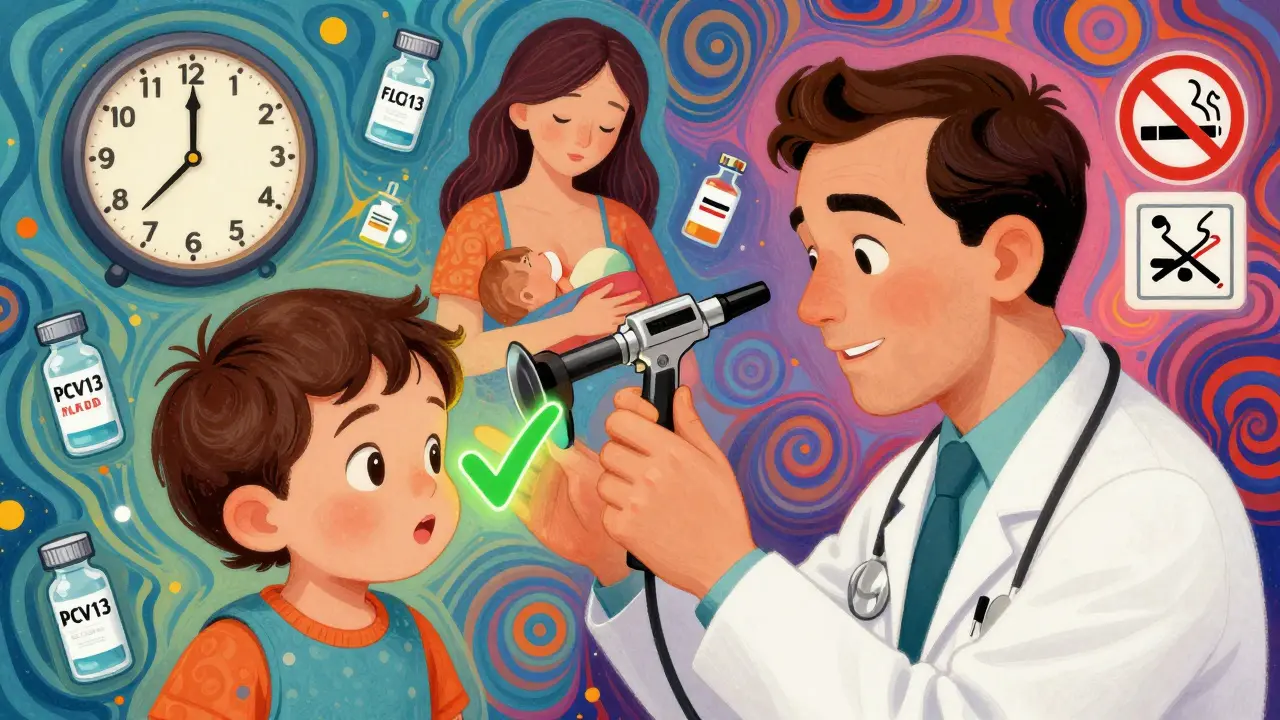
Pain Relief: The Real First Step
Before you even think about antibiotics, focus on pain. It’s the biggest problem for kids-and the fastest to fix.
Use:
- Acetaminophen: 10-15 mg per kg every 4-6 hours
- Ibuprofen: 5-10 mg per kg every 6-8 hours
Ibuprofen often works better for ear pain because it reduces inflammation, not just pain. Many parents report that giving ibuprofen every 6 hours turned a crying, sleepless night into a calm one.
You can also use a warm compress on the ear or over-the-counter ear drops like Auralgan-but only if the eardrum isn’t ruptured. If you see pus or fluid draining, stop the drops and call your doctor.
What About Vaccines?
One of the most effective ways to prevent ear infections is vaccination. The PCV13 pneumococcal vaccine (Prevnar 13) has cut vaccine-type pneumococcal ear infections by 34% since it became routine. The newer 15-valent vaccine (Vaxneuvance), approved in 2021, offers even broader protection.
Flu shots also help. Since many ear infections follow the flu, keeping kids up to date on their annual influenza vaccine reduces their risk.
Studies show that children who get all their vaccines on time have fewer ear infections overall-and fewer repeat infections.
What Increases the Risk?
Some kids are just more prone to ear infections. Here’s why:
- Daycare attendance: Kids in group care are 2-3 times more likely to get ear infections because they’re exposed to more viruses.
- Secondhand smoke: Exposure to cigarette smoke increases risk by 50%. Even if someone smokes outside, the residue lingers on clothes and furniture.
- Bottle-feeding while lying down: This lets milk or formula flow into the Eustachian tube. Breastfeeding upright reduces this risk.
- Family history: If a parent had frequent ear infections as a kid, their children are more likely to too.
- Season: Infections spike in fall and winter, when colds and flu are common.
Knowing these risks helps you take steps to lower them-like keeping kids away from smoke, feeding them upright, and washing hands often.
What Happens If It Doesn’t Go Away?
Most ear infections clear up without problems. But in about 20% of kids, they come back-three or more times in six months. This is called recurrent acute otitis media.
If your child has frequent infections, your doctor might suggest:
- Long-term low-dose antibiotics (rarely used now)
- Ear tubes (tympanostomy tubes) to drain fluid and equalize pressure
- Removing the adenoids if they’re blocking the Eustachian tube
Ear tubes are one of the most common childhood surgeries. They’re small plastic tubes placed in the eardrum during a 10-minute procedure under light anesthesia. They fall out on their own in 6 to 18 months. Most kids hear better right after, and their infections drop by 80%.
What About New Tech and Alternatives?
Technology is helping parents and doctors make smarter decisions. The CellScope Oto is a smartphone attachment that lets you take a picture of your child’s eardrum and send it to your pediatrician. Studies show it’s 85% accurate compared to an in-person exam.
Some clinics now use tympanometry, a quick, painless test that measures eardrum movement. A 2023 study showed this test reduced unnecessary antibiotic prescriptions by 22% in young kids.
Probiotics? A 2022 Cochrane review of 13 studies found no strong evidence they prevent ear infections. And while some parents swear by home remedies like garlic oil or warm oil drops, there’s no proof they work-and they can be dangerous if the eardrum is already damaged.
What Parents Are Saying
On parenting forums, stories vary. One mom on Reddit wrote: “We waited 48 hours with ibuprofen and warm compresses. The fever broke, the crying stopped. No antibiotics needed.”
Another parent in Ohio shared: “We waited too long. By day 3, my toddler’s fever hit 104°F and his eardrum ruptured. We ended up in the ER. I wish we’d started antibiotics sooner.”
There’s no one-size-fits-all. The key is knowing the red flags: high fever that won’t budge, severe pain despite meds, drainage from the ear, or signs of dizziness or facial weakness. If those appear, don’t wait.
Why This Matters Beyond the Ear
Every year in the U.S., otitis media leads to over 15 million doctor visits and costs more than $2.8 billion. About 15 million antibiotic prescriptions are written for ear infections alone-making it the second most common reason kids get antibiotics, right after sore throats.
Overuse fuels antibiotic resistance. The CDC calls penicillin-resistant Streptococcus pneumoniae a “serious threat.” That means future infections might be harder to treat.
By choosing antibiotics only when needed, we protect not just our own kids, but the whole community. Every time we avoid an unnecessary antibiotic, we help keep these drugs effective for when they truly matter.
What to Do Next
If your child has ear pain:
- Give acetaminophen or ibuprofen for pain and fever.
- Use a warm compress if it helps.
- Watch for 48 hours if your child is over 2, has mild symptoms, and no high fever.
- Call your doctor if symptoms worsen or don’t improve after 48 hours.
- Start antibiotics only if recommended by your provider.
- Complete the full course if prescribed.
Keep a symptom log: note fever, pain level, sleep disruption, and ear drainage. This helps your doctor decide if it’s a one-time infection or something recurring.
And remember: your child’s immune system is powerful. Sometimes, the best medicine is time, comfort, and patience-not a prescription.
Do all ear infections need antibiotics?
No. About 80% of ear infections in children over 2 years old get better on their own within 3 days. Antibiotics are only needed for severe cases, very young children, or if symptoms don’t improve after 48-72 hours of pain management.
Is amoxicillin the best antibiotic for ear infections?
Yes, for most cases. High-dose amoxicillin (80-90 mg/kg/day) is the first-line treatment because it’s effective against resistant strains. If your child is allergic to penicillin, alternatives like cefdinir or azithromycin are used.
Can ear infections cause hearing loss?
Yes, temporarily. During an active infection, fluid behind the eardrum can cause mild conductive hearing loss-15 to 40 decibels. This usually goes away once the infection clears. Persistent fluid (OME) can last up to 3 months but rarely causes permanent damage.
Why does my child keep getting ear infections?
Frequent ear infections are often due to anatomy (shorter Eustachian tubes), exposure to viruses in daycare, secondhand smoke, or bottle-feeding while lying down. Kids with recurrent infections (3+ in 6 months) may benefit from ear tubes or adenoid removal after evaluation by an ENT specialist.
Can I prevent ear infections?
Yes. Vaccines like PCV13 and the flu shot reduce risk. Breastfeeding upright, avoiding smoke exposure, and washing hands often also help. Kids in daycare are at higher risk, so extra vigilance with symptoms is key.
What if my child’s eardrum ruptures?
A ruptured eardrum sounds scary, but it’s actually a relief-it drains pressure and often stops the pain. It usually heals on its own within a few weeks. Avoid putting drops in the ear and keep water out. Call your doctor to confirm healing and rule out complications.
Babe Addict
December 28, 2025 AT 02:50And don't get me started on 'watchful waiting'-that's just a fancy way of saying 'hope for the best.'
Anna Weitz
December 29, 2025 AT 03:40Nikki Thames
December 29, 2025 AT 07:02Janice Holmes
December 29, 2025 AT 23:29Olivia Goolsby
December 31, 2025 AT 06:11Alex Lopez
January 1, 2026 AT 11:10Amoxicillin at 80-90 mg/kg? That's not overprescribing-that's precision medicine. And yes, I know the resistance stats. But here's a radical thought: maybe the problem isn't antibiotics-it's that we're using them like they're candy when we should be using them like they're surgical tools. Use them when they matter. Don't hoard them like gold bars.
Also, ibuprofen > acetaminophen for ear pain. Try it. You'll thank me.
Gerald Tardif
January 2, 2026 AT 18:19Monika Naumann
January 4, 2026 AT 06:22Elizabeth Ganak
January 5, 2026 AT 14:28Nicola George
January 6, 2026 AT 02:04Raushan Richardson
January 6, 2026 AT 05:31