When a brand-name drug hits the market, it’s often priced at $10,000 a year or more. Patients, insurers, and pharmacies brace for the cost-until a generic version is approved. But that approval doesn’t mean the drug is suddenly available. In fact, it can take years longer for the cheaper version to reach pharmacy shelves, even after the FDA says it’s safe and effective. Why? Because patent litigation has become a legal shield for big pharma to block competition-not to protect innovation, but to protect profits.
How the System Was Supposed to Work
The Hatch-Waxman Act of 1984 was meant to strike a balance. It gave brand-name drugmakers extra patent time to make up for the years they spent in FDA approval. In return, it created a fast-track path for generic companies to bring cheaper versions to market. All a generic manufacturer had to do was file an Abbreviated New Drug Application (ANDA) and certify that the brand’s patents were either invalid or wouldn’t be infringed. That’s called a Paragraph IV certification. If a brand-name company didn’t like that certification, they had 45 days to sue. And if they did? The FDA was legally forced to delay final approval of the generic for 30 months. That wasn’t meant to be a full trial-it was supposed to be a short pause while the courts sorted out the dispute. But today, that 30-month stay has become a starting line, not a finish line.The Real Timeline: Approval ≠ Availability
Here’s the disconnect: the FDA approves a generic drug. But it doesn’t hit the shelves. Why? Because the patent lawsuit is still going. According to a 2021 NIH study, the median time between a generic’s FDA approval and its actual market launch is 3.2 years. That’s not a glitch. It’s the system working exactly as designed-for brand-name companies. Take Humira. The FDA approved its first generic in 2023. But because of multiple patent lawsuits, the generic didn’t launch until late 2023-more than 18 months after approval. In the meantime, patients paid $1,200 a month for the brand. Employers paid an extra $1.2 billion in 2023 alone just because the generic was delayed. That’s not an exception. It’s the norm.Patent Thickets: The Legal Fog
Brand-name companies don’t just rely on one patent. They build patent thickets-a web of dozens of secondary patents covering everything from pill coatings to delivery devices to dosing schedules. And here’s the trick: 72% of these patents were filed after the original drug was approved by the FDA. That means they weren’t protecting the original invention. They were protecting the profit. These patents get listed in the FDA’s Orange Book, which generic companies use to know what they’re up against. But here’s the problem: about 15% of the listings are wrong. Some patents are expired. Others never applied to the drug at all. Generic companies have to dig through this mess, hire patent lawyers, and guess which lawsuits will stick. It’s expensive. It’s confusing. And it’s designed to wear them down.
Pay-for-Delay: When Competitors Get Paid to Wait
Sometimes, instead of fighting in court, brand-name companies and generic makers strike a deal: the generic company agrees to delay its launch-and the brand pays them to do it. These are called pay-for-delay agreements. The FTC calls them anticompetitive. Courts have ruled them illegal in some cases. But they still happen. In 2010, the FTC found that 24% of patent settlements included both payment and delay. Even today, these deals are a quiet part of the system. Why? Because for the generic company, a $100 million payout today beats a $500 million legal bill and the risk of losing everything. For the brand, it’s cheaper than losing the patent and watching sales collapse overnight.Who Pays the Price?
The cost isn’t just financial. It’s human. A primary care doctor in Chicago told STAT News about patients rationing insulin because the generic version was approved but stuck in litigation for 18 months. A Reddit user wrote about their patient who couldn’t afford the $1,200/month brand drug-and had to wait two years after generic approval just to get the cheaper version. These aren’t rare stories. They’re everyday realities. Generic manufacturers aren’t immune, either. Teva reported that patent delays cost them $850 million in lost revenue in 2023. But they’re still the ones footing the legal bills. Defending a single patent case can cost $3-5 million. A full appeal? Over $10 million. That’s why only the biggest generic companies can play this game. Smaller players get squeezed out.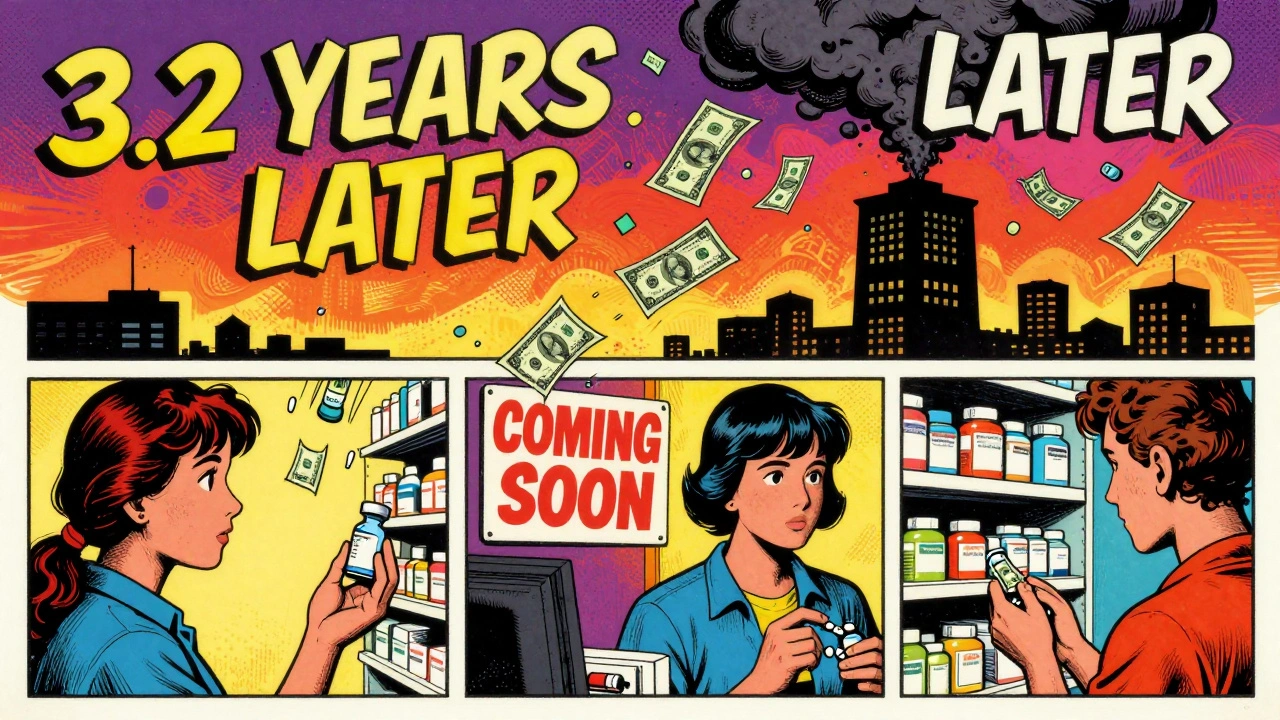
Christian Landry
December 8, 2025 AT 05:41Mona Schmidt
December 9, 2025 AT 05:58Katie Harrison
December 10, 2025 AT 09:40Arun Kumar Raut
December 11, 2025 AT 19:34Chris Marel
December 11, 2025 AT 23:50Nikhil Pattni
December 13, 2025 AT 12:49Haley P Law
December 14, 2025 AT 19:50William Umstattd
December 15, 2025 AT 10:12precious amzy
December 15, 2025 AT 20:19Carina M
December 17, 2025 AT 19:02Guylaine Lapointe
December 17, 2025 AT 19:55Elliot Barrett
December 18, 2025 AT 21:33