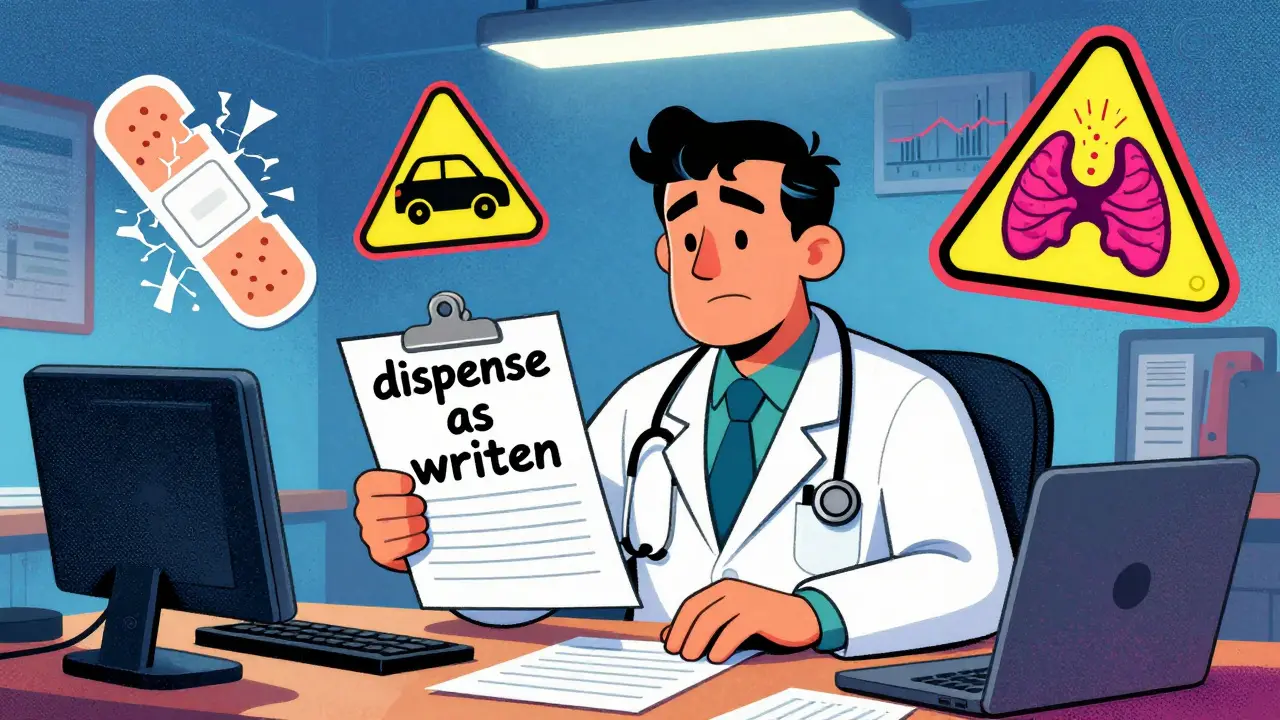
When you prescribe a generic drug, you might think you’re doing the right thing-saving your patient money, following guidelines, keeping costs down. But in today’s legal climate, that simple choice can put you at risk. The truth is, physician liability for generic drug prescriptions has changed dramatically over the last decade, and most doctors aren’t fully aware of how deep the risk runs.
Why Generic Drugs Are Different Now
In 2011 and 2013, the U.S. Supreme Court made two rulings that changed everything: PLIVA v. Mensing and Mutual Pharmaceutical v. Bartlett. These cases ruled that generic drug manufacturers can’t be sued for failing to update warning labels, even if a patient is severely injured. Why? Because federal law forces generic makers to use the same label as the brand-name version-they can’t change it on their own. So if a drug causes toxic epidermal necrolysis, liver failure, or Stevens-Johnson syndrome, the patient can’t sue the company that made the pill. The manufacturer is legally shielded. That leaves one person standing in the line of fire: you, the prescribing physician. Suddenly, the doctor who wrote ‘may substitute’ on the prescription is the only one with deep pockets left. And plaintiffs’ attorneys know it. Between 2014 and 2019, lawsuits targeting doctors over generic drug injuries rose by 37%, according to the American Bar Association. These aren’t fringe cases. They’re real. One patient lost 65% of her skin after taking generic sulindac. Another developed life-threatening skin reactions after a pharmacist switched his epilepsy medication. Both sued the doctor-not the manufacturer.Your Legal Duty Doesn’t Change-But the Risks Do
Legally, your duty to your patient is the same whether you prescribe brand-name or generic. You must choose the right drug, at the right dose, with the right warnings. But here’s the catch: when you prescribe a brand-name drug, the manufacturer carries the burden of warning. When you prescribe a generic, you’re now the primary source of that warning. That means if you prescribe a drug known to cause drowsiness, and the patient later crashes their car, you could be liable if you didn’t specifically tell them not to drive. That’s not hypothetical. Courts have ruled this way before-in Coombes v. Florio, a doctor was held responsible for not warning a patient about sedative side effects. And it’s not just about side effects. For drugs with narrow therapeutic indices-like warfarin, levothyroxine, or certain anti-seizure meds-switching between generic brands can cause dangerous fluctuations in blood levels. Pharmacists are allowed to switch them unless you write ‘dispense as written.’ But if the patient has a seizure or a bleed because the generic was slightly different, you’re the one on the hook.State Laws Vary-And So Does Your Risk
You can’t rely on one rule across the country. Forty-nine states let pharmacists substitute generics unless you say otherwise. But how they handle notification? That’s a mess. In 32 states, pharmacists must tell you within 72 hours if they switched the drug. In 17, they don’t have to tell you at all. That means you might be prescribing a drug based on outdated information, and the patient could be on a different generic than you intended-without you knowing. Some states are pushing back. Illinois courts have ruled that generic manufacturers can be held liable if a drug is inherently dangerous and the label doesn’t reflect new safety data. But in most other states, federal preemption shuts the door. So your liability risk depends on where you practice-and where the patient lives when they’re harmed.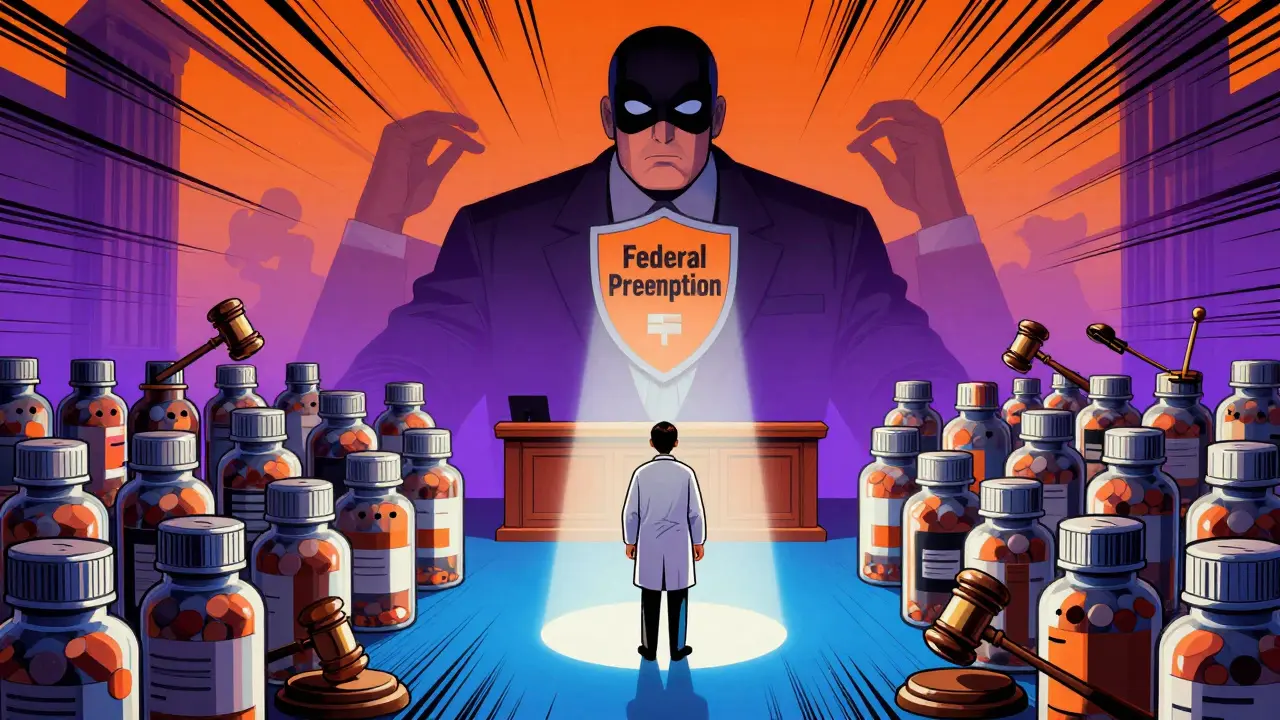
What Doctors Are Actually Doing
A 2022 AMA survey of 1,200 physicians found that 68% feel more anxious about prescribing generics now. Nearly half say they sometimes choose the more expensive brand-name drug-not because it’s clinically better, but because they’re scared of being sued. On physician forums, stories flood in: - ‘I now write out a full warning sheet for every generic I prescribe. Adds 15 minutes to every visit.’ - ‘My patient got Stevens-Johnson after a switch. Manufacturer can’t be sued. Now I’m being sued.’ - ‘I stopped prescribing generic lamotrigine altogether. Too risky.’ These aren’t outliers. They’re symptoms of a broken system. And the cost isn’t just legal-it’s clinical. Patients pay more. Access to affordable meds drops. And doctors are caught in the middle.How to Protect Yourself
You can’t stop prescribing generics. They’re used in 90% of all prescriptions. But you can protect yourself. 1. Use ‘dispense as written’ wisely. For drugs with narrow therapeutic windows-warfarin, levothyroxine, phenytoin, lithium, carbamazepine-always write ‘dispense as written.’ Don’t rely on the pharmacist to know the risk. You’re the expert. 2. Document counseling, specifically. Generic ‘medication discussed’ notes won’t cut it. You need specifics:- ‘I explained that [drug] may cause dizziness and advised avoiding driving or operating heavy machinery.’
- ‘I warned that switching between generic brands of levothyroxine can affect thyroid levels and that consistency is critical.’
- ‘Patient acknowledged understanding of risks of Stevens-Johnson syndrome with this medication.’
Gregory Parschauer
January 14, 2026 AT 05:55This is a goddamn scandal. Generic manufacturers get a free pass to sell potentially lethal drugs while doctors are left holding the bag? The FDA and Congress are complicit in this corporate shield. We’re not just talking about paperwork-we’re talking about patients losing skin, organs, and lives because a corporation decided profit > safety. And now you want me to write a novel in my EHR just to avoid being sued? That’s not medicine-that’s legal triage.
Lethabo Phalafala
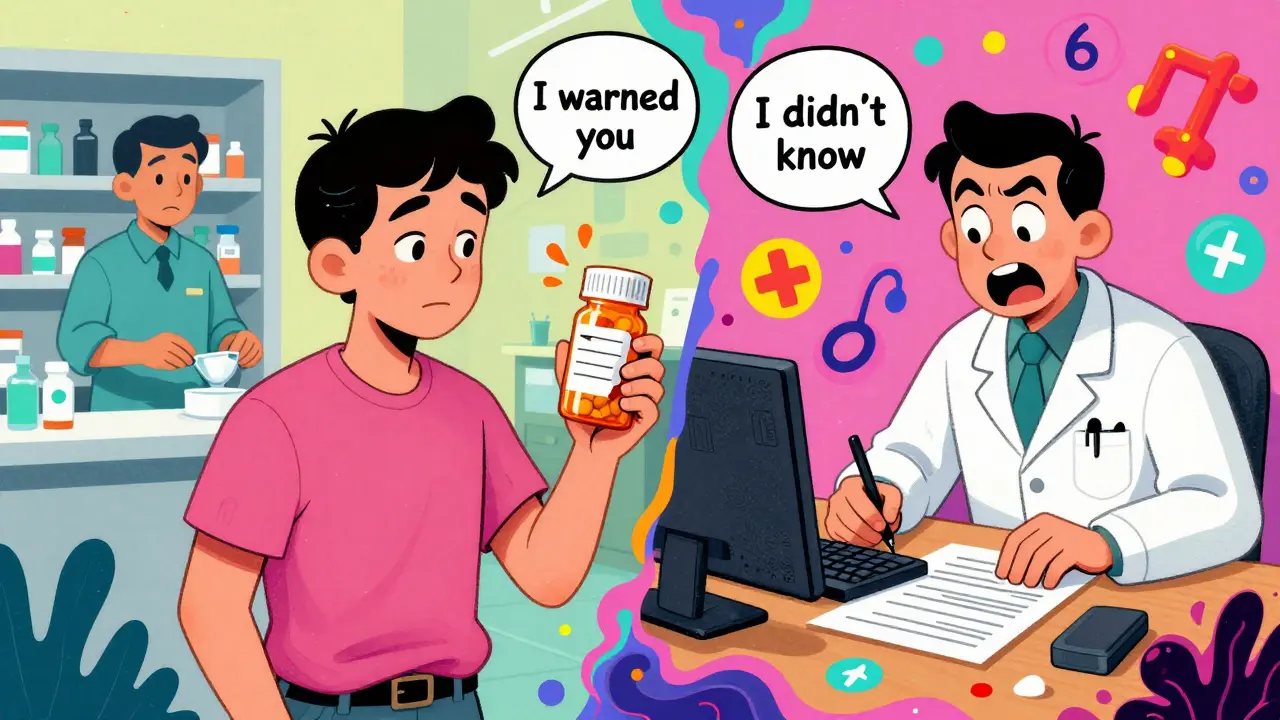
January 14, 2026 AT 14:33I had a patient last month-62-year-old woman on generic levothyroxine-switched by the pharmacy without telling me or her. She came in with tremors, palpitations, and a TSH of 0.08. She cried because she thought she was dying. I had to explain that the generic she got had a different filler, and the absorption was all over the place. No one gets sued but me. I’m tired of being the human shield for Big Pharma’s legal loopholes.
jefferson fernandes
January 15, 2026 AT 12:16Let’s be real: the ‘dispense as written’ directive isn’t enough. You need to document the *conversation*-not just the checkbox. I now use a standardized script: ‘This generic version may have different inactive ingredients that can affect absorption. If you feel different after switching-fatigue, dizziness, heart racing-you must call me immediately. This isn’t a suggestion. It’s a safety protocol.’ I say it every time. I write it down. And I make sure the patient repeats it back. If they don’t? I don’t write the script. Period.
Acacia Hendrix
January 16, 2026 AT 19:31The jurisprudential framework surrounding pharmaceutical liability has undergone a paradigmatic shift since PLIVA v. Mensing-particularly with regard to federal preemption doctrines and the doctrine of learned intermediary. The physician, as the epistemic authority, is now functionally the sole conduit of risk disclosure, effectively transforming the prescriptive act into a tortious liability nexus. The absence of dynamic labeling capability in generic manufacturers creates a structural asymmetry wherein clinical autonomy is weaponized against the practitioner. We are, in essence, the canaries in the coal mine of regulatory capture.
Adam Rivera
January 17, 2026 AT 19:12Hey, I get it-this is scary stuff. But don’t let fear stop you from helping people. I’ve been prescribing generics for 18 years. I just make sure to sit down with patients. I say, ‘Look, this is cheaper, but here’s what could go wrong-and here’s what to watch for.’ Most folks appreciate the honesty. And honestly? Most of them don’t even know the difference between brand and generic until you explain it. You’re not the enemy. The system is.
Rosalee Vanness
January 17, 2026 AT 21:44I used to skip the extra documentation. I thought, ‘It’s just a generic, everyone knows the risks.’ Then a patient had a seizure after a pharmacy switch-same drug, different manufacturer-and the lawyer came after me like I’d personally poisoned them. I lost sleep for months. Now? I treat every generic like it’s a landmine. I write out the warning like I’m writing a letter to my own child: ‘If you feel your heart racing, your skin breaking out, or your mind going fuzzy-STOP and call me. Do not wait. Do not assume it’s normal.’ I print it, hand it to them, and make them sign a copy. It takes two extra minutes-but it’s the difference between peace of mind and a lawsuit that could end your career. Don’t wait for it to happen to you. Start today.
lucy cooke
January 18, 2026 AT 14:37There’s a metaphysical horror here, isn’t there? We’ve outsourced our moral responsibility to a pill-then outsourced the liability for that pill to a human being who can’t even control its formulation. The patient is caught between a manufacturer that can’t speak, a pharmacist that can’t be held accountable, and a physician who’s been turned into a sacrificial oracle. We are the last priests of a broken sacrament: prescribing, not healing. The system doesn’t want us to cure-it wants us to absolve. And yet, we’re the ones who must bear the weight of a system that refuses to answer for its own poison.
Trevor Davis
January 18, 2026 AT 15:42