
Nocebo Risk Estimator
This tool estimates your likelihood of experiencing medication side effects due to nocebo effects based on communication style and personal factors. Based on studies showing 50-76% of reported side effects in clinical trials occur with placebos, this calculator helps you understand how expectations can influence symptoms.
Key Insights from Research:
- Using absolute numbers ("3 in 100") instead of percentages reduces nocebo responses by 15-25%
- Positive reframing cuts nocebo effects by 30-40%
- 70-80% of nocebo responses come from verbal suggestions
When you take a pill, you expect it to help. But what if the side effects you feel aren’t from the drug at all? What if they’re coming from your mind? This isn’t science fiction. It’s science - and it’s happening more often than you think.
What’s Really Causing Your Side Effects?
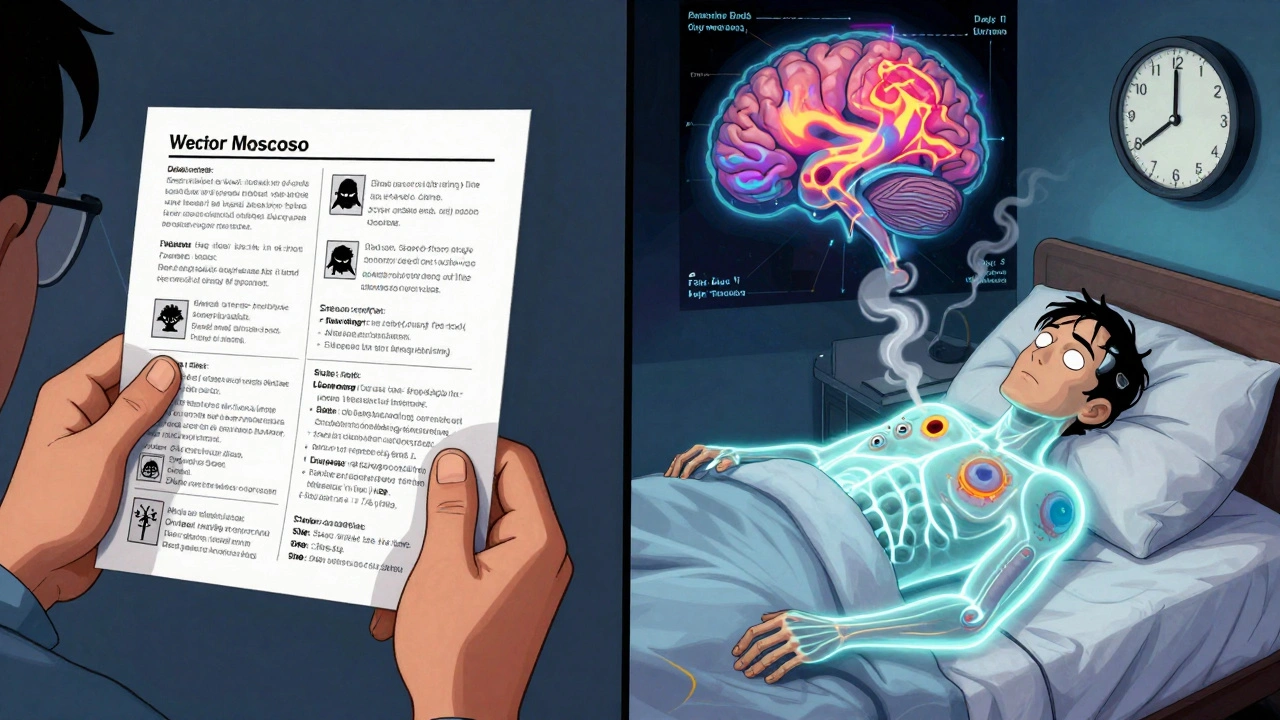
You’ve probably heard of the placebo effect: when a sugar pill makes someone feel better because they believe it will. But there’s another side to this coin - the nocebo effect. That’s when you expect something to hurt you, and your body delivers. Headache. Nausea. Fatigue. Dizziness. All real symptoms. All triggered not by chemicals, but by fear. Studies show that in clinical trials, 50 to 76% of people who report side effects from a medication actually took a placebo. That’s right - half or more of the side effects people blame on their drugs are happening because they were told those side effects were possible. A 2025 study in eLife Sciences found that nocebo effects weren’t just common - they were stronger and longer-lasting than placebo effects. While placebo responses stayed steady, nocebo symptoms didn’t fade. They stuck around.How Your Brain Turns Worry Into Pain
Your brain doesn’t just imagine these symptoms. It creates them. Brain scans show that when someone expects pain or side effects, areas like the anterior cingulate cortex and insula light up. These are the same regions that activate during real physical pain. Your body responds with real changes: cortisol spikes, heart rate increases, even immune activity shifts. It’s not just about being anxious. It’s about what you’re told. Research shows that 70-80% of nocebo responses come from verbal suggestions - what your doctor says, what’s written on the medication leaflet, what you read online. A patient told, “This drug can cause severe headaches,” is far more likely to get one - even if the pill is sugar. In one study, people given placebo injections reported injection-site pain 45-55% of the time. Same needle. Same saline. Just different expectations.It’s Not Just Headaches - It’s Everywhere
Nocebo effects don’t pick and choose. They show up across conditions:- In migraine trials, 20-30% of placebo patients reported side effects matching the active drug - dizziness, fatigue, nausea.
- For cancer treatments, 25-40% of patients on placebos reported nausea - even though they never got the chemo.
- After the first dose of COVID-19 vaccines, 76% of the headaches and fatigue reported were in the placebo group.
- In depression trials, 25-35% of people on sugar pills developed new symptoms like insomnia or irritability.
- Even in irritable bowel syndrome, 22-32% of placebo patients had worse gut symptoms simply because they expected them.
Why Doctors Don’t Always Tell You the Whole Story
Doctors want you to be informed. But the way we talk about risks can backfire. Saying “3% of patients get nausea” sounds harmless. But saying “1 in 33 people will feel sick” triggers more fear. Research shows that using absolute numbers - “3 out of 100” - instead of percentages reduces nocebo responses by 15-25%. The problem? Most medication leaflets are written for lawyers, not patients. They list every possible side effect, no matter how rare. One drug’s leaflet might list 50+ possible reactions. That’s not transparency - it’s fear-mongering. And it works. Patients who read these lists are more likely to stop taking their meds.The Real Cost of Nocebo Effects
This isn’t just about discomfort. It’s about money, health, and lives.- 25-35% of patients stop taking prescribed medication because they blame side effects that were never caused by the drug.
- 15-20% of primary care visits are for symptoms that turn out to be nocebo-driven.
- Patients often take extra pills - antacids, painkillers, sleep aids - to fix side effects that don’t exist.
What Can Be Done?
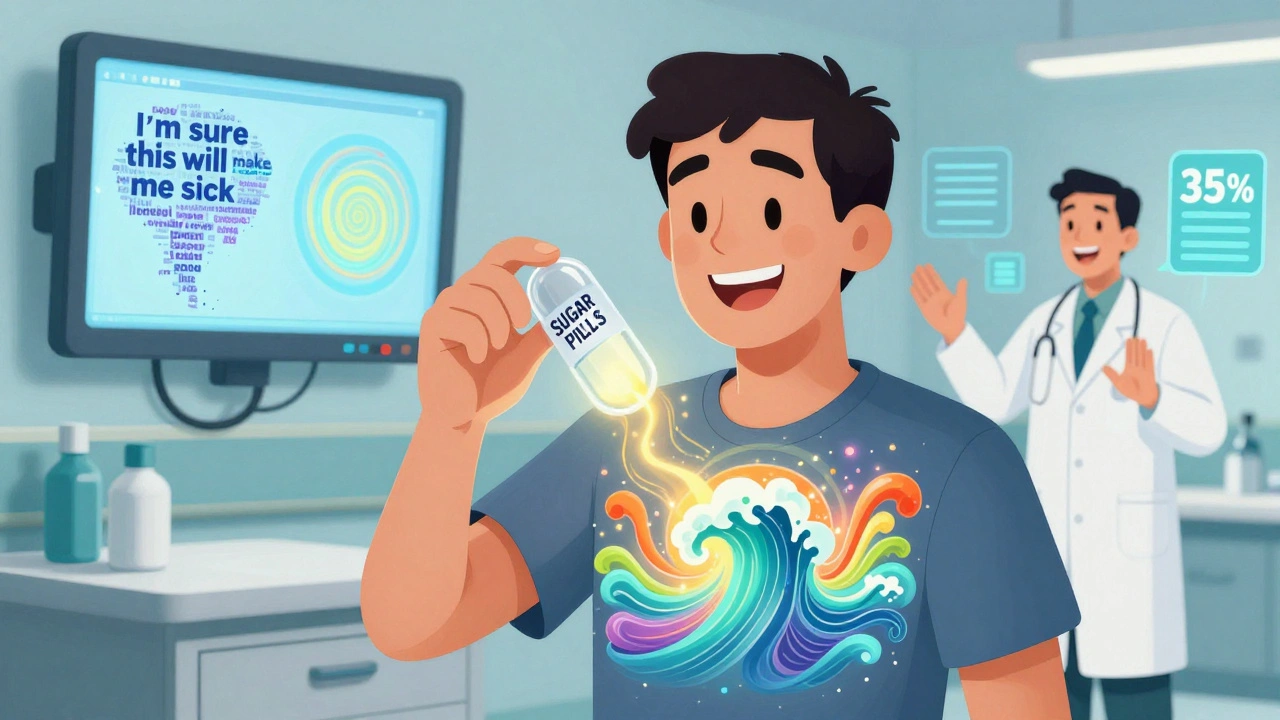
There are ways to fight back - without hiding information. One approach is expectation reframing. Instead of saying, “This drug can cause nausea,” say, “Most people don’t feel sick. If you do, it’s usually mild and goes away quickly.” This simple shift cuts nocebo responses by 30-40%. Another is open-label placebos. Yes, you read that right. Patients are told, “This is a sugar pill, but studies show it can still help reduce pain.” In trials for IBS and chronic pain, patients improved by 25-35% - even though they knew it wasn’t real medicine. The power of expectation doesn’t need deception. Hospitals are starting to use AI tools that analyze how patients talk during appointments. If someone uses phrases like “I’m sure this will make me sick,” or “I had a bad reaction last time,” the system flags them for a different communication style. Early results show 82% accuracy in predicting who’s at high risk for nocebo effects.What You Can Do
If you’re starting a new medication:- Ask your doctor: “What do most people actually feel?” Not, “What could go wrong?”
- Don’t read the full side effect list unless you need to. Focus on the common ones - the ones that affect more than 5% of people.
- Remember: just because you feel something doesn’t mean it’s from the drug.
- If you start having symptoms, wait a few days. Many nocebo reactions fade as your brain adjusts.
- If symptoms persist, talk to your doctor - but don’t assume it’s the drug. It might be your mind.
What’s Next?
The FDA and European Medicines Agency now require drug makers to analyze how much of the side effect data comes from nocebo responses. Starting in 2025, new drug approvals may include a “nocebo rate” alongside efficacy numbers. That’s a big shift. It means the medical world is finally recognizing that the mind is part of the treatment. Research is also looking at genetics. Some people have a variation in the COMT gene that makes them 2.5 times more likely to experience nocebo effects. In the future, doctors might test for this - not to deny treatment, but to tailor how they explain it. The truth is, we’ve been treating the body like a machine. But it’s not. It’s a system shaped by belief, fear, language, and experience. Until we account for that, we’ll keep misdiagnosing the cause of side effects - and leaving patients worse off.Can placebo pills really cause side effects?
Yes. In clinical trials, 50-76% of people who report side effects are taking placebos - sugar pills or saline injections. These symptoms - headaches, nausea, dizziness - are real and measurable. They’re caused by expectations, not chemicals. For example, 76% of fatigue and headache reports after the first COVID-19 vaccine dose occurred in the placebo group.
Why do some people get nocebo effects and others don’t?
It depends on personality, past experiences, and how information is presented. People with anxiety, past negative medical experiences, or a tendency to catastrophize are 2.3 to 3.1 times more likely to experience nocebo effects. Genetic factors also play a role - certain variants in the COMT gene increase susceptibility by 2.5 times. How a doctor explains risks matters too - alarmist language increases nocebo responses.
Are nocebo effects just in my head?
No. Nocebo effects are real physiological changes. Brain scans show increased activity in pain-processing regions. Cortisol levels rise. Heart rate increases. Immune markers shift. These aren’t imaginary. They’re biological responses triggered by belief. The mind doesn’t just influence the body - it directly activates physical systems.
Can doctors reduce nocebo effects without lying?
Absolutely. Doctors can use positive framing: “Most people tolerate this well,” instead of “This causes nausea in 15% of users.” They can use absolute numbers (“3 in 100”) instead of percentages. They can emphasize that side effects are usually mild and temporary. Training in communication techniques can reduce nocebo responses by 30-40%. Open-label placebos - telling patients they’re getting a sugar pill - have also been shown to reduce symptoms in chronic pain and IBS.
Should I stop my medication if I feel side effects?
Don’t stop without talking to your doctor. Many side effects reported in the first week are nocebo-driven and fade within days. If you’re unsure, wait 3-5 days. Track your symptoms. Then discuss them with your provider. Ask: “Could this be related to my expectations?” Stopping medication unnecessarily can lead to worse outcomes - especially for conditions like depression, high blood pressure, or epilepsy.
Is the nocebo effect the same as hypochondria?
No. Hypochondria is a persistent fear of having a serious illness despite medical reassurance. Nocebo effects are real physical reactions triggered by specific expectations - often after being told about possible side effects. A person might feel a headache after being warned about it, even if they had no prior health anxiety. It’s not about being overly worried - it’s about how the brain interprets information.
Lucinda Bresnehan
December 2, 2025 AT 16:43I used to think my headaches from blood pressure meds were the drug... turns out I was reading the leaflet like a horror novel. Once I stopped obsessing over every tiny symptom, the headaches faded. Not magic. Just my brain calming down.
Also, my grandma took a sugar pill for 'joint support' and swore it worked better than the real stuff. She didn't even know it was placebo. Mind is wild.
Shannon Gabrielle
December 4, 2025 AT 16:10So let me get this straight - we’re paying billions so doctors can tiptoe around telling people what could go wrong? Meanwhile, the FDA’s letting pharma companies write leaflets like they’re suing their own customers. Classic American healthcare: scare ‘em, then charge ‘em to fix the fear they created.
ANN JACOBS
December 4, 2025 AT 20:10It is truly fascinating, and indeed profoundly moving, to consider the extent to which our cognitive frameworks - shaped by language, social conditioning, and even the formatting of pharmaceutical disclosures - can exert such tangible, measurable physiological influence. The nocebo effect is not merely a psychological curiosity; it is a systemic failure of medical communication, one that demands interdisciplinary intervention, from neuroscientists to linguists to patient advocates. We must re-engineer how we speak about risk - not to deceive, but to honor the integrity of the human mind-body connection. This is not just medicine. It is moral epistemology.
Nnaemeka Kingsley
December 6, 2025 AT 18:17man i never thought about this before but i had this cough med and i was like 'oh this gonna make me dizzy' and then i got dizzy. turned out i was just tired. brain is a beast.
Sean McCarthy
December 8, 2025 AT 17:2050-76%? That’s not a fluke. That’s a systemic failure. The medical establishment is terrified of liability, so they overload patients with every possible side effect-no matter how statistically absurd. And then they wonder why people stop taking their meds? Wake up. This isn’t informed consent. It’s informed panic.
Lydia Zhang
December 10, 2025 AT 14:52huh.
Kay Lam
December 11, 2025 AT 09:13Think about how much we’ve been trained to fear our own bodies. We’re told every little twinge is a sign of something terrible, and then we’re handed a 30-page pamphlet listing every possible bad thing that could happen-even if it’s happened to one person in a trial of 10,000. We’re not being informed. We’re being conditioned to expect harm. And then we wonder why we feel sick. It’s not the pill. It’s the pamphlet. It’s the tone. It’s the fear we’ve been taught to carry. We need to change the story. Not the medicine.
Matt Dean
December 13, 2025 AT 04:58Of course your brain makes you feel sick. People are dumb. They read a list of side effects and then their body goes, 'oh, you said headache, so here’s a headache.' No wonder half the population is on antidepressants-they’re just trying to cope with the fact that they got scammed by their own anxiety.
Walker Alvey
December 13, 2025 AT 08:49So the real drug is fear. And the placebo? The truth. The system doesn’t want you to know that. Because if you knew your mind could heal you-or hurt you-without a single chemical, what would you need doctors for? Exactly. That’s why they keep the leaflets long. Fear sells. Truth doesn’t.
James Steele
December 14, 2025 AT 01:04The nocebo effect isn’t just a clinical phenomenon-it’s a semiotic rupture in the patient-provider dyad. The linguistic framing of risk constitutes a performative act of somatic suggestion, wherein the signifier (‘nausea,’ ‘dizziness’) becomes the signified through a process of anticipatory somatization. The pharmacological agent is rendered epiphenomenal; the real pharmacodynamic driver is the hermeneutic context of the informed consent document. We are not treating disease-we are negotiating meaning.
Louise Girvan
December 15, 2025 AT 22:42They’re hiding this on purpose. Big Pharma knows if people realized most side effects are in their heads, they’d stop buying drugs. That’s why they bury the truth in fine print. And now they’re using AI to track who’s 'susceptible'? That’s not healthcare. That’s surveillance. Next they’ll be charging you extra if your COMT gene makes you too scared to take your pills.
soorya Raju
December 16, 2025 AT 04:22wait so you’re saying the gov and big pharma made us sick on purpose?? like… they told us the vaccines cause fatigue so we’d get fatigue?? and now they say it’s ‘in our heads’?? this is mind control. i knew it. they’re using the leaflets as weapons.
Dennis Jesuyon Balogun
December 17, 2025 AT 04:39This is the most important thing I’ve read all year. We treat the body like a machine that needs fixing, but it’s not. It’s a living, breathing system shaped by stories we tell ourselves. The moment we stop seeing patients as broken parts and start seeing them as meaning-making beings, medicine becomes healing. The nocebo effect isn’t a flaw-it’s a feature of consciousness. We need to design care around that, not ignore it.
Grant Hurley
December 17, 2025 AT 16:22my doctor just told me 'most people don’t feel anything' when i asked about my new med. i was so relieved. didn’t get a single side effect. small change, huge difference.
Kshitij Shah
December 17, 2025 AT 22:57so basically if your doctor says ‘this might make you tired’ you’ll be tired even if it’s water? lol. then why do i get tired after coffee? same thing?