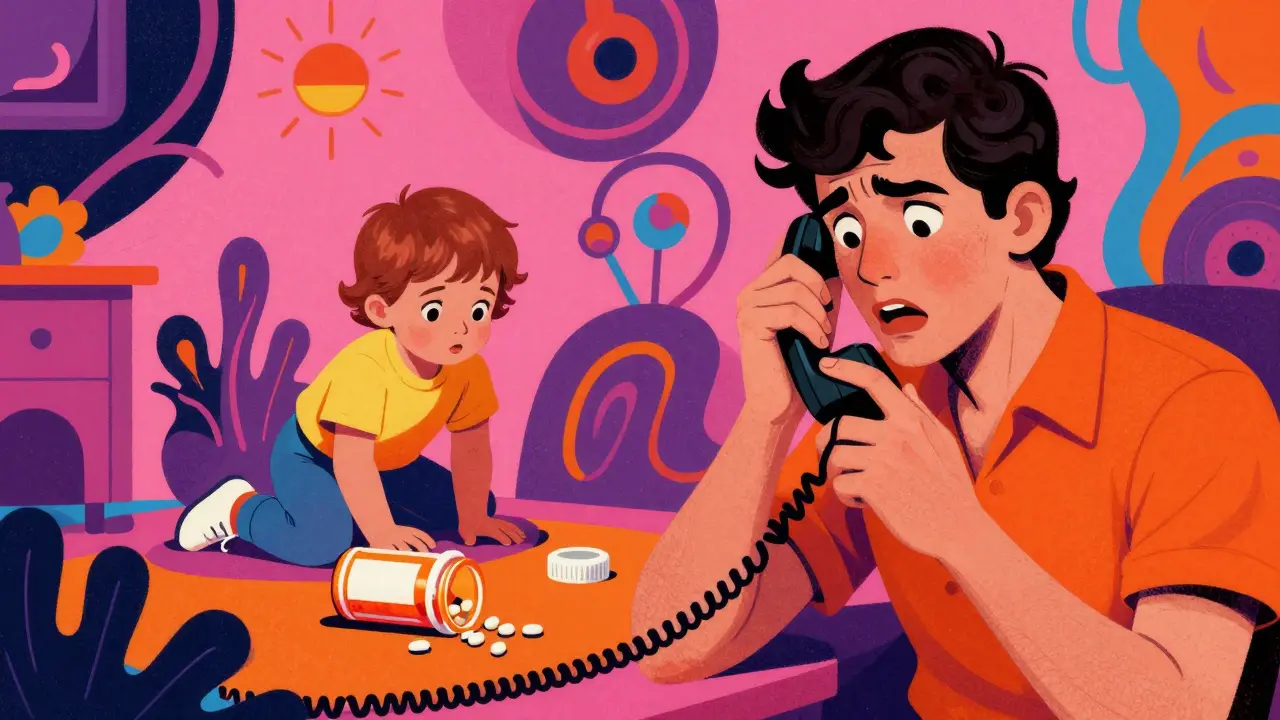
Imagine the panic when you realize your toddler just swallowed a handful of your blood pressure pills or you accidentally took double the dose of a potent prescription. In those few seconds, your mind races: Do I induce vomiting? Should I rush to the ER? Who do I call first? When every minute counts, the Poison Control Hotline is a free, 24/7 national public health service that provides immediate expert medical guidance for potential poison exposures. It isn't just a call center; it's a critical bridge between a potential tragedy and a safe resolution, often saving families from unnecessary and expensive hospital trips.
Quick Facts About the Service
If you're in a rush, here is what you need to know right now. The national number is 1-800-222-1222. It is free, confidential, and available every single day of the year. You don't need insurance, and you don't even need to provide your identity to get help. Whether it's a prescription drug, an over-the-counter medication, or a household chemical, these specialists are trained to handle it.
| Method | Action | Best For... |
|---|---|---|
| Phone | Dial 1-800-222-1222 | Urgent cases, complex symptoms, or intentional ingestions. |
| Text | Text 'poison' to 797979 | Quick questions when you can't speak on the phone. |
| Online | Visit poisonhelp.org | Low-risk exposures and quick algorithmic assessments. |
What Happens When You Call?
When you dial the hotline, you aren't talking to a general operator. You are routed to one of 53 accredited poison centers based on your location. The person on the other end is a Specialist in Poison Information (SPI), typically a registered nurse, pharmacist, or physician with advanced toxicology training. These pros use over 1,500 evidence-based algorithms to determine if a dose is actually toxic based on the person's weight and age.
For medication cases-which make up nearly half of all calls-the specialist evaluates the therapeutic index of the drug. This is basically the gap between a dose that helps and a dose that harms. For example, some drugs have a wide window, meaning a small overdose might not be dangerous, while others are toxic even with one extra pill. About 60% of medication-related calls are resolved right over the phone, meaning the specialist determines the risk is low enough that you can monitor the person at home instead of spending six hours in a waiting room.
Exactly What to Report About Medications
To get the most accurate advice, you need to be a detective. The more specific you are, the faster the specialist can tell you if you're in danger. Don't just say "they took some Tylenol." That's too vague. Instead, follow this checklist of details to have ready:
- Exact Product Name: Look at the bottle. Is it "Tylenol Extra Strength" or "Tylenol PM"? These contain different active ingredients.
- Strength: Check the milligrams (mg) per pill. A 500mg tablet is very different from a 325mg tablet.
- Amount Ingested: Estimate how many pills are missing from the bottle. Be honest-even if it was a lot, the specialists need the real number to save a life.
- Timing: Exactly what time did the exposure happen? If it was 3:15 PM, say that. Pharmacokinetics-how the body absorbs the drug-depends heavily on time.
- Patient Details: The person's age and weight (in kilograms if possible). A 10mg dose is nothing for an adult but could be critical for a 15-pound baby.
- Current Symptoms: Mention everything, from mild nausea or drowsiness to shivering or confusion.
One of the most overlooked details is polypharmacy. If the person took two different medications or mixed a drug with alcohol, tell the specialist. About 32% of serious medication outcomes happen because of interactions between different substances, not just the overdose of a single drug.

The Role of Technology: webPOISONCONTROL
If you're dealing with a low-risk situation, the webPOISONCONTROL tool is a lifesaver. It uses a digital decision tree that guides you through the same questions a human specialist would ask. You input the substance, amount, age, weight, and time, and it spits out a recommendation in about two to three minutes.
However, there is a limit to the AI. The online tool is designed for accidental, simple exposures. If someone intentionally took an overdose or if they mixed more than two different substances, the system will tell you to pick up the phone. These complex cases require the clinical judgment of a human toxicologist to navigate potential drug-drug interactions and psychiatric needs.
Why This Service Matters for Public Health
Beyond helping individual families, the hotline acts as a massive surveillance system. Through the National Poison Data System (NPDS), experts can spot dangerous new trends in real-time. For instance, they've identified novel threats like synthetic cannabinoid issues and gabapentinoid poisonings long before they became mainstream news. This allows the medical community to update treatment protocols across the country.
From a financial perspective, the impact is staggering. Because the service prevents millions of unnecessary ER visits, it saves the U.S. healthcare system roughly $1.8 billion every year. For every single dollar the government invests in these centers, society gets back over seven dollars in medical savings and preserved productivity. It's one of the most efficient pieces of health infrastructure we have.

Common Scenarios and Outcomes
Most calls involve kids. Pediatric accidental ingestions account for nearly half of all cases. In 83% of these situations, the specialists can provide home-management instructions that keep the child safe and out of the hospital. A classic example is acetaminophen (Tylenol) overdose. If caught early, specialists can coordinate the administration of N-acetylcysteine, a medication that prevents liver failure if given within a critical 8-hour window.
Other common cases involve cardiovascular medications or sedatives, which have seen a spike in calls recently. Whether it's a senior citizen taking two doses of a blood pressure med by mistake or a teenager experimenting with a prescription, the goal remains the same: risk stratification. They determine if the case is "non-toxic," "monitor at home," or "immediate emergency room referral."
Is the Poison Control Hotline really free?
Yes, it is 100% free. The service is funded through government appropriations, state grants, and hospital subsidies. You will never be asked for a credit card or insurance information to receive guidance.
Should I induce vomiting before calling?
No. Do not induce vomiting or give any "home remedies" unless a poison control specialist specifically tells you to. Some substances can cause more damage to the esophagus or lungs if they are vomited back up.
What if I don't have the medication bottle?
Provide as much detail as you can. Describe the pill's color, shape, and any imprints (letters or numbers) on the tablet. Specialists have databases that can often identify a medication based on its physical appearance.
Do I have to give my name and address?
The service is confidential. While they may ask for your zip code to route you to the nearest center or for data tracking, you can remain anonymous if you prefer.
How long does a typical call take?
For medication-related exposures, a consultation usually lasts between 8 and 12 minutes. This includes the time it takes to gather the patient's details and the specialist's risk assessment.
Next Steps for Every Household
Don't wait for an emergency to find this number. The best way to handle a medication mistake is to be prepared. Start by programming 1-800-222-1222 into every phone in your house and sharing it with babysitters or elderly parents. It's also a good idea to keep your medications in their original packaging; trying to identify a loose white pill during a crisis is nearly impossible and slows down the rescue process.
If you're an adult managing several prescriptions, keep a current list of all your medications and dosages on your fridge. In an emergency, a spouse or first responder can hand that list to the poison specialist, ensuring the advice you get is based on accurate data, not guesswork.