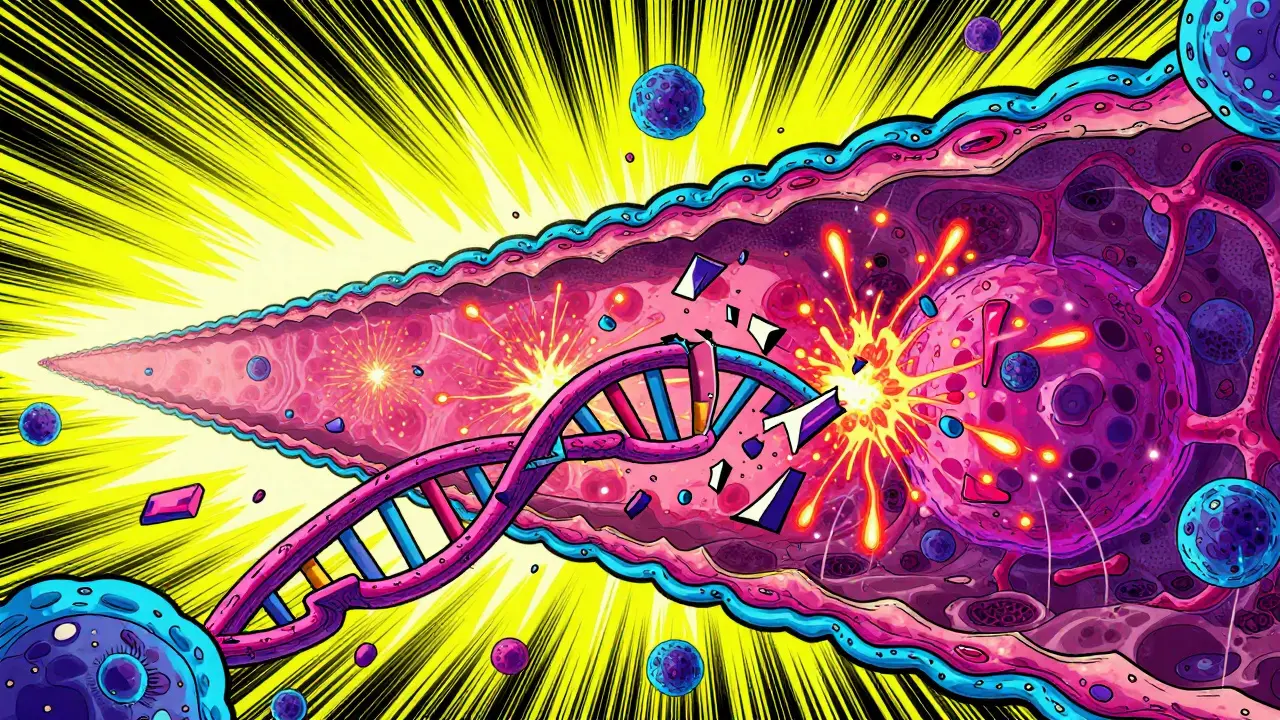
When radiation therapy is used to treat cancer, it’s not magic. It’s physics and biology working together in a very precise way. The goal? To destroy cancer cells without turning your whole body into a casualty. And the key to how it works lies in one thing: DNA damage.
How Radiation Hits Cancer Cells
Radiation therapy uses high-energy particles or waves-like X-rays or protons-to target tumors. But it doesn’t just zap cells randomly. It’s designed to punch through the outer layers of cancer cells and hit their DNA. That’s the real target. DNA holds the instructions for how a cell lives, divides, and survives. Break it badly enough, and the cell can’t recover.
The most lethal damage comes from double-strand breaks. Imagine your DNA as a twisted ladder. A single strand break is like snapping one rail-you can sometimes fix it. But a double-strand break? That’s like cutting both rails in the same spot. The cell loses its blueprint. And without it, the cell can’t replicate properly. It either dies right away or tries to divide and fails spectacularly.
Why Cancer Cells Are More Vulnerable
Not all cells react the same way. Healthy cells repair DNA damage better than most cancer cells. Why? Because cancer cells are already stressed. They grow fast, their DNA is messy, and their repair systems are overloaded. Radiation pushes them past their limit.
When radiation hits, it doesn’t just break DNA directly. It also creates reactive oxygen species-tiny, unstable molecules that act like molecular grenades. These chemicals attack proteins, lipids, and DNA. The result? A cascade of damage that overwhelms the cell’s ability to fix itself.
Some cancer cells are especially sensitive because they’re stuck in a phase of the cell cycle where DNA is exposed and vulnerable. Radiation exploits that. Cells in the M (mitosis) and G2 phases are most at risk. That’s why radiation is often given in small doses over weeks-it catches more cells in those weak spots as they cycle through.
The Three Ways Radiation Kills Cells
Radiation doesn’t just have one way to kill. It has three major paths:
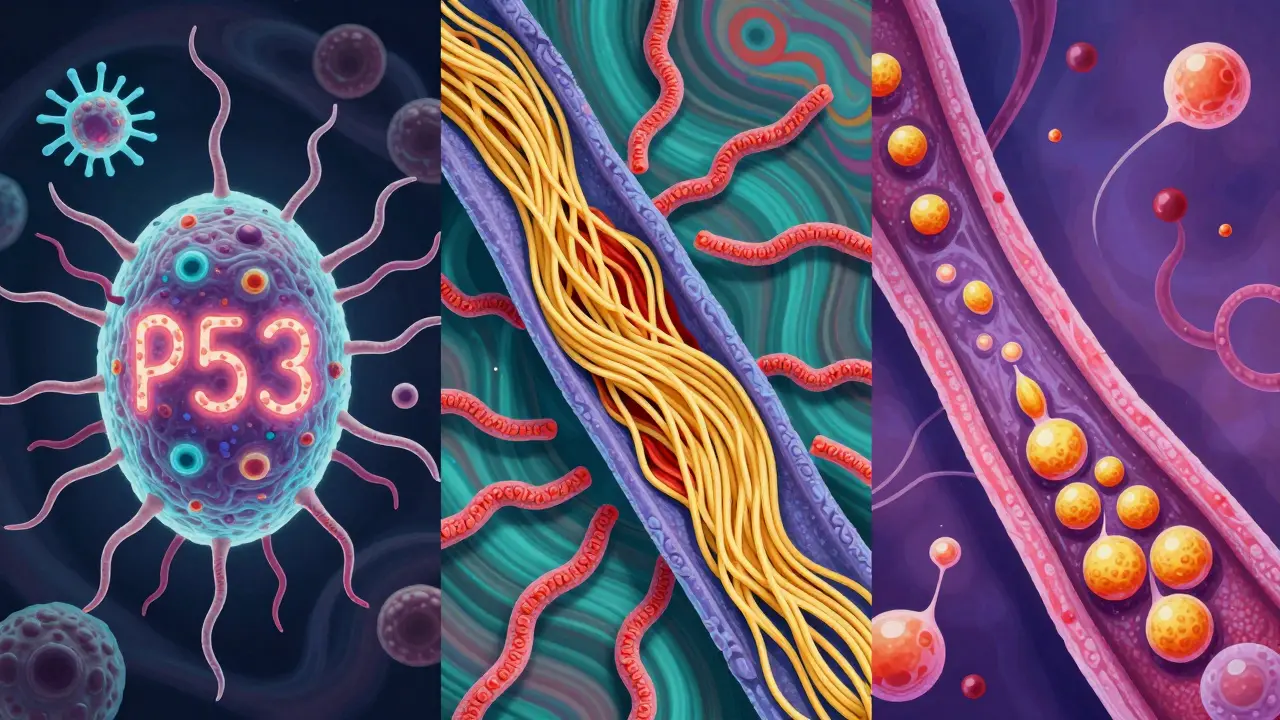
- Apoptosis-programmed cell death. The cell activates its own suicide button. This happens mostly in cells with intact p53 genes, which act like quality control supervisors. If DNA damage is too severe, p53 says, “Call it quits.”
- Reproductive failure-the cell doesn’t die right away, but it can’t divide again. It’s like giving a printer a jammed paper tray. It looks fine, but it’s useless. This is how most cancer cells actually die after radiation.
- Ceramide pathway-a less talked about but powerful trigger. Radiation activates enzymes that make ceramide, a fatty molecule that signals the cell to shut down. This pathway is especially important in blood vessels feeding tumors. High-dose radiation can kill the tumor’s blood supply, starving the cancer from the inside.
These mechanisms don’t work alone. They overlap. A cell might start with DNA breaks, then trigger ceramide, then fail to divide, then activate apoptosis. It’s a chain reaction.
How the Cell Tries to Fight Back
Cancer cells aren’t helpless. They have repair teams. Two main systems try to fix double-strand breaks:
- Non-homologous end joining (NHEJ)-a quick, messy patch job. It glues broken ends back together, even if it gets the sequence wrong. This often leads to more mutations… or cell death.
- Homologous recombination (HR)-a precise repair using a sister DNA strand as a template. It’s accurate, but it only works in certain phases of the cell cycle.
Here’s the twist: how a cell repairs its DNA after radiation can determine whether your immune system steps in. New research from CMRI (2023) found that cells using HR die quietly. No alarm bells. No signal to the immune system. But cells that use NHEJ-or can’t repair at all-release signals that look like an infection. Your body’s immune cells notice. They come in. They start killing.
This is huge. It means radiation isn’t just a local treatment. It can turn your body into a cancer hunter-if the cell dies the right way.
Why Some Tumors Resist Radiation
Not every tumor responds. About 30-40% of cancers develop resistance. Why?
- Too much repair-some tumors have extra copies of repair proteins like 53BP1. Patients with high 53BP1 levels had lower survival rates in head and neck cancer studies.
- Low oxygen-tumors with poor blood flow are hypoxic. Oxygen helps radiation create more free radicals. Without it, you need 2.5 to 3 times more radiation to kill the same cells.
- Immune suppression-tumors can recruit cells that shut down immune activity. Even if radiation wakes up the immune system, these suppressors block the response.
That’s why doctors now combine radiation with other treatments. For example, patients with BRCA1 or BRCA2 mutations (common in breast and ovarian cancers) have broken HR repair. Giving them radiation alone helps-but adding a PARP inhibitor (a drug that blocks backup repair) makes it even more effective.
The New Frontier: Radiation + Immune Boost
One of the most exciting developments in the last five years is combining radiation with immunotherapy. The PEMBRO-RT trial showed that giving pembrolizumab (an immune checkpoint drug) along with radiation increased response rates in lung cancer from 22% to 36%.
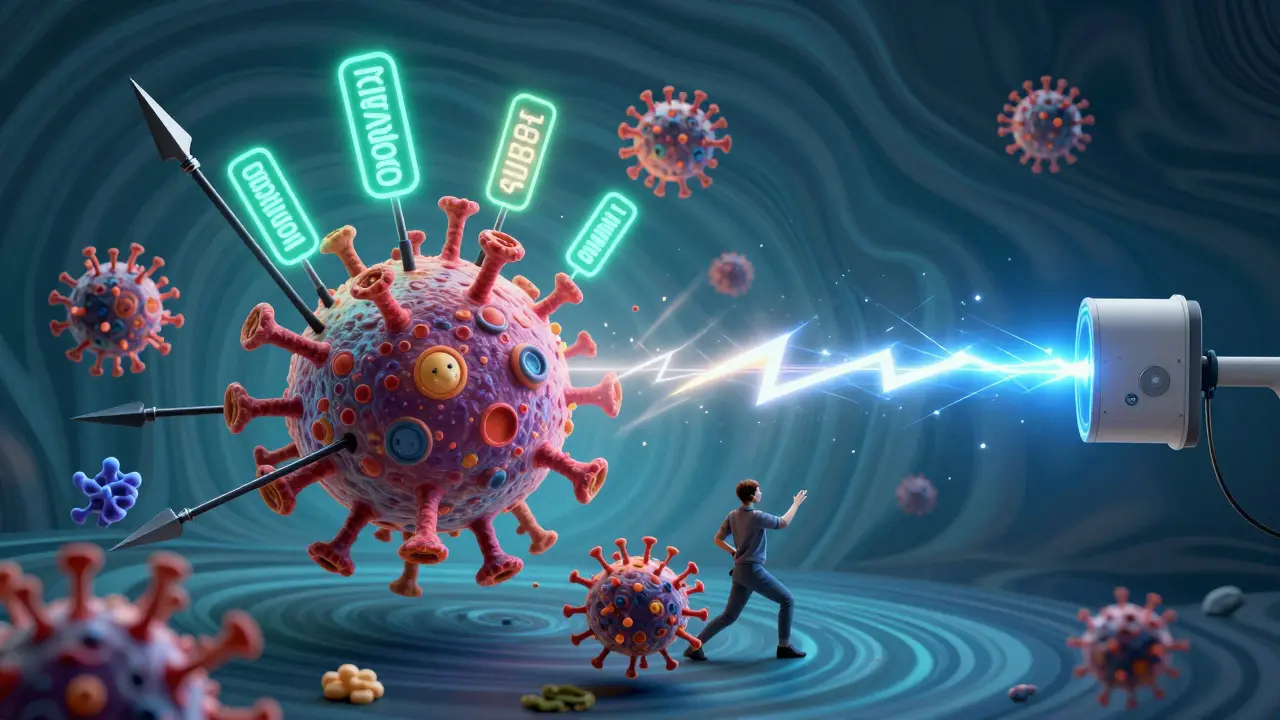
Why does this work? Radiation turns the tumor into a vaccine factory. It releases tumor antigens-molecular flags that tell the immune system, “This is cancer.” It also makes cancer cells more visible by increasing MHC-I presentation. Think of it like putting up neon signs on the cancer cells saying, “Look here!”
And with new tools like FLASH radiotherapy-delivering radiation in under a second-doctors are seeing less damage to healthy tissue. Early trials show the same tumor control, but fewer side effects. It’s like firing a bullet so fast the surrounding tissue doesn’t have time to react.
What This Means for Patients
If you’re undergoing radiation therapy, you’re not just getting a machine zap. You’re part of a biological chain reaction. Your treatment is designed to:
- Break DNA in cancer cells
- Trigger their internal death signals
- Starve them by cutting off blood supply
- Wake up your immune system to finish the job
And the future? It’s about personalization. Doctors are starting to test tumors for repair gene mutations before treatment. If a tumor lacks BRCA2? Use radiation + PARP inhibitor. If it’s hypoxic? Add oxygen boosters. If it’s hiding from the immune system? Add immunotherapy.
Radiation therapy isn’t just a tool anymore. It’s a trigger. And when you combine it with the right partners, it becomes part of a much bigger system-one that turns your own body into a weapon against cancer.
Aisling Maguire
February 28, 2026 AT 08:28bill cook
March 1, 2026 AT 06:56Katherine Farmer
March 2, 2026 AT 04:29Brandie Bradshaw
March 2, 2026 AT 15:00Brandon Vasquez
March 3, 2026 AT 11:39Miranda Anderson
March 3, 2026 AT 12:10Full Scale Webmaster
March 3, 2026 AT 21:53Sophia Rafiq
March 5, 2026 AT 06:41Martin Halpin
March 5, 2026 AT 10:09Justin Ransburg
March 6, 2026 AT 21:48Lisa Fremder
March 7, 2026 AT 00:34