Simvastatin Interaction Checker
Safety Assessment
Results will appear here after checking
Simvastatin is one of the most commonly prescribed cholesterol-lowering drugs in the U.S., especially in its generic form. But behind its low cost and widespread use is a hidden danger: simvastatin can become deadly when mixed with certain medications - or even foods. The risk isn’t theoretical. People have been hospitalized, and some have died, because their doctors didn’t catch a simple drug interaction. This isn’t about rare side effects. It’s about predictable, preventable disasters.
Why the 80 mg Dose Is a Red Flag
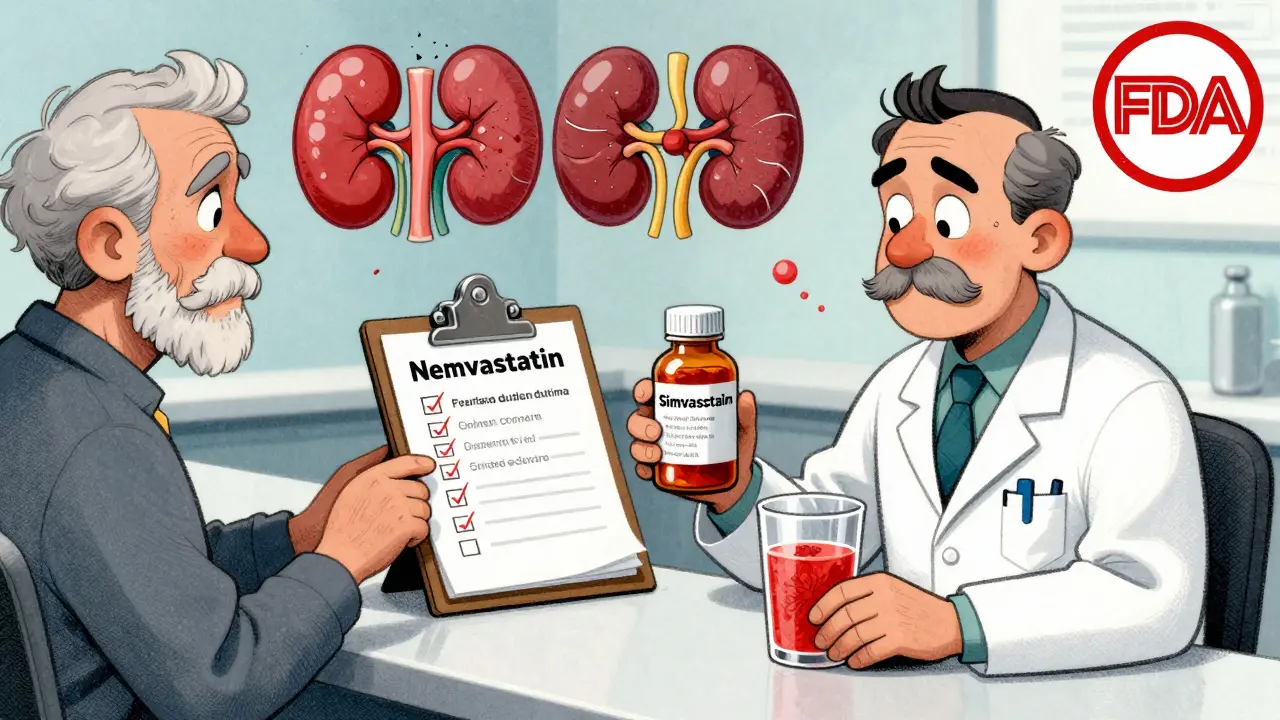
The FDA didn’t just warn about simvastatin 80 mg - they banned its use for most new patients in 2011. Why? Because the data was undeniable. In clinical trials, the rate of severe muscle damage (rhabdomyolysis) jumped from 0.08% at 20-40 mg doses to 0.61% at 80 mg. That’s more than seven times higher. And rhabdomyolysis doesn’t just hurt. It can shut down your kidneys, trigger heart failure, or kill you.Even if you’ve been on 80 mg for years, the risk doesn’t go away. The longer you take it, the more your muscles are under strain. That’s why current guidelines from the American College of Cardiology say: don’t start anyone on 80 mg unless there’s absolutely no other option. And even then, you need blood tests every few months to check for muscle damage.
The Real Culprits: Drugs That Turn Simvastatin Toxic
Simvastatin is broken down in your liver by an enzyme called CYP3A4. When another drug blocks that enzyme, simvastatin builds up in your blood like a clogged drain. That’s when muscle cells start dying. The worst offenders are strong CYP3A4 inhibitors:- Antibiotics: Clarithromycin and erythromycin - common for sinus or lung infections - can spike simvastatin levels by 400% or more.
- Fungus fighters: Ketoconazole, itraconazole, voriconazole - used for yeast or fungal infections - are absolute no-gos.
- Heart and transplant drugs: Cyclosporine, diltiazem, verapamil, and amiodarone can all turn simvastatin into a poison.
- HIV meds: Ritonavir, atazanavir, and other protease inhibitors are among the most dangerous combinations.
One study found that patients on simvastatin who got clarithromycin were over 10 times more likely to develop muscle damage than those who didn’t. And it doesn’t take long - symptoms can show up in under 72 hours. That’s why pharmacists now flag these combinations automatically. If your doctor prescribes an antibiotic while you’re on simvastatin, ask: "Is this safe with my cholesterol pill?"
Grapefruit Juice Isn’t Just a Warning - It’s a Hazard
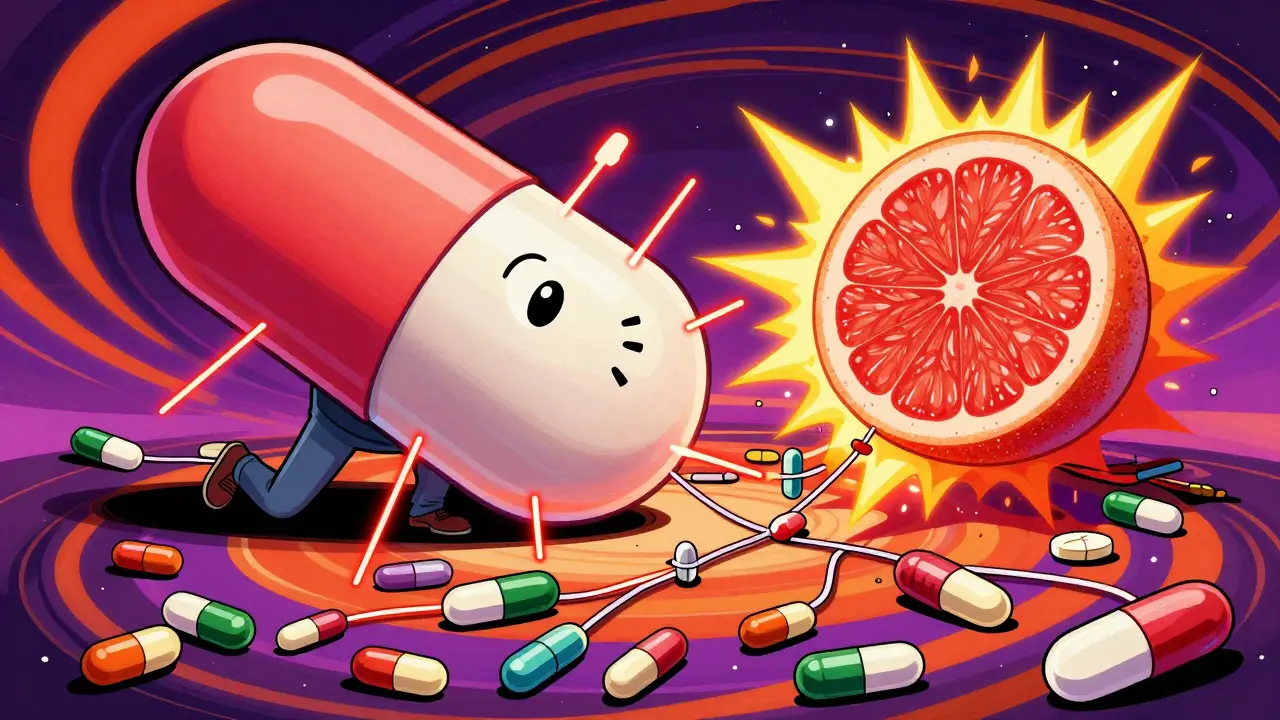
You’ve probably heard to avoid grapefruit with statins. But most people think it’s a minor thing. It’s not. A single 8-ounce glass of grapefruit juice can increase simvastatin levels in your blood by up to 260%. That’s the same as taking a double dose - without even knowing it.Studies show 43% of patients on high-dose simvastatin still drink grapefruit juice regularly. They think "a little won’t hurt." But it does. Even orange juice from the same family (like Seville oranges or pomelos) can cause the same problem. If you’re on simvastatin, skip it entirely. No exceptions. No "just on weekends." No "I’ll drink it before I take my pill." The interaction happens fast and stays around for hours.
Other Hidden Risks: Fibrate, Colchicine, and Niacin
You might think if you’re not on antibiotics or antifungals, you’re safe. But other common drugs also raise the danger:- Colchicine: Used for gout, it’s often prescribed long-term. When combined with simvastatin, even at low doses, it can trigger muscle breakdown. The FDA has issued specific warnings about this combo.
- Fenofibrate: A fibrate used with statins to lower triglycerides. It increases risk even if you’re on a low dose of simvastatin.
- Niacin (vitamin B3): Sometimes added to statins for extra cholesterol control. But it also raises muscle toxicity risk - especially with higher simvastatin doses.
Many patients don’t realize these are dangerous. They see "niacin" and think it’s just a supplement. But when it’s prescribed as a pill, it’s a drug - and it’s not safe with simvastatin.
What to Do If You’re Already on Simvastatin
If you’re taking simvastatin, especially at 40 mg or higher, here’s what you need to do right now:- Check your meds. Go through every pill you take - prescription, over-the-counter, even herbal. Look for the drugs listed above. If you’re unsure, bring your list to your pharmacist.
- Ask about alternatives. Rosuvastatin (Crestor) and pravastatin (Pravachol) are statins that don’t rely on CYP3A4. They’re safer with other drugs. If you’re on multiple medications, switching might be the smartest move.
- Get tested. Your doctor should check your liver enzymes (ALT, AST) and a muscle enzyme called CK every 3-6 months. If you feel unexplained muscle pain, weakness, or dark urine, stop the drug and call your doctor immediately.
- Stop grapefruit. No juice. No fruit. No smoothies. No supplements labeled "grapefruit extract."
Why This Isn’t Just a "Patient Error" Problem
Too often, people blame patients for not reading labels. But the real problem is the system. Simvastatin is cheap - under $4 a month for generic 20 mg. That makes it the default choice for many doctors, especially in busy clinics. But cost shouldn’t override safety.Between 2011 and 2018, prescriptions for simvastatin 80 mg dropped by 82%. Why? Because doctors finally listened to the data. But 2% of new prescriptions still use it. That’s 2% too many. And many of those patients are older adults on multiple drugs - the exact group most at risk.
Pharmacists who run intervention programs have shown that when they actively screen for interactions, dangerous combinations drop by 67%. That means if your pharmacy offers medication reviews, take them. Don’t wait until something goes wrong.
What’s Next for Simvastatin?
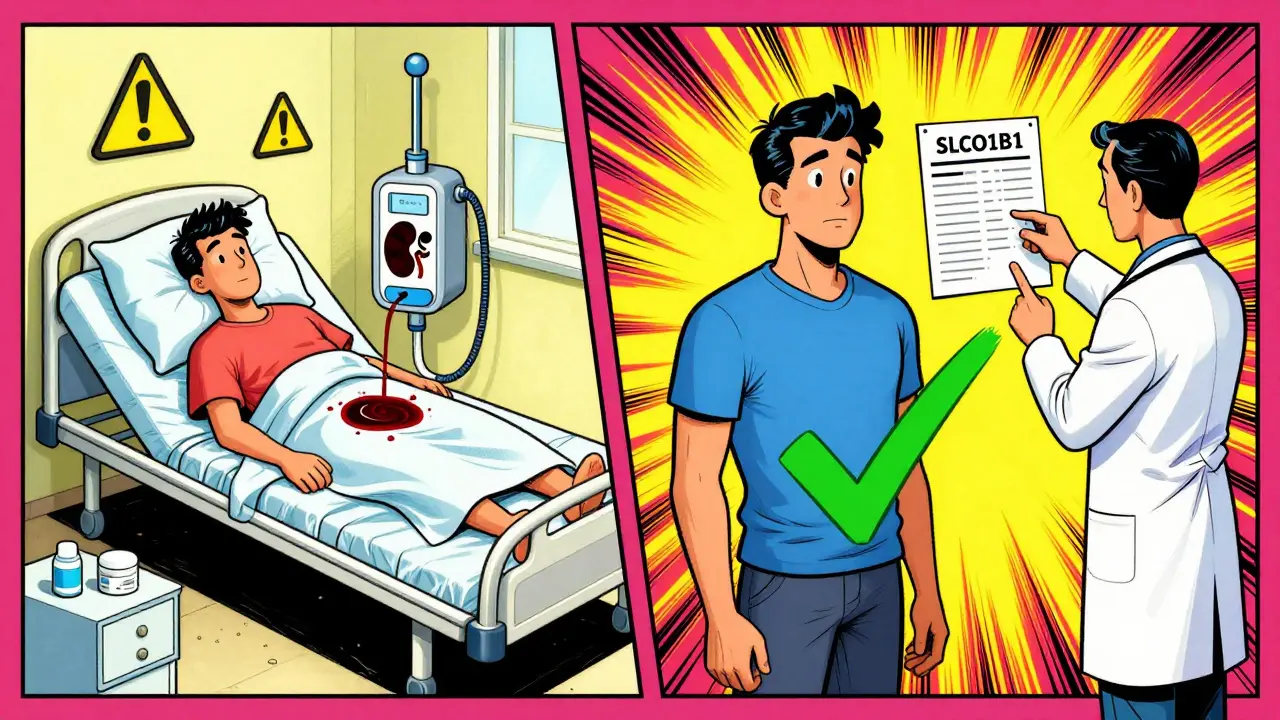
The future of simvastatin is shrinking - and for good reason. Newer statins like pitavastatin and rosuvastatin offer stronger cholesterol control with far fewer interactions. Genetic testing for SLCO1B1 mutations can now identify people who are 4.5 times more likely to develop muscle damage on simvastatin. These tools exist. They’re just not used enough.Right now, simvastatin 20 mg or lower is still a reasonable option for healthy people taking only a few medications. But if you’re over 65, have kidney issues, or take any other prescription, you’re playing Russian roulette with your muscles. The data doesn’t lie. The FDA didn’t issue warnings for nothing.
If you’re on simvastatin, don’t assume you’re safe. Ask your doctor: "Is this the safest option for me?" If they say yes, ask for proof. If they don’t know, get a second opinion. Your muscles - and your life - are worth more than a $4 pill.
Can I take simvastatin with blood pressure meds?
Some blood pressure medications are safe with simvastatin, but others are dangerous. Diltiazem and verapamil can raise simvastatin levels, so if you take either, your simvastatin dose must be capped at 10 mg daily. Amlodipine and amiodarone also require a max of 5 mg. Always check with your doctor or pharmacist before combining these drugs.
What are the early signs of muscle damage from simvastatin?
Early signs include unexplained muscle pain, tenderness, or weakness - especially in your thighs, shoulders, or lower back. You might feel unusually tired. Dark, tea-colored urine is a serious red flag, meaning your muscles are breaking down and your kidneys are under stress. If you notice any of these, stop the medication and call your doctor immediately.
Is it safe to take simvastatin with fish oil or omega-3 supplements?
Yes, fish oil and omega-3 supplements are generally safe with simvastatin. They don’t interfere with the CYP3A4 enzyme and don’t increase the risk of muscle damage. In fact, they’re often recommended together to help lower triglycerides. But always tell your doctor you’re taking them - just in case.
Can I switch from simvastatin to another statin safely?
Yes, switching is often the safest move, especially if you’re on multiple medications. Rosuvastatin and pravastatin are the top alternatives because they’re not metabolized by CYP3A4. Your doctor can switch you over with a simple dose adjustment. Most people tolerate the change well, and the risk of interactions drops dramatically.
Why do some people still get prescribed simvastatin 80 mg?
It’s rare, but sometimes it happens in patients who’ve been on it for years and haven’t had side effects. But guidelines now strongly discourage starting anyone new on 80 mg. If you’re on it now, your doctor should be evaluating whether you really need it - or if a safer statin would work just as well. Don’t assume you’re an exception. The risks are real for everyone.
Katherine Carlock
January 12, 2026 AT 18:12Wow, I had no idea grapefruit juice could be this dangerous with simvastatin. I drink it every morning like it’s water. Guess I’m switching to orange juice now… or maybe just water. 😅
Prachi Chauhan
January 13, 2026 AT 19:35It’s not just the drug-it’s the system. Doctors are pressured to prescribe cheap generics, pharmacists are overworked, and patients get handed a script like it’s a candy bar. We treat cholesterol like a number, not a body. This isn’t about being careful-it’s about being alive. And yet, no one talks about how much profit is tied to keeping simvastatin on the shelf.
Why isn’t this front-page news? Why aren’t pharmacies required to do mandatory interaction checks before filling? Why do we wait for someone to die before we act? This is systemic neglect dressed up as medical practice.
I’ve seen patients on 80 mg for years because their doctor said, ‘You’ve been fine so far.’ Fine doesn’t mean safe. It means lucky. And luck runs out.
And don’t get me started on niacin. People think it’s ‘natural,’ so it’s harmless. It’s not. It’s a drug. A toxic one, paired with simvastatin. We need better education, not just warnings buried in fine print.
Switching to rosuvastatin isn’t a luxury-it’s a survival tactic if you’re on more than two meds. But insurance won’t cover it unless you’re already in the ICU. That’s not healthcare. That’s gambling.
My aunt had rhabdo. She was 72. Took simvastatin and clarithromycin for a sinus infection. Didn’t even know the combo existed. Now she walks with a cane. Her kidneys are fine. But her muscles? Gone. Forever.
We need to stop normalizing this risk. It’s not ‘just a statin.’ It’s a ticking time bomb if you’re not careful. And most people have no idea they’re holding the fuse.
Sona Chandra
January 15, 2026 AT 14:04THIS IS WHY AMERICA IS FALLING APART. PEOPLE ARE DYING BECAUSE DOCTORS ARE TOO LAZY TO CHECK DRUG INTERACTIONS AND PATIENTS ARE TOO STUPID TO READ LABELS. WHY ISN’T THIS ON THE NEWS?!? THEY’RE KILLING PEOPLE WITH $4 PILLS AND NO ONE CARES!!
Konika Choudhury
January 16, 2026 AT 01:50Why do we let foreign pharma companies dictate our medicine? Simvastatin is cheap because it's made in India and China. We should ban it and use American-made statins. This is a national security issue
Darryl Perry
January 17, 2026 AT 16:57Correlation is not causation. Rhabdomyolysis rates are low overall. This is fearmongering.
Windie Wilson
January 19, 2026 AT 12:15So let me get this straight… I can’t have my morning grapefruit smoothie, my clarithromycin for that sinus thing, AND my simvastatin? What am I supposed to do, just… die quietly? 😔
At this point, I feel like my body is a minefield and my doctor’s office is a game of Russian roulette with a side of insurance paperwork.
Amanda Eichstaedt
January 20, 2026 AT 16:16I’ve been on simvastatin 20 mg for 8 years. I take it with water, no grapefruit, and I’m on lisinopril and metformin. My doctor checks my CK levels every 6 months. I’m fine. But I also know people who aren’t. This post isn’t alarmist-it’s a public service. If you’re on multiple meds, talk to your pharmacist. They’re the unsung heroes here.
And yes, rosuvastatin is pricier, but if you’re over 65 or on other drugs, it’s worth every penny. Your muscles don’t have a backup plan.
Stop treating meds like they’re candy. This isn’t theoretical. It’s biology.
Abner San Diego
January 21, 2026 AT 13:15Why do we even still have simvastatin 80 mg on the market? If the FDA banned it for new patients, why not recall it entirely? This is corporate greed disguised as medical choice. Someone’s making bank off people’s ignorance.
And grapefruit juice? That’s not a warning. That’s a death sentence with a citrus twist.
I’m not saying don’t use statins. I’m saying don’t use the dangerous one when better options exist. But hey, maybe your life’s not worth $15 more a month.
Eileen Reilly
January 23, 2026 AT 02:09ok but like… i took simva for 3 years and i was fine. why are people acting like its a death sentence? also i drink grapefruit juice and i dont even know what cyp3a4 is and i still breathe. maybe its just me? 🤷♀️
Monica Puglia
January 23, 2026 AT 13:07Thank you for writing this. I’m a nurse, and I’ve seen too many patients come in with CK levels through the roof because they were on simvastatin + clarithromycin + grapefruit juice. No one told them. No one checked. 🫂
Switching to pravastatin or rosuvastatin is not a big deal. It’s literally one script change. Why do we make people suffer before we act?
If you’re on meds-ask your pharmacist. They’re trained for this. And if your doctor says ‘it’s fine’-ask for proof. Not just vibes. Data. 📊
And PLEASE stop drinking grapefruit juice. It’s not worth it. Not even a little. 🙏