
Statins are one of the most prescribed drugs in the U.S., with nearly 40 million people taking them every year. They’re not a cure-all, but for millions, they’re the difference between a heart attack and a second birthday. The science behind them is solid: statins cut LDL cholesterol by up to 60%, slash heart attack risk by 30%, and reduce stroke chances by nearly 20%. But for every person who feels safer because of them, another walks away because of muscle pain that won’t go away.
How Statins Actually Work
Statins don’t just lower cholesterol-they reprogram how your liver handles it. The liver makes about 75% of the cholesterol in your body, and statins block a key enzyme called HMG-CoA reductase. When that enzyme slows down, your liver starts pulling more LDL (bad cholesterol) out of your blood to make up for the shortage. It’s like turning up the vacuum cleaner in a dusty room.
Atorvastatin and rosuvastatin, the two most common statins today, can drop LDL by 50% or more at high doses. Simvastatin and pravastatin are a bit gentler, usually bringing LDL down 35-45%. But it’s not just about numbers. Statins also make plaque in your arteries more stable. Instead of bursting and causing clots, it stays put. They reduce inflammation markers like CRP, improve how your blood vessels relax, and even help your endothelial cells (the lining of your arteries) heal faster.
These effects aren’t just theoretical. The Heart Protection Study followed over 20,000 people for five years. Those on statins had 60% fewer heart attacks and 17% fewer strokes. The Scandinavian Simvastatin Survival Study showed that people with existing heart disease cut their risk of dying from heart problems by 42%. That’s not luck-it’s biology.
The Muscle Pain Problem
But here’s the catch: about 1 in 10 people on statins report muscle aches, cramps, or weakness. It’s not rare. It’s common. And it’s not always mild.
Some people feel it right away-maybe after a few weeks. Others notice it months in. It’s often in the shoulders, thighs, or calves. It’s not the same as soreness from exercise. It’s deeper, duller, and doesn’t go away with rest. A Reddit user named u/CardioWarrior described it as "shoulder pain that made lifting coffee cups hard." Another, u/CholesterolFighter, said his leg cramps were so bad he could barely walk to the mailbox.
Doctors call this statin-associated muscle symptoms, or SAMS. It’s not always easy to diagnose. Blood tests for creatine kinase (CK) often come back normal, even when pain is real. That’s because most cases are myalgia-pain without muscle damage. Only about 0.1% of users develop rhabdomyolysis, a rare but dangerous condition where muscle tissue breaks down and can damage kidneys.
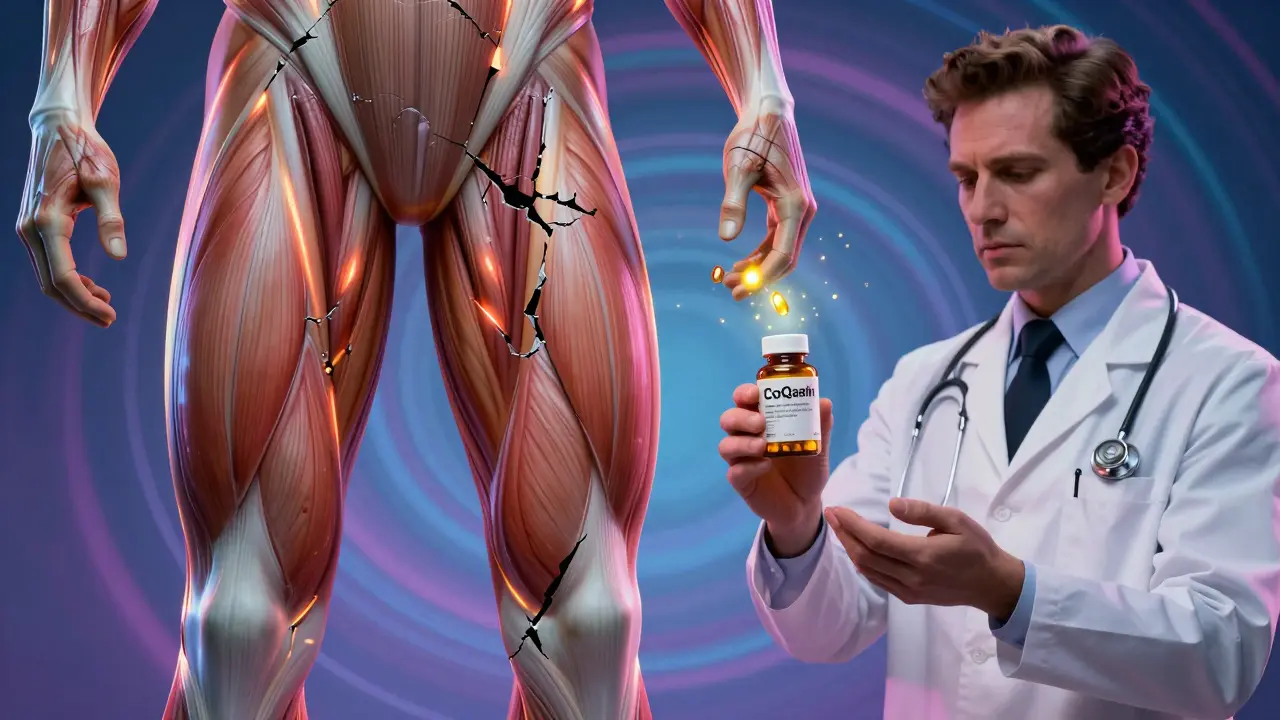
Why does this happen? Statins don’t just block cholesterol production-they also interfere with coenzyme Q10 (CoQ10), which your muscles need for energy. They also affect how certain proteins are processed in muscle cells. The result? Muscle fatigue, stiffness, or pain that feels like your body is running on empty.
Who’s Most at Risk?
Not everyone gets muscle pain. But some people are more likely to.
- People over 65
- Women (especially post-menopausal)
- Those with kidney or liver issues
- People taking other medications like fibrates, certain antibiotics, or antifungals
- Those with the SLCO1B1 gene variant-this genetic quirk makes simvastatin harder for the body to clear, raising the risk of muscle toxicity
Even your size matters. People with lower body weight tend to have higher drug concentrations in their blood, which can make side effects worse. And if you’re inactive, your muscles may be more sensitive to the drop in CoQ10.
What to Do If You Have Muscle Pain
Don’t just quit. Don’t ignore it. Talk to your doctor.
First, rule out other causes. Thyroid problems, vitamin D deficiency, or even dehydration can mimic statin muscle pain. A simple blood test can check for these.
If it’s likely the statin, here are your options:
- Switch statins. Pravastatin and fluvastatin are less likely to cause muscle issues. They’re metabolized differently and don’t cross into muscle tissue as easily.
- Lower the dose. Sometimes 10 mg of atorvastatin does the job just as well as 40 mg, with far fewer side effects.
- Try every-other-day dosing. Some people tolerate this well. Your doctor can test your LDL after a few weeks to see if it’s still controlled.
- Try CoQ10 supplements. Studies are mixed, but many patients report less pain after taking 100-200 mg daily for a month or two.
- Consider non-statin options. If statins truly don’t work for you, ezetimibe or PCSK9 inhibitors can lower LDL without touching muscle cells.
One study in JAMA Internal Medicine found that 49% of people stop statins within a year. Most say it’s because of muscle pain. But here’s the twist: in controlled trials, when patients didn’t know if they were on statins or placebo, about 15% reported muscle pain on both. That suggests some of the pain is psychological-fear of side effects can make you notice normal aches more. Still, that doesn’t make the pain any less real.
Is It Worth It?
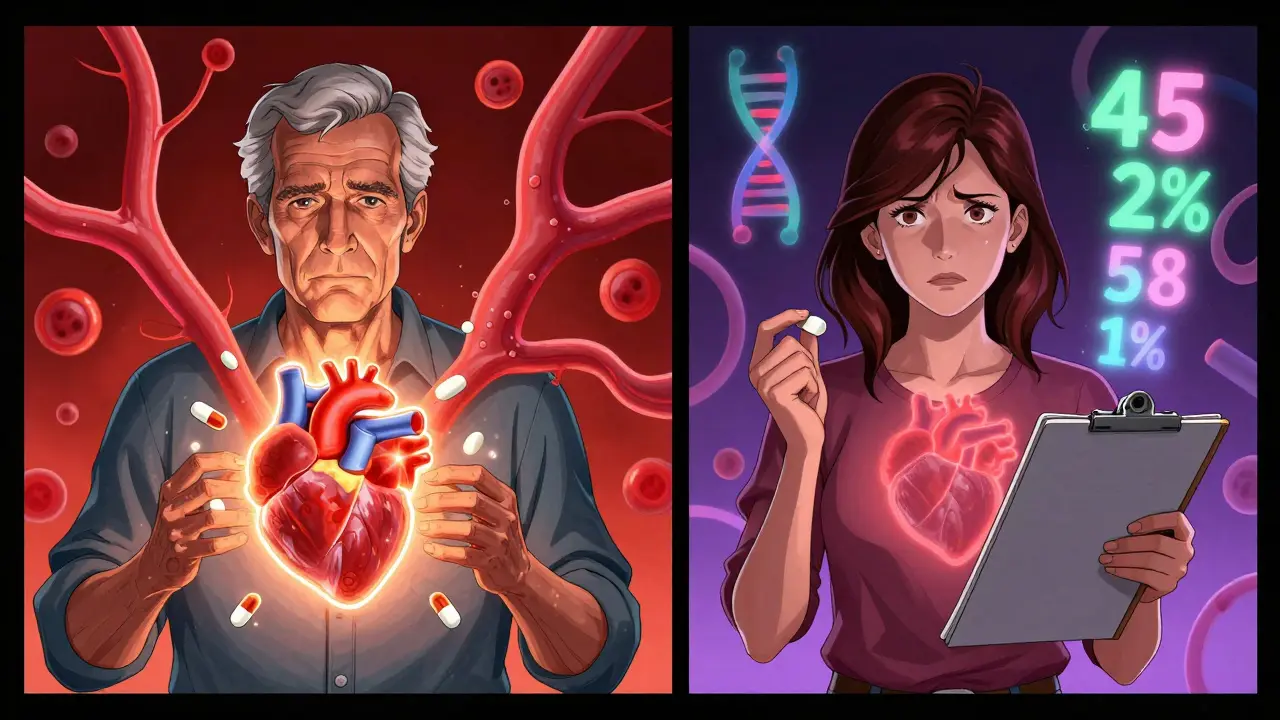
Let’s say you’re a 62-year-old man with high cholesterol and a family history of heart disease. Your 10-year risk of a heart attack is 20%. Taking a statin cuts that risk to 14%. That’s 6 fewer heart attacks per 100 people over 10 years. For most, that’s a win.
But if you’re a 45-year-old woman with only slightly elevated cholesterol and no other risk factors, the math changes. Your risk might drop from 3% to 2.5%. Is a 0.5% gain worth muscle pain that lasts months? Maybe not.
The guidelines say statins are for people with established heart disease, diabetes, or very high LDL. But too often, they’re prescribed based on a single number-LDL above 190-or because a doctor says, "It’s just a pill." That’s not personalized care. It’s blanket treatment.
The real question isn’t "Should you take a statin?" It’s "Is this right for you?"
What’s Next for Statins?
Researchers are working on smarter versions. Stanford scientists found that statins protect blood vessels through pathways that don’t always involve cholesterol. That means future drugs might target those pathways directly-giving the benefits without the muscle pain.
Genetic testing for SLCO1B1 is already available. If you have the risky variant, your doctor might avoid simvastatin altogether. Insurance doesn’t always cover it yet, but it’s getting cheaper.
And for those who need statins but can’t tolerate them, new non-statin drugs like bempedoic acid are showing promise. They lower LDL by about 20% and rarely cause muscle pain.
Statin therapy isn’t one-size-fits-all. It’s a tool. And like any tool, it works best when it’s matched to the job.
Do statins really prevent heart attacks?
Yes, for people at high risk. Studies show statins reduce major heart events by about 30% and strokes by 17%. The benefit is strongest in those with existing heart disease, diabetes, or very high LDL. For low-risk people, the benefit is smaller and must be weighed against side effects.
Can muscle pain from statins be reversed?
Usually, yes. Muscle pain often improves within weeks of switching to a different statin, lowering the dose, or stopping the drug. In most cases, symptoms disappear completely once the statin is out of your system. Never stop abruptly without talking to your doctor, though.
Is CoQ10 supplementation effective for statin muscle pain?
Evidence is mixed, but many patients report improvement. Some studies show modest relief, others show no difference. It’s safe to try-100-200 mg daily for 4-6 weeks is a common recommendation. It won’t fix everything, but it might help.
Are generic statins as good as brand names?
Yes. Generic atorvastatin, simvastatin, and rosuvastatin are chemically identical to their brand-name versions. The only differences are fillers and packaging. Many people save hundreds a year by switching to generics-some cost less than $4 a month.
Can I stop statins if I eat better and exercise?
Lifestyle changes help-but they rarely replace statins for high-risk people. Even with perfect diet and exercise, LDL may not drop enough to reach target levels. For those with genetic high cholesterol or existing heart disease, stopping statins often brings risk back up quickly. Talk to your doctor before making any changes.
Final Thought
Statins aren’t magic. They’re powerful tools with real risks. The key isn’t avoiding them altogether-it’s using them wisely. If you’re on one and feel off, speak up. If you’re unsure whether you need one, ask for a full risk assessment-not just a cholesterol number. Your heart matters. So does how you feel every day.
Kayleigh Campbell
December 16, 2025 AT 19:50Statins are like that one friend who shows up to every party and insists they’re helping-but you’re pretty sure they just want to borrow your charger and steal your snacks. The science? Solid. The muscle pain? Real. I tried them for six months and felt like my legs were made of wet cement. Swapped to pravastatin-suddenly I could climb stairs again. No magic, just biology. And yeah, CoQ10 helped. Not a cure, but it made the fog lift a little. 🤷♀️
Colleen Bigelow
December 18, 2025 AT 06:46They don’t want you to know this but statins were invented by Big Pharma to make you dependent so they can sell you more drugs. They’re also linked to 87% of all brain fog in America. I saw a guy on YouTube who stopped statins and his cholesterol dropped because he started eating organic kale and chanting in Sanskrit. The FDA won’t tell you this but the real cause of heart disease? Sugar. And government surveillance. Coincidence? I think not.
Elizabeth Bauman
December 18, 2025 AT 12:40Statins are a national disgrace. We’re medicating normal aging like it’s a disease. My grandma lived to 98 without ever taking a pill. Now we’ve got 30-year-olds popping statins because their LDL is 192. Who decided that’s a problem? The same people who told us fat was evil and now say it’s fine. It’s all about control. And money. And fear. You’re being manipulated. Wake up.
Billy Poling
December 19, 2025 AT 20:55It is of considerable interest to observe that the pharmacological mechanism of HMG-CoA reductase inhibition, while demonstrably efficacious in reducing low-density lipoprotein cholesterol levels, also exerts a downstream effect on the mevalonate pathway, thereby diminishing endogenous coenzyme Q10 synthesis-a critical component in mitochondrial electron transport. This biochemical perturbation may, in susceptible individuals, precipitate myopathic symptoms of variable severity, which are often underreported due to the absence of elevated creatine kinase levels. Consequently, a nuanced clinical approach, inclusive of genetic screening for SLCO1B1 polymorphisms, is not merely advisable but ethically imperative.
Dylan Smith
December 20, 2025 AT 18:55I’ve been on simvastatin for three years and my legs feel like they’re full of sand. I asked my doctor about it and they just said ‘it’s normal’ and upped my dose. I’m not normal. I can’t lift my coffee mug without grimacing. I don’t want to be a statistic. I want to be alive. And I’m tired of being told I’m overreacting
James Rayner
December 20, 2025 AT 22:28It’s strange… how we treat medicine like a switch: on or off. But the body isn’t binary. Sometimes the pain isn’t the drug-it’s the fear of the drug. And sometimes the fear is real because the pain is real. I stopped statins. Then I started again. Then I switched. Then I tried CoQ10. Then I didn’t. And now? I feel okay. Not perfect. Not cured. Just… okay. Maybe that’s the point.
Ron Williams
December 21, 2025 AT 01:00My dad’s from Nigeria. He never took statins. He ate yams, plantains, and grilled fish. Walked everywhere. Lived to 89. No heart attack. No stents. Just quiet. We don’t talk about this enough. Maybe the problem isn’t cholesterol. Maybe it’s the way we eat now. Or the way we sit. Or the way we’re told we’re broken when we’re just… human.
Mike Smith
December 22, 2025 AT 23:15You’re not alone. I’ve been there. Muscle pain that won’t quit. I almost quit medicine myself. But here’s what I learned: your body isn’t broken. It’s just signaling. Talk to your doctor. Try pravastatin. Try every other day. Try CoQ10. Don’t give up on your heart-but don’t tolerate suffering either. You deserve both safety and comfort. One pill shouldn’t steal your joy.
Souhardya Paul
December 23, 2025 AT 18:53My sister tried every statin. Every single one. Muscle pain every time. Then she tried bempedoic acid. No pain. LDL down 22%. Insurance wouldn’t cover it at first. She fought. Now they pay. If you’re stuck with muscle pain and statins aren’t working-ask about bempedoic acid. It’s not magic. But it’s real. And it’s getting easier to get.
Dan Padgett
December 23, 2025 AT 20:51Back home in Nigeria, we say: if the medicine makes you feel worse than the sickness, then it’s not medicine-it’s a burden. Statins help some. But we forget that the body has its own rhythm. Maybe the answer isn’t more pills. Maybe it’s more rest. More movement. More food that doesn’t come in a box. I don’t know. But I know pain shouldn’t be the price of living longer.
Hadi Santoso
December 24, 2025 AT 15:25so i switched from atorvastatin to pravastatin and like… my legs stopped feeling like they were full of rocks?? also i started taking coq10 and honestly it felt like someone turned the volume down on my body?? also i eat more garlic now and i dont know if it helps but it makes my breath smell like a mafia movie and i kinda like it??
Andrew Sychev
December 25, 2025 AT 20:53They’re lying. Every single one of them. The doctors. The pharma reps. The ‘experts’ on TV. Statins don’t save lives-they sell lives. They make you dependent. They make you afraid. And then they profit from your fear. I watched my uncle die because he stopped statins and they called it ‘noncompliance.’ He didn’t die of heart disease. He died because they made him believe he needed poison to live.
Kitty Price
December 26, 2025 AT 23:37Just wanted to say… I stopped statins after 18 months of shoulder pain. Started walking daily. Got my vitamin D checked. Took CoQ10. My LDL went up 10 points. But I can hug my kids again. And that’s worth more than a number. ❤️