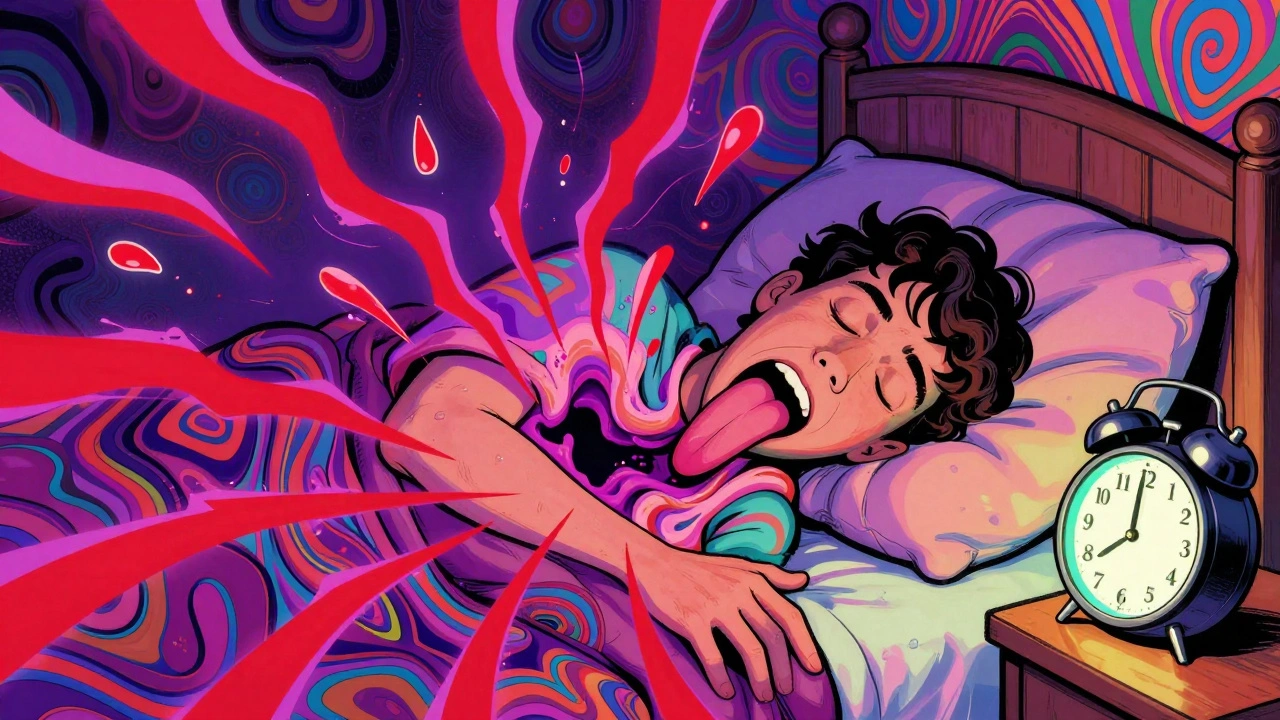
If you wake up tired even after a full night’s sleep, your problem might not be how much you sleep-it’s how you sleep. For many people with obstructive sleep apnea, the difference between a restful night and a chaotic one comes down to one simple thing: whether they sleep on their back or their side.
Why Sleeping on Your Back Makes Apnea Worse
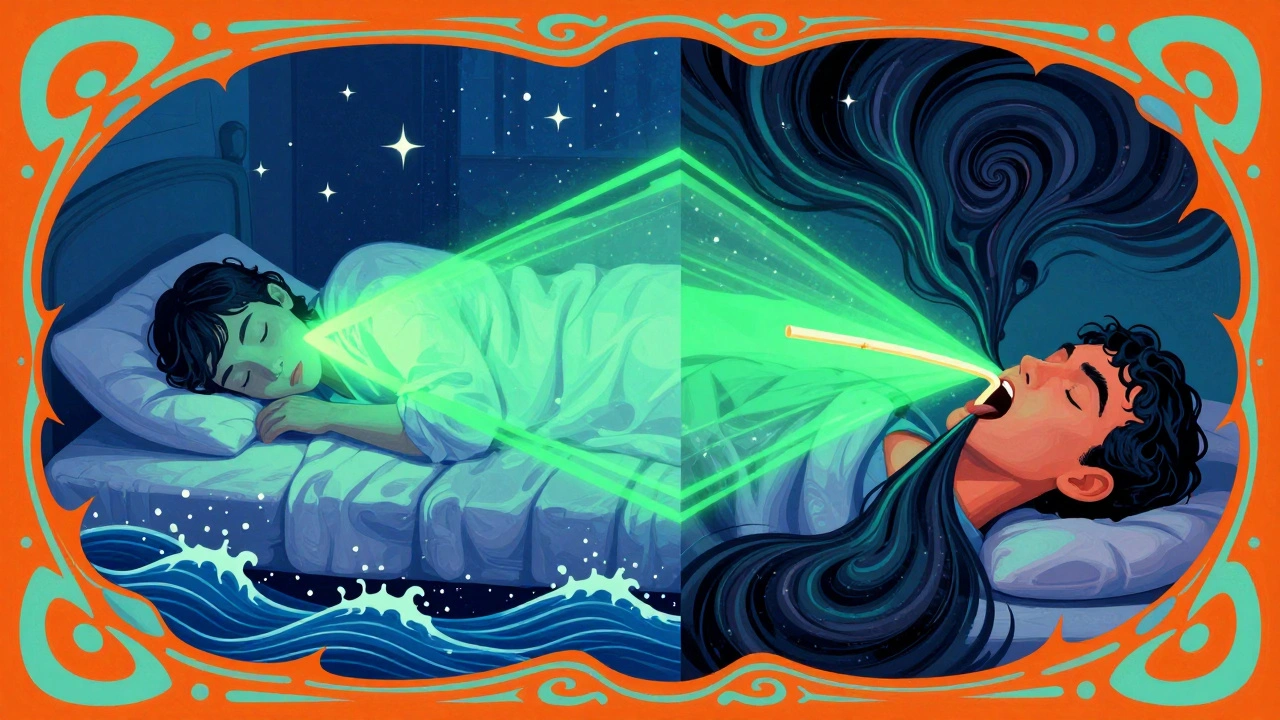
When you lie on your back, gravity pulls your tongue and soft tissues in your throat downward. This isn’t just uncomfortable-it’s dangerous for your airway. Studies show this position reduces the space in your upper airway by 30-40% compared to sleeping on your side. That’s enough to cause complete blockages, especially if you already have narrow airways or excess tissue from weight, age, or anatomy.People with positional obstructive sleep apnea (POSA) see their breathing interruptions jump from maybe 5 per hour on their side to 30 or more on their back. These aren’t just minor pauses. Each event drops your oxygen levels, spikes your heart rate, and jolts your brain awake-often without you realizing it. Over time, this stresses your heart, raises blood pressure, and leaves you exhausted even after 8 hours in bed.
One 2023 study found that apnea events in the supine position last longer, cause deeper oxygen drops, and trigger more frequent brain arousals than the same events when sleeping on the side. It’s not just quantity-it’s intensity. And that’s why simply flipping your position can turn severe apnea into mild-or even eliminate it entirely.
Why Side Sleeping Helps
Sleeping on your side keeps your airway open. Without gravity pulling your tongue backward, your throat stays clearer. Many people notice their snoring stops almost instantly when they roll onto their side. Partners often report the difference is dramatic-no more loud snoring, no more gasping noises.It’s not just about comfort. Side sleeping improves oxygen saturation levels and reduces the number of times your brain has to wake you up to restart breathing. Research from the Sleep Foundation confirms side sleeping is the single best position for reducing obstructive sleep apnea symptoms. It doesn’t cure the underlying cause, but it removes one of the biggest triggers.
And it works for more than just obstructive sleep apnea. While the benefits are strongest for OSA, some people with central sleep apnea also see improvement, likely because side sleeping changes lung pressure and helps the brain’s breathing signals communicate better with the body.
How to Know If You Have Positional Sleep Apnea
Not everyone with sleep apnea benefits from positional therapy. You need to have positional OSA-meaning your breathing problems are much worse when you’re on your back.The diagnostic standard? A sleep study that breaks down your apnea-hypopnea index (AHI) by position. If your AHI while on your back is at least double what it is when you’re on your side, you’re a candidate. For example: if your AHI is 4 on your side but 32 on your back, you have clear positional dependence.
Here’s the catch: many sleep studies don’t track position unless specifically requested. If you’ve been told you have mild or moderate apnea but still feel exhausted, ask your doctor if your results were broken down by sleeping position. A 2023 study found that ignoring position data can lead to underestimating apnea severity by up to 30%.
And don’t assume you’re not a candidate just because you don’t snore loudly. Some people have silent apnea-breathing stops without noise, but oxygen still plummets. Only a sleep study can confirm if your apnea is position-dependent.
Positional Therapy Options: From Tennis Balls to Smart Devices
There are three main ways to train yourself to sleep on your side. They range from low-tech hacks to high-tech wearables.The Tennis Ball Technique is the cheapest option. Sew a tennis ball into the back of an old T-shirt or sleep shirt. It’s uncomfortable to lie on your back with a ball pressing into your spine, so you roll over. It works-many people see big improvements. But it’s not comfortable. About 45% of users quit within three months because of disrupted sleep and soreness.
Specialized pillows are designed to keep your head and neck aligned while encouraging side sleeping. Some have contours, others have side bolsters. They cost $20-$50 and are worth trying if you’re not ready for high-tech solutions. They don’t actively stop you from rolling back, but they make side sleeping more comfortable.
Wearable devices like the NightBalance Sleep Position Trainer or Smart Nora use gentle vibration or subtle motion to nudge you back onto your side when you roll onto your back. These don’t wake you up-they just guide you. A 2015 study in the Journal of Clinical Sleep Medicine found that these devices reduced supine sleep time to nearly 0% for most users. More importantly, 68% of users using the Sleep Position Trainer achieved treatment success (AHI under 5), compared to just 43% using the tennis ball method.
Compliance is the real win. The same study showed users of wearable devices reported 30% higher satisfaction and better quality of life scores than those using the tennis ball trick. The vibration is subtle enough that most users don’t even remember it happening the next day.
How Positional Therapy Compares to CPAP
CPAP is still the gold standard. It’s more effective at lowering overall AHI numbers. But here’s the problem: about half of people who start CPAP quit within a year. Masks leak. It’s noisy. It feels claustrophobic. Adherence is the biggest hurdle.Positional therapy doesn’t fix everything, but it’s easier to stick with. Studies show adherence rates for positional therapy are 35-40% higher than for CPAP. That matters. A treatment that works 4 hours a night is better than one that works 0.
The American Academy of Sleep Medicine and the American Academy of Family Physicians both recommend positional therapy as a first-line option for people with mild to moderate positional OSA. For those who can’t tolerate CPAP-or who want to reduce their CPAP pressure-positional therapy is a powerful tool.
It’s not a replacement for CPAP in severe cases. But for the 50-60% of OSA patients whose apnea is position-dependent, it’s often enough to eliminate the need for a machine entirely.
What to Expect When You Start
If you decide to try positional therapy, give yourself two weeks to adjust. Your body is used to sleeping on your back. Rolling over feels unnatural at first. You might wake up more often in the first few nights, especially with a tennis ball or wearable device.Combine positional therapy with head elevation. Raising your head 6-8 inches with a wedge pillow or adjustable bed frame helps keep your airway open even more. It also reduces acid reflux, which can worsen apnea.
Track your progress. Use a sleep tracker that shows position and breathing events, or ask your doctor for a follow-up sleep study after 6-8 weeks. Many people see their AHI drop by 50% or more within a month.
And don’t forget your partner. They’ll be the first to notice the silence. One user on a sleep forum said, “My wife cried the first night she didn’t hear me snore. She said it was the first time in 12 years she slept through the night.”

Who Should Avoid Positional Therapy
It’s not for everyone. If your apnea is just as bad on your side as it is on your back, positional therapy won’t help. That’s why diagnosis matters.People with severe spinal issues, chronic back pain, or those who can’t safely turn over during sleep (due to mobility or neurological conditions) should avoid methods that physically block supine sleeping.
And if you have central sleep apnea without a clear positional pattern, positional therapy may not be effective. Always confirm your diagnosis with a sleep study before investing time or money.
The Future of Positional Therapy
New devices are getting smarter. Some now use AI to learn your sleep patterns and adjust feedback based on your movements. Others integrate with smart beds that gently tilt you onto your side. Researchers are also studying whether reducing supine sleep can lower heart attack and stroke risk-since lying on your back increases pressure on the heart and disrupts blood flow.Market data shows adoption of wearable positional devices has grown 25% yearly since 2020. More people are realizing they don’t need a mask to breathe better at night. For many, the solution was never a machine-it was a position.
Final Thought
You don’t need to live with exhaustion because of how you sleep. If you have sleep apnea, and you roll onto your back at night, you’re making your condition worse-on purpose, without knowing it. Positional therapy isn’t glamorous. It doesn’t come with a flashy machine or a doctor’s prescription. But for the right person, it’s the most effective, affordable, and sustainable treatment available.Try it. Start with a pillow. Add a tennis ball. Then consider a wearable if you’re still rolling back. Your brain, your heart, and your partner will thank you.
Can sleeping on your side cure sleep apnea?
Sleeping on your side won’t cure sleep apnea, but it can eliminate symptoms for people with positional obstructive sleep apnea (POSA). For those whose apnea is much worse when lying on their back, side sleeping can reduce breathing interruptions by 50-80%, sometimes bringing AHI down to normal levels without any device or treatment.
Is the tennis ball method effective for positional sleep apnea?
Yes, the tennis ball method works for many people, but it’s uncomfortable. Studies show it reduces supine sleep time and improves AHI, but about 45% of users stop using it within three months due to pain and disrupted sleep. It’s a good low-cost test to see if positional therapy helps before investing in a wearable device.
Do I need a sleep study to try positional therapy?
You don’t need one to try side sleeping, but you should get a sleep study if you suspect apnea. Positional therapy only works if your apnea is worse on your back. Without a study that tracks your breathing by position, you won’t know if you’re a candidate. Many people assume they have general apnea when they actually have positional apnea-and that changes everything.
How much do positional therapy devices cost?
Basic solutions like specialized pillows cost $20-$50. The tennis ball trick is free. Wearable devices like the NightBalance Sleep Position Trainer cost $300-$400, and Smart Nora runs around $500. Most insurance plans don’t cover these yet, but they’re often cheaper than replacing CPAP masks or paying for sleep studies year after year.
Can I use positional therapy with CPAP?
Absolutely. Many people use positional therapy to reduce their CPAP pressure needs. If you sleep on your side, your airway stays more open, so you might need lower air pressure-which makes CPAP more comfortable and easier to tolerate. Combining both can improve adherence and outcomes.
Does side sleeping help with central sleep apnea?
Side sleeping can help some people with central sleep apnea, but the effect is weaker than for obstructive apnea. Central apnea is caused by brain signaling issues, not airway collapse. Still, side sleeping may improve lung expansion and help the brain send clearer breathing signals, leading to modest improvements in some cases.
How long does it take to see results from positional therapy?
Most people notice less snoring and fewer nighttime awakenings within a few days. For measurable improvement in breathing events, it usually takes 2-4 weeks of consistent side sleeping. A follow-up sleep study after 6-8 weeks will show if your AHI has dropped significantly.
Can I train myself to sleep on my side without devices?
Yes. Many people succeed using just pillows-placing a body pillow behind your back or sleeping with a pillow between your knees to stabilize your posture. Consistency is key. It takes time to retrain your brain, but with daily practice, your body learns to prefer side sleeping-even without vibration or discomfort.
Mayur Panchamia
December 5, 2025 AT 21:05India has been sleeping on sides for centuries-our traditional duniya doesn’t have fancy pillows or vibrating belts, yet we don’t wake up gasping like Americans with CPAP masks glued to their faces. You think this is new science? It’s just common sense. Your spine knows what to do. Stop overcomplicating everything with gadgets. A pillow behind your back, a little discipline, and you’re done. No $500 machine needed. We did it without Silicon Valley.
Karen Mitchell
December 7, 2025 AT 16:03While the article presents a compelling case for positional therapy, it fails to address the methodological limitations of the studies cited. Most are observational, with small sample sizes, and none control for confounding variables such as BMI, alcohol consumption, or nasal obstruction. Furthermore, the claim that side sleeping ‘eliminates’ apnea is statistically misleading-reduction ≠ eradication. The American Academy of Sleep Medicine recommends CPAP as first-line for a reason: evidence-based, reproducible, and scalable. This article reads like a wellness blog masquerading as medical advice.
Geraldine Trainer-Cooper
December 7, 2025 AT 19:38we’re all just trying to not die while we sleep
the body knows
stop fighting it
just roll over
and let go
Kenny Pakade
December 8, 2025 AT 01:28Let me guess-this whole ‘side sleeping’ thing was invented by a bunch of yoga instructors who hate American medicine. You know what fixes sleep apnea? A real doctor. A real machine. Not some TikTok hack with a tennis ball. And don’t get me started on ‘cultural wisdom’-if this worked so well, why do we have 30 million Americans with apnea? Because people are lazy. They want free solutions. This isn’t ancient India, it’s 2025. We have technology. Use it.
brenda olvera
December 9, 2025 AT 06:26i just started sleeping on my side last month and my husband says i haven't snored once
he cried last night he was so happy
we both slept like babies
no machines
no masks
just me turning over
and it changed everything
you don't need fancy stuff to breathe better
you just need to listen
Brooke Evers
December 10, 2025 AT 15:31I want to say how deeply encouraging this post is-not just because of the medical facts, but because it gives people permission to try something simple before jumping into something invasive. So many of us have been told ‘you need CPAP’ and felt defeated, like we failed because we couldn’t tolerate it. But what if the problem isn’t you? What if it’s the tool? Positional therapy isn’t a compromise-it’s a recalibration. It’s your body saying, ‘I can do this without wires.’ And for so many people, it’s enough. I’ve seen friends go from 35 apnea events an hour to 4 just by sleeping on their side. It’s not magic. It’s biology. And it’s beautiful.
Chris Park
December 12, 2025 AT 04:03Did you know the FDA approved the NightBalance device after a 12-month study funded by the same company that manufactures it? The tennis ball method was tested by a university lab in 2017-results showed no significant difference in oxygen saturation compared to placebo. The entire ‘positional therapy’ movement is a marketing ploy by wearable tech startups to replace CPAP with a $400 gadget that does the same thing as a sock filled with socks. Sleep apnea is not caused by gravity-it’s caused by corporate greed selling ‘natural’ solutions to people too afraid to admit they need a machine. Wake up.
Saketh Sai Rachapudi
December 14, 2025 AT 03:42why do americans always think they invented sleep?? we in india have been sleeping on side since ancient times-our grandmas used to tie a cloth behind back to stop rolling. no need for fancy devices. also, cpap is for weak people. real men sleep on back and still breathe. also, why do you think we don’t have sleep apnea epidemics? because we don’t eat processed food and sleep on floor. this article is brainwashed by silicon valley. side sleep is good, but not because of science-because of culture. learn from us.
Billy Schimmel
December 14, 2025 AT 16:26so i tried the tennis ball thing
lasted two nights
woke up with a bruise on my spine
and my cat started sleeping on my back instead
so now i just use a pillow
and i’m fine
no gadgets
no drama
just… sleep
Shayne Smith
December 15, 2025 AT 06:49my partner and i started using a body pillow after reading this and holy crap we both sleep better now
no more midnight kicks
no more ‘why are you snoring again?’
we’re not even trying to fix apnea
we just wanted to stop fighting over blankets
and now we’re both sleeping 8 hours
and i didn’t even need a device
just a big ol’ pillow and some patience
Katie O'Connell
December 15, 2025 AT 20:29While the empirical data presented is not without merit, the rhetorical framing of positional therapy as a panacea is both reductive and epistemologically unsound. The conflation of symptomatic alleviation with therapeutic efficacy undermines the clinical rigor required for evidence-based medicine. Furthermore, the implicit dismissal of CPAP as ‘clunky’ or ‘uncomfortable’ reflects a broader cultural trend toward aestheticized health solutions that prioritize convenience over durability. One cannot reasonably substitute biomechanical intervention with behavioral modification without first establishing the severity of the underlying pathology.
Clare Fox
December 17, 2025 AT 20:08i think the real question isn’t whether side sleeping works
but why we’ve been taught to fear our own bodies
we’ve been sold machines instead of trust
sleep isn’t a problem to be fixed
it’s a rhythm to be remembered
the body remembers how to breathe
we just forgot to let it
try it
not as a treatment
but as a return