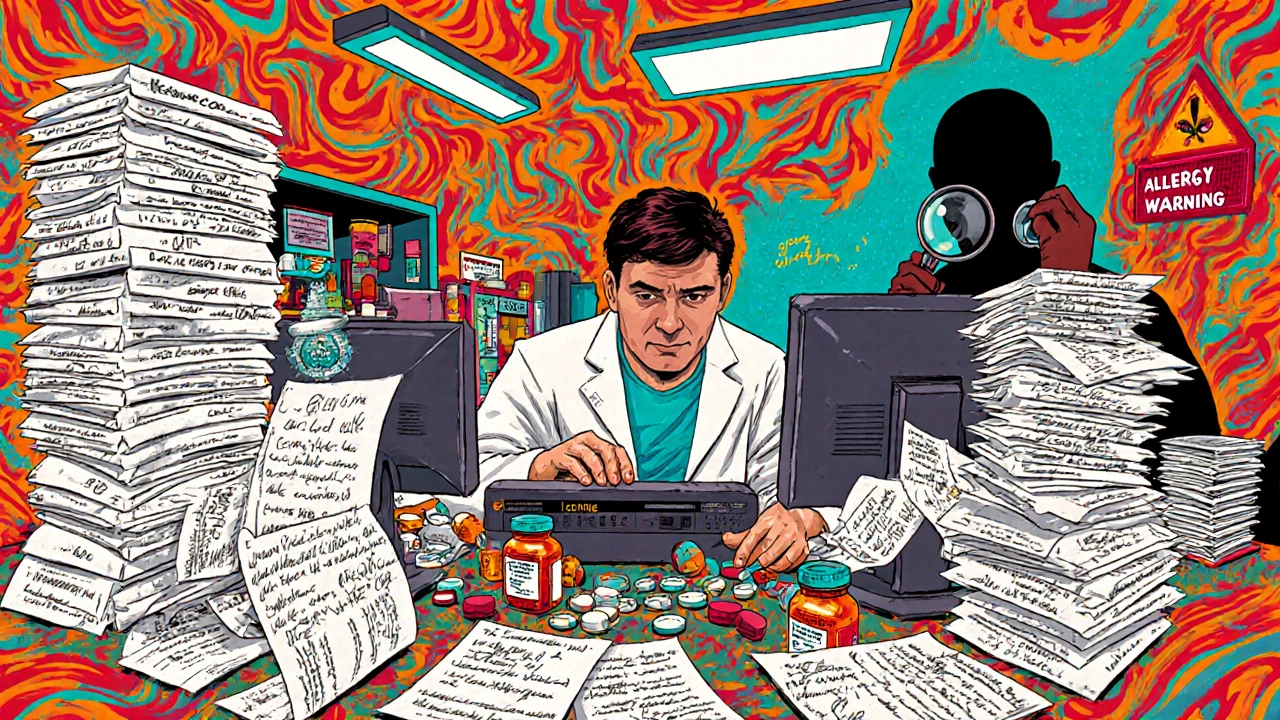
Error Prevention in Medication Use: Avoid Mistakes That Put You at Risk
When it comes to your health, error prevention, the practice of stopping medication mistakes before they happen. Also known as medication safety, it’s not just about taking pills correctly—it’s about understanding what you’re taking, why, and how it might interact with everything else in your life. A simple mix-up between two similar-looking drugs, an expired pill, or ignoring a food interaction can send you to the ER. It’s not rare. The FDA reports that over 1.3 million people in the U.S. are injured each year because of medication errors. Most of these aren’t caused by doctors or pharmacists—they’re caused by confusion, lack of communication, or assuming something is safe because it’s "just a supplement" or "generic."
Drug interactions, when two or more substances affect each other’s behavior in your body. Also known as medication interactions, they’re behind many preventable hospital visits. Think of it like traffic: if you take a blood thinner like warfarin and suddenly start eating large amounts of leafy greens, you’re changing the road conditions. Same with supplements—St. John’s wort can make your antidepressant useless. And generics? They’re just as effective as brand names, but if your insurance switches you without warning, you might not notice the difference until your blood pressure spikes or your seizures return. That’s why knowing your meds—down to the dosage and expiration date—is part of generic drug safety, the practice of ensuring that lower-cost versions of medications work as intended without hidden risks. A study in JAMA found that patients who didn’t double-check their new generic prescriptions were three times more likely to have a bad outcome.
It’s not just about what’s in the bottle. It’s about how you use it. Did you know that 40% of medication errors happen because patients don’t ask the right questions? You don’t need to be a doctor to spot red flags. If your pill looks different this month, ask why. If your pharmacist says, "This is the same as last time," ask what changed. If you’re on multiple drugs, write them down—name, dose, reason—and bring that list to every appointment. Even something as simple as using a pill organizer can cut your risk of taking the wrong dose in half. And never ignore symptoms like confusion, swelling, or unusual fatigue—they might not be "just aging" or "stress." They could be signs your body is reacting to something you’re taking.
Below, you’ll find real stories and practical guides on how to avoid these mistakes. From flying with insulin to switching from brand to generic without risking your health, these posts cover the hidden traps most people never think about. Whether you’re managing chronic pain, mental health, kidney disease, or just trying to stay safe with over-the-counter meds, the tools here are simple, proven, and meant for real life—not textbooks.