What Is Triple-Negative Breast Cancer?
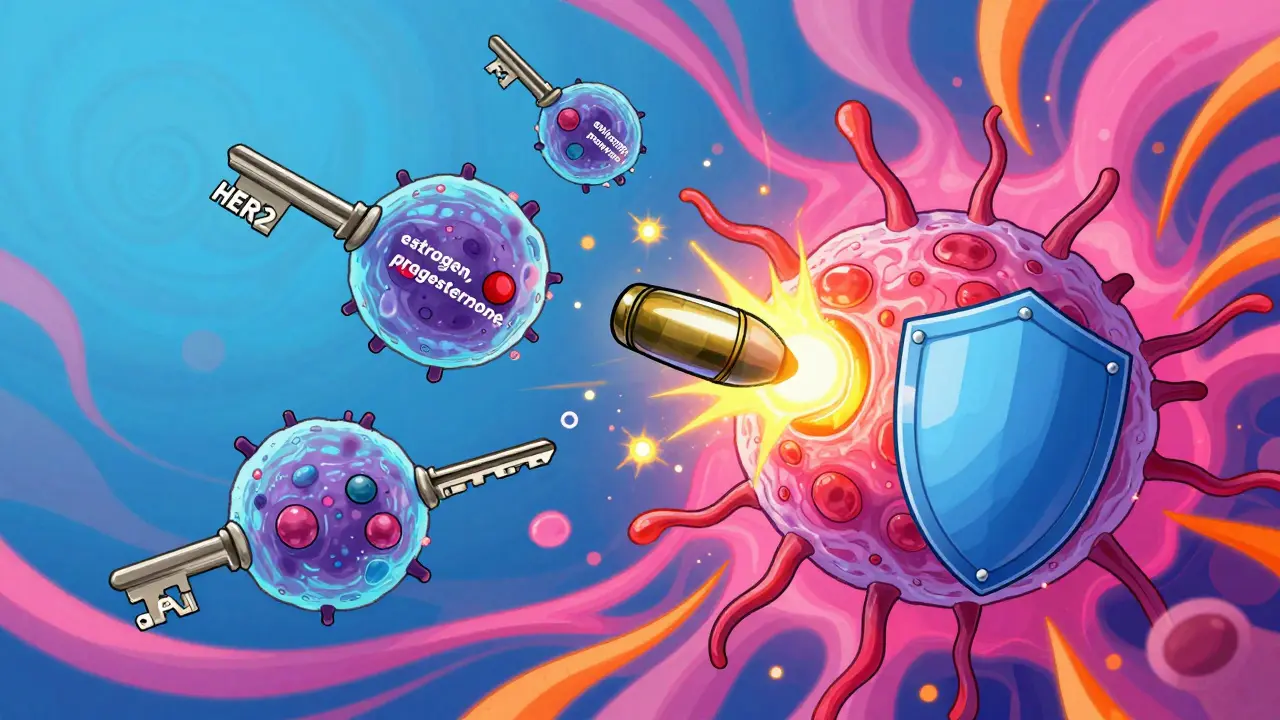
Triple-negative breast cancer is a subtype of breast cancer that lacks estrogen receptors, progesterone receptors, and HER2 protein overexpression. This means it doesn’t respond to hormone therapies like tamoxifen or HER2-targeted drugs like trastuzumab. It makes up about 10% to 15% of all breast cancer cases, according to Houston Methodist Hospital’s 2025 research report. Unlike other breast cancers, TNBC grows quickly, often spreads early, and has a higher chance of coming back within the first three to five years after diagnosis.
Because it doesn’t have the usual targets for treatment, TNBC has historically been harder to treat. Chemotherapy has been the main option for decades. But that’s changing. New research is identifying specific biological features in tumors that let doctors pick treatments that work better and cause fewer side effects.
Standard Treatment Today: Chemo, Surgery, and Beyond
For early-stage triple-negative breast cancer, the standard approach still starts with neoadjuvant chemotherapy-meaning chemo before surgery. The goal is to shrink the tumor so it’s easier to remove and to kill hidden cancer cells. Common chemo drugs include anthracyclines like doxorubicin and taxanes like paclitaxel. Platinum-based drugs like carboplatin are often added, especially for patients with BRCA mutations.
After chemo, surgery follows-either a lumpectomy or mastectomy. Then comes adjuvant therapy, which might include more chemo, radiation, or newer drugs like immunotherapy or PARP inhibitors, depending on the tumor’s features.
For metastatic TNBC (cancer that has spread), treatment shifts to controlling the disease rather than curing it. The options now include several targeted therapies, not just chemo.
Immunotherapy: Turning the Body’s Defense Against Cancer
One of the biggest breakthroughs in TNBC treatment is immunotherapy. Some TNBC tumors have high levels of PD-L1, a protein that tricks the immune system into ignoring cancer. Drugs like pembrolizumab and atezolizumab block PD-L1, letting immune cells attack the tumor.
The KEYNOTE-522 trial showed that adding pembrolizumab to chemo before surgery increased the chance of a complete pathologic response-from 51% to 64.8% in PD-L1-positive patients. That means no living cancer cells were found in the breast or lymph nodes after treatment.
For metastatic disease, pembrolizumab combined with chemotherapy became a first-line option in 2020 after the IMpassion130 trial showed a 48.3% response rate in PD-L1-positive patients, compared to 33.2% with chemo alone.
But not everyone benefits. Only about 40% of metastatic TNBC tumors are PD-L1 positive. That’s why testing is now standard before starting immunotherapy.
PARP Inhibitors: Targeting Genetic Weaknesses
About 15% to 20% of TNBC patients have inherited mutations in the BRCA1 or BRCA2 genes. These genes help repair damaged DNA. When they’re broken, cancer cells rely on another repair pathway-PARP.
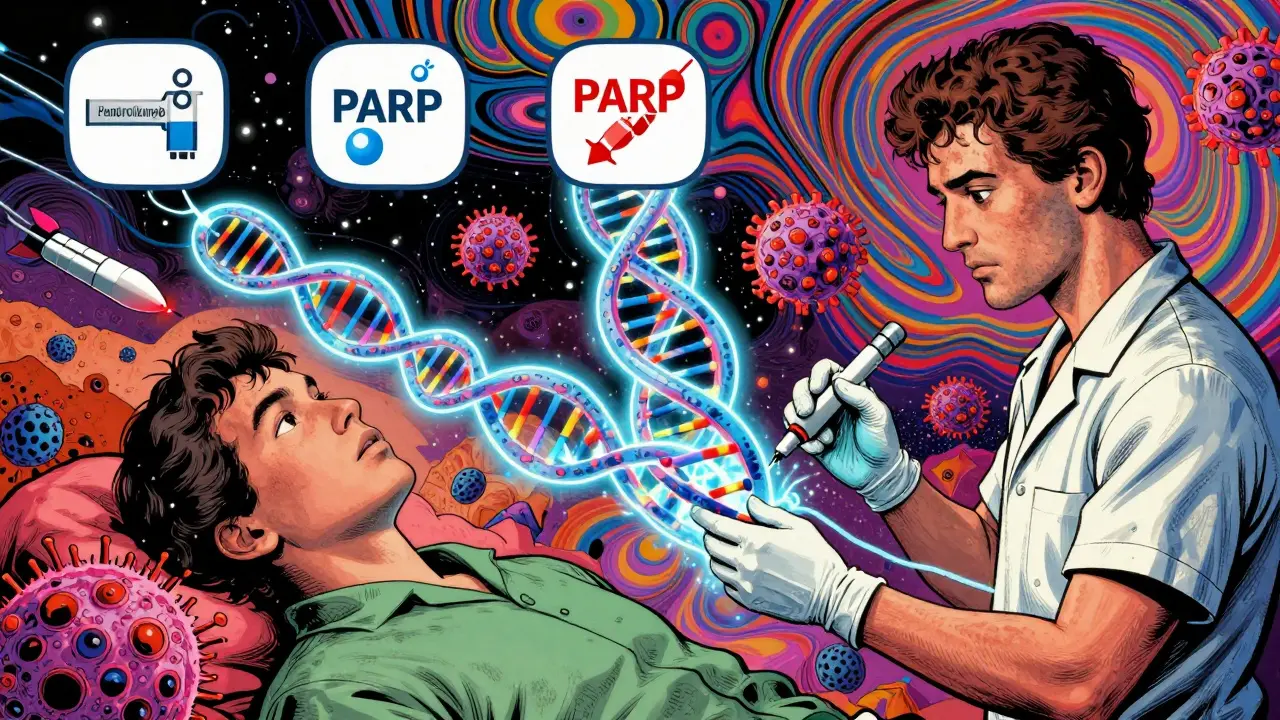
PARP inhibitors like olaparib and talazoparib block that backup system, causing cancer cells to die. The OlympiAD trial showed these drugs improved progression-free survival by 7.8 months compared to standard chemo in BRCA-mutated patients.
These drugs are now approved for both early and metastatic TNBC in patients with germline BRCA mutations. Testing for BRCA is now recommended for every TNBC patient at diagnosis-not just those with a family history.
Antibody-Drug Conjugates: Smart Bombs for Cancer Cells
Sacituzumab govitecan (Trodelvy®) is a type of drug called an antibody-drug conjugate (ADC). It’s like a guided missile: one part finds cancer cells using a protein called Trop-2, which is common in TNBC. The other part delivers a powerful chemo drug directly inside the tumor.
The ASCENT trial showed sacituzumab govitecan cut the risk of death by 57% and improved survival compared to standard chemo in patients who had already tried two or more treatments. The response rate was 35%, with a median response lasting 5.6 months.
Another ADC, trastuzumab deruxtecan (Enhertu®), is showing promise even in tumors with very low HER2 levels-a group once thought to be untreatable. In the DESTINY-Breast04 trial, it achieved a 37% response rate in these patients.
Both drugs come with side effects: neutropenia, diarrhea, and lung inflammation. But for patients who’ve run out of options, they offer real hope.
New Frontiers: Personalized Vaccines and Dual-Target Therapies
One of the most exciting developments is the personalized neoantigen vaccine being tested at Houston Methodist Hospital. This treatment is made for each patient individually. After sequencing the tumor’s DNA, scientists identify unique mutations-neoantigens-that the immune system can recognize. A custom vaccine is made in-house within six weeks, then given with pembrolizumab to boost the immune response.
In phase I trials as of September 2025, 78% of patients showed strong immune activation. The goal is to prevent recurrence after chemo and surgery.
Another emerging strategy is dual-target inhibition. Instead of attacking one pathway, doctors are combining drugs that hit two weak points at once. For example, pairing a CDK12 inhibitor with a PARP inhibitor has shown 68% tumor growth inhibition in lab models-far better than either drug alone.
Other combinations under study include CDK4/6 and PI3Kα inhibitors, which block both cell growth signals and cell cycle progression. These are still in early trials, but they represent a shift from one-size-fits-all chemo to precision combinations.
A New Treatment Sequence: Less Chemo, Same Results
Researchers at UT Southwestern Medical Center found something surprising: changing the order of treatments can reduce side effects without losing effectiveness.
Instead of giving chemo first, they started with radiation, then gave only two doses of pembrolizumab, followed by chemo. The result? A 59% pathologic complete response rate-nearly the same as the KEYNOTE-522 trial-but with only 41% serious side effects, compared to 82% in the standard regimen.
Dr. Heather McArthur, who led the study, said, “We think it’s very encouraging to achieve the same results with less chemotherapy, less immunotherapy, and less toxicity.” This protocol could become the new standard for early-stage TNBC, especially for patients who can’t tolerate long, harsh treatments.

What’s Next? Biomarkers, Access, and Survival Gaps
Today, treatment decisions rely on three key biomarkers: PD-L1 status, BRCA mutations, and tumor mutational burden. Soon, we’ll add more-like homologous recombination deficiency (HRD) and gene expression profiles.
But access remains a problem. In low- and middle-income countries, only 35% to 40% of patients get tested for these markers or receive newer drugs. The cost of ADCs and immunotherapies is still prohibitive for many.
Survival rates also show a stark gap. While 5-year survival for most breast cancers is around 28%, it’s only 12% to 15% for metastatic TNBC. That’s why research is accelerating. Over 1,500 clinical trials for TNBC have launched since 2019-about 30% of all breast cancer trials.
Companies like Roche, Merck & Co., Gilead, and AstraZeneca are investing heavily. New ADCs targeting LIV-1 and FRα are in phase III trials. Drugs like datopotamab deruxtecan and adagloxad simolenin could be approved by 2027.
How to Navigate Treatment Options
If you’re diagnosed with TNBC, here’s what to ask:
- Has my tumor been tested for PD-L1, BRCA, and HRD?
- Am I a candidate for neoadjuvant chemo with immunotherapy?
- Are there clinical trials available at my center?
- Can I get a second opinion from a specialized breast cancer center?
- What are the side effects of each option, and how will they affect my daily life?
Many major cancer centers now use multidisciplinary tumor boards to review each case. That means oncologists, surgeons, radiologists, and genetic counselors all weigh in on your plan.
Why This Matters
Triple-negative breast cancer used to be a dead end. Now, it’s a frontier. With better testing, smarter drugs, and new treatment sequences, survival is improving. The goal isn’t just to extend life-it’s to make treatment less brutal, more personal, and more effective.
The next five years will bring even more change. Personalized vaccines, dual-target drugs, and refined biomarkers could turn TNBC from one of the most aggressive cancers into one of the most manageable.
Is triple-negative breast cancer curable?
Early-stage triple-negative breast cancer can be cured in many cases, especially with modern treatments like neoadjuvant chemo plus immunotherapy. About 60% of patients achieve a pathologic complete response, meaning no cancer remains after treatment. For those with metastatic disease, cure is not yet possible, but new therapies can control the cancer for years and significantly improve quality of life.
Do I need genetic testing if I have triple-negative breast cancer?
Yes. All patients diagnosed with TNBC should have germline BRCA1/2 testing, regardless of family history. About 1 in 5 TNBC cases are linked to inherited BRCA mutations. Finding one can change your treatment-PARP inhibitors are highly effective in these cases-and it also informs risk for other cancers and family members.
What are the side effects of immunotherapy for TNBC?
Immunotherapy can cause immune-related side effects because it activates the immune system. Common ones include fatigue, rash, diarrhea, and thyroid problems. More serious but rare reactions include lung inflammation, liver damage, or diabetes. These are monitored closely during treatment and usually manageable if caught early. The newer UT Southwestern protocol reduces exposure to immunotherapy, lowering these risks.
Are there clinical trials for triple-negative breast cancer that I can join?
Yes, over 1,500 clinical trials for TNBC are active globally. Many focus on new ADCs, immunotherapy combinations, personalized vaccines, and dual-target drugs. Ask your oncologist about trials at academic cancer centers. Some are open to patients who haven’t tried chemo yet, others for those who’ve had multiple treatments. ClinicalTrials.gov is a public resource to search options.
Why is triple-negative breast cancer more common in Black women?
Black women are about twice as likely to be diagnosed with TNBC compared to white women, and often at younger ages. The reasons are complex and include genetic, biological, and social factors. Some studies suggest higher rates of BRCA mutations and tumor biology differences. But access to screening, timely diagnosis, and quality care also play major roles in outcomes. Addressing these disparities is now a key focus in research and policy.
Can I still have children after TNBC treatment?
Many women can have children after TNBC treatment, but it depends on age, chemo type, and whether ovarian function was affected. Chemo can cause early menopause. If you want to preserve fertility, talk to your oncologist before starting treatment. Options include freezing eggs or embryos. Some newer protocols use less chemo, which may improve chances of future pregnancy.