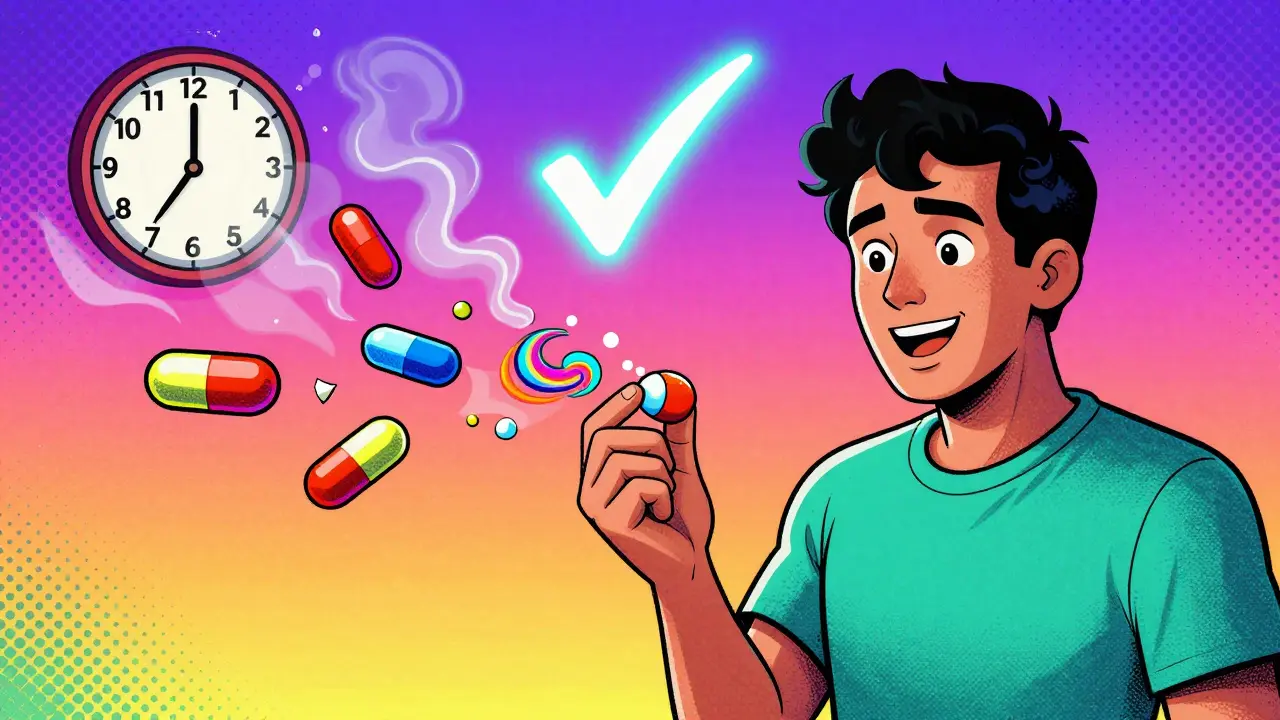
Why Generic Combination Products Improve Patient Compliance
If you’ve ever struggled to keep up with a pile of pills-some in the morning, some at night, others with food, others without-you know how easy it is to miss a dose. Now imagine if instead of three separate pills, you took just one. That’s the power of generic combination products.
These aren’t just cheaper versions of brand-name drugs. They’re smart, integrated treatments that combine two or more medications into a single delivery system-like a pill with two active ingredients, an insulin pen that holds both the drug and the injector, or a patch that releases medicine through your skin. And when they’re generic, they bring the same benefits at a fraction of the cost.
Patients don’t fail treatment because they’re lazy. They fail because it’s too complicated, too expensive, or too confusing. Generic combination products cut through all three.
How Combination Products Simplify Treatment
Think about diabetes. Before prefilled insulin pens, patients had to draw insulin from a vial, load a syringe, inject it, and clean up. It was messy. It took time. And mistakes happened-about 1 in 5 people miscounted doses or mixed up types.
Now, a single prefilled pen delivers the exact dose with one click. No measuring. No needles to handle. Just press and go. That’s a combination product: a drug (insulin) + a device (the pen) = one simple step.
Same goes for heart disease. Drug-eluting stents are tiny metal scaffolds implanted in arteries, coated with medicine that slowly releases over weeks to prevent re-blocking. That’s a device + a drug working together. No extra pills to remember. No complex dosing schedule. The treatment happens right where it’s needed.
Even asthma inhalers have evolved. Some now combine a bronchodilator and a steroid in one device. Instead of two separate inhalers, patients use one. Fewer steps. Fewer chances to forget.
Studies show that when patients switch from multiple separate medications to a single combination product, adherence jumps by 15% to 25%. That’s not a small win. It’s life-changing.
The Cost Advantage of Generic Versions
Brand-name combination products can cost hundreds-even over a thousand-dollars a month. For patients on fixed incomes or without good insurance, that’s a dealbreaker. Many skip doses, split pills, or stop entirely.
Generic versions change that. They offer the exact same active ingredients, the same delivery mechanism, and the same clinical results-but at 30% to 80% lower cost.
The FDA requires generic combination products to meet the same strict standards as the brand-name version. The drug must be bioequivalent-meaning it enters the bloodstream at the same rate and level. The device must perform identically too. An auto-injector must require the same amount of force to activate. An inhaler must deliver the same dose within 5% accuracy. A patch must release the same amount of medicine per hour.
And here’s the kicker: patients who start on generic medications are 8.7 percentage points more likely to stick with their treatment than those who start on brand-name versions. Why? Because they can afford to take them.
A 2023 FDA survey found that 23.4% of patients skip doses because of cost. Generic combination products directly tackle that number.

Why Generic Doesn’t Mean Risky
Some patients worry that generics are “lesser.” They think, “If it’s cheaper, it must not work as well.” That’s a myth.
The FDA doesn’t approve a generic combination product unless it matches the brand in every meaningful way. The drug part? Tested in blood samples to prove it behaves the same. The device part? Tested in labs to make sure the pen clicks the same, the patch sticks the same, the inhaler puffs the same.
One common concern is inactive ingredients-the fillers, dyes, or flavors. These don’t affect how the medicine works. They might change the pill’s color or shape, but not its effect. Patients might notice the difference, but not the outcome.
Real-world data backs this up. A 2023 study of over 100,000 patients on generic combination products for high blood pressure and diabetes showed no increase in hospitalizations or complications compared to brand-name users. The outcomes were identical.
The only real risk? Switching between different generic versions without proper guidance.
The Hidden Challenge: Switching Between Generics
Here’s where things get tricky.
There’s no single “generic” for a combination product. Multiple companies can make them. And while the drug ingredient stays the same, the device might look or feel different.
One patient might get a generic insulin pen with a dial that turns clockwise. The next month, they get another generic with a dial that turns counterclockwise. Or an inhaler with a different mouthpiece shape. Or a patch that peels off differently.
Patients on PatientsLikeMe reported confusion when switching between generic inhalers for COPD. One said, “Each version required a different breathing technique. I missed doses until my pharmacist sat down and showed me how.”
That’s not a failure of the product. It’s a failure of communication.
When a pharmacist swaps one generic for another, they should explain the difference. A 5-minute chat can prevent a missed dose. Studies show that when patients get clear instructions during a switch, adherence improves by 17% to 22%.
For complex devices like auto-injectors or inhalers, training isn’t optional-it’s essential. A 2023 report from Oliver Healthcare Packaging found that 78% of patients said ease of use improved their adherence. But that ease only matters if they know how to use it.
What Works Best: Real Examples
Some combination products have become gold standards-not because they’re fancy, but because they work.
- Insulin pens: Used by millions with diabetes. Generic versions now cost under $25 per pen compared to $100+ for brand-name. Dose accuracy within ±5%. No more vials, syringes, or ice packs.
- Combination blood pressure pills: Often combine an ACE inhibitor and a diuretic. One pill, once a day. Generic versions cut monthly costs from $120 to $15.
- Nicotine patches with gum: Some newer patches now include a slow-release formula combined with a built-in dose tracker (yes, even generics have smart features now).
- Fixed-dose antiretroviral combinations: For HIV, three drugs in one pill. Generic versions made treatment affordable in low-income countries and boosted adherence from 60% to over 85%.
These aren’t theoretical. These are daily realities for millions of people.
How to Get the Most Out of Generic Combination Products
If you’re on a combination product-brand or generic-here’s how to make sure it works for you:
- Ask if a generic version is available. Many doctors assume patients know. Don’t assume. Ask.
- Get trained. If it’s a pen, patch, or inhaler, ask your pharmacist to show you how to use it-even if you’ve used one before. Devices change.
- Keep a log. Note when you take your dose. If you miss one, write why. Was it the cost? The complexity? The side effect? That info helps your doctor adjust.
- Don’t switch without talking. If your pharmacy changes your generic, ask: “Is this the same as before? Do I need to use it differently?”
- Use reminders. Phone alarms, pill boxes, or apps like Medisafe help. Even simple sticky notes on the fridge work.
The goal isn’t just to take the pill. It’s to take it right-every time.
The Future Is Integrated
The combination product market is growing fast-projected to hit $258 billion by 2030. And generics are leading the charge.
New innovations are on the horizon: inhalers with built-in sensors that track when you use them, patches that send alerts to your phone if you miss a dose, pens that connect to apps to remind you and report adherence to your doctor.
These aren’t luxury features. They’re tools to help people stay healthy.
And as prices drop and access improves, generic combination products will become the default-not the exception-for managing chronic conditions like diabetes, heart disease, asthma, and hypertension.
The science is clear. The data is solid. The cost savings are real.
What’s missing now is awareness-and the right conversations between patients, pharmacists, and doctors.
Are generic combination products as effective as brand-name ones?
Yes. The FDA requires generic combination products to meet the same standards as brand-name versions. The active drug must be bioequivalent, meaning it works the same way in the body. The device-whether it’s a pen, patch, or inhaler-must perform identically in terms of dose accuracy, activation force, and reliability. Studies show no difference in health outcomes between patients using generic or brand-name combination products.
Why do some patients have trouble switching to generic combination products?
The issue isn’t the medicine-it’s the device. Different manufacturers may make the same drug in a slightly different pen, inhaler, or patch. The shape, button feel, or inhalation technique might vary. Patients who aren’t told about these changes can accidentally use the device wrong and miss doses. That’s why clear instructions from a pharmacist during a switch are critical.
Can I save money by switching to a generic combination product?
Absolutely. Generic combination products typically cost 30% to 80% less than their brand-name equivalents. For example, a brand-name insulin pen might cost $100, while a generic version costs under $25. For blood pressure or cholesterol combinations, monthly savings can go from $120 to $15. These savings make it possible for patients to afford their treatment long-term.
Do I need special training to use a generic combination product?
It depends on the device. Simple patches or pills need little to no training. But for pens, inhalers, or auto-injectors, a 5- to 30-minute demo from your pharmacist is essential. Even if you’ve used the brand-name version before, the generic might feel different. Don’t assume-you should always ask for a quick demonstration when you get a new prescription.
What conditions benefit most from generic combination products?
Chronic conditions that require daily, long-term medication see the biggest gains. These include diabetes (insulin pens), high blood pressure (ACE inhibitor + diuretic combos), asthma and COPD (inhaled steroids + bronchodilators), HIV (multi-drug regimens), and smoking cessation (nicotine patches). For these, simplifying the regimen directly improves adherence and outcomes.
Next Steps: What to Do Now
If you’re managing a chronic condition and taking multiple medications, ask your doctor or pharmacist: “Is there a generic combination product available for my treatment?”
If you’re already on one, make sure you know how to use it correctly. Don’t hesitate to ask for a refresher-even if you’ve used it for years.
If cost is stopping you from taking your meds, a generic combination product might be the solution. They’re safe, effective, and affordable.
Improving compliance isn’t about willpower. It’s about design. And generic combination products are designed to help you succeed-not fight against you.
Henry Ip
January 17, 2026 AT 10:22Cost dropped from $110 to $18 a month. He’s actually smiling now.
Nicholas Gabriel
January 17, 2026 AT 17:00brooke wright
January 19, 2026 AT 11:53vivek kumar
January 20, 2026 AT 01:26Nick Cole
January 20, 2026 AT 03:36Riya Katyal
January 21, 2026 AT 23:35waneta rozwan
January 23, 2026 AT 03:30Cheryl Griffith
January 23, 2026 AT 11:37