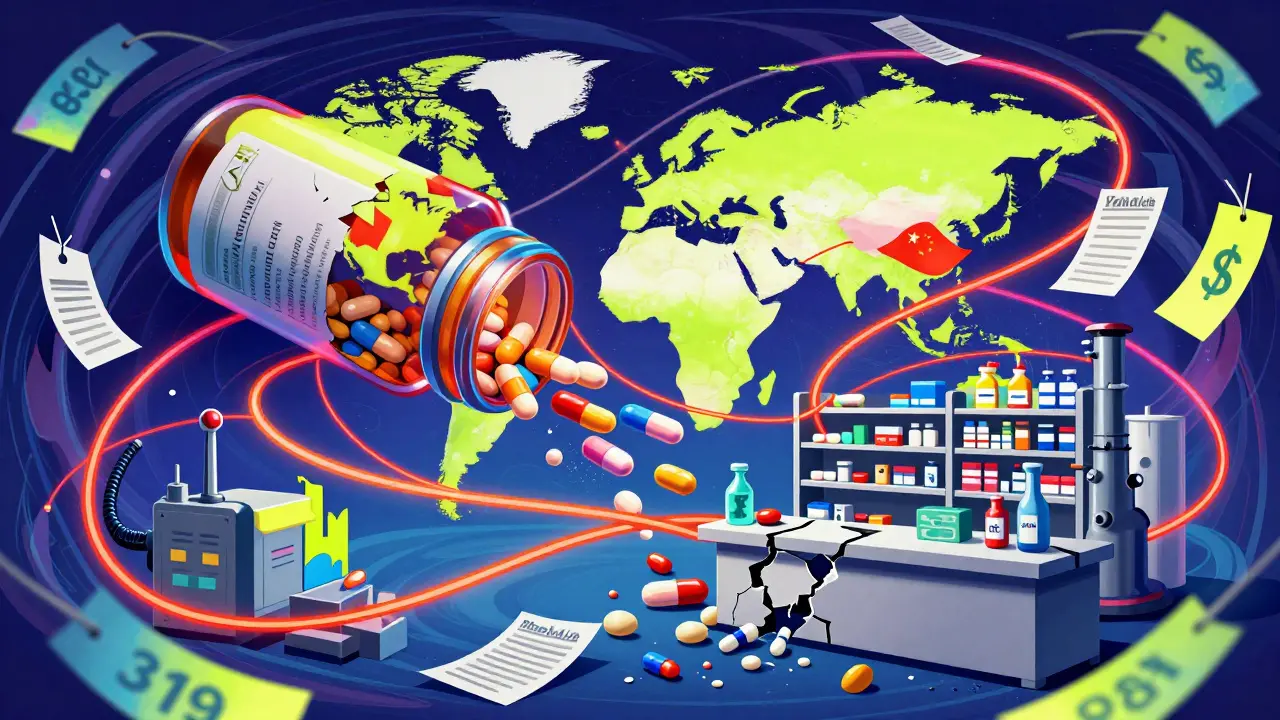
More than 90% of prescriptions in the U.S. are filled with generic drugs. They’re cheaper, widely available, and trusted. But if you’ve recently been told your usual medication is out of stock - or your pharmacy switched you to a different brand with no warning - you’re not alone. Generic drug shortages are at their highest level in over a decade, and the problem isn’t getting better. It’s getting worse.
How We Got Here
The system was built to save money. After the 1984 Hatch-Waxman Act, generic drug makers could skip expensive clinical trials and copy existing branded drugs. That made generics fast and cheap to produce. But over time, the focus shifted from access to price. Pharmacy benefit managers (PBMs) and hospital buying groups started awarding contracts based on the lowest bid - sometimes just fractions of a penny per pill. That created a race to the bottom. Manufacturers couldn’t make a profit. When you’re selling a 30-day supply of metformin for $4, there’s no room left for quality control, modern equipment, or even basic maintenance. So companies stopped investing. They cut corners. And when something breaks - a machine, a supplier, a batch of active ingredient - there’s no backup.The Global Supply Chain Is a Tangled Web
Most of the raw material for generic drugs - called active pharmaceutical ingredients, or APIs - doesn’t come from the U.S. It comes from China and India. In fact, 97% of the antibiotics Americans rely on, 92% of antivirals, and 83% of the top 100 generic drugs have no U.S.-made API source. These ingredients are made in one country, mixed with fillers in another, coated in a third, and packaged in a fourth. One delay, one inspection failure, one export ban, and the whole chain snaps. In early 2020, India halted exports of 26 essential medicines, including acetaminophen. China shut down 44 drug-making facilities during the pandemic. The U.S. didn’t have enough domestic capacity to fill the gap. Hospitals scrambled. Patients went without.Quality Problems Are More Common Than You Think
It’s not just about running out. It’s about what’s in the bottle. In 2022, the FDA pulled cisplatin - a critical cancer drug - off the market after finding “enormous and systematic quality problems” at Intas Pharmaceuticals in India. That wasn’t an accident. FDA audits show U.S.-based manufacturers maintain 95%+ accuracy in their batch records. Some foreign suppliers hover around 78%. That gap isn’t just paperwork. It’s contamination risk. It’s inconsistent potency. It’s pills that don’t work the way they should. A 2023 study found generic drugs made in India were linked to 54% more serious adverse events - including hospitalizations and deaths - than the same drugs made in the U.S. The study didn’t say Indian-made drugs are always dangerous. But it did show that when quality control slips, the consequences can be deadly.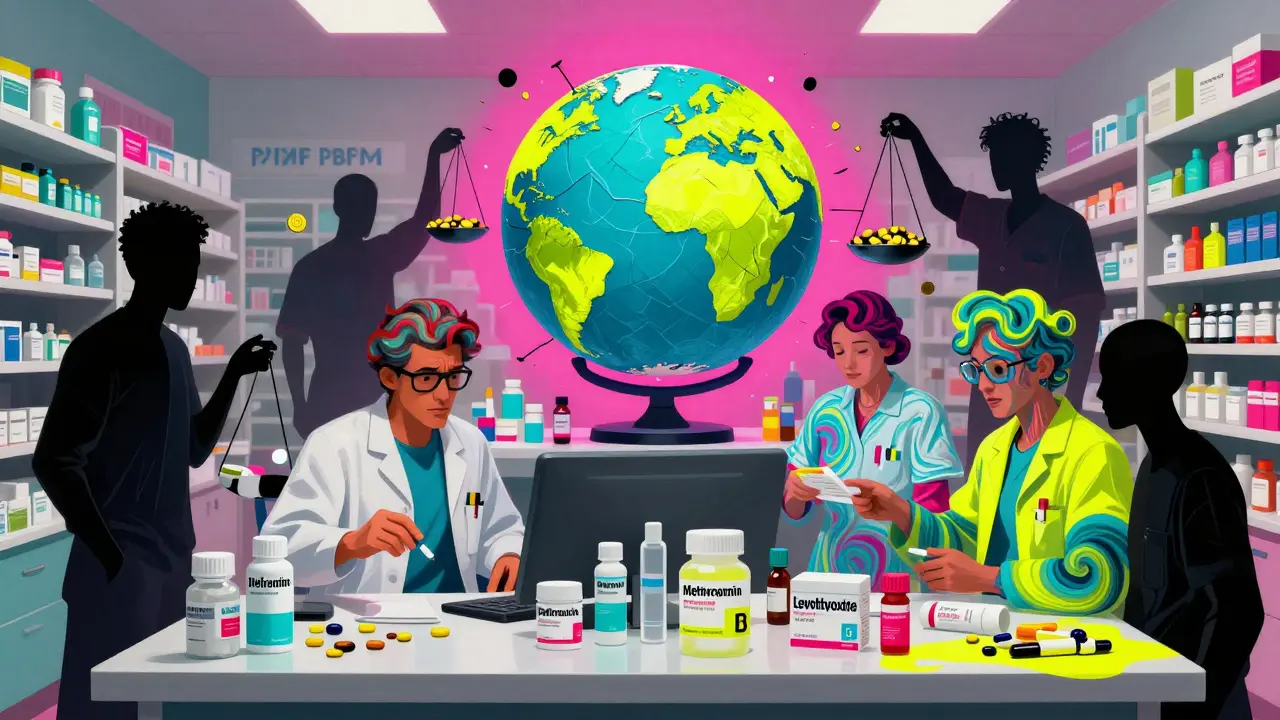
Why Branded Drugs Don’t Have This Problem
Branded drugs rarely run out. Why? Because they’re profitable. Companies like Pfizer or Merck spend billions developing a new drug. Once it’s approved, they have a patent - usually 20 years - to charge what they want. That money pays for factories, quality teams, and supply chain backups. They can afford to make more than they need. They can absorb a hiccup. Generic manufacturers don’t have that luxury. Their margins are 15-20%, sometimes under 5%. When a competitor drops their price by half a cent, they have to match it - or lose the contract. No one wins. The system rewards the cheapest, not the most reliable.The Factory Problem
Building a new FDA-approved drug plant in the U.S. costs $250 million to $500 million. It takes 3-5 years. In India or China, it’s half the price and half the time. So why would a company spend $500 million here when they can spend $100 million abroad and still make a profit? Even if they try, the FDA doesn’t make it easy. Unannounced inspections are common. If they find one missing document or a faulty sensor, they issue a Form 483. Fixing it takes 12-18 months and $1.7 million. Many smaller manufacturers just give up. Since 2010, the U.S. has lost more than half its domestic API production. Only 14% of active ingredients are now made here. The rest come from places where oversight is lighter, costs are lower, and accountability is weaker.Who’s Getting Hurt?
It’s not just patients. It’s nurses, pharmacists, doctors. A hospital pharmacist in Ohio told Reddit they’ve had to switch antibiotics for 17 different infections in six months. A nurse practitioner in Texas had to monitor 89 thyroid patients after switching them from one generic levothyroxine to another because the original was gone. One Medicare beneficiary saw their monthly heart medication cost jump from $10 to $450 when the generic disappeared. The FDA’s drug shortage portal saw complaints rise 327% between 2019 and 2022. The worst-hit drugs? Antibiotics, cancer meds, insulin, epinephrine, and heart medications. These aren’t luxuries. They’re life-savers.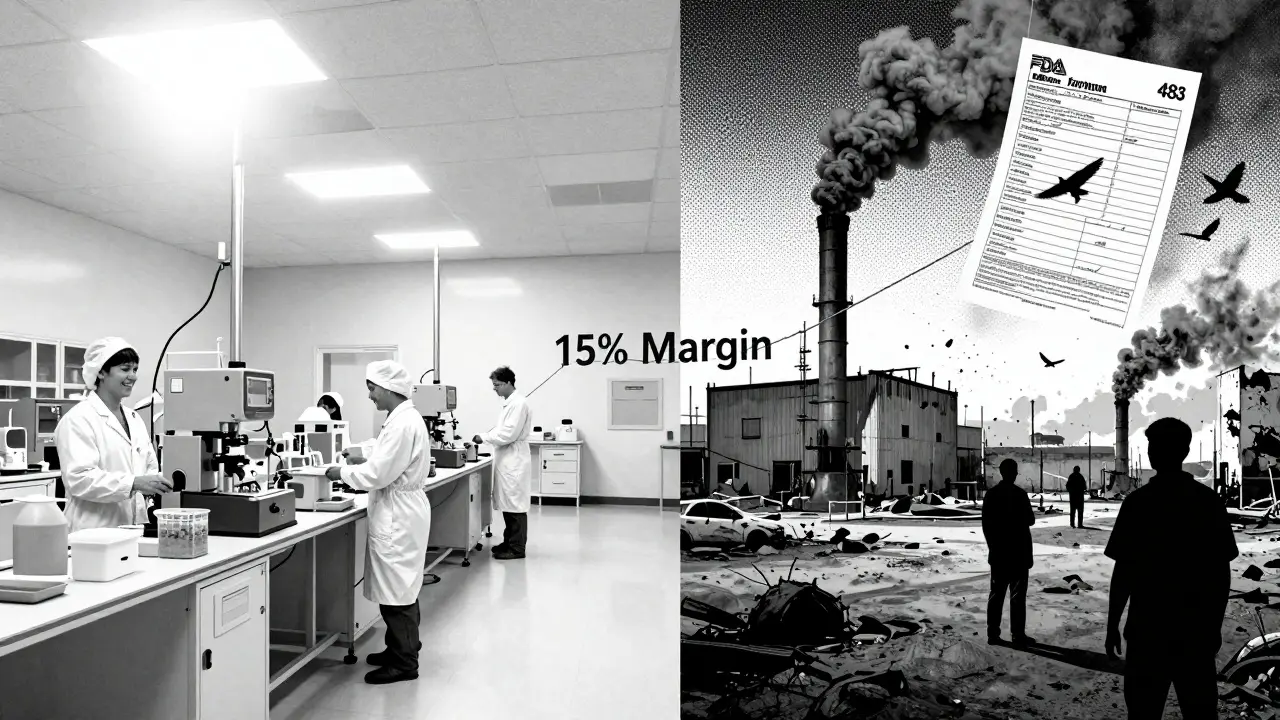
Is Anyone Fixing This?
The FDA says it’s working on it. They’ve approved 12 new continuous manufacturing facilities since 2019 - technology that makes drugs more reliably and with fewer errors. But those 12 facilities produce less than 3% of all generic drugs. It’s a drop in the ocean. Congress has introduced bills to give tax breaks for U.S.-based API production and create strategic stockpiles of critical drugs. The Biden administration added $80 million to inspect foreign factories - but that’s only a 12% increase, even as the number of overseas sites needing inspection jumped 40%. The truth? No one’s fixing the root problem: the pricing model. As long as contracts go to the lowest bidder, manufacturers will keep cutting costs. And as long as they cut costs, shortages will keep happening.What Can You Do?
You can’t control the supply chain. But you can be prepared.- If you take a generic drug every day, ask your pharmacist if there’s a backup brand - and ask your doctor to write a prescription that allows substitution.
- Keep a 30-day supply on hand if possible. Don’t wait until your last pill is gone to refill.
- Sign up for FDA drug shortage alerts. They’re free and emailed directly.
- If your medication is unavailable, don’t skip doses. Talk to your doctor about alternatives. Some insurers will cover the branded version if the generic isn’t available.
What’s Next?
Experts predict the number of generic drug makers serving the U.S. will drop from 127 in 2022 to 89 by 2027. That means fewer companies, fewer backups, and more shortages. Without a fundamental shift - paying more for quality, supporting domestic production, and ending the race to the bottom - this won’t get better. It’ll get worse. The system was designed to save money. But when you can’t get your medicine, no price tag matters anymore.Why are generic drugs running out if they’re so common?
Generic drugs make up 90% of prescriptions, but they’re sold at razor-thin margins. Manufacturers can’t afford to invest in quality equipment or backup supplies because buyers choose the cheapest bid - sometimes just fractions of a cent cheaper per pill. When one factory shuts down or a supplier has a problem, there’s often no one else ready to step in.
Are generic drugs made in the U.S. safer than those made overseas?
Not always - but U.S.-made generics have significantly higher documentation accuracy and fewer quality violations. FDA audits show U.S. manufacturers maintain 95%+ accuracy in batch records, while some foreign facilities fall below 80%. A 2023 study found generics made in India were linked to 54% more serious adverse events than identical drugs made in the U.S. This doesn’t mean all foreign-made drugs are unsafe, but the risk of errors is higher.
Why can’t the U.S. just make more generic drugs at home?
Building a new FDA-compliant drug plant in the U.S. costs $250-500 million and takes 3-5 years. In India or China, it’s half the cost and half the time. Generic manufacturers can’t justify that investment when their profit margins are often under 10%. Without government incentives or price reforms, there’s no financial reason to build here.
Which drugs are most likely to be in short supply?
Antibiotics, cancer drugs like cisplatin and doxorubicin, heart medications, insulin, epinephrine, and thyroid hormones (like levothyroxine) are the most commonly affected. These are high-volume, low-margin generics with complex supply chains and few alternatives. The FDA reported 278 active shortages in October 2023 - 67% were generics.
Can I switch to the brand-name version if the generic isn’t available?
Yes - and your insurance may cover it. Many insurers have exceptions that allow you to get the brand-name drug if the generic is out of stock. Talk to your pharmacist and doctor. They can submit a prior authorization request. While the brand version costs more, it’s often cheaper than going without the medication or switching to a less effective alternative.
Is there a government plan to fix generic drug shortages?
There are proposals - tax credits for U.S. API production, stockpiling critical drugs, and more FDA inspections - but no comprehensive solution yet. The FDA can only ask manufacturers to produce more; they can’t force them. Without changing how generics are priced and purchased, these measures won’t stop the cycle of shortages.
Renee Stringer
January 18, 2026 AT 16:43It’s not just about price - it’s about values. We let corporations prioritize profit over people, and now people are dying because we couldn’t be bothered to pay a few extra cents for a life-saving drug. We knew this was coming. We just chose to look away.
There’s no moral high ground here. Just corporate greed dressed up as ‘efficiency.’
Courtney Carra
January 18, 2026 AT 18:16So we built a system that rewards the cheapest, not the safest - and now we’re shocked when it collapses? 😅
It’s like buying the $5 tire because it’s ‘on sale,’ then crying when it blows out on the highway. We knew the trade-off. We just didn’t want to admit it.
Profit isn’t evil. But when your profit model depends on people not getting their meds? That’s not capitalism. That’s cruelty with a balance sheet.
Jacob Cathro
January 20, 2026 AT 06:22bro the whole thing is a scam. FDA is just a puppet for big pharma. why do u think they let all the plants go overseas? cuz they wanna keep the branded drugs profitable. generic makers are just pawns.
also the ‘quality’ thing is fake. u think the FDA checks every batch? lol. they audit one plant in india every 5 years and call it a day.
and don’t get me started on the ‘inspections’ - it’s all theater. the real problem? the system’s rigged.
Manoj Kumar Billigunta
January 20, 2026 AT 09:55As someone from India, I want to say this with care: many of our manufacturers are hardworking and ethical. But the pressure from global buyers to cut costs? It’s crushing. We’re not villains - we’re trapped in a system that demands cheapness over care.
It’s not about nationality. It’s about incentive. If the market rewarded quality over pennies, we’d all do better. Let’s fix the system, not blame the workers.
Andy Thompson
January 20, 2026 AT 21:30CHINA AND INDIA ARE STOLEN OUR MEDS. THIS IS A WAR. WE LET THEM MAKE OUR LIFE-SAVING DRUGS WHILE OUR FACTORIES ROT.
THEY’RE POISONING US ON PURPOSE. WHY ELSE WOULD THE FDA ALLOW 78% ACCURACY? IT’S A BIOLOGICAL 9/11.
WE NEED TO BAN ALL IMPORTS. BUILD FACTORIES. MURDER THE PBMS. TRUMP WAS RIGHT ABOUT DRUGS.
🇺🇸💊🔥
sagar sanadi
January 22, 2026 AT 14:53Oh wow, so the solution is to pay more? Shocking. Next you’ll tell me water should cost more than soda.
Meanwhile, my cousin in Mumbai gets his insulin for $2. In the US? $450. So the real problem isn’t shortages - it’s that Americans can’t handle paying $4 for a pill.
Maybe if you stopped hoarding insulin like gold, the system wouldn’t break.
kumar kc
January 23, 2026 AT 19:04Quality control is not optional. It’s a moral duty. Anyone who cuts corners on medicine is complicit in harm.
Thomas Varner
January 24, 2026 AT 18:50Okay, so... let me get this straight: we outsourced production because it was cheaper, then didn’t invest in oversight because we didn’t want to pay more, and now we’re surprised that when a factory in India has a typo in a logbook, people die?
Like... we knew this was going to happen. We just didn’t want to deal with it until it hit our own medicine cabinet.
Also, why is no one talking about how PBMs get kickbacks from the cheapest supplier? That’s the real rot.
Edith Brederode
January 24, 2026 AT 21:40I’ve been on levothyroxine for 12 years. Last year, my pharmacy switched me three times in six months. Each time, my heart raced, I felt dizzy, my hair fell out.
I finally asked my doctor to prescribe the brand. Insurance denied it. So I paid $180 out of pocket for one month - and I felt human again.
It’s not ‘just a generic.’ It’s my body. And I’m tired of being treated like a cost center.
Thank you for writing this. I’m sharing it with everyone I know. 🙏
Greg Robertson
January 25, 2026 AT 10:38Hey, I just wanted to say - this post really hit home. I’m a pharmacist in rural Ohio, and we’ve had to switch antibiotics for 17 different infections in the last six months. Patients are confused, scared, and some just stop taking their meds because it’s too much hassle.
It’s not just about the money. It’s about trust. When people can’t count on their meds, they stop trusting the whole system.
Thanks for laying it all out like this. We need more people talking about this.
Crystal August
January 26, 2026 AT 06:09Oh please. This is just fearmongering. You think people in India are ‘poisoning’ us? Newsflash: the FDA approves these drugs. If they were unsafe, they’d be banned. You’re just mad because you have to pay $4 for your meds instead of $1.
Also, if you can’t afford your medication, maybe you shouldn’t have taken out that second mortgage on your ‘organic avocado toast’ lifestyle.
Nadia Watson
January 27, 2026 AT 13:24Thank you for this comprehensive and deeply necessary analysis. The systemic failure here is not merely logistical - it is ethical, economic, and existential. The commodification of human health, driven by perverse market incentives and deregulatory capture, has rendered the most basic pillar of public welfare - access to reliable pharmaceuticals - into a gamble.
While the FDA’s incremental efforts are commendable, they are insufficient without structural reform: mandatory minimum margins for critical generics, strategic domestic production reserves, and transparent, enforceable quality benchmarks for foreign suppliers. The time for tokenism has passed.
As a healthcare professional and citizen, I implore policymakers: this is not a supply chain issue. It is a moral crisis.
With profound respect,
Nadia
thomas wall
January 28, 2026 AT 08:36It is, frankly, a scandal of monumental proportions. The Western world has outsourced not only its manufacturing but its moral responsibility. We have allowed the most vital substances - those that sustain life - to be produced under conditions that would be deemed unacceptable for the manufacture of children’s toys.
And yet, we continue to demand lower prices. We applaud ‘efficiency’ while ignoring the human cost. The tragedy is not that the system is broken - it is that we have chosen to accept its brokenness as normal.
There is no ‘free market’ here. Only a market that has been systematically rigged against the vulnerable.