Switching from brand-name drugs to generic medications isn’t just about saving money-it’s about getting the same effective treatment at a fraction of the cost. If you’ve ever looked at your prescription receipt and winced at the price, you’re not alone. But here’s the truth: generic medications work just as well as the expensive names you see on TV. The FDA doesn’t approve them lightly. They require the same active ingredients, the same strength, the same way they’re taken-whether it’s a pill, injection, or cream. And they must deliver the same amount of medicine into your bloodstream at the same speed. That’s not marketing. That’s science.
They’re the Same Medicine, Just Cheaper
Think of generic drugs like a store-brand cereal. Same ingredients, same nutrition, different packaging. The active ingredient in a generic version of Lipitor (atorvastatin) is identical to the brand-name version. So is the dosage. So is how your body absorbs it. The only differences? The color, shape, or filler ingredients-like starch or dye-that don’t affect how the drug works. These are called inactive ingredients, and while they might change the look of the pill, they don’t change its effect.
The FDA requires every generic drug to prove it’s bioequivalent to the brand-name version. That means the amount of medicine in your blood over time has to fall within 80% to 125% of the brand’s levels. That’s a tight range. It’s not a guess. It’s tested in real people using blood samples. If a generic doesn’t meet this standard, it doesn’t get approved. In fact, the FDA inspects over 1,200 manufacturing sites each year-many of them overseas-to make sure quality stays high.
How Much Can You Really Save?
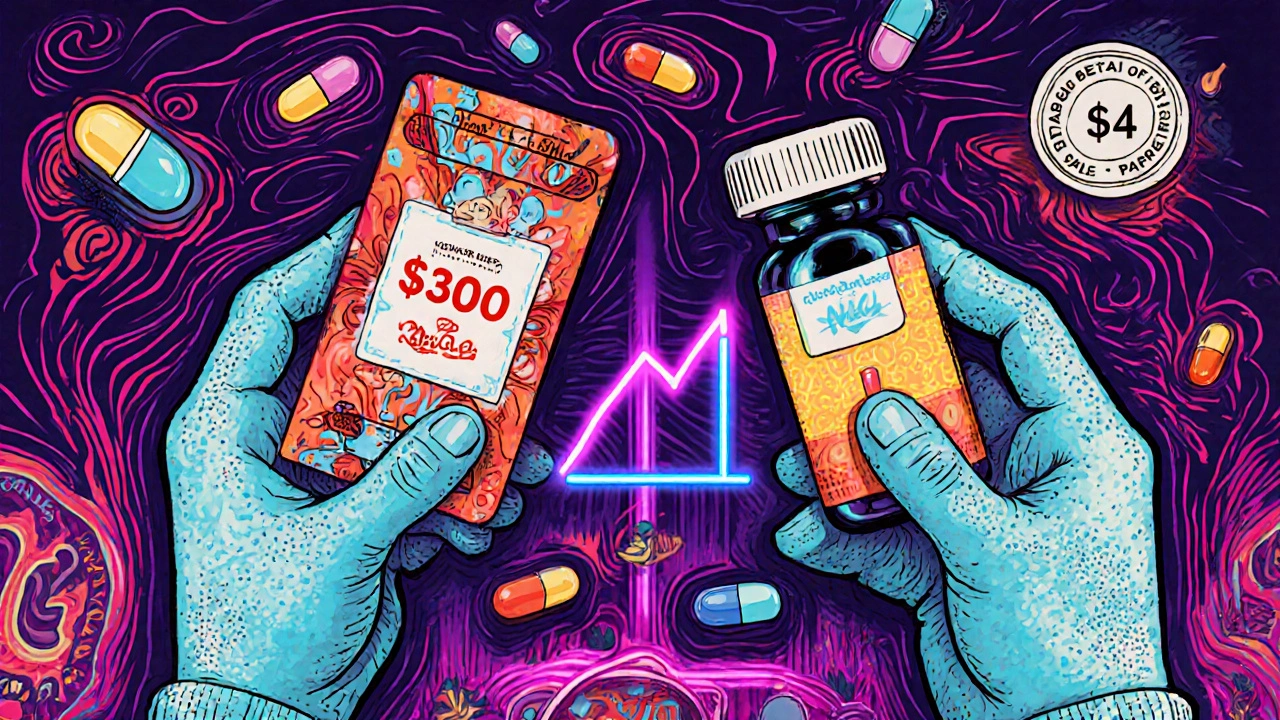
The savings aren’t small. They’re massive. On average, generic drugs cost 80% to 85% less than their brand-name counterparts. For example, the blood thinner warfarin (generic) costs about $4 for a 30-day supply. The brand-name version, Coumadin? Over $300. The antihistamine fexofenadine (generic Allegra) runs $10 versus $30 for the brand. And Lipitor? After the patent expired, the generic dropped from $130 a month to as low as $4.
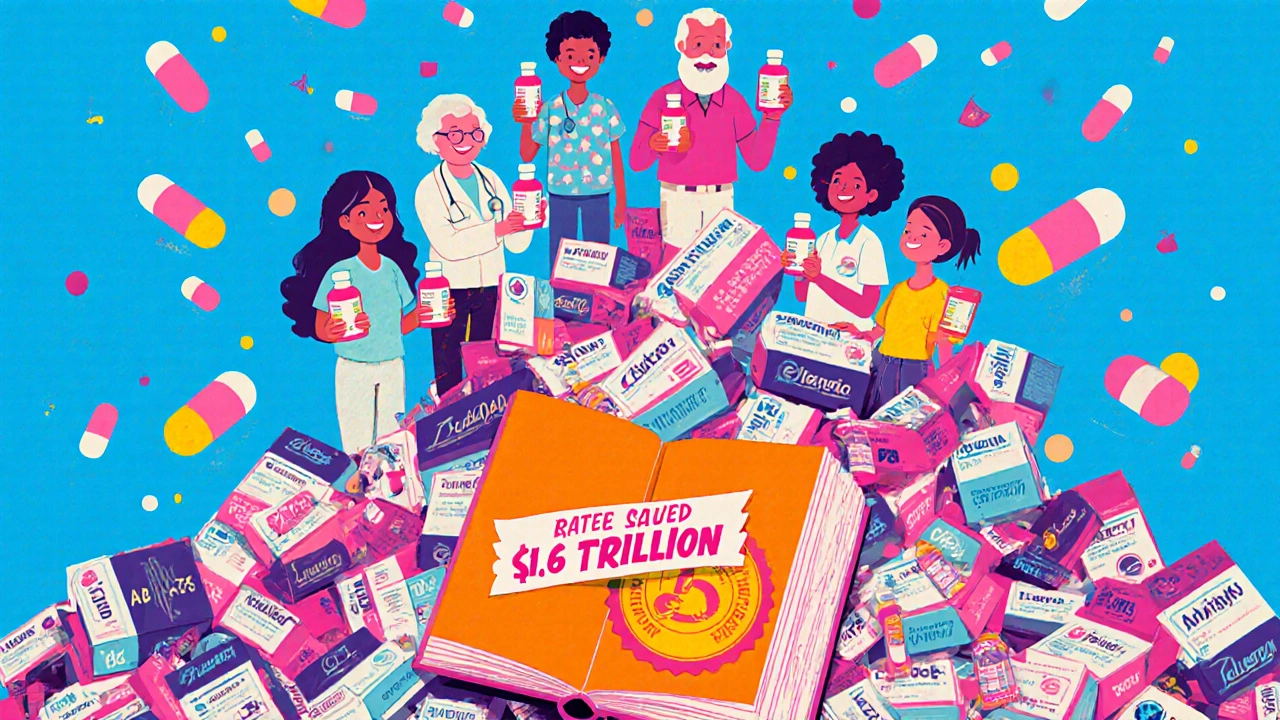
These aren’t outliers. This is the norm. In 2023, generics made up 90% of all prescriptions filled in the U.S. But they accounted for only 23% of total drug spending. That means brand-name drugs-just 10% of prescriptions-were eating up nearly 80% of the money spent on medicine. Over the last decade, generics saved the U.S. healthcare system more than $1.6 trillion. That’s not a guess. That’s from the Association for Accessible Medicines, using real pharmacy claims data.
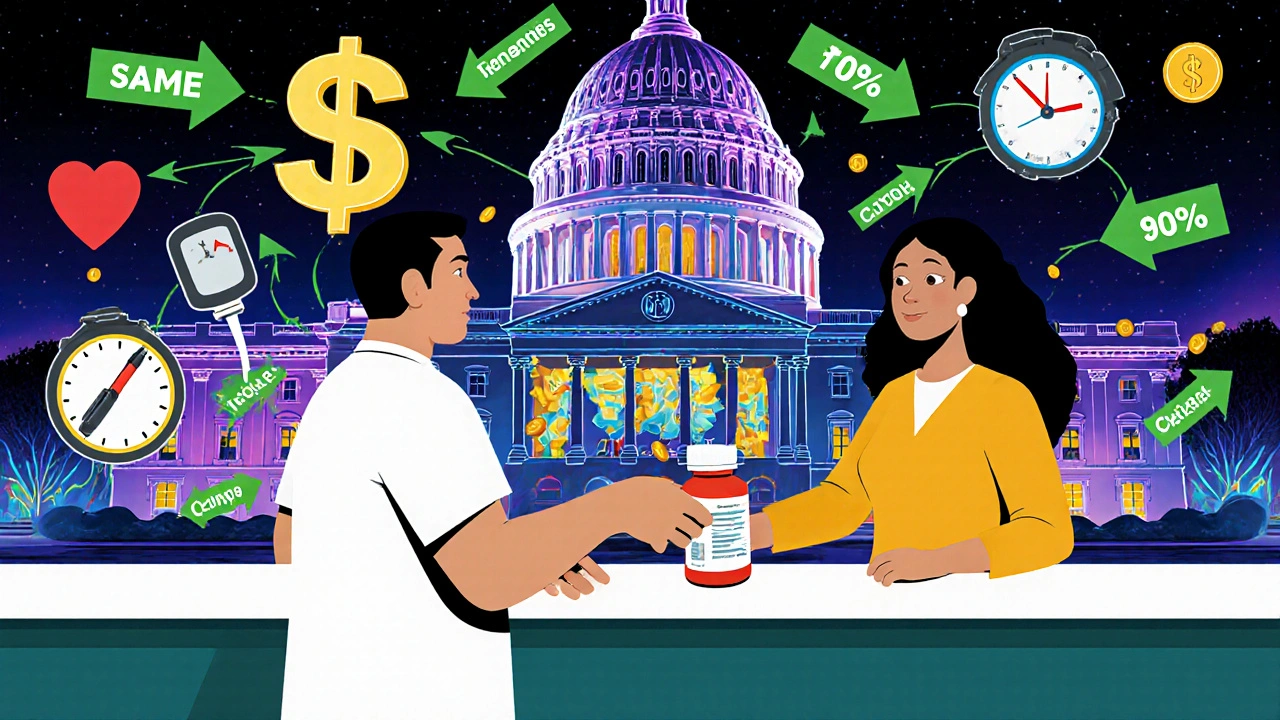
Insurance plans know this. Most have tiered copays: $1-$10 for generics, $25-$75 for brand-name drugs. Some plans don’t cover brand-name drugs at all unless you’ve tried the generic first. That’s not a trick. It’s smart policy. When five or more companies make the same generic drug, prices crash. Competition works.
Are They Safe? What About Side Effects?
People worry: “If it’s cheaper, is it less safe?” The answer is no. The FDA’s Adverse Event Reporting System tracks every reported problem with every drug-brand or generic. In 2023, adverse event reports for generics matched their usage rate: 90% of prescriptions, 90% of reports. That’s proportional. No higher risk. No hidden danger.
Some patients report feeling different after switching-usually because the pill looks different. A patient might say, “My new pill is blue instead of white, and I feel off.” But the active ingredient hasn’t changed. The dose hasn’t changed. The body absorbs it the same way. This is psychological, not physical. The FDA and pharmacists recommend talking to your provider if you’re anxious. A quick chat can ease fears. Many pharmacies now offer the same generic manufacturer if you ask-just so you don’t have to deal with changing pill shapes.
For most medications, switching is seamless. But there are rare exceptions. Drugs with a narrow therapeutic index (NTI)-like warfarin, thyroid meds, or some seizure drugs-require very precise blood levels. Even small changes could matter. But here’s the key: even for these, the FDA requires the same strict bioequivalence standards. Studies, including one published in the Journal of the American Heart Association that tracked 186,000 heart patients, found no difference in outcomes between generic and brand-name versions. The American Medical Association endorses generics for this exact reason: better access without sacrificing care.
What Do Experts Say?
Dr. Janet Woodcock, former head of the FDA’s drug division, said plainly: “Generic drugs undergo rigorous review to ensure they are as safe and effective as brand-name drugs.” That’s not a corporate slogan. That’s the FDA’s official stance, backed by data.
Harvard Medical School’s Dr. Aaron Kesselheim led a major study comparing generic and brand-name heart medications. His team found zero difference in effectiveness. “Our research confirms that generic cardiovascular drugs perform as well,” he said. Even specialists who are cautious about certain drugs, like neurologists treating epilepsy, admit that most generics are equivalent. The concern isn’t about safety-it’s about individual response. But even then, the FDA requires generics to meet the same standard. If a patient has an issue, it’s not because the generic is inferior. It’s because their body reacts differently to any change in medication-brand or generic.
Real People, Real Savings
Patients aren’t just statistics. They’re people. One Reddit user, PharmTech87, shared: “Switching my blood pressure meds to generic saved me $280 a month. No side effects. No issues.” A diabetes patient on PatientsLikeMe wrote: “Metformin generics cost me $4 a month. Glucophage was $300. This keeps me on my meds.”
Kaiser Permanente’s 2023 survey found 87% of members were highly satisfied with generics. Why? Affordability. When people can afford their meds, they take them. A 2023 study found patients using generics were 68% less likely to skip doses because of cost. That’s huge. Skipping pills for high blood pressure, diabetes, or cholesterol doesn’t just hurt your health-it leads to hospital visits, ER trips, and higher costs down the line. Generics keep people healthy and out of the hospital.
What About Biosimilars? Are They the Next Step?
Yes. Biosimilars are the next wave. These are generic versions of complex biologic drugs-like those used for rheumatoid arthritis, cancer, or Crohn’s disease. They’re harder to copy than a simple pill because they’re made from living cells. But they’re still cheaper. As of late 2023, the FDA had approved 37 biosimilars. Experts predict they’ll save Medicare $50 billion a year by 2030. The same principles apply: same effect, lower cost. The FDA is pushing to make these approvals faster and more widespread.
How to Switch Without Stress
Switching is easier than you think. Here’s how:
- Ask your doctor: “Is there a generic version of this drug?” Most doctors know-and many prefer prescribing generics.
- Check with your pharmacist. They can tell you if a generic is available and if your insurance covers it.
- If you’re nervous, ask for the same generic manufacturer as before. Many pharmacies will honor that request.
- Use the FDA’s Orange Book online (or ask your pharmacist for it) to see which generics are approved as therapeutically equivalent.
- Don’t panic if the pill looks different. It’s still the same medicine.
Most switches happen automatically at refill time. No need for a new prescription. Just let your pharmacist know you’re open to generics.
Why This Matters for Everyone
Healthcare costs are rising. Brand-name drug prices go up 5.2% a year. Generics? Just 1.8%. That gap is growing. If you’re on a fixed income, paying out of pocket, or just trying to stretch your budget, generics aren’t a compromise-they’re a lifeline. They keep people on their meds. They prevent hospitalizations. They make treatment possible for millions who otherwise couldn’t afford it.
The system works. The science is solid. The savings are real. There’s no reason to pay more unless your doctor has a specific medical reason to stick with the brand. And even then, you can always ask: “Why?”
Are generic medications as effective as brand-name drugs?
Yes. The FDA requires generic drugs to have the same active ingredients, strength, dosage form, and route of administration as the brand-name version. They must also prove bioequivalence-meaning they deliver the same amount of medicine into your bloodstream at the same rate. Studies involving hundreds of thousands of patients show no difference in effectiveness for conditions like high blood pressure, diabetes, cholesterol, and heart disease.
Why are generic drugs so much cheaper?
Generic manufacturers don’t have to repeat expensive clinical trials. The original brand-name company already proved the drug’s safety and effectiveness. Generics only need to prove they work the same way in the body. This cuts development costs dramatically. Plus, when multiple companies make the same generic, competition drives prices down-even further.
Can I trust generic drugs made overseas?
Yes. The FDA inspects all manufacturing facilities-whether in the U.S., India, China, or elsewhere-before approving a generic drug. In 2023, the FDA conducted over 1,200 inspections of generic drug plants worldwide. Facilities that don’t meet U.S. standards are blocked from selling in America. The same quality rules apply to everyone.
What if I notice a change in how I feel after switching?
If you feel different after switching to a generic, talk to your doctor or pharmacist. It’s usually not because the drug is less effective-it’s because the pill looks different, or you’re subconsciously expecting a change. But if you truly notice new side effects or reduced effectiveness, your provider can switch you back or try a different generic manufacturer. Most of the time, the issue resolves on its own.
Are there any drugs I shouldn’t switch to generic?
For most drugs, switching is safe and recommended. But for a small number of medications with a narrow therapeutic index-like warfarin, levothyroxine, or some anti-seizure drugs-doctors may monitor levels more closely after a switch. Even then, FDA-approved generics meet the same strict standards. The decision to avoid generics should be based on individual patient response, not a blanket rule. Always discuss concerns with your provider.
Will my insurance cover generic drugs?
Almost always. Most insurance plans have lower copays for generics-often $1-$10 versus $25-$75 for brand-name drugs. Some plans require you to try the generic first before covering the brand. Others won’t cover the brand at all unless you’ve been denied the generic. This is standard practice because it saves money for everyone.
How do I know if a generic is approved by the FDA?
The FDA’s “Orange Book” lists all approved generic drugs and their therapeutic equivalence ratings. You can search it online or ask your pharmacist. If a generic is listed as “AB” rated, it means the FDA considers it therapeutically equivalent to the brand-name drug. If it’s not listed, it’s not approved.
If you’re paying more than you need to for your meds, switching to a generic is one of the smartest health decisions you can make. It’s not about cutting corners. It’s about getting the same care without the price tag.
Jennifer Skolney
November 22, 2025 AT 15:34I switched my cholesterol med to generic last year and saved over $200 a month. No side effects, no weird feelings-just the same pill in a different color. My doctor didn’t even blink when I asked for it.
Manjistha Roy
November 23, 2025 AT 11:03It’s frustrating how many people still believe generics are inferior. The FDA doesn’t approve drugs based on price tags. They test them. They inspect factories. They track outcomes. If you’re afraid to switch, ask your pharmacist for the bioequivalence data-it’s public information.
My grandmother takes three generics for heart disease, diabetes, and hypertension. She’s 82, active, and has never had a hospital stay since switching. The only difference? Her prescription copay dropped from $85 to $8.
There’s no science behind the fear. Only marketing. Brand names spend billions on TV ads to make you think they’re better. But the active ingredient? Identical. The absorption rate? Within FDA-mandated limits. The results? The same.
And yes, I’ve seen patients panic because their pill changed from white to blue. That’s psychology, not pharmacology. The body doesn’t care about color. It cares about molecules.
If you’re worried about overseas manufacturing, check the FDA’s inspection database. Most generic plants in India and China meet or exceed U.S. standards. The FDA doesn’t let substandard drugs in. Period.
Generics aren’t a compromise. They’re the default. The brand-name version is the exception-and it’s priced like one.
Every time someone pays full price for a brand when a generic exists, they’re subsidizing corporate profits, not their health.
Don’t let the fear of change keep you from affordable care. Your body doesn’t know the difference. Your wallet will.
And if your doctor pushes back? Ask them why. If they can’t give you a data-backed reason, they’re just repeating what they heard in med school decades ago.
It’s time to stop paying for branding and start paying for results.
Dalton Adams
November 23, 2025 AT 13:02Let’s be real-most people who claim generics don’t work are just too lazy to read the FDA’s Orange Book or understand bioequivalence. I’ve got a PhD in pharmacology, and I’ve reviewed hundreds of generic approval packages. The 80–125% range isn’t a loophole-it’s a precision tool. It’s tighter than the variability you get between different batches of the *same* brand-name drug.
And don’t get me started on the ‘I feel different’ crowd. That’s placebo effect on steroids. If you think a blue pill makes you sleepy and a white one doesn’t, you’re not sick-you’re suggestible.
Also, biosimilars? They’re the future. The FDA is finally catching up. By 2030, we’ll see 90% of biologics being generic-equivalent. Pharma’s going to scream, but patients? They’ll thank us.
And yes, I’ve checked the manufacturing sites in Hyderabad and Shanghai. They’re cleaner than some U.S. pharmacies.
JD Mette
November 25, 2025 AT 11:31I used to be skeptical too. But after my wife switched her thyroid med and her labs stayed perfectly stable, I stopped worrying. I think the real issue isn’t the drug-it’s the fear of change. We get used to things, even if they cost too much.
Olanrewaju Jeph
November 26, 2025 AT 09:27Generics are not a compromise; they are a correction of market failure. The pharmaceutical industry has exploited patent monopolies to extract excessive profits, while patients suffer. The FDA’s rigorous standards ensure that cost reduction does not equate to quality reduction. This is public health at its most rational.
For patients in low-income communities, generics are not optional-they are existential. A $4 metformin prescription can mean the difference between managing diabetes and facing amputation. This is not theoretical. It is daily reality for millions.
Let us not confuse brand loyalty with medical efficacy. The pill does not care about logos.
Kane Ren
November 26, 2025 AT 13:03This is the kind of info we need more of. Too many people are scared of change, even when it saves them hundreds a month. I switched my blood pressure med last year and didn’t even notice. My bank account noticed though. Huge win.
Charmaine Barcelon
November 26, 2025 AT 21:39Ugh. I can’t believe people still fall for this. What about the fillers? The dyes? The binders? Those can cause reactions! You’re just trusting the FDA too much. I know someone who had a rash from a generic-so no, not all generics are safe.
Karla Morales
November 27, 2025 AT 10:18📊 DATA DRIVEN TRUTH: 90% of prescriptions = 23% of spending. 📉
Brand-name drugs? 10% of volume. 80% of cost. 🚨
Generics don’t just save money-they prevent hospitalizations. A 68% reduction in skipped doses? That’s not a statistic. That’s lives saved.
And yes, the FDA inspects every facility-over 1,200 last year. From China to Ohio. No exceptions.
Stop paying for advertising. Start paying for results.
💡 Pro tip: Ask your pharmacist for the same manufacturer. Consistency > aesthetics.
Javier Rain
November 29, 2025 AT 07:40My dad was on Coumadin for years-$300 a month. Switched to warfarin. $6. Same blood tests. Same results. He’s been stable for five years. Why are we still acting like this is a gamble? It’s not. It’s math. And it’s justice.
If you’re still using brand-name meds because you’re afraid, ask yourself: Who’s really benefiting from your fear?
Laurie Sala
November 29, 2025 AT 07:50I switched my antidepressant to generic… and I felt like I was losing myself. Like my emotions were muted. I went back to the brand. It was the only thing keeping me sane. You don’t understand unless you’ve been there. This isn’t just about pills-it’s about identity.
Lisa Detanna
November 30, 2025 AT 13:17Coming from a country where healthcare is a privilege, not a right, I’m in awe of how accessible generics are here. In my home country, even basic generics are scarce. This post made me realize how lucky we are. Thank you for sharing this. It’s not just about money-it’s about dignity.
Demi-Louise Brown
December 1, 2025 AT 06:48Generics are the quiet heroes of public health. They don’t have ads. They don’t have CEOs on talk shows. They just work. And they let people live.
Matthew Mahar
December 2, 2025 AT 12:25Wait wait wait-I just realized something. I’ve been taking my generic Lipitor for two years and I thought the pill was different because it had a weird smell? Turns out my bottle was just old. I felt so dumb. But now I know-I’m not crazy. It’s the packaging. The pill is the same. Phew.
John Mackaill
December 4, 2025 AT 04:49My pharmacist offered me a different generic manufacturer last refill. The pill was a different shape and color. I asked for the old one. She said, ‘No problem.’ Took five minutes. No drama. No extra cost. That’s the system working.
Adrian Rios
December 5, 2025 AT 07:32I’ve been a pharmacist for 22 years. I’ve seen every myth, every fear, every panic about generics. I’ve watched patients cry because they thought they were getting ‘fake’ medicine. I’ve watched them smile when they realized they could afford to refill their meds. Here’s the truth: I’ve never seen a single case where a generic failed because it was inferior. I’ve seen plenty where brand-name drugs caused issues because patients couldn’t afford them and skipped doses. Generics don’t just save money. They save lives. They save families. They save futures. And the FDA? They’re not just checking boxes-they’re protecting people. Every single day. So if you’re still hesitating? Ask your pharmacist. Ask your doctor. But don’t let fear cost you your health.
And if you’re worried about overseas manufacturing? I’ve seen U.S.-made pills with mold. I’ve seen Indian-made generics in pristine, ISO-certified labs. The country doesn’t matter. The inspection does. And the FDA does it better than anyone else.
Stop paying for the logo. Start paying for your life.