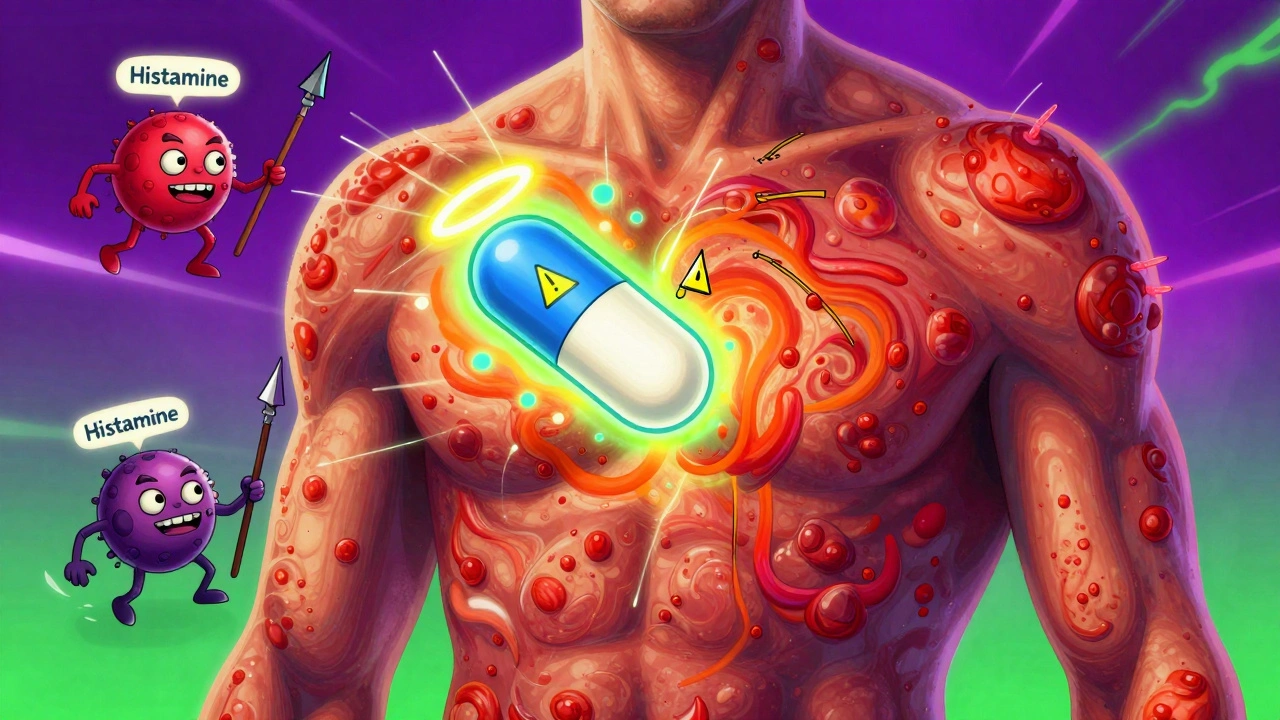
Drug Hypersensitivity: What It Is, How It Happens, and What to Do
When your body treats a medicine like a threat, that’s drug hypersensitivity, an immune system overreaction to a medication that isn’t caused by its intended pharmacological effect. Also known as allergic drug reaction, it’s not the same as a common side effect like nausea or dizziness. This is your immune system misfiring—thinking penicillin, sulfa drugs, or even aspirin is an invader. And when that happens, symptoms can range from a mild itch to anaphylaxis, which can shut down your breathing in minutes.
This isn’t rare. About 5% to 10% of people will have some kind of reaction to a drug at some point. But here’s what most don’t realize: not every rash or fever after taking a pill is an allergy. Sometimes it’s just the drug doing its job too well—or too poorly. True drug hypersensitivity, a specific immune-mediated response that can recur every time you take the drug means your body remembers the trigger. And if you get exposed again, it reacts faster and harder. That’s why doctors ask about past reactions—not to be cautious, but to save your life.
When you can’t avoid the drug—like if you need an antibiotic for a life-threatening infection or chemotherapy for cancer—there’s a way forward: drug desensitization, a controlled process where tiny, increasing doses of the drug are given under close supervision to temporarily reset the immune response. It’s not magic, but it’s science that works. Hospitals use it daily for patients allergic to penicillin, platinum chemo drugs, or even aspirin. It doesn’t cure the allergy, but it lets you get the treatment you need without triggering a full-blown reaction.
And then there’s the flip side: medication side effects, the predictable, non-immune reactions that come with how a drug works in your body. Dizziness from blood pressure meds? That’s a side effect. A swollen throat after taking ibuprofen? That’s hypersensitivity. Mixing them up leads to wrong decisions—like avoiding a life-saving drug because you think you’re allergic when you’re not. That’s why proper diagnosis matters. Skin tests, blood tests, and sometimes even supervised challenge doses help sort it out.
You don’t need to live in fear of every pill. But you do need to know the difference between a bad reaction and a dangerous one. If you’ve ever broken out in hives after a shot, felt your throat close after a new med, or had to go to the ER after taking something you’d used before, you’re not alone. The posts below walk you through real cases, real science, and real solutions—from how desensitization works in a clinic to how to talk to your doctor when you’re unsure if your reaction was serious. You’ll find out which drugs are most likely to trigger hypersensitivity, how to spot the early signs before it turns dangerous, and what steps to take if you’ve been misdiagnosed. This isn’t theory. It’s what keeps people alive.


Drug Reaction with Eosinophilia and Systemic Symptoms (DRESS): What You Need to Know