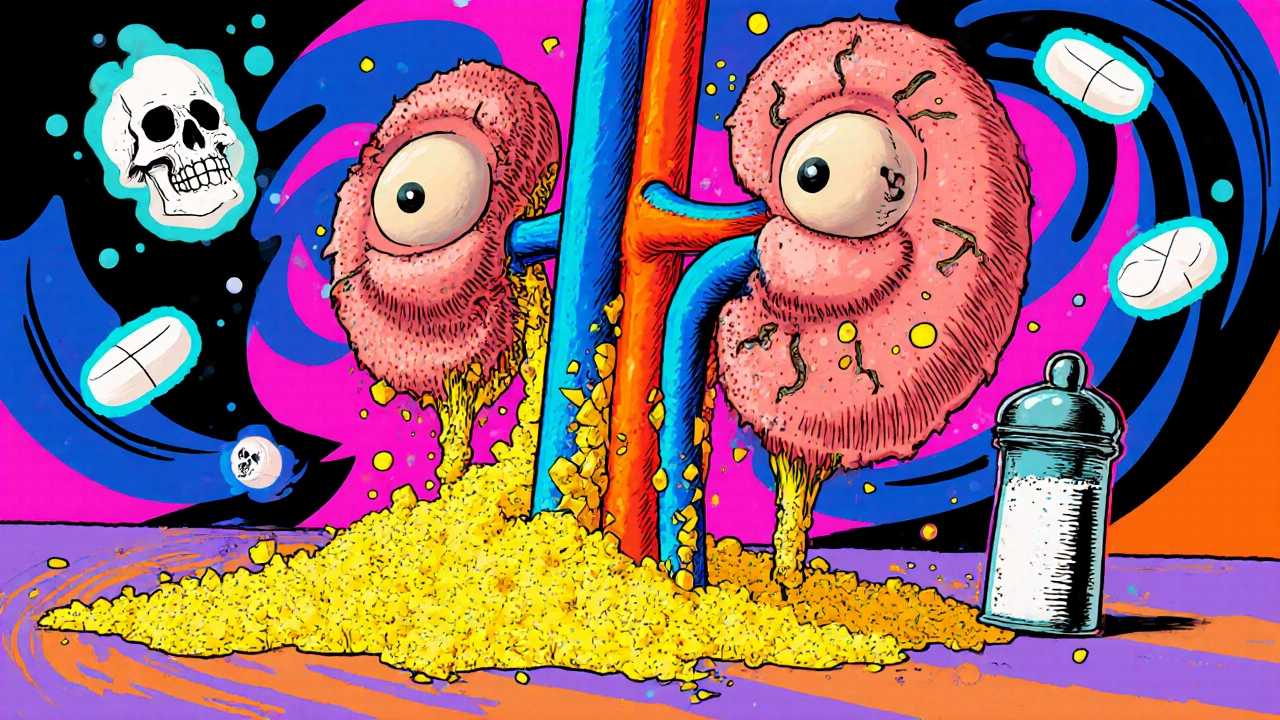
Edema in CKD: Causes, Risks, and What You Can Do
When your kidneys can’t filter fluid properly, edema in CKD, swelling caused by fluid buildup due to chronic kidney disease becomes a warning sign you can’t ignore. It’s not just puffy ankles — it’s your body screaming that something’s off with how it handles water and salt. This isn’t normal aging. It’s a direct result of failing kidneys losing their ability to remove excess fluid, and it often gets worse if you’re also dealing with high blood pressure or heart strain.
People with chronic kidney disease, a long-term condition where kidneys slowly lose function over time are especially at risk because their kidneys can’t keep up with daily fluid intake. Even small changes in salt or water intake can tip the balance. You might notice your shoes don’t fit, your rings feel tight, or your face looks puffy in the morning. These aren’t just inconveniences — they’re signs your body is holding onto fluid because your kidneys aren’t removing it. And if left unchecked, that fluid can build up in your lungs, making it hard to breathe, or put extra pressure on your heart.
fluid retention, the abnormal accumulation of fluid in body tissues in CKD doesn’t happen alone. It’s tied to other problems like high sodium balance, the body’s struggle to maintain proper salt levels when kidneys fail, low protein in the blood, and medications like NSAIDs or certain blood pressure drugs. Many patients don’t realize how much salt is hidden in processed foods, or how drinking too much water at night can make swelling worse by morning. It’s not about cutting out all fluids — it’s about matching intake to what your kidneys can handle.
What you’ll find in the posts below isn’t just theory. It’s real advice from people who’ve dealt with this — how to spot early swelling, what foods to avoid, when to call your doctor, and how medications like diuretics work (and when they don’t). You’ll see how kidney damage affects mineral balance, why some drugs help and others hurt, and what lifestyle tweaks actually make a difference. No fluff. No guesswork. Just clear, practical steps to take control before edema leads to hospital visits or worse.