Medication Allergy: What It Is, How It Happens, and What to Do
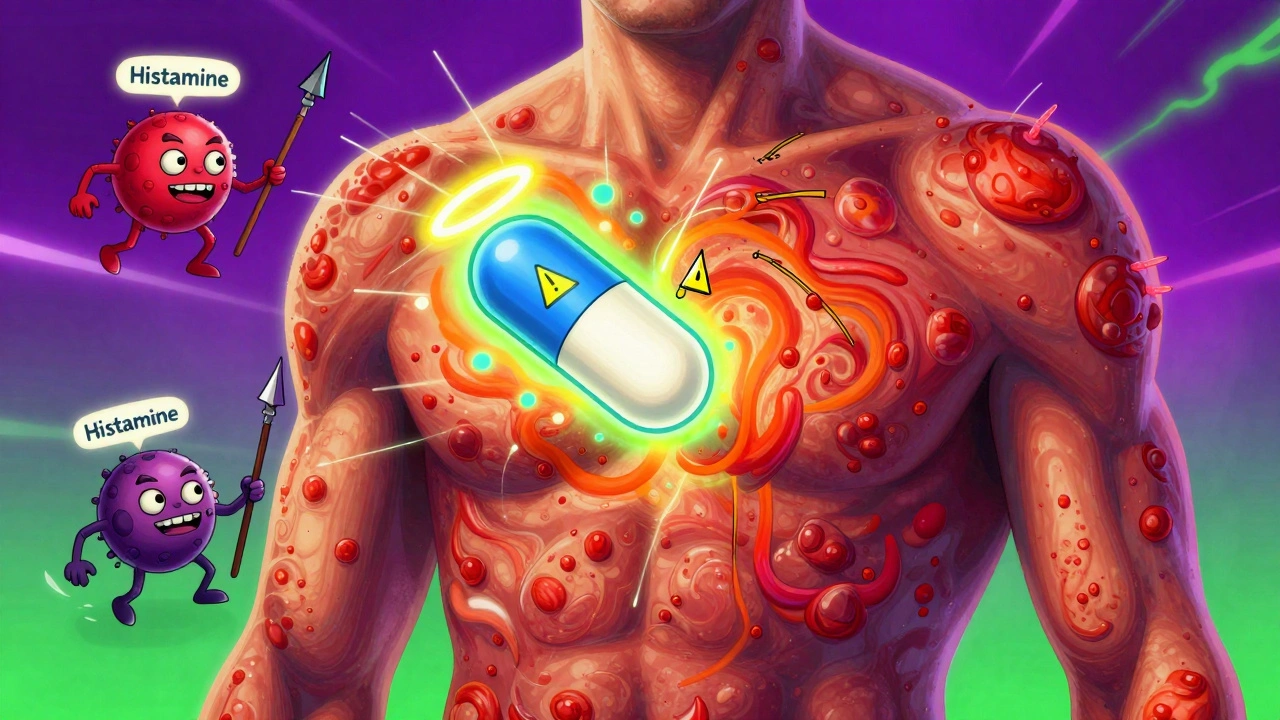
When your body mistakes a medication allergy, an immune system response to a drug that causes symptoms like rash, swelling, or trouble breathing. Also known as drug hypersensitivity, it's not the same as a side effect—it's your body treating a pill like an invader. This isn't just nausea or dizziness. This is hives. Swollen lips. Trouble breathing. In rare cases, it’s anaphylaxis—a medical emergency that can kill within minutes.
Most people confuse adverse drug reactions, any unwanted effect from a medicine, whether immune-related or not with true allergies. A headache after taking ibuprofen? That’s likely a side effect. A rash that spreads after your first dose of penicillin? That’s a medication allergy, an immune system response to a drug that causes symptoms like rash, swelling, or trouble breathing. Also known as drug hypersensitivity, it's not the same as a side effect—it's your body treating a pill like an invader.. Antibiotics like penicillin, sulfa drugs, and certain painkillers like NSAIDs are the usual suspects. But even common meds like aspirin or chemotherapy drugs can trigger reactions. And here’s the thing: once your immune system flags a drug as dangerous, it remembers. Even years later, a tiny dose can set off a full-blown reaction.
But what if you need that drug? What if it’s the only thing that works for your infection or cancer? That’s where drug desensitization, a controlled process that gradually introduces a drug to someone with a known allergy, allowing them to tolerate it safely comes in. It’s not magic—it’s science. Done in a hospital under close watch, doctors give tiny, increasing doses over hours or days. Your immune system learns to ignore the drug, at least temporarily. It’s used for penicillin in pregnant women with syphilis, for chemo drugs in cancer patients, even for some pain meds when alternatives fail. It’s risky, but sometimes the only way forward.
You don’t have to live in fear. If you’ve ever had a reaction, write it down. Not just the drug name—write the symptoms, when they started, how bad they got. Bring that list to every doctor, every pharmacist. Ask: "Could this be an allergy?" Don’t assume it’s "just a side effect." And if you’re told you’re allergic to a drug, ask if testing or desensitization is an option. Too many people avoid life-saving treatments because they think they’re allergic—when they might just need the right approach.
Below, you’ll find real stories and science-backed advice on how to recognize, manage, and sometimes overcome medication allergies—without guessing, without panic, and without giving up on the treatments you need.