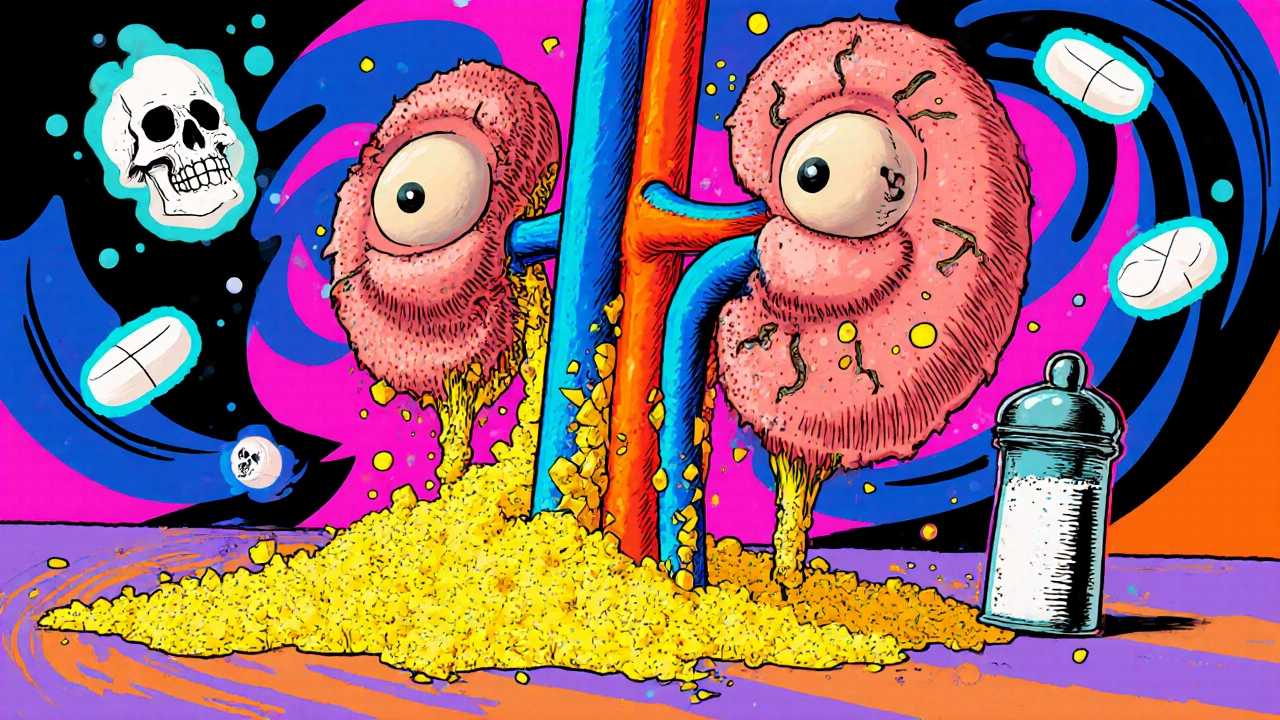
Salt Restriction for CKD: What You Need to Know to Protect Your Kidneys
When you have chronic kidney disease, a long-term condition where the kidneys lose their ability to filter waste and fluid from the blood. Also known as CKD, it affects how your body handles sodium, fluids, and blood pressure. Too much salt doesn’t just make your food taste better—it makes your kidneys work harder, raises your blood pressure, and speeds up damage. If you’re living with CKD, cutting back on salt isn’t optional. It’s one of the most effective, low-cost ways to slow the disease and avoid hospital visits.
Here’s how it works: healthy kidneys balance sodium by removing extra amounts through urine. But when kidneys are damaged, they can’t keep up. Sodium builds up, pulls water into your bloodstream, and spikes your blood pressure. That extra pressure strains your heart and further harms your kidneys. It’s a cycle. And it’s why doctors push so hard for low sodium diet, a dietary approach that limits daily sodium intake to under 2,000 mg, often closer to 1,500 mg for advanced CKD. This isn’t about avoiding salt shakers alone. It’s about spotting hidden sodium in bread, canned soups, frozen meals, deli meats, and even some medications. Many people with CKD don’t realize how much sodium they’re swallowing daily—until their swelling gets worse or their blood pressure won’t budge.
Reducing salt also helps with fluid retention, which causes swollen ankles, shortness of breath, and weight gain. For someone with CKD, those symptoms often mean a trip to the ER. Simple swaps—like choosing fresh over processed, rinsing canned beans, and using herbs instead of salt blends—can make a real difference. And it’s not just about feeling better now. Studies show that people who stick to low-sodium diets have slower progression of kidney disease and fewer heart problems down the road.
That’s why the posts here focus on what actually works: how to read labels, which foods to avoid, how salt connects to other CKD issues like mineral bone disorder, a condition where imbalanced calcium, phosphorus, and parathyroid hormone weaken bones and damage blood vessels. You’ll find practical guides on switching meds, managing side effects, and talking to your pharmacist about hidden sodium in supplements. No theory. No fluff. Just what you need to protect your kidneys and live better with CKD.
What you’ll find below are real, tested strategies from people who’ve been there—how to cut salt without giving up flavor, how to track your intake, and what to do when your doctor says "go low sodium" but you’re not sure where to start. This isn’t a one-size-fits-all list. It’s a collection of tools that actually work for real lives with real kidney disease.