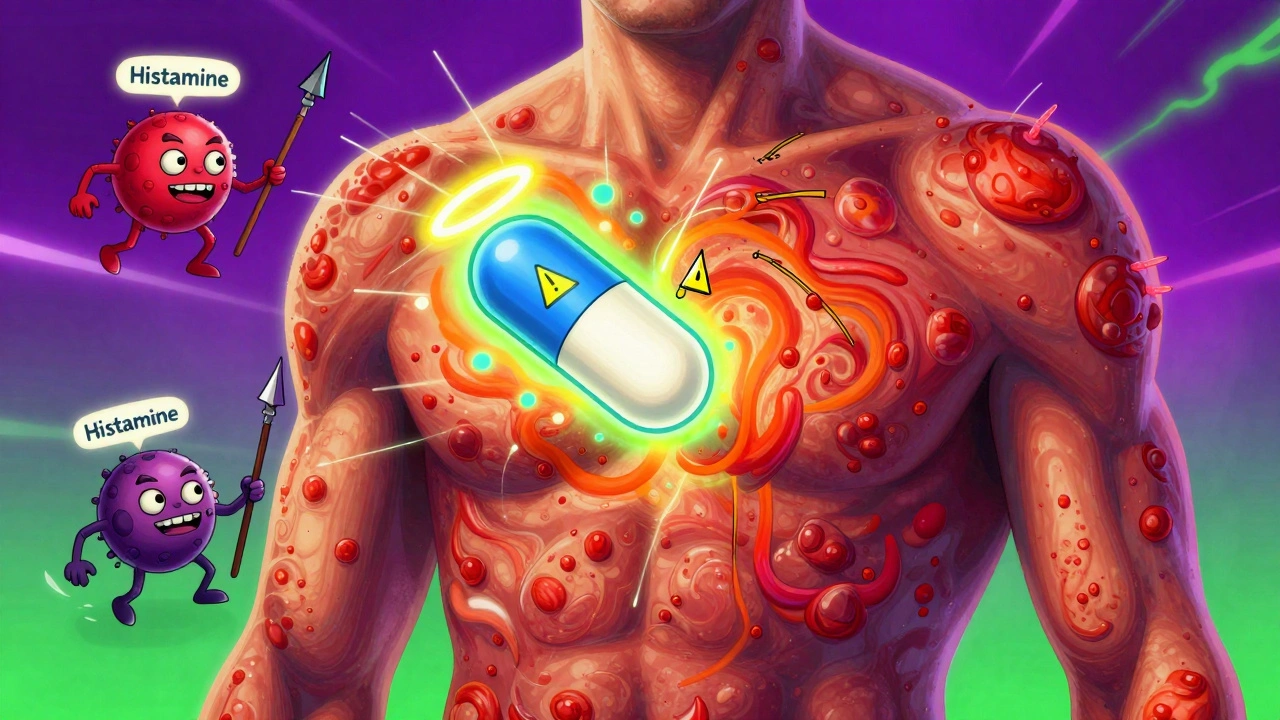
Severe Allergic Reaction: Signs, Triggers, and How to Stay Safe
When your body overreacts to something harmless — like a medicine, food, or insect sting — it can trigger a severe allergic reaction, a sudden, life-threatening immune response that affects multiple systems in the body. Also known as anaphylaxis, it doesn’t wait for permission to happen. One moment you’re fine, the next you’re struggling to breathe, your skin is breaking out in hives, and your throat is closing up. This isn’t just a bad rash or a sneeze — it’s a medical emergency that needs immediate action.
Many people don’t realize that drug hypersensitivity, an extreme immune response to medications is one of the most common causes. Antibiotics, NSAIDs, and even some vaccines can set it off. And it’s not always the first time you take the drug — sometimes your body builds up a reaction over time. That’s why epinephrine, the only medication that can stop a severe allergic reaction in its tracks is so critical. It opens airways, raises blood pressure, and buys you time until you reach a hospital. If you’ve ever had even a mild reaction before, talk to your doctor about carrying an epinephrine auto-injector. Don’t wait for it to get worse.
Some reactions are tied to specific triggers — like shellfish, peanuts, or latex — but others come from unexpected places. A medication you’ve taken for years might suddenly cause swelling, itching, or dizziness. That’s not just a side effect. That could be the start of something serious. And if you’ve ever been told you’re "just anxious" when you felt your throat tightening or your chest closing, know this: your body was sending a signal. Trust it. allergic reaction treatment, starts with recognizing the warning signs before it’s too late. Swelling in the lips or tongue, wheezing, a rapid pulse, nausea, or feeling like you’re going to pass out — these aren’t normal. They’re red flags.
You’ll find real stories here — not just theory — about people who survived because they acted fast, and others who didn’t because they waited too long. We’ll look at how drug desensitization helps those who need life-saving meds despite their allergies. We’ll break down what really happens in your body during anaphylaxis, why some people react to generics but not brands, and how pharmacists are trained to spot the early signs. This isn’t about fear. It’s about being prepared. You don’t need to live in fear of every pill or bite — but you do need to know what to watch for, what to carry, and what to do the second something feels wrong.