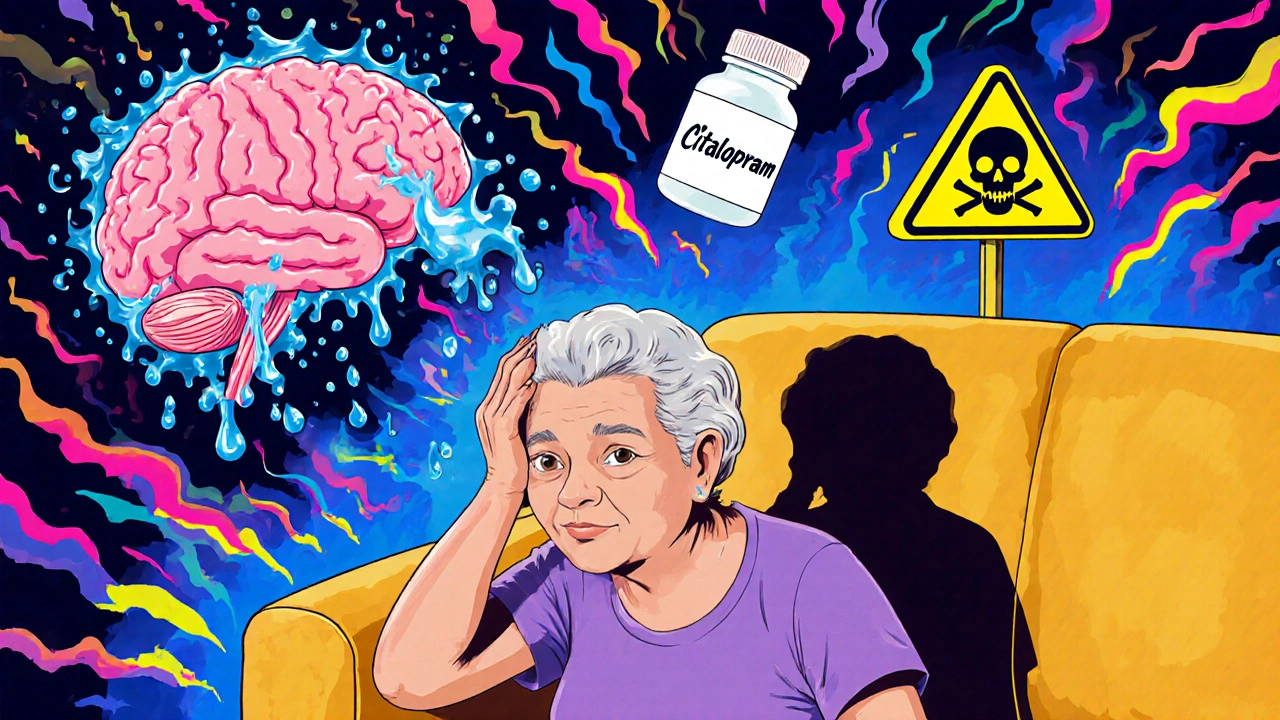
SSRI Hyponatremia: What You Need to Know About Low Sodium and Antidepressants
When you take an SSRI, a class of antidepressants that increase serotonin in the brain, commonly prescribed for depression and anxiety. Also known as selective serotonin reuptake inhibitors, these drugs help many people feel better—but they can also cause a hidden risk: hyponatremia, a condition where sodium levels in the blood drop too low. This isn’t rare. Studies show up to 1 in 10 older adults on SSRIs develop this, especially if they’re over 65, taking diuretics, or already dehydrated.
How does an antidepressant mess with sodium? SSRIs affect how the kidneys handle water. They trigger the release of a hormone called ADH, which tells your body to hold onto water instead of flushing it out. That extra water dilutes your sodium, and if you’re drinking a lot of fluids—maybe because you’re thirsty from side effects like dry mouth—you’re more likely to tip into dangerous territory. Symptoms are subtle at first: nausea, headaches, confusion, or feeling off-balance. But if left unchecked, it can lead to seizures, coma, or even death. That’s why it’s not just a footnote—it’s something you and your doctor should track, especially if you’re on long-term treatment.
Not all SSRIs carry the same risk. Sertraline and citalopram are linked more often than others, while escitalopram and fluoxetine are slightly lower risk—but no SSRI is completely safe. People with kidney problems, heart failure, or those on multiple meds are especially vulnerable. And it’s not just seniors: younger people with eating disorders or who drink excessive water to manage anxiety symptoms can also develop it. The good news? It’s often reversible. Stopping the SSRI, cutting back on fluids, or switching meds usually fixes it. But you need to catch it early.
What you’ll find below are real, practical posts that connect the dots between SSRIs and the body’s chemistry. You’ll see how hyponatremia shows up in older patients, how it overlaps with kidney issues and diuretic use, and how pharmacists and doctors monitor for it. There’s no fluff—just clear, evidence-based info on what to watch for, when to ask for a blood test, and how to talk to your provider without sounding alarmist. This isn’t about fear. It’s about awareness. And if you’re on an SSRI, you deserve to know the full picture.